How to Build an RBI Grade B Study Plan That Actually Works | Best RBI Coaching in Mumbai | The Prayas India
A Well-Planned Strategy Is the First Step Towards Becoming an RBI Officer.
Preparing for the RBI Grade B examination is very different from preparing for most competitive exams. The syllabus is vast, the competition is intense, and the examination tests not only your knowledge but also your ability to manage time, think analytically, and remain consistent over several months.
Every year, thousands of aspirants begin their preparation with enthusiasm. Many purchase multiple books, download countless PDFs, and create ambitious timetables. However, after a few weeks, those plans often collapse. The syllabus feels overwhelming, current affairs begin piling up, revision is neglected, and mock test scores fail to improve.
The problem is rarely a lack of intelligence or dedication.
More often, it is the absence of a structured study plan.
A successful RBI Grade B aspirant does not study randomly. They follow a roadmap that clearly defines what to study, when to study, how to revise, and how to measure progress. Every study session has a purpose, and every week contributes towards a long-term goal.
This article will help you create exactly that—a practical and realistic study plan that actually works.
Understand the RBI Grade B Examination Before Making a Study Plan
Many aspirants prepare hard but not necessarily in the right direction. Before creating a timetable, you must understand what the examination expects from you.
The RBI Grade B recruitment process consists of multiple stages, each requiring a different preparation approach.
The examination broadly includes:
- Phase 1 (Objective Examination)
- Phase 2 (Descriptive & Objective Papers)
- Interview
Each stage evaluates different skills.
Phase 1 focuses on aptitude, awareness, reasoning, English language, and quantitative ability.
Phase 2 demands conceptual clarity in subjects like:
- Economic & Social Issues (ESI)
- Finance & Management (FM)
- English (Descriptive)
A study plan that ignores the balance between these stages often creates unnecessary pressure later.
Instead of preparing Phase 1 and postponing everything else, successful aspirants gradually build their Phase 2 preparation alongside it.
Set Realistic Goals Before You Create a Timetable
One of the biggest mistakes RBI aspirants make is designing a timetable based on motivation rather than reality.
A study plan that demands ten or twelve hours of daily study may look impressive, but if you cannot maintain it consistently, it becomes ineffective.
Instead, begin by evaluating your current situation.
Ask yourself:
- Am I a full-time student?
- Am I preparing while working?
- How many productive hours can I study every day?
- Which subjects are already strong?
- Which areas require the most attention?
Your study plan should match your lifestyle instead of copying someone else’s routine.
A realistic plan is always more sustainable than an ambitious one.
Break the Syllabus into Monthly Targets
Looking at the complete RBI Grade B syllabus can feel overwhelming.
Instead of viewing it as one large task, divide it into smaller milestones.
For example, dedicate each month to achieving specific objectives.
A structured monthly plan may include:
Month Goals
- Complete Quantitative Aptitude fundamentals.
- Build Reasoning concepts.
- Improve English comprehension.
- Begin ESI preparation.
- Start Finance & Management basics.
- Read current affairs daily.
Breaking preparation into monthly targets creates measurable progress and prevents unnecessary stress.
Small achievements every month gradually build confidence.
Your Study Plan Should Balance Learning and Revision
Many aspirants spend weeks learning new topics but rarely revisit what they have already completed.
This creates a false sense of progress.
A strong study plan should always include:
- Learning new concepts.
- Daily revision.
- Weekly revision.
- Practice questions.
- Current affairs reading.
- Short note preparation.
When revision becomes part of your daily schedule rather than a last-minute activity, retention improves significantly.
A Structured Coaching Plan Helps You Stay on Track
Creating a study plan is only the beginning. Following it consistently over several months is the real challenge. Many aspirants lose momentum because they lack accountability, expert guidance, or regular performance evaluation. A structured coaching programme helps maintain discipline, provides the right preparation sequence, and ensures that every stage of the RBI Grade B syllabus is covered systematically.
At The Prayas India, RBI Grade B aspirants receive expert faculty guidance, structured classroom programmes, comprehensive study material, current affairs support, regular mock tests, detailed performance analysis, and personalised mentoring. This organised approach helps students prepare confidently for every stage of the examination.
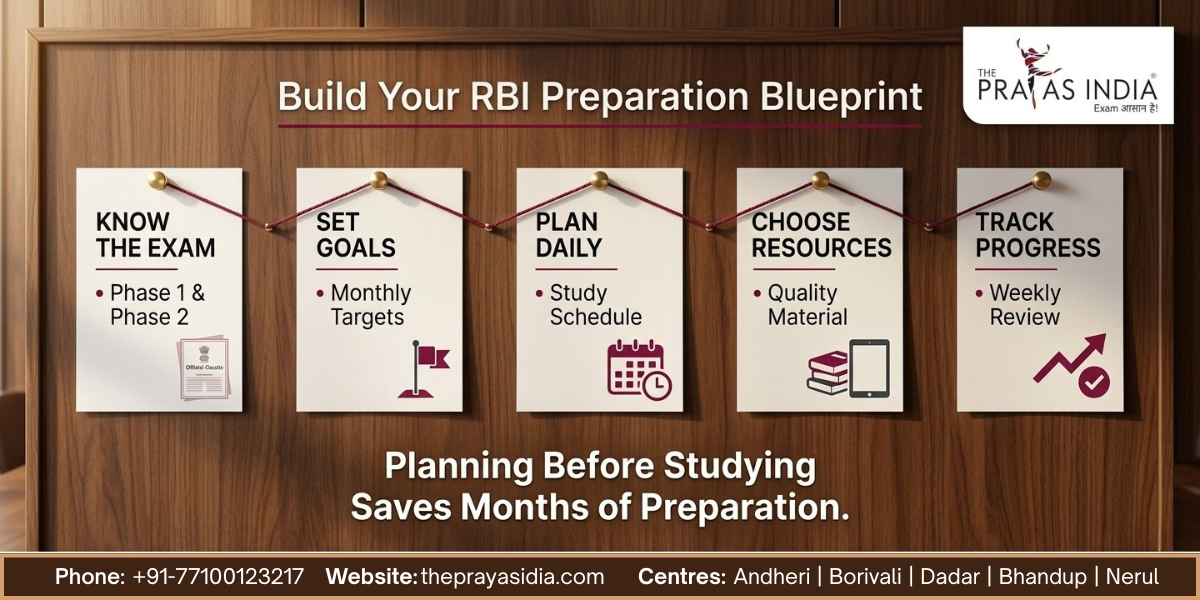
Turn Your Study Plan into a Daily System That You Can Actually Follow
A Great Study Plan Is Not Measured by How It Looks on Paper, but by How Consistently You Can Follow It.
Many RBI Grade B aspirants spend hours designing colourful timetables, downloading study planners, and setting ambitious monthly goals. However, within a few weeks, those schedules often become difficult to follow because they are based on motivation rather than practicality.
An effective study plan should fit naturally into your daily routine. Whether you are a college student, a working professional, or preparing full-time, your timetable should help you make steady progress without causing burnout.
Instead of asking, “How many hours should I study?”, ask yourself, “What important tasks should I complete every day?”
When your preparation focuses on completing meaningful tasks rather than simply spending time at your study table, consistency becomes much easier.
Balance Phase 1 and Phase 2 Preparation from the Beginning
One of the biggest mistakes RBI Grade B aspirants make is preparing only for Phase 1 and postponing Phase 2 until after clearing the preliminary examination.
Although this approach may seem practical, it often creates unnecessary pressure because the time between Phase 1 and Phase 2 is limited.
A smarter approach is to prepare both stages simultaneously.
For example:
Daily Focus Areas
- Quantitative Aptitude
- Reasoning Ability
- English Language
- General Awareness
- Economic & Social Issues (ESI)
- Finance & Management (FM)
Even spending a small amount of time on Phase 2 subjects every week builds familiarity and reduces the burden later.
Preparing both stages together creates a stronger and more balanced preparation strategy.
Design a Daily Routine with Clear Priorities
A productive study day should not be filled with random topics.
Instead, divide your day into focused learning sessions.
A well-balanced routine generally includes:
Concept Building
- Learn one new topic.
- Understand the fundamentals.
- Make concise notes.
Practice Session
- Solve topic-wise questions.
- Improve speed and accuracy.
- Identify weak concepts.
Current Affairs
- Read reliable daily news.
- Focus on banking, economy, RBI policies, and financial developments.
- Prepare revision notes.
Revision
- Revise previously completed chapters.
- Review formulas, concepts, and important facts.
- Strengthen retention.
Following this structure every day creates a preparation rhythm that is easier to sustain over several months.
Choose Limited Resources and Master Them
The RBI Grade B examination has an extensive syllabus, but that does not mean you need dozens of books.
Many aspirants waste valuable time constantly searching for better resources instead of completing the ones they already have.
A focused preparation strategy usually includes:
- One trusted Quantitative Aptitude resource.
- One reliable Reasoning book.
- Quality material for English.
- Standard sources for ESI and Finance & Management.
- Daily current affairs from credible platforms.
- Previous year question papers.
- Regular mock tests.
Completing a few quality resources thoroughly is far more effective than collecting many incomplete ones.
Build Revision into Your Weekly Schedule
Revision should never be left for the final weeks before the examination.
Without regular revision, even well-understood concepts gradually fade from memory.
An effective weekly study plan should include dedicated revision sessions.
For example:
- Daily: Revise the previous day’s topics.
- Weekly: Review all chapters completed during the week.
- Monthly: Solve mixed-topic practice sets and revisit short notes.
- Before Mock Tests: Revise important formulas, concepts, and current affairs.
This systematic revision process improves long-term retention and boosts confidence during the examination.
Consistency Is Built Through Discipline, Not Motivation
Motivation is temporary.
Some days you will feel energetic.
Other days, studying may seem difficult.
This is completely normal.
Successful RBI Grade B aspirants rely less on motivation and more on disciplined routines.
Simple habits such as studying at the same time every day, avoiding unnecessary distractions, completing planned tasks before taking breaks, and reviewing progress every weekend gradually become the foundation of consistent preparation.
Small daily improvements eventually produce significant results over several months.
Expert Guidance Helps You Follow the Right Study Plan
Creating a study plan is only half the journey; following it consistently requires the right support system. Many aspirants struggle to prioritise subjects, manage current affairs, and balance Phase 1 and Phase 2 preparation effectively. Regular guidance from experienced mentors helps students stay accountable, make timely improvements, and maintain confidence throughout their preparation.
At The Prayas India, RBI Grade B aspirants benefit from structured classroom programmes, experienced faculty, comprehensive study material, current affairs guidance, regular mock tests, detailed performance reviews, and personalised mentoring. This systematic approach ensures that every stage of preparation remains organised and goal-oriented.

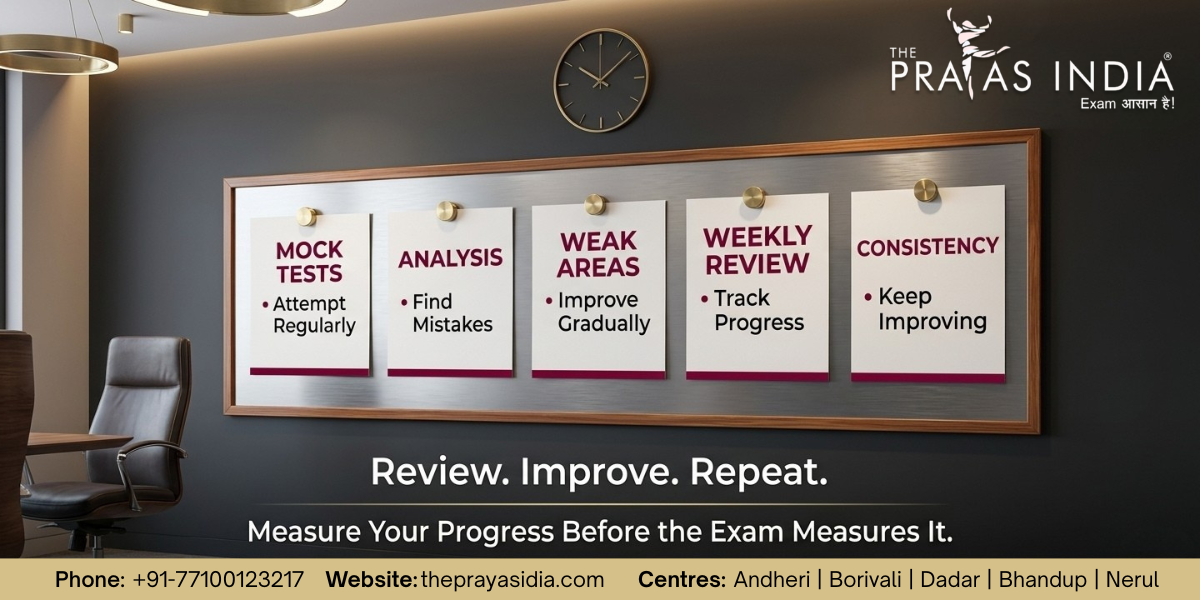
Measure Your Progress Before the Exam Measures It
An Effective Study Plan Doesn’t End with Studying—it Continues with Evaluation, Improvement, and Smart Decision-Making.
Many RBI Grade B aspirants believe that completing the syllabus is the most difficult part of preparation. While syllabus completion is important, it is only one stage of the journey.
The real challenge begins after that.
Can you solve questions accurately under time pressure?
Can you identify why your mock scores are not improving?
Can you consistently perform well across all subjects instead of excelling in just one?
These questions separate well-prepared candidates from those who merely finish the syllabus.
A successful RBI Grade B study plan is built around continuous performance evaluation rather than endless studying.
Treat Mock Tests as Learning Sessions, Not Scorecards
Many aspirants become either overconfident after one good mock score or discouraged after one poor performance.
Both reactions can slow down preparation.
A mock test is not designed to judge your preparation.
It is designed to improve it.
Instead of asking,
“How many marks did I score?”
Ask yourself:
- Which section took the most time?
- Which questions should I have skipped?
- Which topics repeatedly reduced my accuracy?
- Were my mistakes conceptual or careless?
- What should I improve before the next mock?
Every mock test should provide clear action points for the following week.
This approach gradually transforms weak areas into strengths.
Track Your Progress Every Week
Many students rely on memory to judge whether their preparation is improving.
This often creates confusion because progress becomes difficult to measure objectively.
Maintain a simple weekly performance tracker.
Review areas such as:
Weekly Review Checklist
- Chapters completed
- Revision completed
- Current affairs covered
- Practice questions solved
- Mock tests attempted
- Accuracy percentage
- Time management
- Weak topics identified
Recording these details every week helps you recognise improvement patterns and quickly identify areas that require additional attention.
Preparation becomes measurable instead of emotional.
Focus on Continuous Improvement Instead of Perfection
One of the biggest reasons aspirants lose confidence is expecting perfection too early.
No candidate performs perfectly in the initial mock tests.
Improvement is gradual.
For example:
If your first mock score is average, your goal for the next mock should not be achieving a dramatic jump.
Instead, aim for measurable improvements such as:
- Fewer careless mistakes.
- Better time management.
- Higher accuracy.
- Improved current affairs retention.
- Stronger descriptive writing structure.
Small improvements accumulated over several months produce remarkable final results.
Avoid Common Study Planning Mistakes
Even well-designed study plans fail when they are not reviewed regularly.
Some common mistakes include:
Following an Unrealistic Timetable
Studying twelve hours one day and two hours the next rarely creates consistent progress.
A balanced schedule is far more sustainable.
Ignoring Current Affairs
Current affairs cannot be covered effectively at the last moment.
Daily reading and regular revision are essential for RBI Grade B preparation.
Skipping Revision
Completing new topics without revisiting previous ones creates knowledge gaps that become visible during mock tests.
Changing Resources Frequently
Jumping between multiple books, PDFs, and online courses creates confusion instead of clarity.
Master a limited number of trusted resources.
Not Reviewing Performance
Preparation without regular evaluation often leads to repeating the same mistakes.
Performance review should become a fixed weekly habit.
Consistency Is the Real Competitive Advantage
Every serious RBI Grade B aspirant studies.
Every aspirant solves questions.
Every aspirant attempts mock tests.
The difference lies in consistency.
Candidates who continue following their study plan even on difficult days gradually outperform those who depend only on motivation.
Remember:
A study plan succeeds because it is followed consistently—not because it is perfectly designed.
Expert Mentorship Accelerates Continuous Improvement
Self-study helps build knowledge, but expert guidance helps refine performance. Many aspirants struggle to identify why their mock scores fluctuate or which preparation strategy should be modified. Experienced mentors provide valuable insights, help analyse performance objectively, and ensure that preparation remains aligned with the actual demands of the RBI Grade B examination.
At The Prayas India, students receive regular mock tests, detailed performance analysis, personalised mentoring, answer-writing guidance, current affairs support, and strategic preparation plans designed to improve performance consistently until the final examination.
A Great Study Plan Is Only Valuable If You Follow It Every Day
The RBI Grade B examination rewards disciplined execution far more than perfect planning.
Every successful RBI Grade B officer once started exactly where you are today—with a syllabus to complete, limited time, and uncertainty about where to begin.
The difference between candidates who clear the examination and those who fall short is rarely intelligence alone. It is the ability to remain disciplined for months, evaluate performance honestly, and continuously improve the study plan whenever required.
A study plan should never be treated as a fixed document.
It should evolve with your preparation.
As your strengths improve and weak areas become visible through mock tests, your priorities should change accordingly. Some weeks may require additional attention to Quantitative Aptitude, while others may demand more focus on Economic & Social Issues, Finance & Management, or descriptive writing.
Flexibility within a structured framework is what makes a study plan truly effective.
Remember, consistency over several months always produces better results than occasional bursts of excessive studying.
Frequently Asked Questions About RBI Grade B Preparation
How many months are required to prepare for RBI Grade B?
The preparation duration depends on your academic background and current level of preparation. Most serious aspirants benefit from a well-structured study plan followed consistently over several months, allowing sufficient time for concept building, revision, current affairs, and mock tests.
Can I prepare for RBI Grade B while working full-time?
Yes.
Many successful candidates prepare alongside their jobs by following a realistic daily schedule. Consistency, effective time management, and focused study sessions are far more important than studying for extremely long hours.
Should I prepare Phase 1 and Phase 2 together?
Yes.
Preparing both stages simultaneously helps reduce pressure after the preliminary examination and ensures stronger conceptual understanding in subjects such as Economic & Social Issues and Finance & Management.
How important are mock tests?
Mock tests are essential because they help evaluate your preparation, improve time management, increase accuracy, and identify weak areas that require additional practice.
However, analysing each mock is just as important as attempting it.
How should I revise current affairs?
Instead of relying only on daily reading, prepare concise monthly revision notes and revise them regularly.
This approach improves retention and makes revision before the examination significantly easier.
RBI Grade B Study Plan Checklist
Before moving closer to the examination, make sure your preparation includes the following essentials.
Planning
✓ Understood the complete exam pattern.
✓ Created monthly study targets.
✓ Balanced Phase 1 and Phase 2 preparation.
Daily Routine
✓ Following a realistic timetable.
✓ Learning new concepts daily.
✓ Reading current affairs consistently.
Practice
✓ Solving topic-wise questions.
✓ Attempting previous year papers.
✓ Taking regular mock tests.
Performance Review
✓ Analysing every mock test.
✓ Tracking weak subjects.
✓ Reviewing weekly progress.
Revision
✓ Revising daily.
✓ Maintaining short notes.
✓ Completing monthly revision cycles.
A checklist like this helps ensure that your preparation remains systematic instead of becoming reactive.
Why Expert Guidance Makes RBI Grade B Preparation More Effective
The RBI Grade B examination demands much more than subject knowledge. Aspirants must manage an extensive syllabus, descriptive papers, current affairs, and multiple stages of the selection process simultaneously. Without proper guidance, many candidates struggle to prioritise subjects, evaluate their progress, or prepare strategically for Phase 2 and the interview.
At The Prayas India, RBI Grade B preparation is designed to simplify this journey. Students receive experienced faculty guidance, structured classroom programmes, comprehensive study material, dedicated current affairs support, descriptive answer-writing practice, regular mock tests, detailed performance analysis, interview guidance, and personalised mentoring that helps them stay focused throughout the preparation cycle.
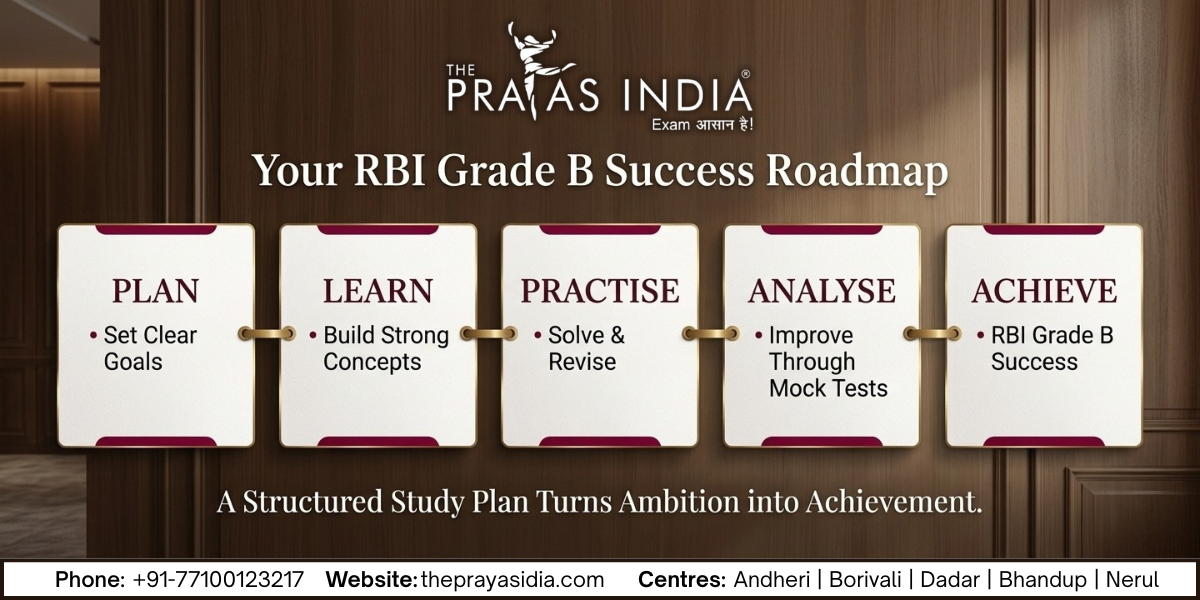
Why Choose The Prayas India for RBI Grade B Preparation?
Preparing for RBI Grade B requires a structured approach, expert mentorship, and continuous performance evaluation. At The Prayas India, students receive a comprehensive preparation ecosystem designed to maximise their chances of success.
Our Key Strengths
- Expert faculty with extensive experience in RBI Grade B preparation
- Structured classroom and online coaching programmes
- Comprehensive study material covering both Phase 1 and Phase 2
- Daily current affairs and monthly revision support
- Descriptive answer-writing practice for English and Phase 2 papers
- Regular sectional and full-length mock tests
- Detailed mock analysis with personalised feedback
- One-to-one mentoring and doubt-solving sessions
- Interview guidance for final-stage preparation
- Consistent academic support from preparation to final selection
Whether you are starting from scratch or refining your existing strategy, a structured preparation system can help you study with greater clarity, confidence, and consistency.
Conclusion
Building an effective RBI Grade B study plan is not about creating the perfect timetable—it is about creating a system that you can follow every single day. Focus on understanding the examination, setting realistic goals, balancing Phase 1 and Phase 2 preparation, revising regularly, and learning from every mock test.
Success in the RBI Grade B examination is achieved through disciplined execution, not shortcuts. Stay consistent, trust your preparation, and keep refining your strategy as you progress. With the right guidance, structured planning, and dedicated effort, your goal of becoming an RBI Grade B Officer can become a reality.
Contact Us
- 📞 Call: +91-77100 13217
- 🌐 Website: https://theprayasindia.com
- 📍 Centres: Andheri | Borivali | Dadar | Nerul | Bhandup