New Bank Exam Batch: What Aspirants Should Check Before Enrolling
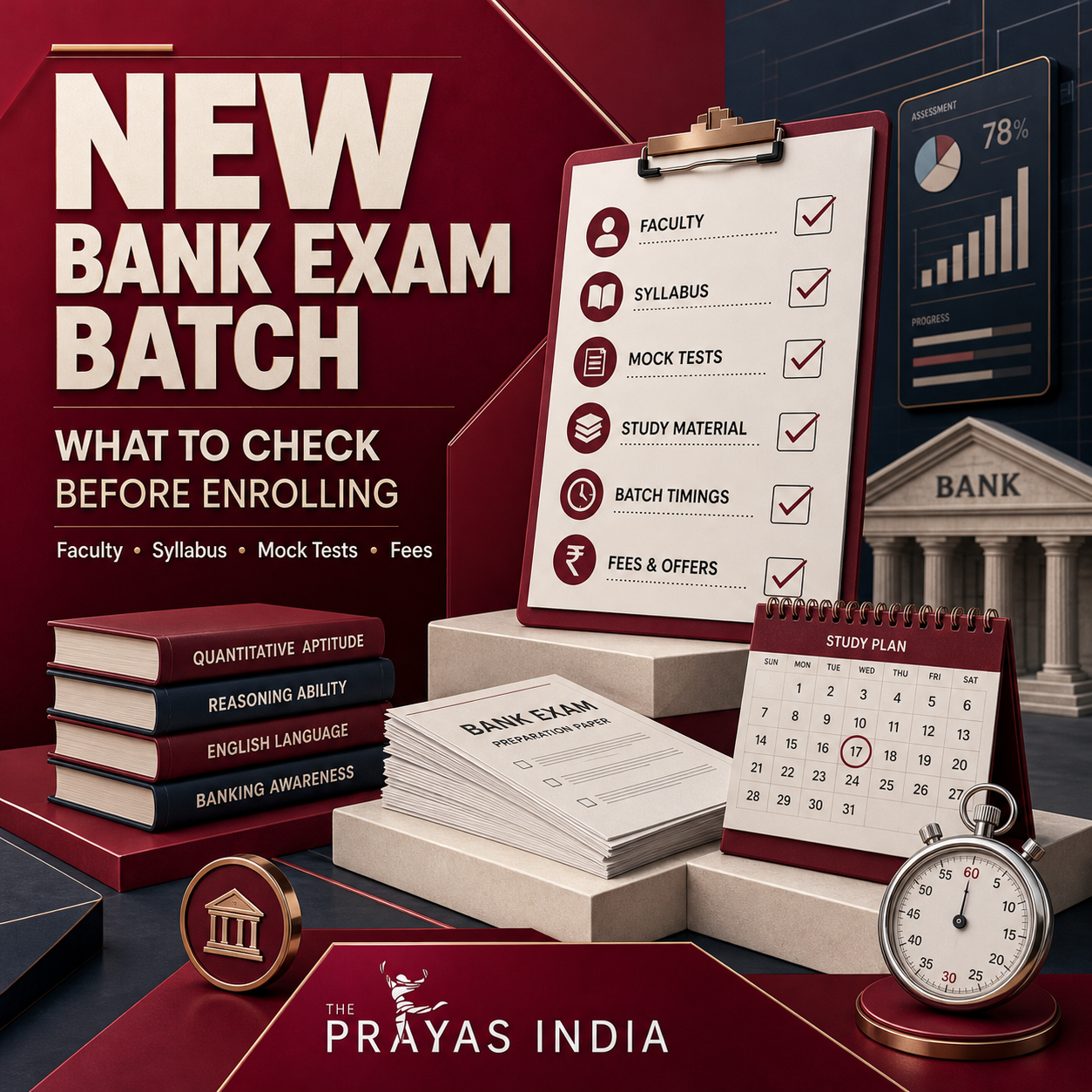
Is a new bank exam batch starting soon? Before enrolling, aspirants preparing for SBI PO, SBI Clerk, IBPS PO, IBPS Clerk and other banking recruitment examinations should carefully evaluate the course structure, faculty, syllabus coverage, mock tests, batch timings and overall learning support.
Joining a coaching institute can provide a structured preparation plan, but choosing a batch simply because admissions are open or a new session is starting may not be the right decision. Every aspirant has different strengths, weaknesses, study habits and time constraints. A course that works well for one candidate may not suit another.
For students in Bhandup, Mulund, Nahur and nearby areas of Mumbai, the decision may also involve travel time, class schedules and the ability to balance coaching with independent study.
This guide explains what to check before enrolling in a new bank exam batch, which questions to ask the institute, how to compare available options and how to determine whether a programme fits your preparation goals.
Why Is Choosing the Right Bank Exam Batch Important?
Banking examinations are competitive and typically require candidates to prepare across multiple areas, such as Quantitative Aptitude, Reasoning Ability, English Language and General or Banking Awareness, depending on the examination and stage.
A well-organised batch can help candidates follow a study schedule, learn concepts systematically, practise exam-style questions and identify areas that need improvement. However, attending classes alone is not enough. Regular revision, timed practice and performance analysis remain essential.
Before making a decision, consider three questions:
- Does the batch cover the examination I intend to take?
- Can I follow its schedule consistently alongside my other responsibilities?
- Will the course provide the academic support I need at my current preparation level?
Answering these questions first can help you shortlist suitable options rather than making a rushed decision.
1. Check Whether the Batch Covers Your Target Examination
The first step is to identify the examination for which you are preparing. A batch designed around one recruitment examination may not cover every requirement of another.
For example, candidates preparing for SBI PO may need a preparation plan aligned with the applicable preliminary and main examination stages, along with interview preparation where relevant. Aspirants targeting clerical recruitment should verify the current selection process and syllabus for their specific examination.
Before enrolling, confirm:
- Which banking examinations does the batch cover?
- Does the course include the relevant preliminary and main examination syllabus?
- Are all applicable subjects included?
- Is interview or other stage-specific guidance available if required?
- Will the teaching plan be updated if the official examination pattern changes?
Always check the latest official notification for your target examination. Do not assume that all bank exams follow the same syllabus, selection process or marking scheme.
2. Evaluate the Faculty and Teaching Approach
Faculty quality can make a significant difference to how effectively you understand difficult concepts. However, the number of years a teacher has worked or the claims made in promotional material should not be the only factors you consider.
Look for teaching that explains both the concept and its application to exam-style questions.
For Quantitative Aptitude, check whether the teaching approach covers fundamentals, calculation techniques and different question formats. For Reasoning Ability, find out whether concepts are explained step by step before students move to more complex puzzles. For English, assess whether the programme addresses comprehension, grammar and vocabulary in a structured manner.
Ask the institute whether a demo lecture or orientation session is available. This can help you evaluate the pace of teaching, clarity of explanations and opportunity to ask questions.
What to check: Choose a learning environment in which you can understand the concepts, practise them and clarify doubts rather than merely copy notes.
3. Understand the Complete Course Structure
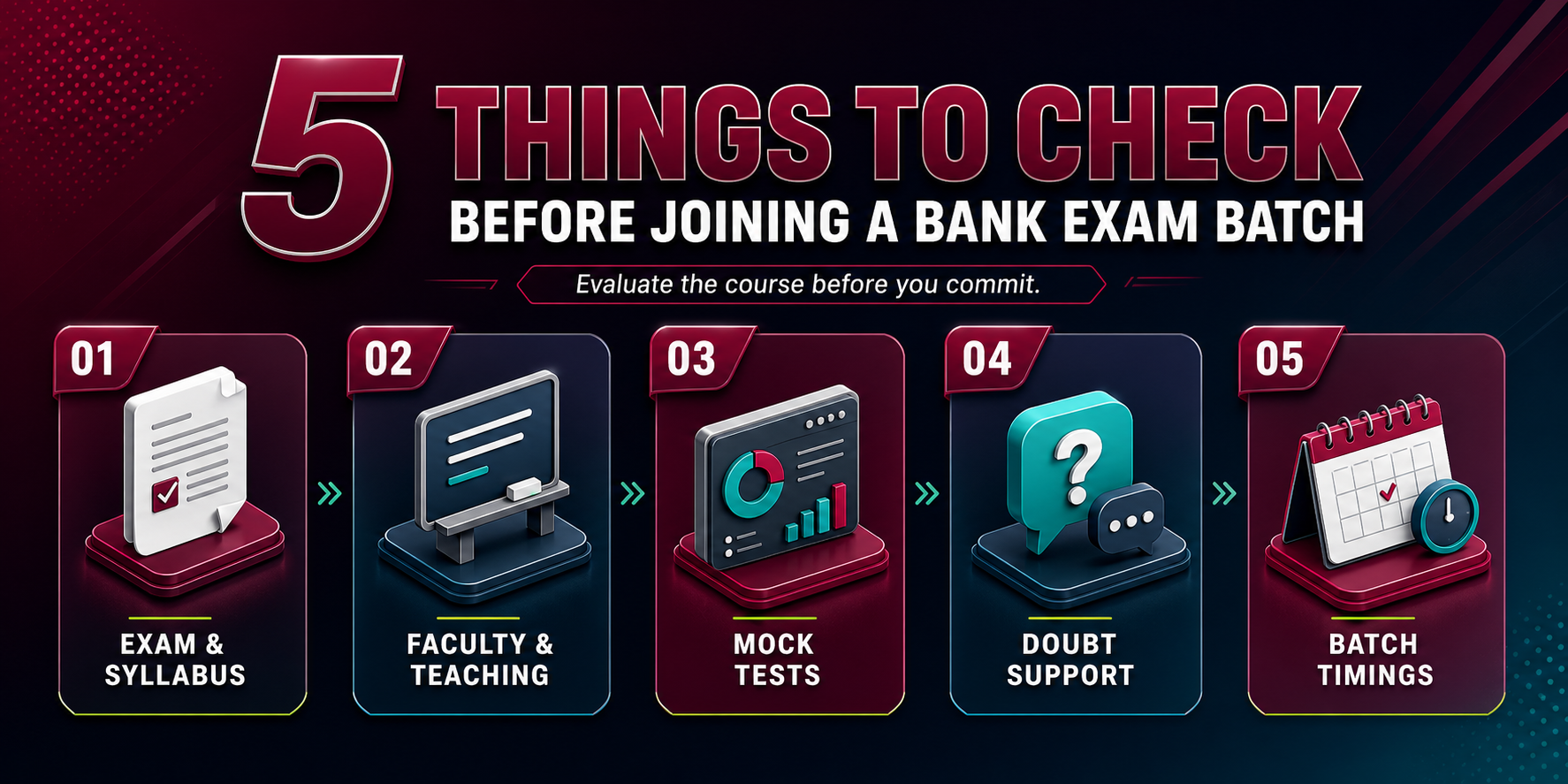
Before paying fees, request a clear explanation of the course plan. A batch may advertise extensive coverage, but you should understand how that coverage will be delivered.
- Check whether the course includes:
- Topic-wise concept classes.
- Practice questions after each topic.
- Sectional tests and full-length mock tests, where appropriate.
- Regular revision sessions.
- Doubt-clearing opportunities.
- Guidance on time management and question selection.
- Access to notes, practice material or recorded sessions, if offered.
Ask how the institute plans to complete the syllabus and whether sufficient time is allocated for revision and testing.
Also confirm what is included in the advertised course fee. Printed material, test series, additional classes or other services may be covered differently across programmes.
A transparent course structure makes it easier to understand what you are paying for and how the programme will support your preparation.
4. Check the Quality and Frequency of Mock Tests
Mock tests are an important part of bank exam preparation because they help candidates practise under timed conditions. However, simply having access to many tests does not guarantee better preparation.
Find out how the batch incorporates tests into its teaching schedule.
A useful programme should explain when students are expected to attempt sectional tests, when full-length mock tests become appropriate and how their performance will be reviewed.
Before enrolling, ask:
- How frequently are sectional and full-length tests conducted?
- Are the tests aligned with the relevant examination pattern?
- Will students receive performance reports or answer explanations?
- Is there guidance on analysing incorrect answers?
- Can students identify their weak topics from the test results?
Mock-test analysis is particularly valuable. If you repeatedly make calculation errors or spend too much time on a particular question type, your next study session should address that weakness.
Do not judge a batch solely by the number of tests advertised. Consider whether the testing process helps you learn from mistakes.
5. Ask How Doubts and Difficult Topics Are Handled
Even students who attend classes regularly may struggle with particular concepts. Some need additional practice in arithmetic, while others find complex reasoning sets or English comprehension difficult.
Before enrolling, understand how doubt-solving works.
Ask whether you can raise questions during class, whether separate doubt-clearing sessions are scheduled and how you can seek help if you do not understand a topic after the lesson.
Also find out whether missed classes can be covered through a recording, a supplementary session or another arrangement. Do not assume these services are available unless the institute confirms them.
A supportive learning environment should make it possible to address difficulties before they affect your progress across several topics.
6. Compare Batch Timings With Your Daily Routine
A course may have a strong academic structure, but it will be difficult to benefit from it if the timetable conflicts with your daily responsibilities.
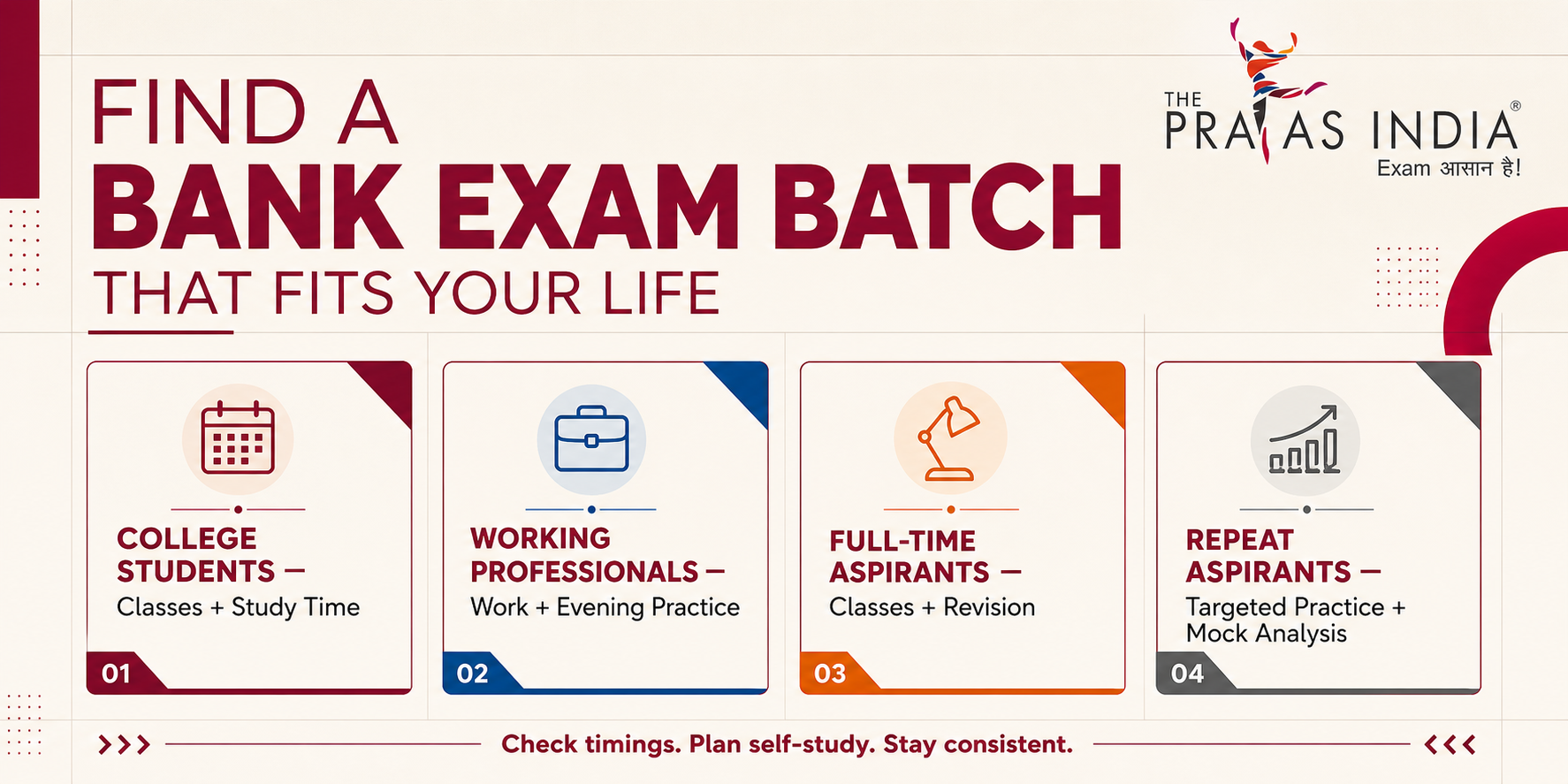
Students, working professionals and full-time aspirants may need different schedules.
Students, working professionals and full-time aspirants may need different schedules.
| Aspirant category | What to consider before enrolling |
|---|---|
| College students | Compatibility with lectures, assignments and examinations |
| Working professionals | Evening or weekend options, commute and energy levels |
| Full-time aspirants | Balance between classes, self-study, revision and mock tests |
| Beginners | Enough time to understand fundamentals and practise regularly |
| Repeat aspirants | Scope for targeted practice, revision and weak-area improvement |
Ask for the exact class timings, weekly schedule, expected duration of the programme and rules for missed sessions.
Remember that classroom hours are only one part of preparation. You will also need time for independent practice, revision and analysis.
7. Review Study Material and Practice Resources
Study material should support the teaching plan, not overwhelm you with unnecessary content.
Before enrolling, ask what resources are provided and how they are used during the course. Check whether the material includes topic-wise explanations, practice questions, exam-style exercises and solutions.
It is also worth understanding how current affairs and banking awareness are covered when they are relevant to your target examination.
- Look for these features:
- Clearly organised subject-wise material.
- Questions arranged by topic or difficulty.
- Explanations for important answers.
- Revision-friendly notes.
- Updated resources where examination requirements change.
- Clear guidance on which material to prioritise.
If the course provides online resources, ask how long you can access them and whether there are any restrictions. If printed material is included, clarify whether all subjects are covered in the stated fee.
Avoid assuming that a larger quantity of material automatically means better preparation. What matters is whether the resources are relevant, understandable and used consistently.
8. Understand the Fees and Payment Terms
Course fees are an important consideration, but the cheapest or most expensive option is not automatically the best.
Before making a payment, ask for a clear breakdown of the total cost and the services included.
Confirm:
- The complete course fee.
- Whether registration or material charges are separate.
- Whether the test series is included.
- Any additional charges for supplementary classes or services.
- Available payment schedules, if offered.
- The refund, cancellation or batch-transfer policy.
- The validity period for online access, where applicable.
Request the applicable terms in writing and retain your receipt or payment confirmation.
Be cautious about making a rushed payment solely because a discount or admission offer is described as ending soon. Take enough time to compare the course structure, schedule and learning support before committing.
9. Check the Batch Size and Individual Attention
Batch size can influence how comfortable students feel asking questions and interacting with the faculty. However, class size alone does not determine teaching quality.
A larger batch may work well when lessons are organised and students have reliable doubt-clearing options. A smaller batch may offer more opportunities for interaction, but you should still evaluate the teaching method and available practice support.
Ask the institute how students can get their doubts resolved, whether individual progress is reviewed and whether additional guidance is available for learners who fall behind.
If possible, attend a demo session or speak to current or former students. Focus on specific feedback about teaching clarity, schedule consistency and academic support rather than relying only on general praise.
10. Verify the Institute’s Location and Accessibility
For students considering classroom coaching in Bhandup or nearby parts of Mumbai, the institute’s location can affect attendance and daily study time.
A convenient centre may reduce commuting pressure, but location should be considered alongside teaching quality, course structure and batch timings.
Before enrolling, verify the centre’s exact address, transport options, class schedule and whether the advertised batch is conducted at that location.
If you live in Bhandup, Mulund, Nahur or Kanjurmarg, estimate your regular travel time before selecting a batch. A timetable that leaves you exhausted after commuting may be difficult to sustain over several months.
Also confirm whether the programme is classroom-based, online or hybrid. Do not assume that every course is available in every format.
11. Evaluate Student Feedback Carefully
Student feedback can help you understand what an institute’s learning experience is like, but reviews should be assessed thoughtfully.
Read specific comments about faculty, syllabus coverage, test quality, doubt resolution and timetable management. Look for recurring patterns rather than making a decision based on one unusually positive or negative review.
You can also ask the institute for details about its teaching approach and student support. If you speak to a current student, ask about their day-to-day experience instead of relying only on claims about results.
When evaluating selection or success claims, check what the figures actually represent and whether the information is clearly explained. Past results may offer context, but they cannot guarantee an individual candidate’s outcome.
The most useful question is whether the course offers a learning environment that suits your requirements.
12. Questions to Ask Before Paying the Admission Fee
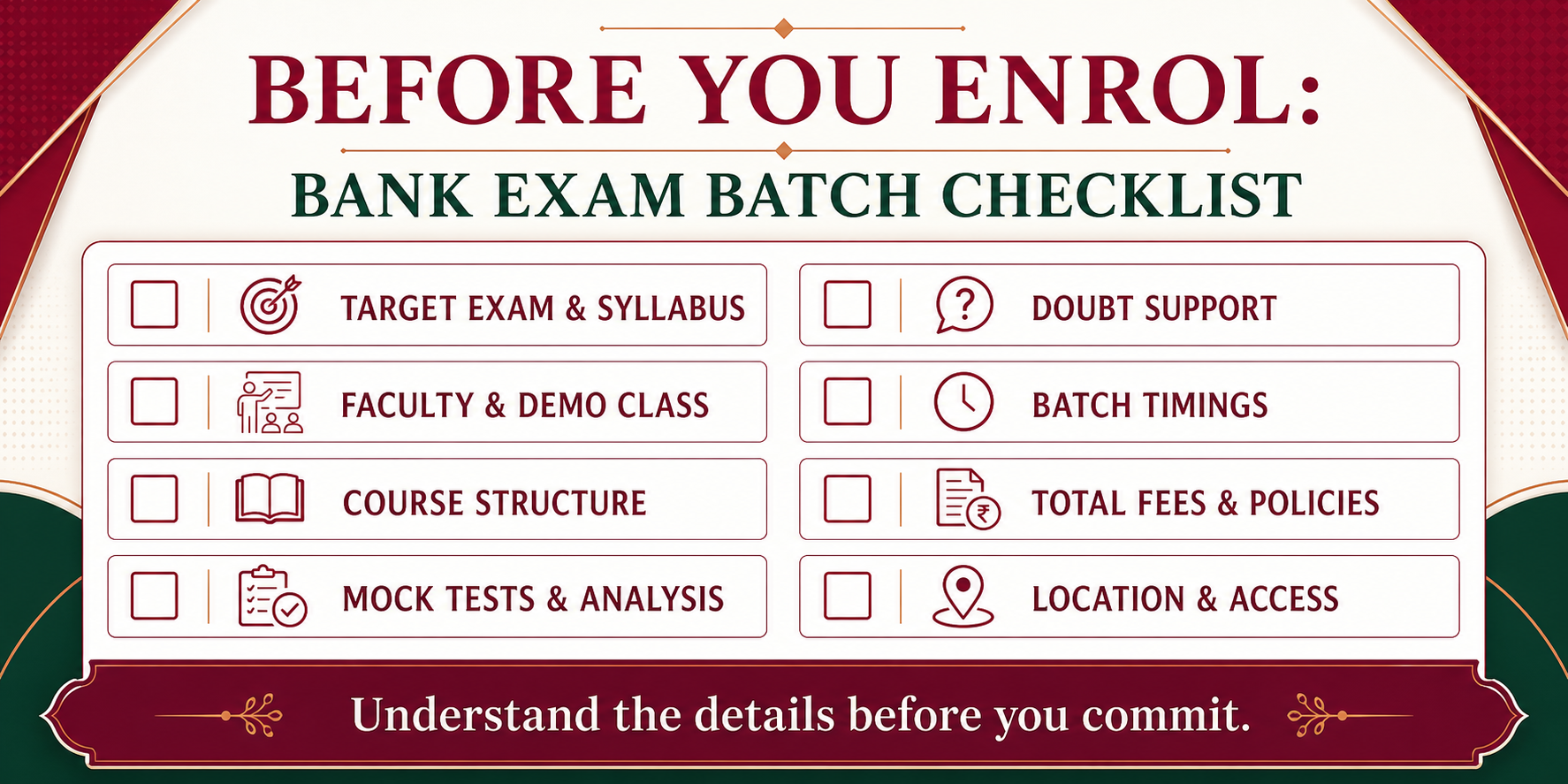
Before confirming your seat in a new bank exam batch, use the following checklist.
If important information remains unclear, ask for clarification before making a payment. A clear understanding of the programme can help you avoid mismatched expectations later.
How to Choose a Bank Exam Coaching Batch in Bhandup
If you are looking for bank exam coaching in Bhandup, start by identifying what you need most from a programme. Beginners may prioritise foundational teaching and a structured timetable, while repeat aspirants may prefer targeted practice, revision and detailed mock-test analysis.
When comparing local coaching options, consider:
- Whether the batch covers your target examination.
- Faculty experience and clarity of teaching.
- The availability of practice tests and revision.
- Batch timings and commute.
- The level of doubt-solving support.
- Total fees and the services included.
- The course duration and admission terms.
The Prayas India aspirants can enquire about available banking exam preparation programmes in Bhandup and discuss whether the course structure, schedule and learning support suit their goals.
Before enrolling, confirm the current batch availability, course details, timings and fees directly with the institute. Availability and programme features may vary by batch.
Common Mistakes to Avoid When Joining a New Bank Exam Batch
Choosing only on the basis of discounts: A lower fee can be attractive, but compare the complete course structure and included resources before deciding.
Ignoring the official syllabus: Confirm that the programme is relevant to your chosen examination and the current recruitment requirements.
Expecting coaching to replace self-study: Classes provide structure and guidance, but independent practice and revision remain essential.
Overlooking batch timings: A schedule that repeatedly conflicts with work, college or commuting may affect attendance and preparation.
Not checking the fee terms: Understand what is included, which charges are additional and what policies apply before paying.
Trusting unverified result claims: Ask for clear context about selection claims and evaluate the programme on its actual teaching and support.
Enrolling without understanding the teaching approach: A demo class, where available, can help you assess whether the faculty’s explanations suit your learning style.
Conclusion: Make an Informed Decision Before Enrolling
Joining a new bank exam batch can be a useful step towards a more organised preparation plan, provided the programme matches your examination goals, current skill level, schedule and budget.
Before enrolling, check the syllabus coverage, faculty, course structure, mock-test system, doubt support, study material, fees and admission policies. Aspirants who prefer classroom coaching should also consider location and travel time, particularly when balancing classes with independent study.
For candidates preparing for SBI PO, SBI Clerk, IBPS PO, IBPS Clerk and other banking recruitment examinations, the right batch should help make preparation more systematic—not create unrealistic expectations.
If you are exploring bank exam coaching in Bhandup, contact The Prayas India to enquire about available batches and compare the course details with your requirements.
Choose carefully, prepare consistently and make every study session count.
Frequently Asked Questions (FAQs)
1. What should I check before joining a new bank exam batch?
Check syllabus coverage, faculty, teaching methods, mock tests, doubt-clearing support, study material, batch timings, course fees and admission policies before enrolling.
2. Is coaching necessary for bank exam preparation?
Coaching is not compulsory for every aspirant. Some candidates prepare through self-study, while others benefit from structured classes, expert guidance, regular practice and doubt-solving support.
3. Which subjects should a bank exam batch cover?
Depending on the target examination and stage, preparation may include Quantitative Aptitude, Reasoning Ability, English Language, General Awareness and Banking Awareness. Confirm the current official syllabus for your examination.
4. Should I attend a demo class before enrolling?
If a demo class is available, attending it can help you assess the clarity of teaching, pace of instruction, explanation style and opportunities to ask questions.
5. How important are mock tests in a bank exam batch?
Mock tests help aspirants practise under timed conditions, evaluate speed and accuracy, and identify weak areas. Reviewing mistakes after each test is as important as attempting it.
6. How can working professionals choose the right bank coaching batch?
Working professionals should compare class timings, commute, course duration and missed-class arrangements. They should also reserve enough time for self-study, revision and mock-test analysis.
7. What should I ask about bank coaching fees?
Ask for the total fee, registration charges, included study materials and tests, any additional costs, payment terms, refund policy and course validity. Request the applicable terms in writing.
8. Where can I enquire about bank exam coaching in Bhandup?
You can contact The Prayas India to enquire about available bank exam preparation batches, course structure, timings and fees in Bhandup. Confirm current availability directly with the institute.
Looking for a New Bank Exam Batch in Bhandup?
Preparing for SBI PO, SBI Clerk, IBPS PO or IBPS Clerk? Connect with The Prayas India to enquire about available batches, course structure, class timings and preparation support.
THE PRAYAS INDIA — BHANDUP
D-322, Neptune Magnet Mall, Lal Bahadur Shastri Marg, near Metro, Ganesh Nagar, Bhandup West, Mumbai, Maharashtra 400078
Call Now: +91-7710013217 Enquire on WhatsApp
Get Directions to Bhandup Centre
Contact the institute to confirm current batch availability, timings, fees and course details before enrolling.
WordPress tip: Add the three infographics at the exact locations marked in the article. Keep each infographic’s visual direction distinct—the first uses midnight blue and teal, the second uses cobalt and burnt orange, and the third uses emerald and sand. This gives the article visual variety without making the overall page feel inconsistent.