Pandit Madan Mohan Malaviya: Educationist-Nationalist and Architect of Ethical Public Life
- GS Paper 1: Modern Indian History (National Movement, Education, Social Reform)
- GS Paper 4: Ethics – Values, Leadership, Moral Courage, Education Ethics
- Prelims: INC sessions, newspapers, institutions, personalities
- Optional (History): National Movement, Social Reform Movements, Education in Colonial India
Introduction
Pandit Madan Mohan Malaviya (1861–1946) was one of the most respected figures of the Indian national movement, revered with the honorific title “Mahamana” for his moral authority, intellectual stature, and selfless public service. A nationalist leader, educationist, and social reformer, Malaviya represented a tradition of constitutional nationalism rooted in ethical conduct and educational regeneration.
Unlike leaders primarily remembered for mass agitation or revolutionary methods, Malaviya’s contribution lay in institution-building, consensus-oriented politics, and value-based nationalism. He played a significant role in the Indian National Congress (INC) and left an enduring legacy through the establishment of the Banaras Hindu University (BHU), which became a cornerstone of India’s modern educational renaissance. Within the broader freedom struggle, Malaviya stands as a symbol of intellectual nationalism and moral leadership.
Early Life and Intellectual Formation
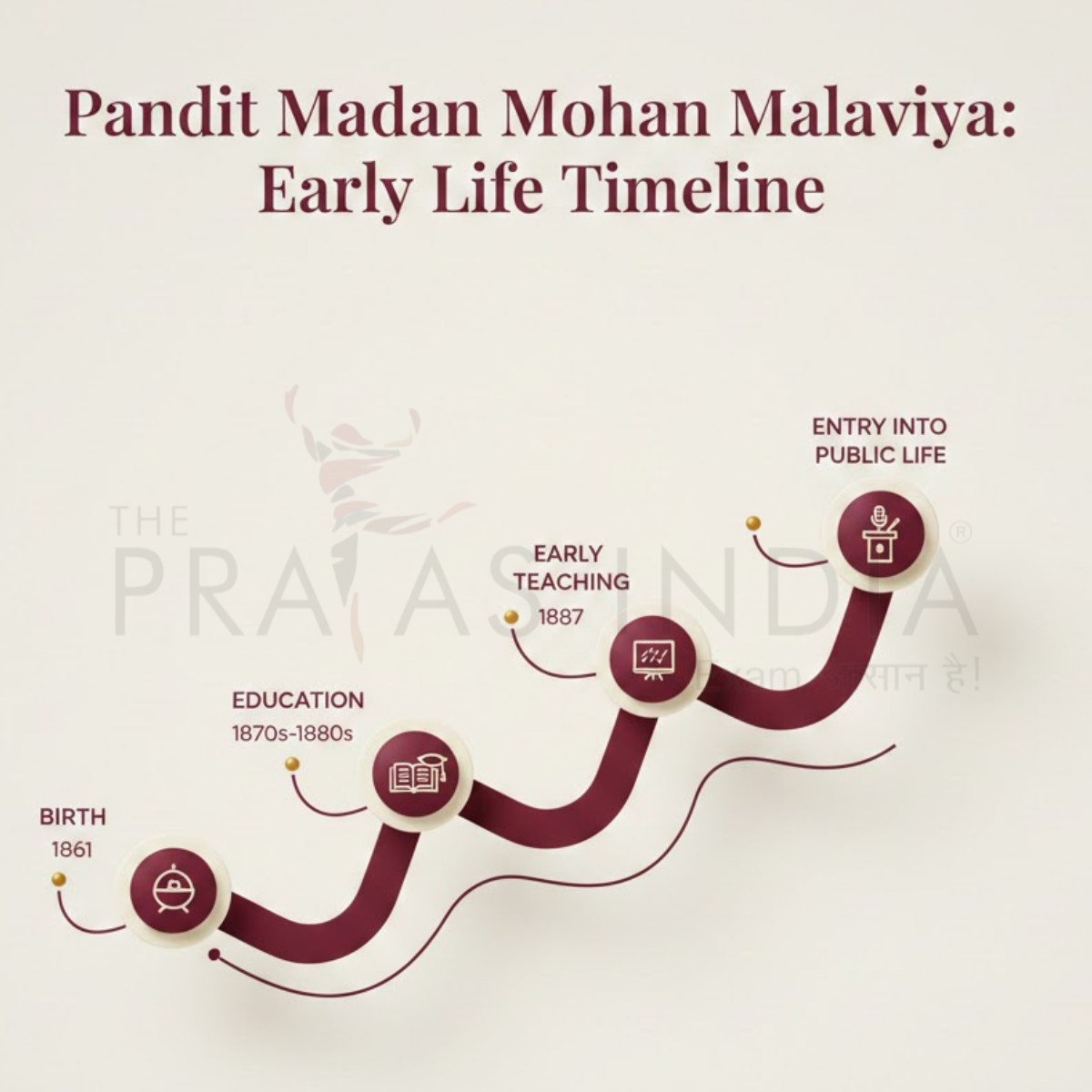
Pandit Madan Mohan Malaviya was born in 1861 at Allahabad into a family deeply rooted in Sanskrit learning and religious scholarship. His early exposure to Indian scriptures, philosophy, and classical traditions shaped his ethical worldview and cultural confidence. At the same time, he received modern education at Allahabad University, where he was influenced by Western liberal ideas and constitutional thought.
This synthesis of Indian cultural values and modern education became the defining feature of Malaviya’s intellectual formation. His early involvement in teaching, writing, and public speaking gradually drew him into nationalist politics, where he sought to reconcile cultural pride with modern nation-building.
Role in the Indian National Congress
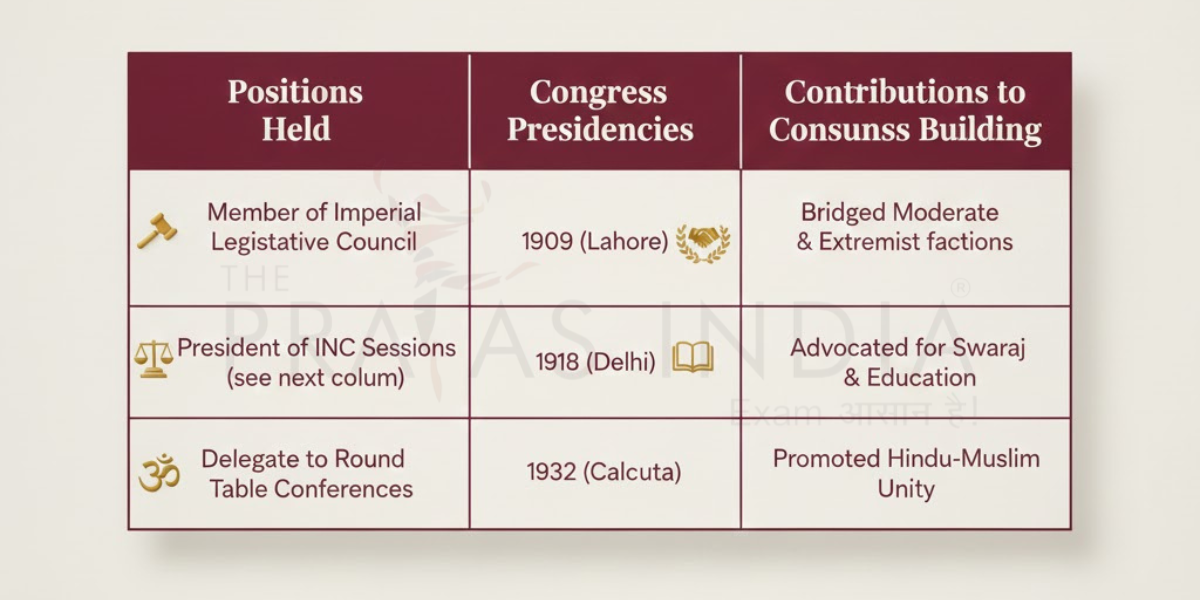
Pandit Madan Mohan Malaviya was closely associated with the Indian National Congress from its early years and remained an influential figure for several decades. He served as President of the Congress multiple times, reflecting the trust he commanded across ideological lines.
Position during the Moderate–Extremist Phase
During the period of ideological division between Moderates and Extremists, Malaviya adopted a balancing role. While he broadly aligned with constitutional and reformist methods, he also appreciated the need for greater assertiveness in demanding self-government. His politics aimed at maintaining unity within the Congress, particularly during moments of internal strain.
Contribution to Consensus Building
Malaviya consistently worked to bridge ideological differences, believing that national unity was essential for confronting colonial rule. His approach helped sustain institutional continuity within the Congress during a period of ideological churn.
Founder of Banaras Hindu University (BHU)
Malaviya’s most enduring contribution to India lies in his role as the founder of Banaras Hindu University (1916), one of Asia’s largest and most influential residential universities.
Vision Behind BHU
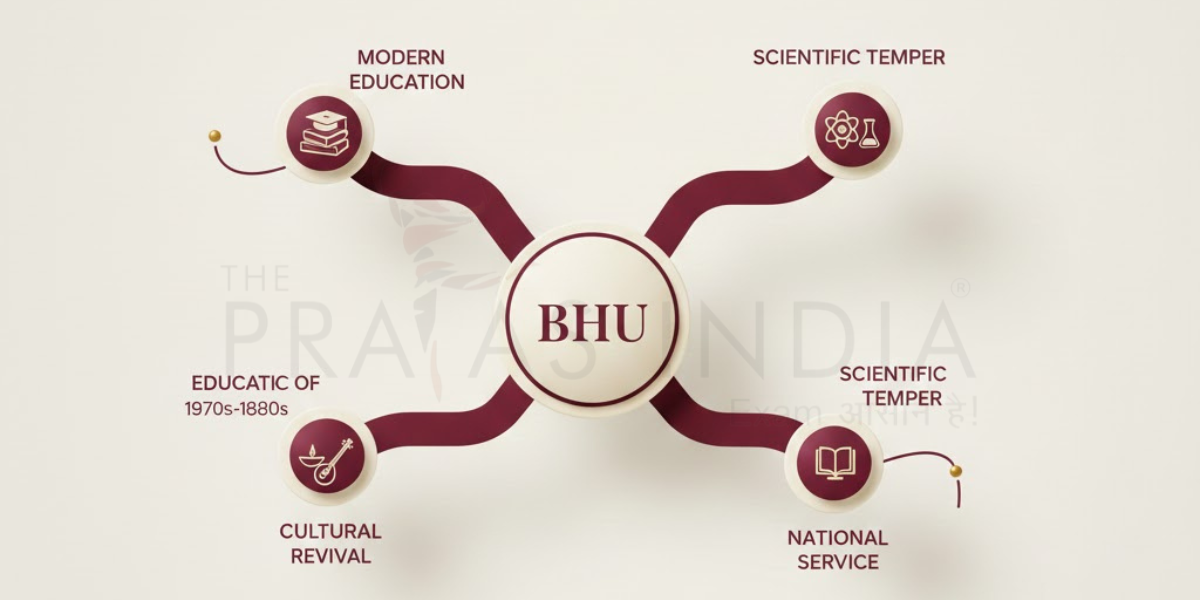
Malaviya envisioned BHU as a national university that would combine modern scientific education with India’s cultural and ethical traditions. He believed that political freedom required intellectual self-confidence and moral grounding, which could only be achieved through national education.
Objectives of BHU
- Promotion of scientific temper and modern disciplines
- Revival and respect for Indian culture and knowledge systems
- Creation of disciplined, socially responsible citizens
Significance
BHU became a model of education as nation-building, producing generations of scholars, administrators, and leaders who contributed to independent India.
Educational and Cultural Nationalism
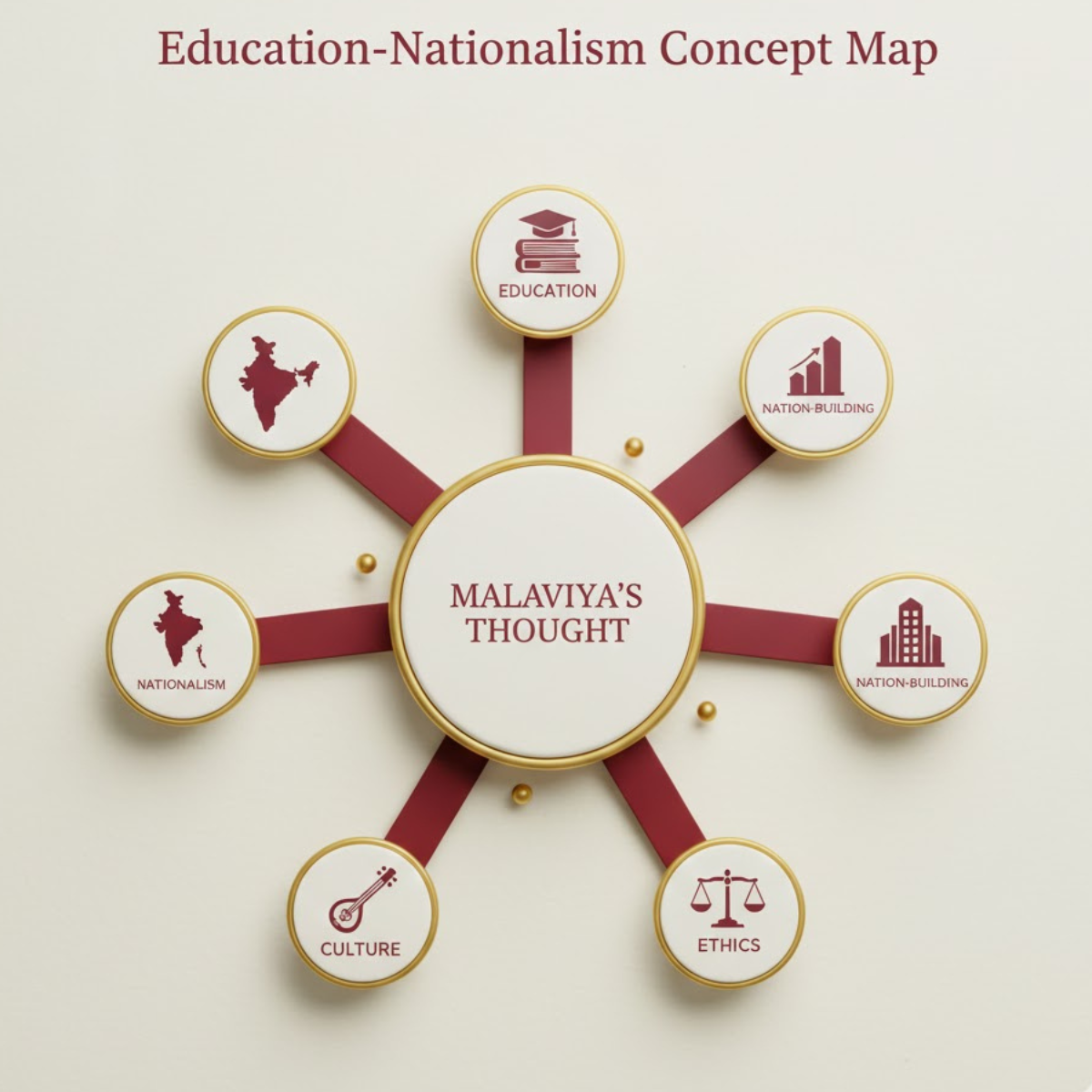
Pandit Madan Mohan Malaviya believed that education was the foundation of nationalism. For him, political freedom without intellectual and moral regeneration would remain incomplete.
Value-Based Education
Malaviya emphasized education that inculcated ethical conduct, discipline, and social responsibility, rather than mere technical skills.
Promotion of Indian Languages and Culture
He advocated the use of Indian languages, respect for classical learning, and cultural self-confidence, viewing cultural alienation as a major legacy of colonial rule.
Education as Nation-Building
Malaviya’s nationalism was thus constructive rather than confrontational, focusing on building institutions that would sustain freedom in the long run.
Social Reform and Ethical Outlook
Malaviya’s approach to social reform was guided by ethical persuasion rather than radical confrontation. He stressed social harmony, moral upliftment, and unity across communities.
Views on Social Harmony
He advocated the reduction of social divisions and believed that moral reform was essential for national regeneration.
Ethical Conduct in Public Life
Malaviya consistently emphasized personal integrity, restraint, and service as the hallmarks of public leadership. His life itself became a model of ethical politics, earning him widespread respect across ideological lines.
Journalism and Public Communication
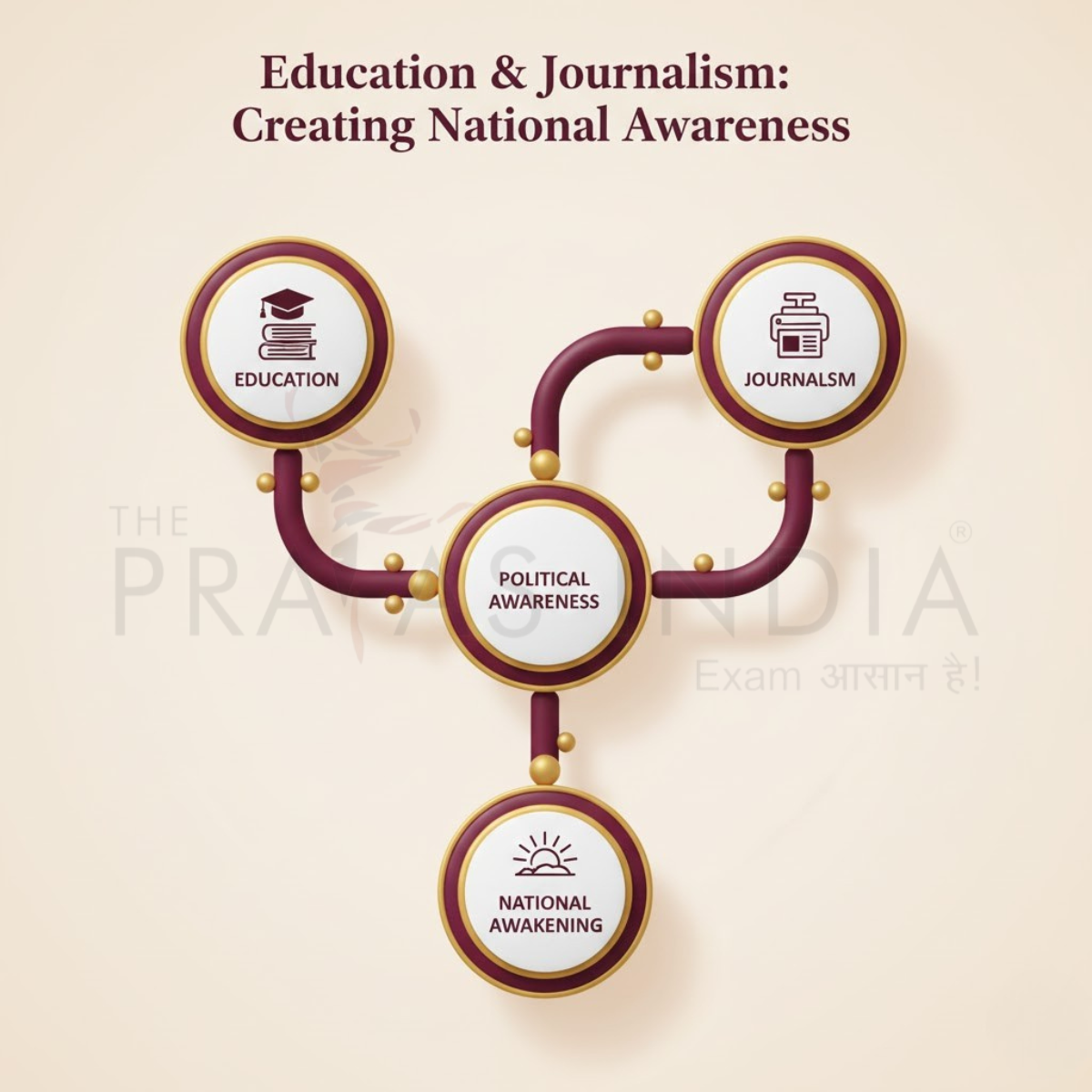
Malaviya effectively used journalism as an instrument of national awakening. He edited and contributed to nationalist newspapers, using them to educate the public on political rights, social issues, and ethical responsibilities.
Role of Media
Through responsible journalism, Malaviya sought to create an informed and morally conscious public opinion, avoiding sensationalism or incitement.
Political Ideology and Methods
Malaviya remained committed to constitutional methods, dialogue, and reform throughout his political career. He believed that sustained pressure through institutions, public opinion, and moral legitimacy would ultimately compel colonial concessions.
Relationship with Other Leaders
He maintained respectful relations with leaders across the ideological spectrum, including Moderates, Extremists, and later Gandhian nationalists. His politics was marked by conciliation rather than confrontation.
Contributions to National Integration
One of Malaviya’s understated yet vital contributions was his role in national integration. At a time when ideological and social divisions threatened the unity of the movement, he emphasized:
- Unity over factionalism
- Ethics over expediency
- Institution-building over personality-centric politics
His influence helped shape a political culture that valued restraint, dialogue, and long-term national interest.
Critical Evaluation
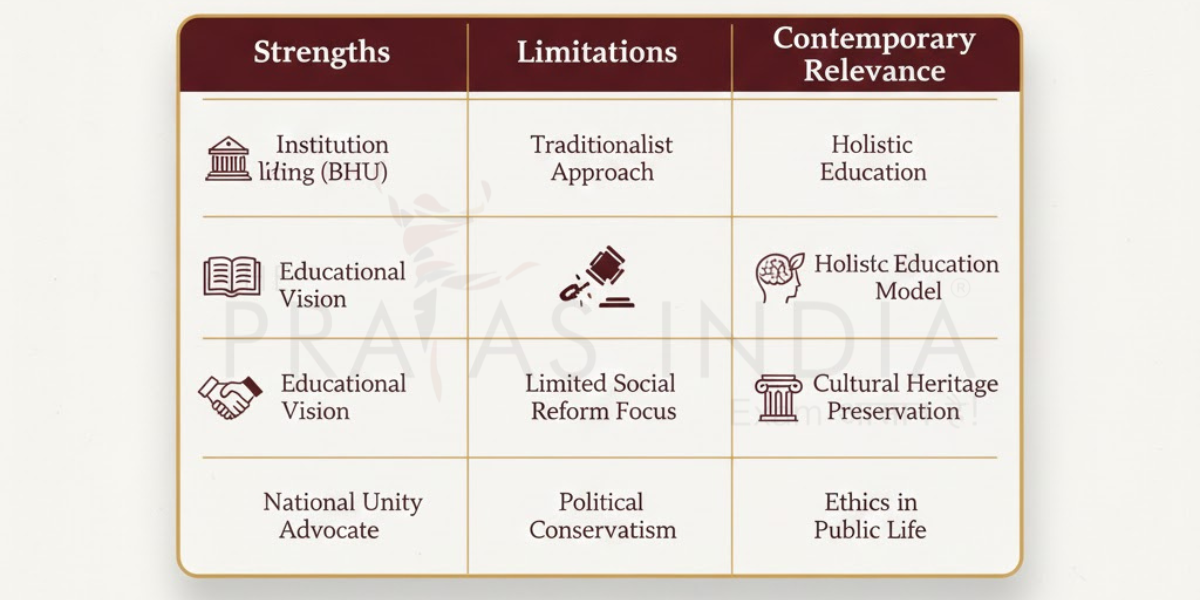
Strengths
- Pioneer of national education
- Ethical and consensus-oriented leadership
- Long-term institution-building vision
Limitations and Criticisms
- Overreliance on constitutional methods in a coercive colonial context
- Limited engagement with mass agitation compared to later leaders
- Social reform approach seen by some as cautious
Contemporary Relevance
In an era of polarized politics, Malaviya’s emphasis on ethical public life, dialogue, and education-led nation-building remains highly relevant.
Frequently Asked Questions (FAQs) on Pandit Madan Mohan Malaviya – UPSC GS-I
Q1. Why is Pandit Madan Mohan Malaviya called “Mahamana”?
He was given the title Mahamana due to his moral authority, selfless public service, educational vision, and ethical leadership within the national movement.
Q2. What was Malaviya’s role in the Indian National Congress?
He was a senior Congress leader and served as its President multiple times. He played a key role in maintaining unity and consensus during ideological divisions within the Congress.
Q3. How did Malaviya differ from Extremist leaders like Tilak?
Malaviya relied primarily on constitutional methods, dialogue, and institution-building, whereas Extremists emphasized mass agitation and direct resistance.
Q4. Why is Banaras Hindu University considered Malaviya’s greatest contribution?
BHU embodied his vision of national education combining modern science with Indian cultural values, making it a landmark in India’s educational renaissance.
Q5. What was Malaviya’s idea of nationalism?
His nationalism was educational, ethical, and cultural, focusing on moral upliftment, unity, and long-term nation-building rather than confrontation.
Q6. Did Malaviya support social reform?
Yes, but through ethical persuasion and gradual reform, emphasizing social harmony rather than radical social transformation.
Q7. How did Malaviya contribute through journalism?
He used nationalist newspapers to spread political awareness, promote ethical public life, and educate citizens on rights and responsibilities.
Q8. What criticisms are associated with Malaviya’s approach?
Critics argue that his reliance on constitutional methods was inadequate against colonial repression and that his social reform agenda was cautious.
Q9. Why is Malaviya important for UPSC GS-I?
He represents moderate nationalism, educational nationalism, and ethical leadership, helping answer questions on ideological diversity in the freedom struggle.
Q10. What is Malaviya’s relevance in contemporary India?
His emphasis on ethical public life, education-led development, and dialogue remains relevant in strengthening democratic institutions today.
Conclusion
Pandit Madan Mohan Malaviya occupies a distinctive place in India’s freedom struggle as an educationist-nationalist and moral statesman. While he may not be remembered for dramatic mass movements, his contribution to institution-building, ethical politics, and educational renaissance has had a lasting impact on modern India. As the founder of BHU and a respected Congress leader, Malaviya demonstrated that national freedom is sustained not merely by protest, but by ideas, institutions, and values. His legacy continues to inform India’s democratic and educational ethos.