National Song Before National Anthem — New Rules 2026 Explained
In February 2026, the Government of India — through the Union Ministry of Home Affairs (MHA) — issued a fresh set of guidelines and protocols governing the official rendering of India’s National Song, “Vande Mataram”, in ceremonial and public observances. The main thrust of these new rules is that “Vande Mataram” must be played or sung before the National Anthem (“Jana Gana Mana”) whenever both are performed, with a uniform protocol to be followed at official functions, schools, and other important national events.
These new directives represent a significant update in how national symbols are observed in India, reaffirming the historical and cultural importance of the National Song and standardising ceremonial practices across institutions.
Background: National Song and National Anthem
India has two distinct musical symbols of national identity:
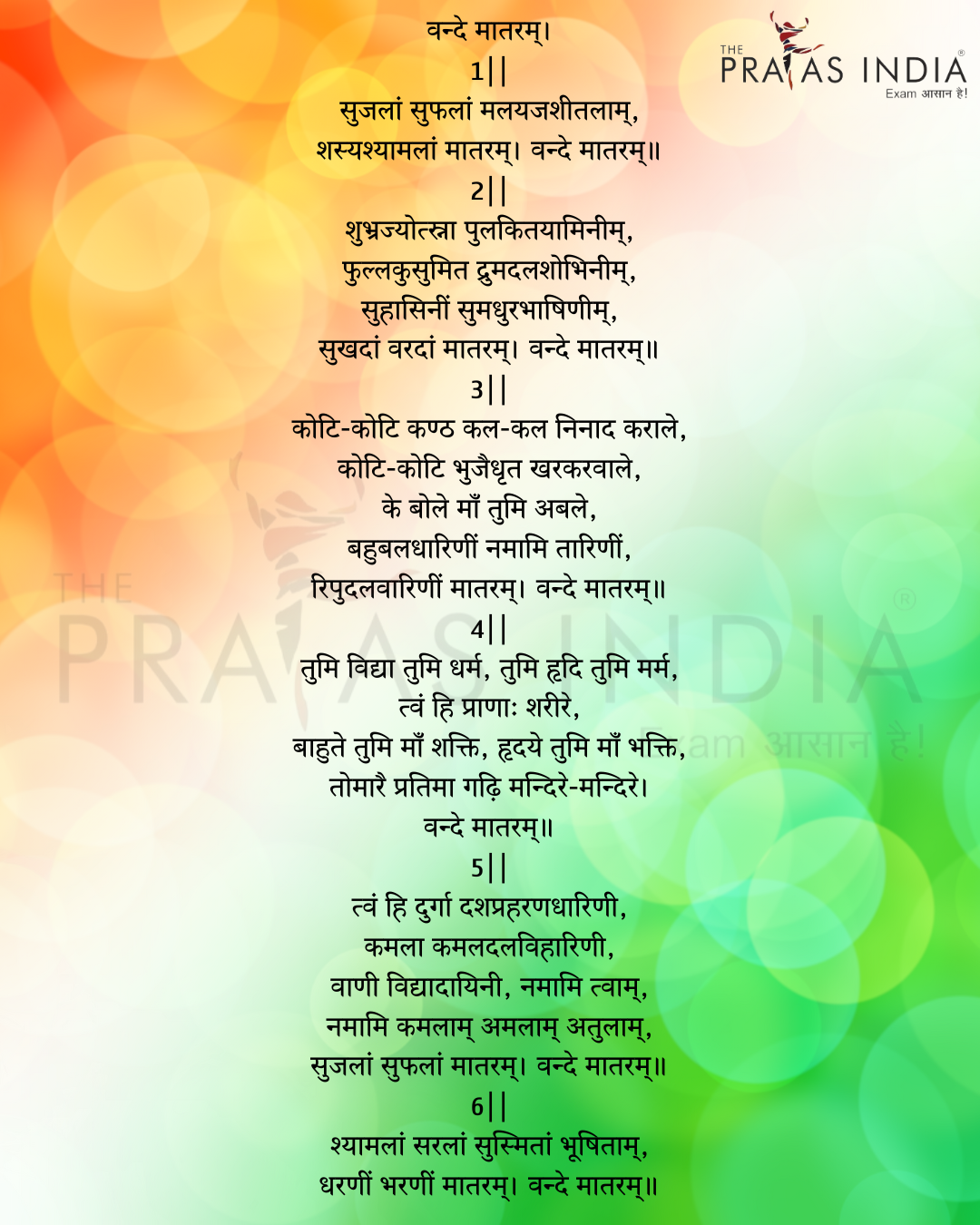
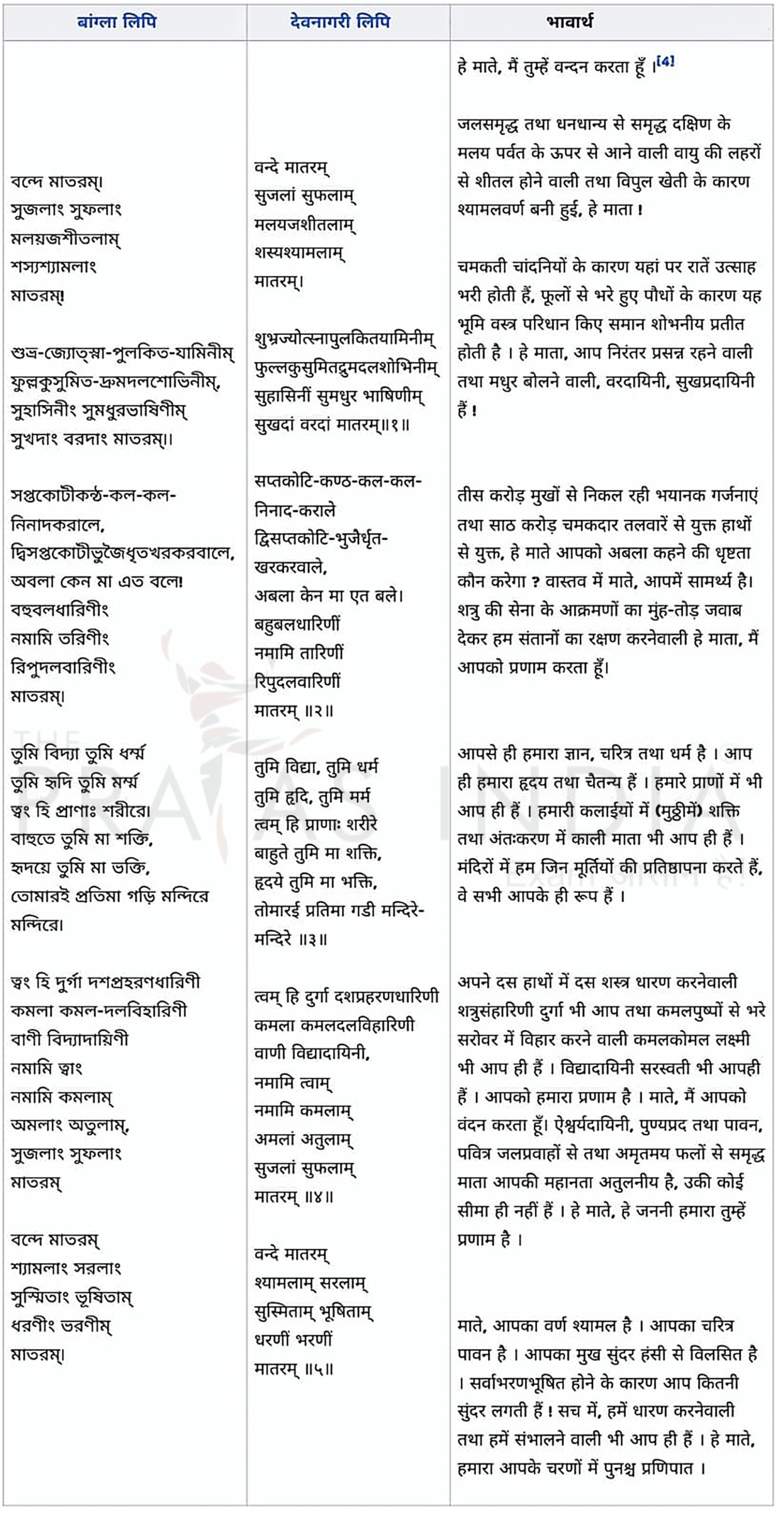
- “Vande Mataram” — designated as the National Song. Written by Bankim Chandra Chattopadhyay in the late 19th century, it became a rallying cry during the freedom movement and was formally adopted as the National Song.
- “Jana Gana Mana” — adopted as the National Anthem. Written by Rabindranath Tagore, it represents the unity and diversity of the Republic of India.
Traditionally, “Jana Gana Mana” has been the more widely prescribed symbol in official protocols. Although “Vande Mataram” has long been part of ceremonial occasions, its positioning and rendition had lacked a uniformly defined sequence. This changed with the MHA’s new guidelines in January–February 2026.
What the 2026 Rules Say
1. “Vande Mataram” Must Precede the National Anthem
The core of the new protocol is that whenever the National Song (“Vande Mataram”) and the National Anthem (“Jana Gana Mana”) are sung or played together, the National Song must be rendered first.
This applies widely across:
- Government and public events
- Official ceremonies
- School assemblies
- Medals and civilian award ceremonies
- State functions involving the President, Governors, or other dignitaries
2. Full Six Stanzas of “Vande Mataram” Are Now Mandatory
The official version of the National Song is defined as all six stanzas, comprising about 3 minutes and 10 seconds of performance time. This is a departure from previous practice, where usually only the first stanza or first two stanzas were rendered.
This reinstates the complete original composition by Bankim Chandra Chattopadhyay.
3. Audience Must Stand to Attention
Under the guidelines, all persons present at an event where “Vande Mataram” is performed must stand to attention — similar to the protocol followed for the National Anthem.
An exception is made for film screenings, newsreels, or documentaries where standing could disrupt viewing or cause confusion; in such cases, standing is not required.
4. Specific Occasions for Mandatory Rendition
The MHA directive lists numerous instances where the National Song must be performed before the anthem:
- Unfurling of the National Flag
- Arrival and departure of the President or Governors at formal functions
- Civil investiture and award ceremonies
- Official public and ceremonial events
- School assemblies and functions
The guidelines also encourage mass community singing at appropriate occasions, supported by printed lyrics or audio arrangements where needed.
Rationale Behind the New Rules
Commemoration of the National Song
The timing of the rule’s issuance coincides with the 150th anniversary of “Vande Mataram”, which was composed in the mid–1870s and became a key symbol during India’s struggle for independence.
Standardising Protocol
Previously, there was no uniform national directive on the sequence of “Vande Mataram” and the anthem. The 2026 guidelines aim to create clarity and consistency across all government and public functions.
Symbolic Respect
By placing the National Song before the National Anthem in official ceremonies, the government intends to emphasize the historical and patriotic resonance of “Vande Mataram” alongside the existing reverence for the anthem.
Implications of the New Rules
For Schools and Institutions
Educational institutions are encouraged to begin assemblies with the National Song followed by the anthem, instilling early appreciation for national symbols.
For Official Functions
Government departments and ministries must update event protocols to incorporate the new sequence and stanza requirements. Performance logistics — including audio arrangements — will need to align with the fixed duration and full rendition.
For Cultural Observances
The wider application of the National Song in cultural or ceremonial programmes may influence public perception and ceremonial traditions.
Controversies and Public Debate
The new rules have sparked debate across political and social spheres:
- Some political parties and leaders have criticised the mandate, arguing that mandating the full version may politicise cultural symbols or place undue compulsion on institutions.
- Religious and community groups have raised concerns about the inclusiveness of requiring specific symbolic renditions, especially when certain stanzas contain devotional imagery.
- Supporters of the guidelines argue that they reaffirm national pride and heritage, and correct historical omissions in official practices.
The discussion reflects broader debates about national identity, tradition, and constitutional secularism in contemporary India.
Conclusion
The 2026 National Song rules represent one of the most significant protocol changes in recent years concerning India’s national symbols. By making “Vande Mataram” mandatory before the National Anthem, with all six original stanzas and standing protocol, the government has created a uniform ceremonial sequence for official events, schools, and public observances. These changes are not just procedural; they also carry historical and cultural significance, reinforcing the place of the National Song in India’s civic life.
As institutions adapt to these guidelines, debates and discussions are likely to continue, reflecting the complex interplay between tradition, modernity, and national consciousness in India.
National Anthem Government Order 2026
FAQs
1) What is the new rule about the National Song and National Anthem in 2026?
The 2026 MHA guidelines state that whenever both are performed at an event, “Vande Mataram” must be rendered before “Jana Gana Mana.”
2) Is it compulsory to play Vande Mataram before the National Anthem in every event?
It is mainly applicable in government functions, schools, official ceremonies, and public institutions where both are included in the programme.
3) How many stanzas of Vande Mataram must be sung as per the 2026 guidelines?
The guidelines mention that the full six stanzas of “Vande Mataram” should be rendered as the official version in prescribed events.
4) What is the total duration of the full Vande Mataram?
The full version of “Vande Mataram” is approximately 3 minutes 10 seconds.
5) Is standing compulsory during Vande Mataram like the National Anthem?
Yes, the guidelines recommend that people should stand in attention during the National Song, similar to the protocol for the National Anthem.
6) Who issued the new rules regarding Vande Mataram in 2026?
The new protocol was issued by the Ministry of Home Affairs (MHA), Government of India.
7) Why were these new guidelines introduced?
The main objective is to standardise the protocol across institutions and reaffirm the historical significance of “Vande Mataram” in national ceremonies.
8) Is this topic important for UPSC CSE 2026?
Yes, it is important for Prelims (polity + national symbols) and Mains GS-2 (governance + constitutional values).