Attitude and Aptitude: Foundations of Ethical Behaviour and Effective Public Administration
- GS Paper 4: Ethics and Human Interface, Attitude, Aptitude, Emotional Intelligence
- GS Paper 1: Indian Society (values, social conditioning)
- Prelims: Ethics terminology, conceptual clarity
- Optional (Philosophy / Sociology / PSIR): Human Behaviour, Value Systems, Decision-Making
Introduction
Human behaviour in both personal and professional spheres is shaped not merely by knowledge, but by deeper psychological constructs such as attitude and aptitude. While aptitude determines what an individual is capable of doing, attitude determines how and why an individual chooses to act in a given situation.
In the context of public service and governance, attitude and aptitude acquire special significance. Civil servants are entrusted with discretionary power, public resources, and citizen welfare. Their effectiveness and ethical conduct depend not only on technical competence but also on values, mindset, and moral orientation.
Thus, attitude and aptitude together form the ethical backbone of public administration, directly influencing decision-making, service delivery, and trust in governance institutions.
Conceptual Understanding
Attitude
Meaning and Definition
Attitude refers to a relatively enduring organisation of beliefs, feelings, and behavioural tendencies towards an object, person, issue, or situation. It shapes how individuals perceive reality and respond to it.
In simple terms, attitude answers the question:
“What do I think, feel, and intend to do?”
Components of Attitude
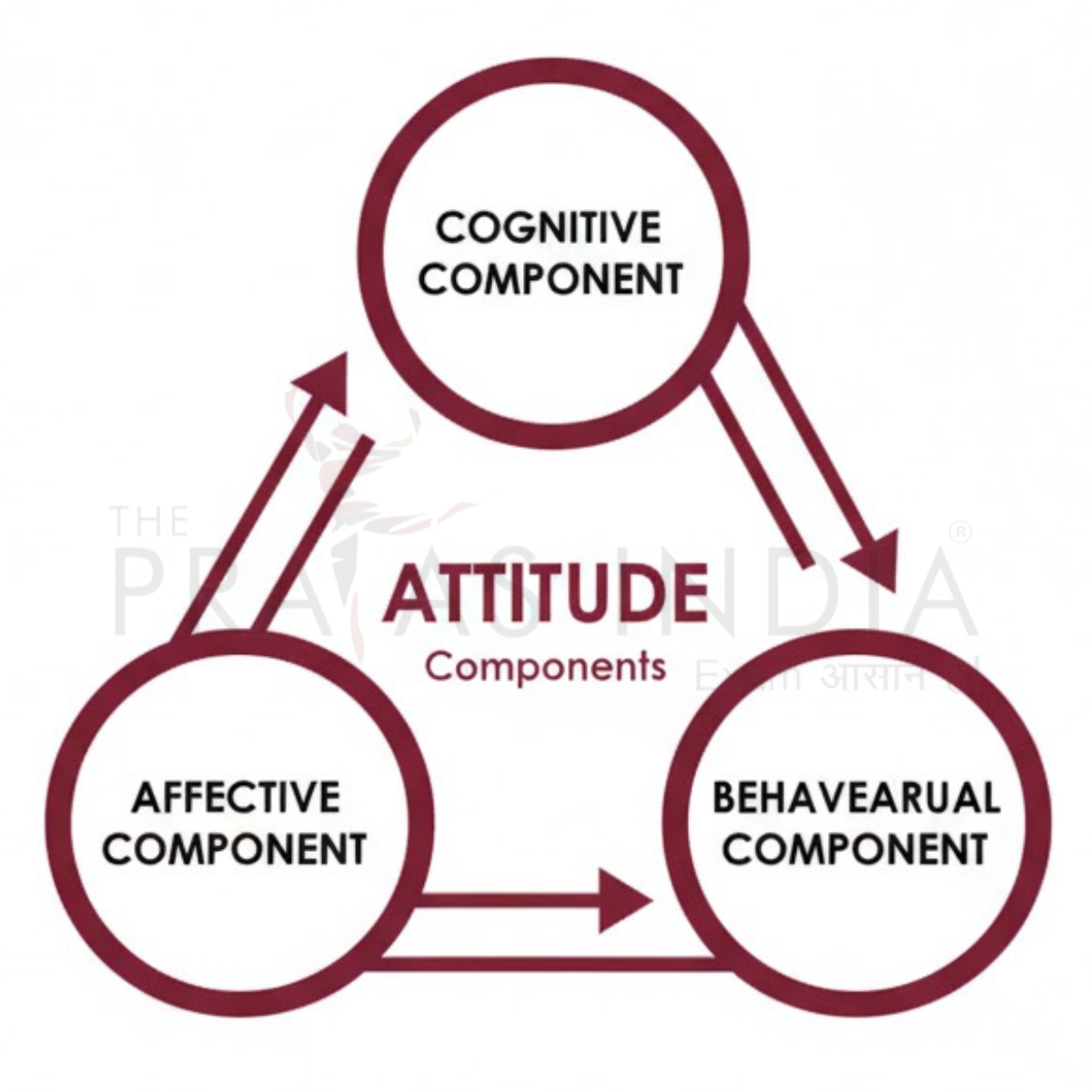
Attitude is classically understood as comprising three interrelated components:
- Cognitive Component
- Beliefs, perceptions, and thoughts about an object or situation
- Example: Belief that public service is a means of social change
- Affective Component
- Emotional responses or feelings
- Example: Empathy towards marginalized communities
- Behavioural Component
- Predisposition to act in a certain way
- Example: Proactive grievance redressal
Aptitude
Meaning and Definition
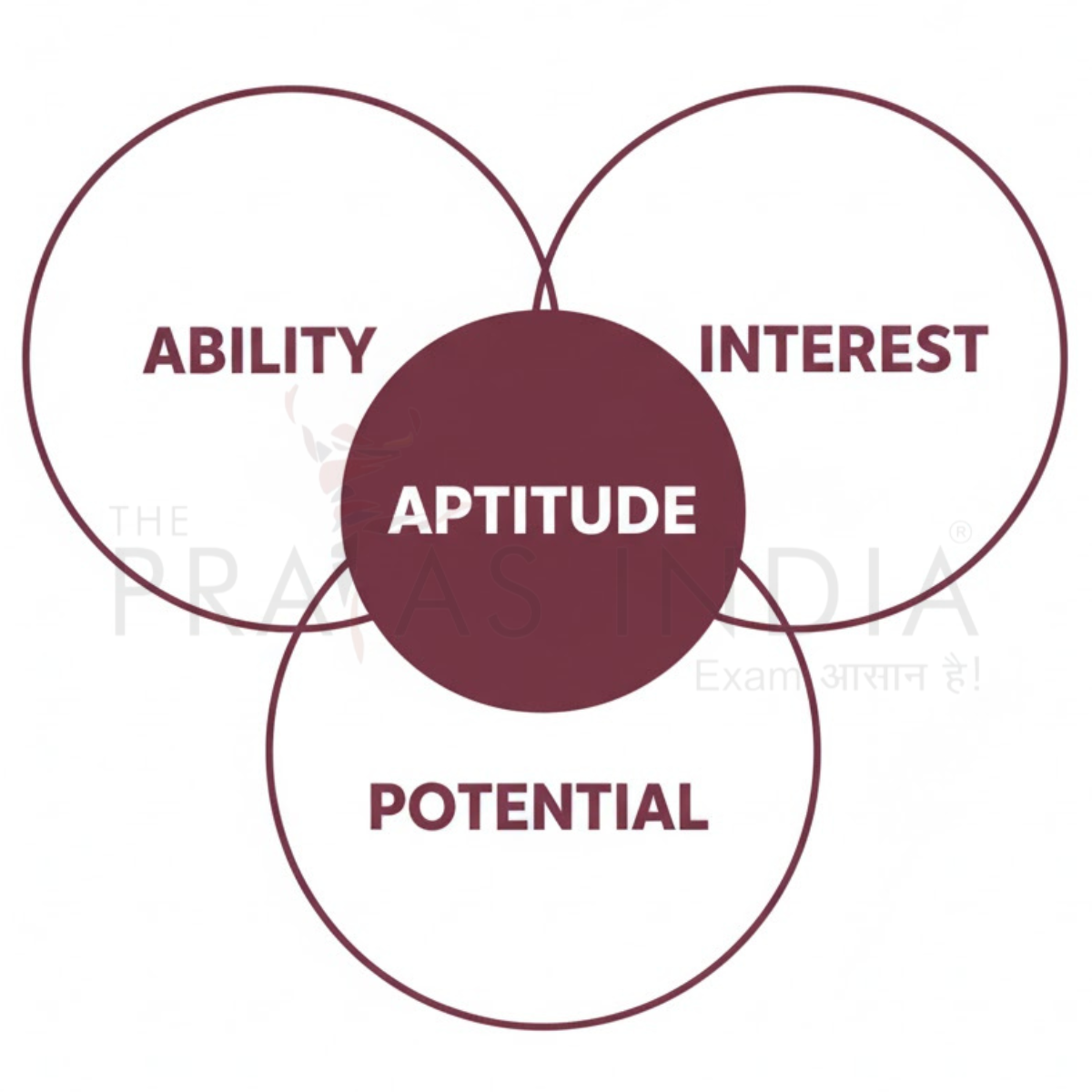
Aptitude refers to an individual’s natural or acquired capacity to perform a task effectively. It indicates potential for learning and competence in specific areas.
Aptitude answers the question:
“How well can I do this task?”
Natural vs Acquired Aptitude
- Natural Aptitude:
Innate abilities such as analytical thinking or spatial reasoning - Acquired Aptitude:
Developed through education, training, and experience (e.g., administrative skills)
Relation with Skills and Competence
- Aptitude → Capacity to learn
- Skills → Learned abilities
- Competence → Effective application of skills and aptitude
Difference Between Attitude and Aptitude
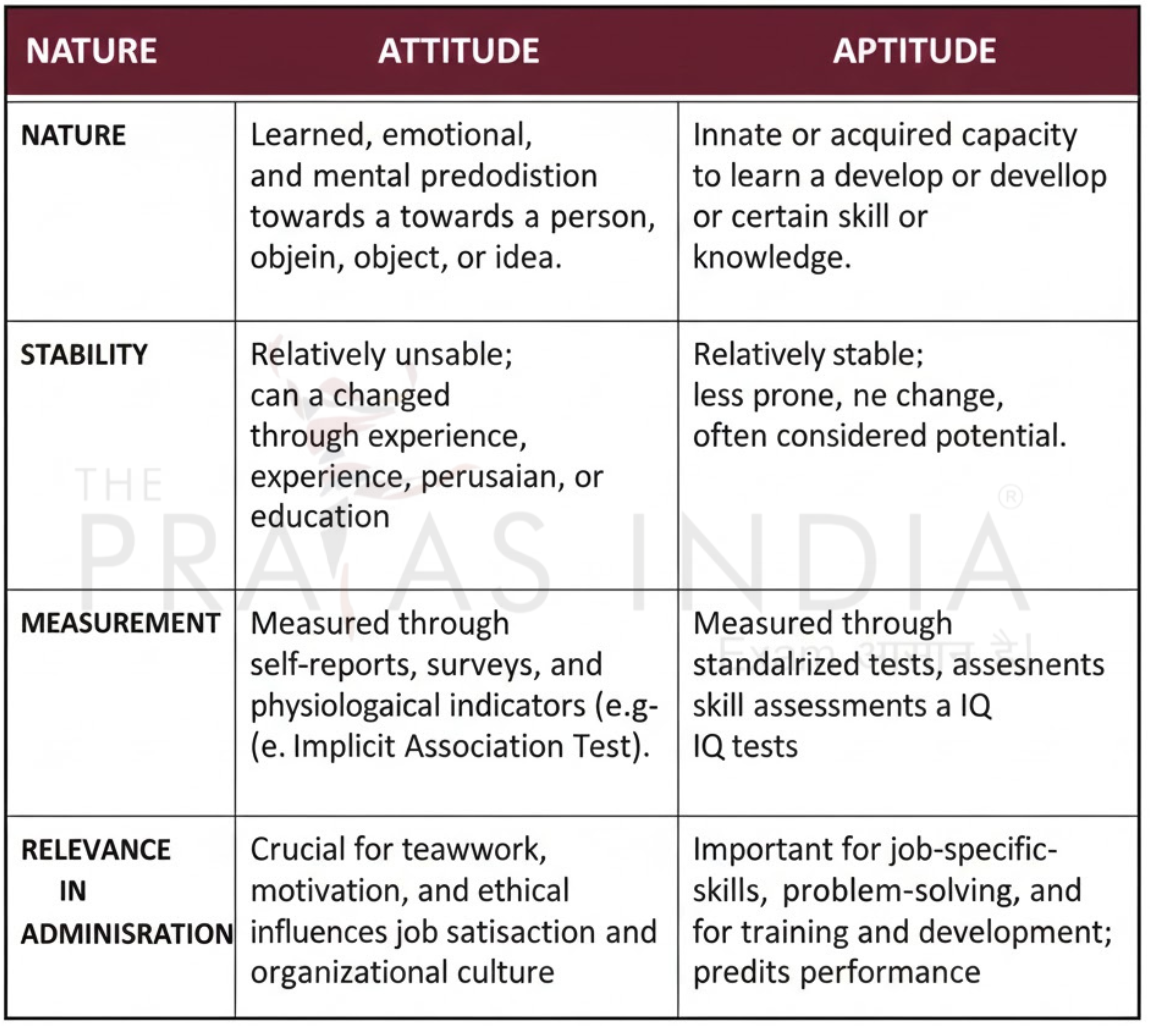
Attitude and aptitude, though related, are conceptually distinct.
- Nature:
Attitude is psychological and value-laden; aptitude is ability-oriented. - Stability:
Attitude is relatively flexible and can be reshaped; aptitude is more stable but can be enhanced. - Measurement:
Attitude is assessed through surveys and situational judgment tests; aptitude through standardized ability tests. - Relevance in Administration:
Attitude influences ethical conduct; aptitude influences administrative efficiency.
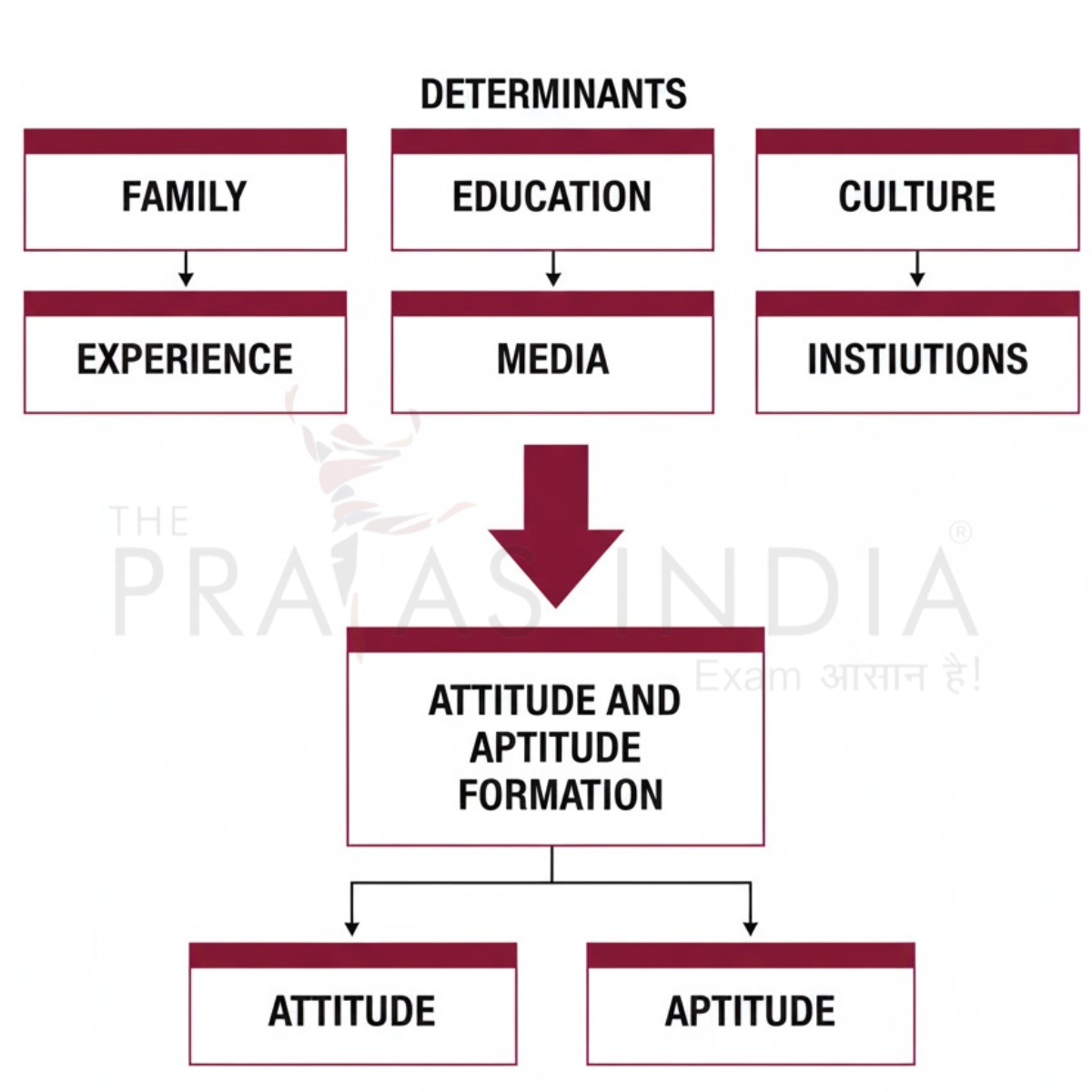
Determinants of Attitude and Aptitude
Attitude and aptitude are shaped by multiple social and institutional factors.
Key Determinants
- Family and Upbringing
- Early moral values, discipline, and work ethic
- Education and Socialization
- Formal education shapes reasoning and aptitude; socialization shapes attitudes
- Culture and Peer Influence
- Norms, traditions, and peer behaviour affect ethical outlook
- Experience and Learning
- Field exposure and real-life challenges refine aptitude and reshape attitudes
- Media and Institutions
- Media narratives and institutional culture influence perceptions and conduct
Attitude, Aptitude and Ethical Behaviour
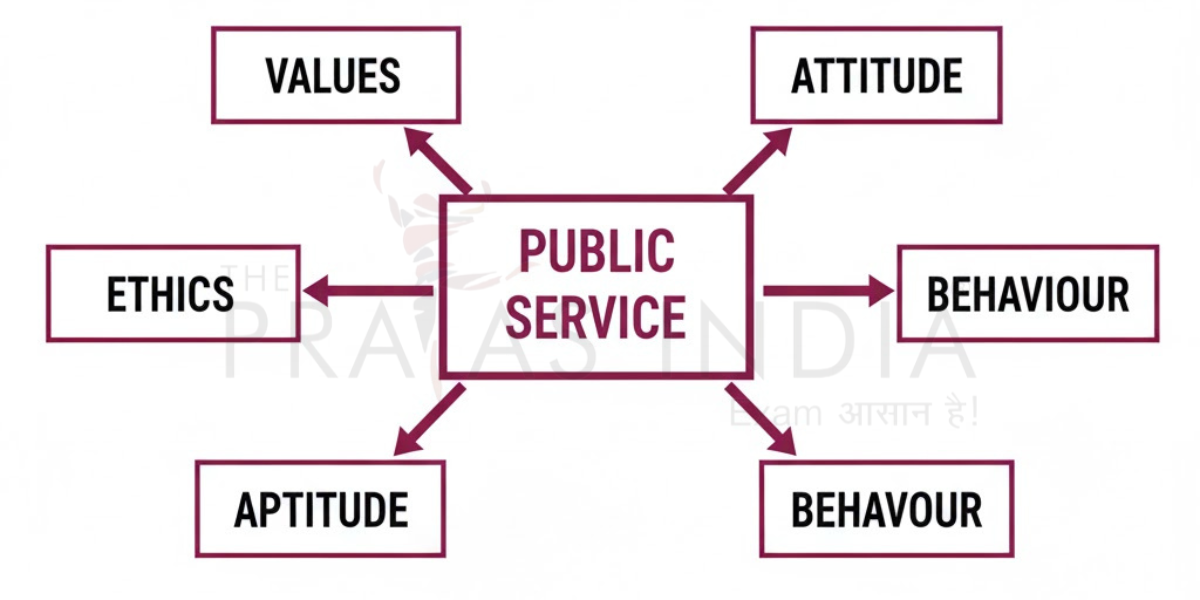
Ethical behaviour is the outcome of the interaction between attitude, aptitude, and values.
Role in Moral Judgment
- Attitude shapes moral sensitivity—recognizing ethical issues
- Aptitude supports ethical reasoning—choosing feasible and lawful options
Influence on Ethical Dilemmas
In ethical dilemmas, a civil servant may know the right action (attitude) but lack the competence to implement it (aptitude), or vice versa.
Link with Core Values
- Integrity: Consistency between values and actions
- Empathy: Understanding citizens’ perspectives
- Objectivity: Evidence-based decision-making
Relevance in Civil Services and Governance
Attitude in Public Service
A positive administrative attitude fosters:
- Citizen-Centric Governance: Respectful and responsive service delivery
- Accountability and Transparency: Willingness to explain actions
- Service Orientation: Viewing authority as responsibility, not privilege
An empathetic and impartial attitude strengthens public trust.
Aptitude in Administration
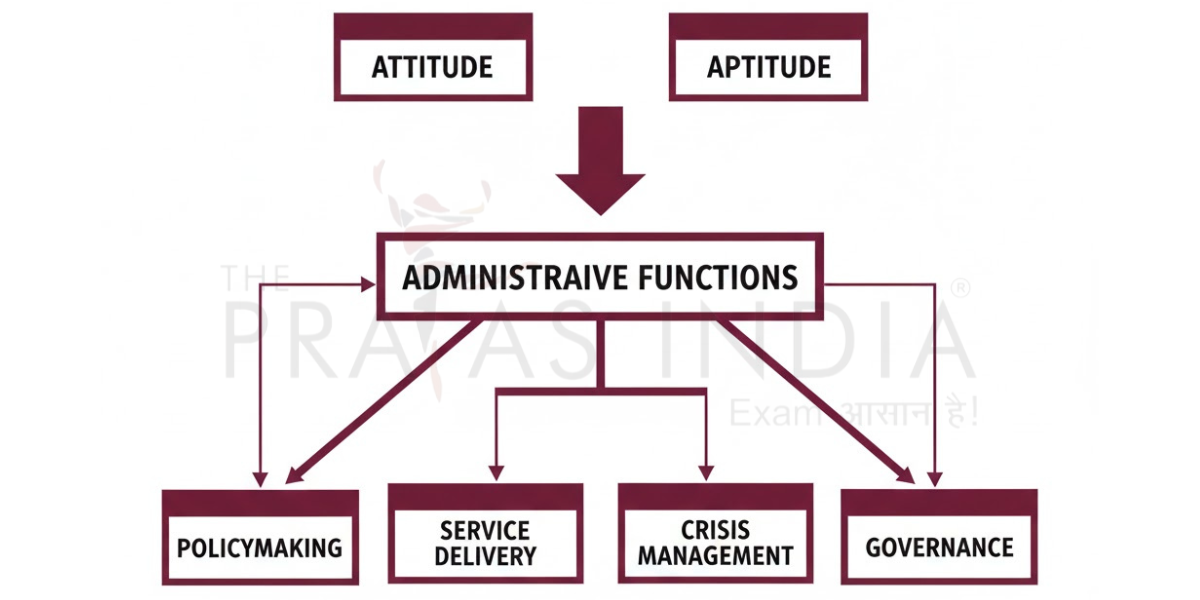
Administrative aptitude is critical for:
- Policy Implementation: Translating intent into outcomes
- Problem-Solving: Handling complex, multi-stakeholder issues
- Crisis Management: Quick decision-making under pressure
Aptitude ensures that good intentions are converted into effective action.
Measurement of Attitude and Aptitude
Tools and Methods
- Psychological Tests: Measure reasoning, numerical, and analytical aptitude
- Situational Judgment Tests (SJTs): Assess attitude and ethical orientation
- Interviews and Personality Tests: Evaluate values, integrity, and mindset
UPSC Relevance
- Ethics Paper (GS-IV): Conceptual and case-based assessment
- Interview Stage: Tests attitude, emotional intelligence, and aptitude for public service
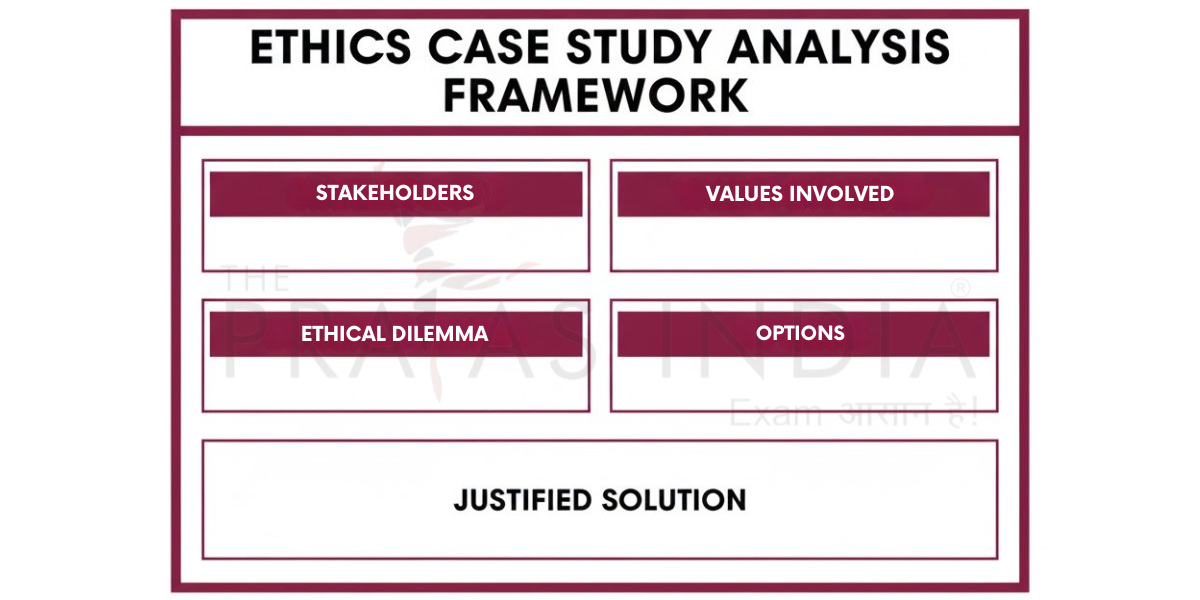
Case Study Illustrations (GS-IV Style)
Case 1: Right Aptitude, Wrong Attitude
An officer has excellent technical knowledge and efficiency but displays arrogance and lack of empathy toward citizens, leading to public dissatisfaction and ethical complaints.
Learning: Aptitude without ethical attitude undermines governance legitimacy.
Case 2: Positive Attitude, Limited Aptitude
A newly appointed officer lacks experience but demonstrates integrity, empathy, and willingness to learn, gradually improving outcomes through collaboration.
Learning: A positive attitude can compensate for limited aptitude in the long run.
Challenges in Developing Ethical Attitude and Aptitude
- Institutional Pressures: Targets and political expectations
- Value Erosion: Normalization of unethical practices
- Political Interference: Undermining objectivity
- Lack of Training: Inadequate ethics and capacity-building programs
These challenges can distort both attitude and aptitude.
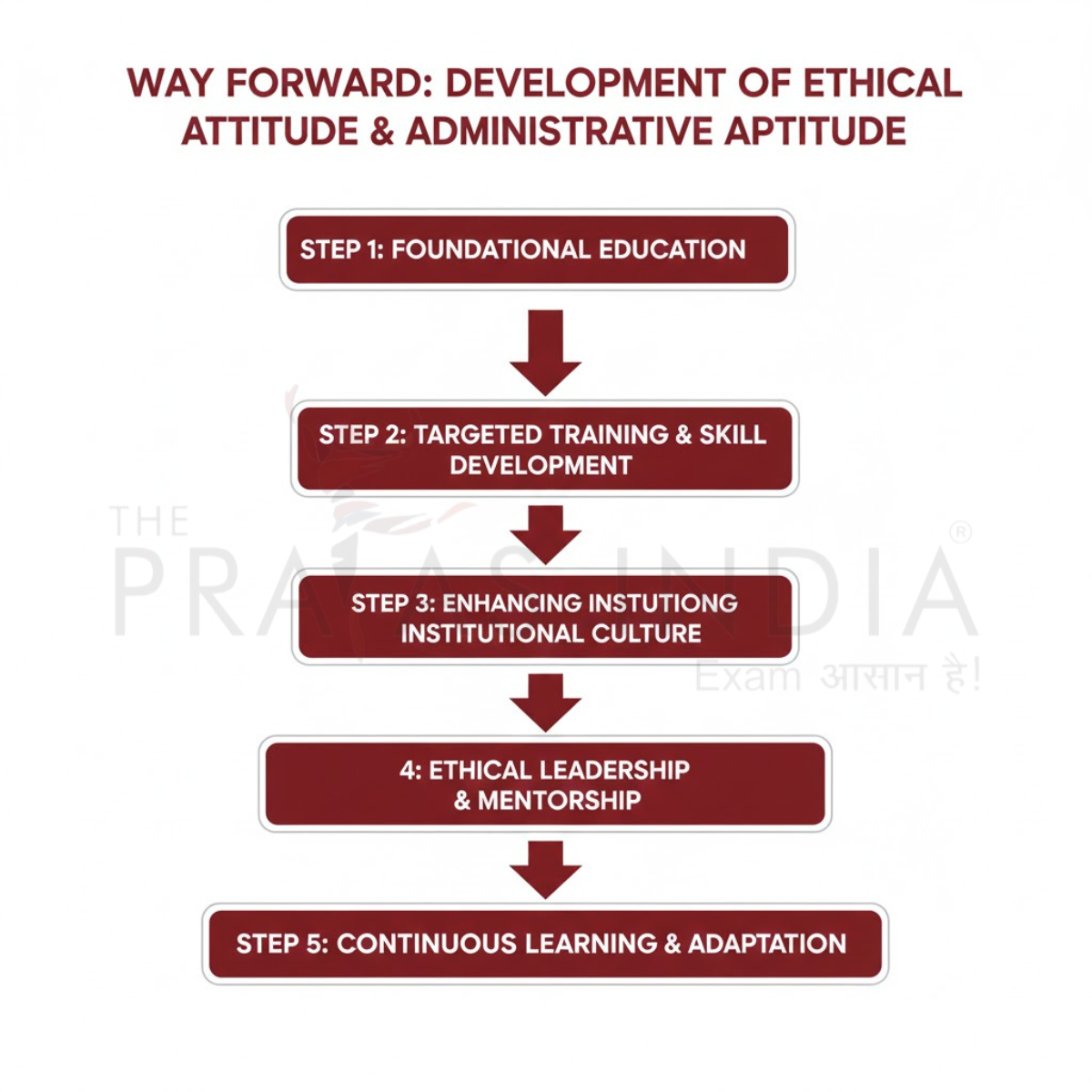
Way Forward
To develop ethical and competent civil servants:
- Ethics Training and Orientation Programs
- Value-Based Education from Early Stages
- Performance Evaluation Linked with Ethics
- Role Modeling by Senior Officials
- Continuous Capacity Building
Conclusion
Attitude and aptitude together define the character and capability of public administration. While aptitude enables effective performance, attitude ensures that power is exercised with empathy, integrity, and responsibility. For civil services, excellence lies not in competence alone but in the harmonious balance of competence and conscience. Ethical governance in a democratic society ultimately depends on administrators who possess both the right skills and the right mindset.
Frequently Asked Questions (FAQs) on Attitude and Aptitude – UPSC Ethics (GS-IV)
Q1. What is the difference between attitude and aptitude?
Attitude reflects an individual’s mindset, values, and predisposition to act, while aptitude refers to the ability or potential to perform a task effectively. Attitude guides behaviour; aptitude enables performance.
Q2. Why are attitude and aptitude important for civil servants?
Civil servants exercise public authority and discretion. A positive attitude ensures ethical conduct, while strong aptitude ensures effective decision-making and implementation, together strengthening governance and public trust.
Q3. How are attitude and aptitude linked with ethics?
Attitude shapes moral sensitivity and value orientation, whereas aptitude supports ethical reasoning and problem-solving. Ethical behaviour emerges from the interaction of values, attitude, and administrative competence.
Q4. Can attitude be changed and aptitude be developed?
Yes. Attitude is relatively flexible and can be shaped through training, experience, and ethical orientation. Aptitude can be enhanced through education, skill-building, and institutional exposure.
Q5. What role do attitude and aptitude play in ethical dilemmas?
Attitude influences the recognition of ethical issues and empathy for stakeholders, while aptitude helps in identifying feasible, lawful, and effective solutions to complex dilemmas.
Q6. How does UPSC assess attitude and aptitude?
UPSC assesses them through:
- GS-IV Ethics paper (theory + case studies)
- Situational judgment and behavioural questions
- Personality Test (Interview stage)
Q7. Can a good attitude compensate for limited aptitude in administration?
In the long run, yes. A positive, learning-oriented attitude can help overcome initial limitations in aptitude, while high aptitude without an ethical attitude can damage governance outcomes.
Q8. What are the major challenges in developing ethical attitude among civil servants?
Institutional pressures, political interference, value erosion, inadequate ethics training, and weak role models often undermine ethical attitude and aptitude.
Q9. How can the government promote ethical attitude and aptitude?
Through ethics training, value-based education, performance evaluation linked to integrity, mentorship by senior officials, and a strong institutional culture.
Q10. Why is this topic important for GS-IV answers?
Attitude and aptitude form the conceptual core of the Ethics syllabus, frequently asked in theory questions, case studies, and interview discussions.