Biosphere Reserves in India – Structure, Significance & Conservation Efforts
- GS Paper 1: Physical Geography, Biogeography
- GS Paper 3: Environment, Biodiversity Conservation, Climate Change
- Prelims: Protected Areas, MAB Programme, Species Distribution, Environmental Acts
- Geography Optional: Biogeography, Ecosystem Diversity, Conservation Strategies
Introduction
Biosphere Reserves (BRs) are large protected landscapes that integrate biodiversity conservation, scientific research, and sustainable development. Unlike conventional protected areas created solely for wildlife protection, Biosphere Reserves adopt a holistic approach where humans and nature coexist, emphasizing ecological balance, cultural integrity, and livelihood security.
How BRs Differ from National Parks and Wildlife Sanctuaries
| Aspect | National Park | Wildlife Sanctuary | Biosphere Reserve |
|---|---|---|---|
| Purpose | Wildlife protection | Wildlife protection with fewer restrictions | Conservation + research + sustainable use |
| Human Activity | Strictly restricted | More permitted | Allowed in outer zones |
| Area | Smaller | Medium | Very large multi-ecosystem areas |
| Zonation | No zonation | No zonation | Core, Buffer, Transition |
Biosphere Reserves go beyond wildlife protection by addressing ecosystem sustainability, climate resilience, and socio-ecological research.
UNESCO Man and Biosphere (MAB) Programme
Launched in 1971, UNESCO’s MAB Programme aims to:
- Promote harmony between humans and nature
- Encourage innovative conservation models
- Support research, monitoring, and education
- Create a global network for knowledge-sharing
India is an active participant, and several Indian BRs are part of the UNESCO World Network of Biosphere Reserves (WNBR).

Concept & Zonation of Biosphere Reserves
The Biosphere Reserve model is based on a three-zone framework designed to balance conservation, research, and sustainable living.
A. Core Zone
- No human disturbance
- Legally protected (often overlaps with National Parks)
- Focus: ecological processes, biodiversity hotspots, genetic resources
- Activities: Long-term monitoring, ecological research
B. Buffer Zone
- Surrounds the core
- Activities allowed: eco-restoration, environmental education, limited tourism, and regulated research
- Acts as protective insulation to reduce pressures on the core
C. Transition Zone
- Outermost, where communities live and work
- Encourages sustainable agriculture, eco-tourism, crafts, and participatory conservation
- Demonstrates how development and ecology coexist
Why the Three-Zone System Matters
- Balances conservation and livelihood
- Protects fragile habitats
- Promotes climate resilience
- Facilitates cross-disciplinary scientific research
- Reduces human–wildlife conflict through zonation
Biosphere Reserves in India: Overview
India’s ecological diversity—from the Himalayas to the Western Ghats, coasts, islands, deserts, and grasslands—is represented in its Biosphere Reserve network.
- Total BRs in India: 18
- UNESCO MAB-designated BRs: 12 (including Nilgiri, Sundarbans, Gulf of Mannar, Nanda Devi, etc.)
Distribution Across Biogeographic Provinces
- Himalayas: Nanda Devi, Khangchendzonga
- Western Ghats: Nilgiri, Agasthyamalai
- Deccan Plateau: Pachmarhi, Achanakmar–Amarkantak
- Coastal/Marine: Gulf of Mannar, Sundarbans
- Islands: Great Nicobar
India is one of the world’s mega-diverse nations, and BRs help preserve this ecological wealth.
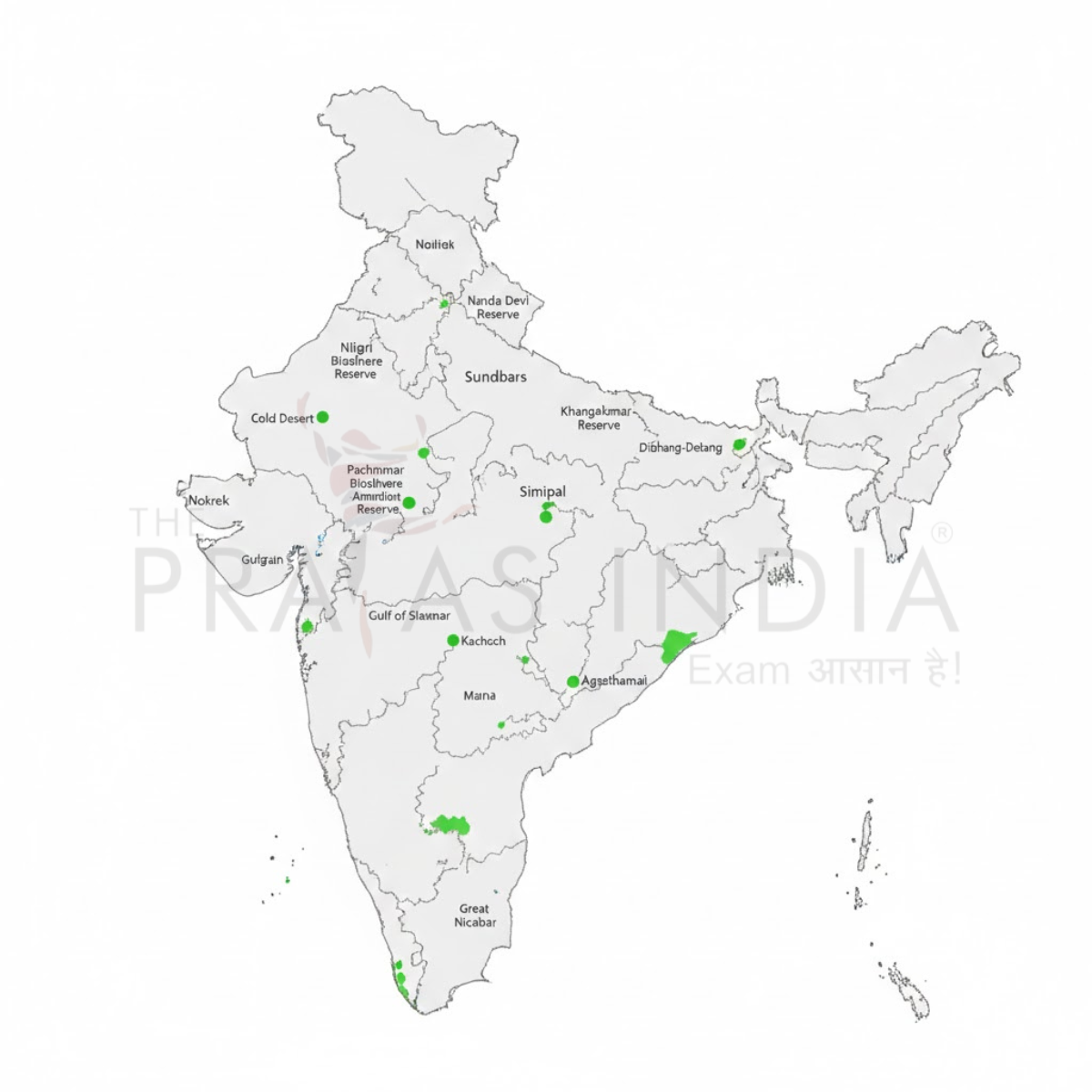
List of All Biosphere Reserves in India
| Biosphere Reserve | State | Year | Key Species / Ecosystem | UNESCO MAB Status |
|---|---|---|---|---|
| Nilgiri | TN–KL–KA | 1986 | Lion-tailed macaque, shola forests | Yes (2000) |
| Nanda Devi | Uttarakhand | 1988 | Snow leopard, alpine meadows | Yes (2004) |
| Nokrek | Meghalaya | 1988 | Hoolock gibbon, citrus gene pool | Yes (2009) |
| Gulf of Mannar | TN | 1989 | Dugong, coral reefs | Yes (2001) |
| Sundarbans | WB | 1989 | Royal Bengal Tiger, mangroves | Yes (2001) |
| Manas | Assam | 1989 | Golden langur, riverine grasslands | Yes (2020) |
| Great Nicobar | Andaman & Nicobar | 1989 | Nicobar megapode, evergreen forests | Yes (2013) |
| Similipal | Odisha | 1994 | Tiger, sal forests | Yes (2009) |
| Dibru-Saikhowa | Assam | 1997 | Feral horses, wetlands | No |
| Dehang-Dibang | Arunachal Pradesh | 1998 | Mishmi takin, temperate forests | No |
| Pachmarhi | MP | 1999 | Giant squirrel, Satpura ranges | Yes (2009) |
| Khangchendzonga | Sikkim | 2000 | Red panda, alpine biomes | Yes (2016) |
| Agasthyamalai | TN–KL | 2001 | Myristica swamps, endemic flora | Yes (2016) |
| Achanakmar–Amarkantak | CG–MP | 2005 | Leopards, mixed deciduous forests | No |
| Great Rann of Kutch | Gujarat | 2008 | Wild ass, saline desert ecosystem | No |
| Cold Desert | HP | 2009 | Snow leopard, trans-Himalayan cold desert | No |
| Seshachalam Hills | AP | 2010 | Red sanders, dry deciduous forests | No |
| Panna | MP | 2011 | Tiger, Ken River landscape | Yes (2020) |
Major Biosphere Reserves of India – Analytical Notes
a. Nilgiri Biosphere Reserve (First BR of India)
- Encompasses the Western Ghats across Tamil Nadu, Karnataka, Kerala
- UNESCO-declared (2000)
- Contains evergreen forests, sholas, montane grasslands
- Critical species: Lion-tailed macaque, Nilgiri tahr, Nilgiri langur
- Ecological significance: water source for south Indian rivers, high endemism
- Conservation challenges: plantation encroachment, human–animal conflict
b. Sundarbans Biosphere Reserve
- World’s largest mangrove ecosystem
- Home to Royal Bengal Tiger, saltwater crocodile
- Protects the delta formed by Ganga–Brahmaputra–Meghna
- High climate vulnerability: cyclone impacts, sea level rise
- Critical for carbon sequestration and storm buffering
c. Nanda Devi Biosphere Reserve
- Uttarakhand Himalayan ecosystem
- Home to snow leopard, Himalayan musk deer
- Contains Nanda Devi and Valley of Flowers National Parks (UNESCO WHS)
- Unique alpine meadows and glacial landscapes
- Issues: climate-induced glacier retreat, restricted access
d. Gulf of Mannar Biosphere Reserve
- India’s first marine BR
- Over 4,200 species including dugong, coral reefs, sea horses
- Rich in sea grasses and undersea biodiversity
- Threats: coral bleaching, overfishing
- High ecological and economic importance
e. Great Nicobar Biosphere Reserve
- The southernmost part of India
- Dense tropical evergreen forests
- Endemic species: Nicobar macaque, Nicobar pigeon, giant robber crab
- Unique tribal communities: Shompens, Nicobarese
- Conservation issue: tectonic activity + post-tsunami impacts
Other Key BRs (in brief)
- Pachmarhi – Satpura landscapes, tribal conservation model
- Achanakmar–Amarkantak – Source of Narmada River, rich sal forests
- Similipal – One of India’s oldest tiger habitats
- Manas – Riverine grasslands, home to pygmy hog
- Dibru-Saikhowa – Wetlands, feral horses, vulnerable to floods
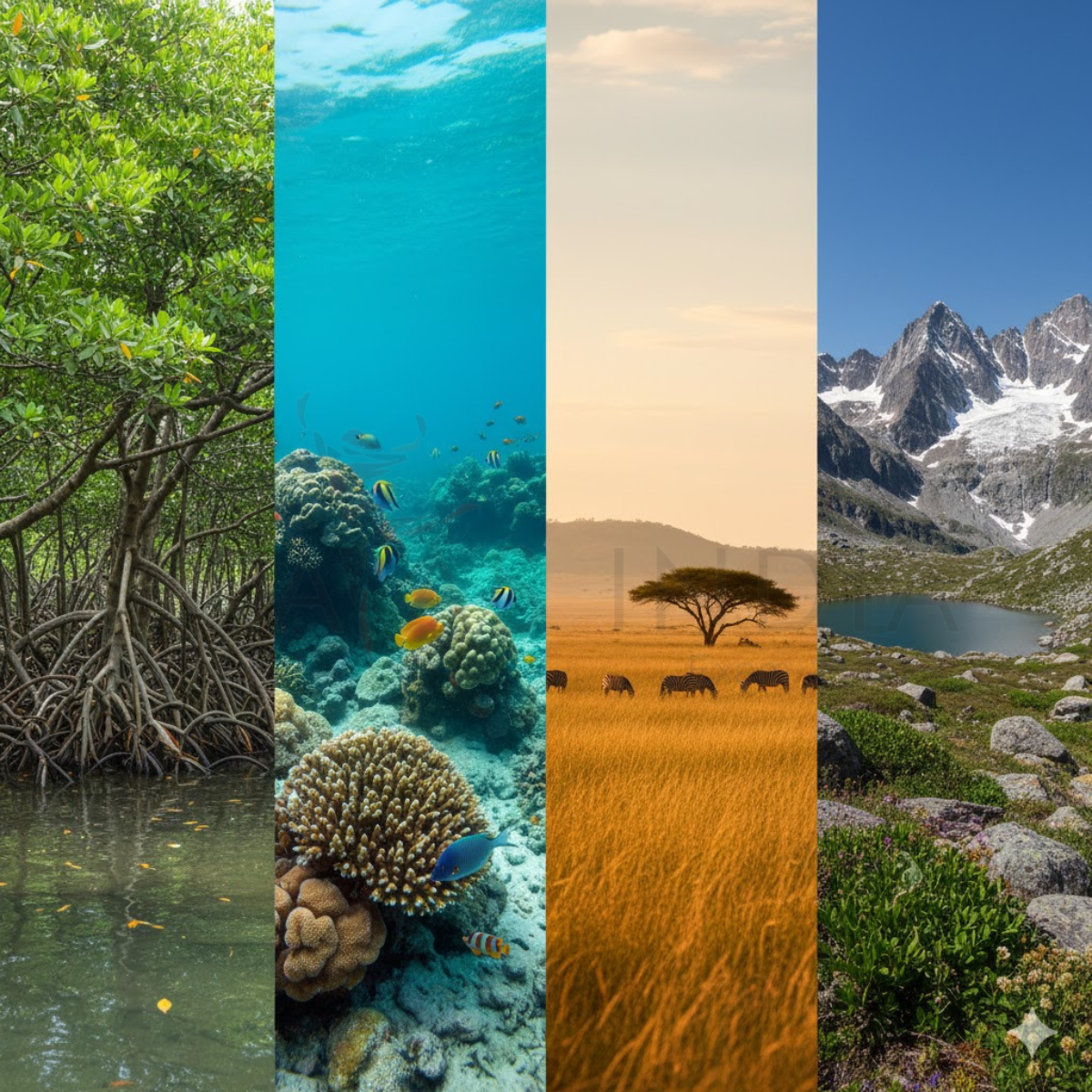
Biodiversity Importance of Biosphere Reserves
- Represent India’s complete ecological spectrum
- Preserve rare species: snow leopard, lion-tailed macaque, dugong, gharial
- Maintain gene pools essential for ecological evolution
- Protect migration corridors and landscape connectivity
- Serve as carbon sinks and climate regulators
- Promote in-situ conservation over ex-situ approaches
Threats to Biosphere Reserves
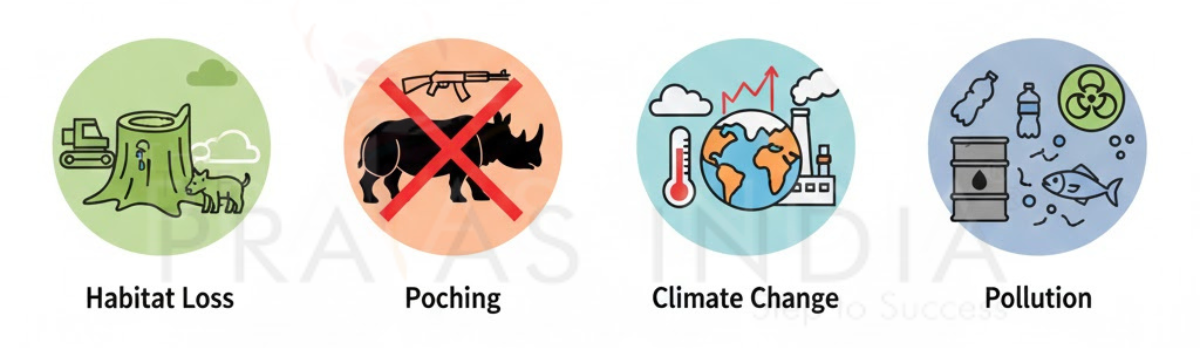
Major Threats
- Deforestation & encroachment
- Climate change—cyclones, glacier melt, coral bleaching
- Poaching & illegal wildlife trade
- Invasive species
- Mining and unsustainable tourism
- Marine pollution (especially Gulf of Mannar, Sundarbans)
- Habitat fragmentation from infrastructure
Conservation Measures
National Measures
- Environment Protection Act, 1986
- National Biodiversity Authority (NBA)
- Eco-Sensitive Zones (ESZ)
- Project Tiger, Project Elephant
- Joint Forest Management
- Community-based conservation
- Coral reef monitoring & wetland restoration
International Support
- UNESCO MAB Programme
- Ramsar Convention (for wetland BRs)
- World Heritage Sites
- Convention on Biological Diversity (CBD)
Technological Initiatives
- GIS mapping, satellite monitoring
- Camera trapping for population studies
- E-DNA sampling for genetic diversity
- Drones for anti-poaching
Role of Local Communities in BRs
Local residents are central to BR functioning because of:
- Centuries-old traditional ecological knowledge
- Sustainable livelihood systems
- Cultural ties to forests
Case Studies
- Kurumba tribe in Nilgiris – traditional honey collection, forest knowledge
- Sundarbans fishing communities – adapting to climate change
- Shompen tribe of Great Nicobar – highly isolated, dependent on forest resources
Case Studies – UPSC Enrichment
1. Sundarbans Climate Vulnerability
- Sea level rise + cyclones
- Tigers pushed inland
- Salinity changing freshwater ecosystems
2. Coral Decline in Gulf of Mannar
- Mass bleaching events
- Overexploitation and trawling
- Conservation through community-based reef restoration
3. Tiger Recovery in Similipal
- From poaching crisis → slow recovery
- Radio-collaring and anti-poaching measures
4. Tribal Conservation in Pachmarhi
- Baiga and Gond tribes
- Sustainable use of NTFPs
FAQs about Biosphere Reserves in India
1. What is a Biosphere Reserve?
A Biosphere Reserve is a large protected area designated to conserve biodiversity, support scientific research, and promote sustainable development. It follows the UNESCO Man and Biosphere (MAB) Programme guidelines.
2. How is a Biosphere Reserve different from a National Park or Wildlife Sanctuary?
- National Park: Strict protection, no human activity allowed.
- Wildlife Sanctuary: Some regulated human activity permitted.
- Biosphere Reserve: Has three zones—core, buffer, transition—and focuses on balancing conservation + livelihood + research.
3. How many Biosphere Reserves are there in India?
There are 18 Biosphere Reserves in India.
4. How many Indian Biosphere Reserves are part of UNESCO’s MAB Network?
Currently, 12 Indian Biosphere Reserves have been recognized under the UNESCO MAB Programme.
5. What are the three zones of a Biosphere Reserve?
- Core Zone: No human activity; strictly protected.
- Buffer Zone: Allowable research, monitoring, eco-restoration.
- Transition Zone: Sustainable human activities allowed.
6. Which is the first Biosphere Reserve of India?
Nilgiri Biosphere Reserve (established in 1986) is India’s first Biosphere Reserve.
7. Which Biosphere Reserve is known for mangroves?
The Sundarbans Biosphere Reserve contains the world’s largest mangrove forest.
8. Which Biosphere Reserve protects coral reefs in India?
The Gulf of Mannar Biosphere Reserve is known for coral reefs, seagrass beds, and marine biodiversity.
9. What is the significance of Biosphere Reserves for climate change?
BRs protect ecosystems that act as carbon sinks, help study climate impacts, and support resilient landscapes.
10. What is the role of local communities in Biosphere Reserves?
Local and tribal communities participate in sustainable livelihoods, conservation, and use traditional ecological knowledge for ecosystem protection.
11. What is the largest Biosphere Reserve in India?
The Great Nicobar Biosphere Reserve is among the largest, covering diverse forest ecosystems.
12. Which laws support Biosphere Reserve conservation?
Environment Protection Act (EPA) 1986, Biodiversity Act 2002, Forest Rights Act, ESZ guidelines, etc.
Conclusion
Biosphere Reserves represent India’s commitment to global environmental stewardship, combining the twin goals of biodiversity conservation and sustainable development. They provide integrated models where ecology, economy, and society interact harmoniously, aligning with global climate goals (UNFCCC, CBD) and national conservation priorities.
Strengthening BRs through community participation, better funding, climate resilience strategies, and scientific monitoring is vital for protecting India’s ecological heritage.