Buddhism: Origin, Philosophy, Institutions, Sects, and Historical Significance
- GS Paper 1: Ancient Indian History (Religious Movements, Philosophy, Culture)
- GS Paper 4: Ethics – Compassion, Non-violence, Middle Path
- Prelims: Buddhist doctrines, councils, sects, symbols, places
- Optional (History / Philosophy): Buddhism, Indian Philosophy, Shramana Traditions
Introduction
Buddhism is one of the most significant heterodox religious–philosophical traditions that emerged in ancient India during the 6th century BCE, a period marked by profound social, economic, and intellectual transformation. Founded by Gautama Buddha, Buddhism developed not merely as a religious faith but as a moral, ethical, and philosophical system that offered an alternative worldview to prevailing Brahmanical orthodoxy.
Unlike ritual-centric Vedic religion, Buddhism emphasized ethical conduct, mental discipline, and wisdom as means to overcome human suffering. Over time, it evolved into a powerful social force that challenged caste hierarchy, encouraged rational inquiry, and promoted compassion and non-violence. Its influence extended beyond India, shaping civilizations across Asia and later the modern world, making Buddhism a major chapter in both Indian and global history.
Socio-Religious Background
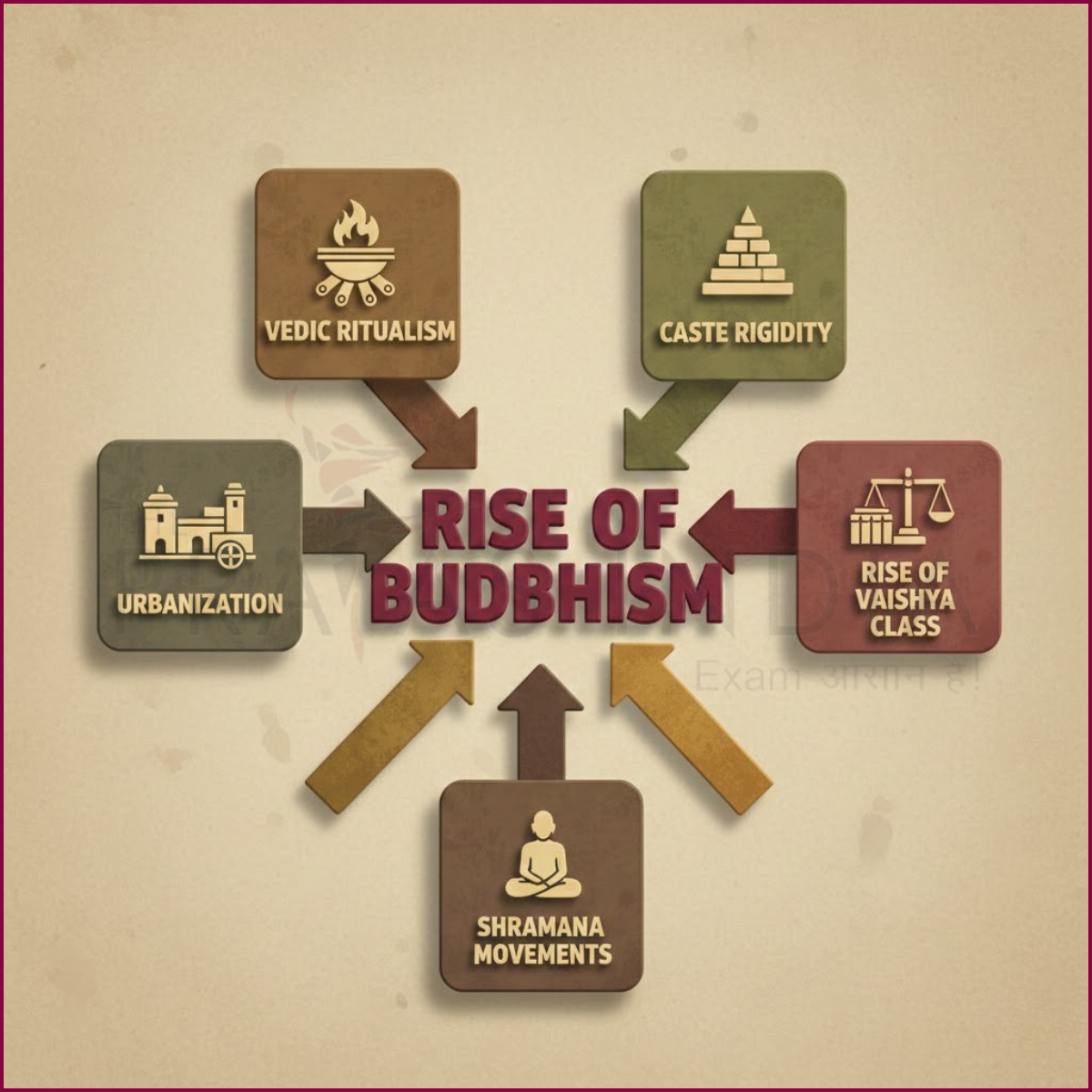
The rise of Buddhism cannot be understood without reference to the Later Vedic socio-religious environment.
Vedic Orthodoxy and Ritualism
By the 6th century BCE, Brahmanical religion had become increasingly ritualistic and rigid. Complex sacrifices (yajnas), dominance of Brahman priests, and emphasis on birth-based varna restricted spiritual access for large sections of society.
Varna System and Social Tensions
The rigidification of the varna hierarchy led to social dissatisfaction among Kshatriyas, Vaishyas, and lower groups. Urbanization and the rise of merchant classes further weakened the relevance of sacrificial rituals.
Rise of Shramana Movements
In response, several Shramana traditions—including Buddhism, Jainism, Ajivikas—emerged, advocating renunciation, asceticism, ethical living, and individual salvation.
Life and Role of Gautama Buddha (Brief Overview)
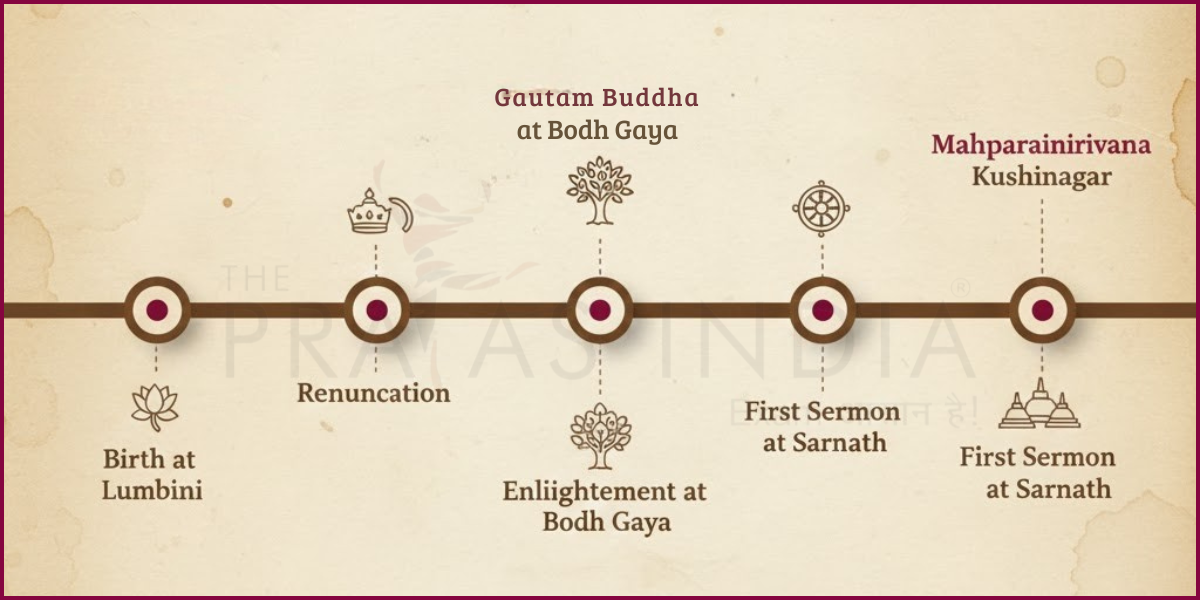
Gautama Buddha was born as Siddhartha Gautama at Lumbini (present-day Nepal) to a Kshatriya family of the Shakya clan. Sheltered in luxury, his worldview changed after encountering the Four Sights—old age, sickness, death, and asceticism—which revealed the universality of suffering.
Renouncing worldly life, he undertook severe penance before realizing the futility of extreme asceticism. He attained enlightenment at Bodh Gaya, discovering the Middle Path. His first sermon at Sarnath, known as the Dhammachakra Pravartana, laid the foundation of Buddhist doctrine.
Buddha functioned not as a prophet but as a teacher and guide, emphasizing rational understanding and self-effort.
Core Doctrines of Buddhism
Four Noble Truths
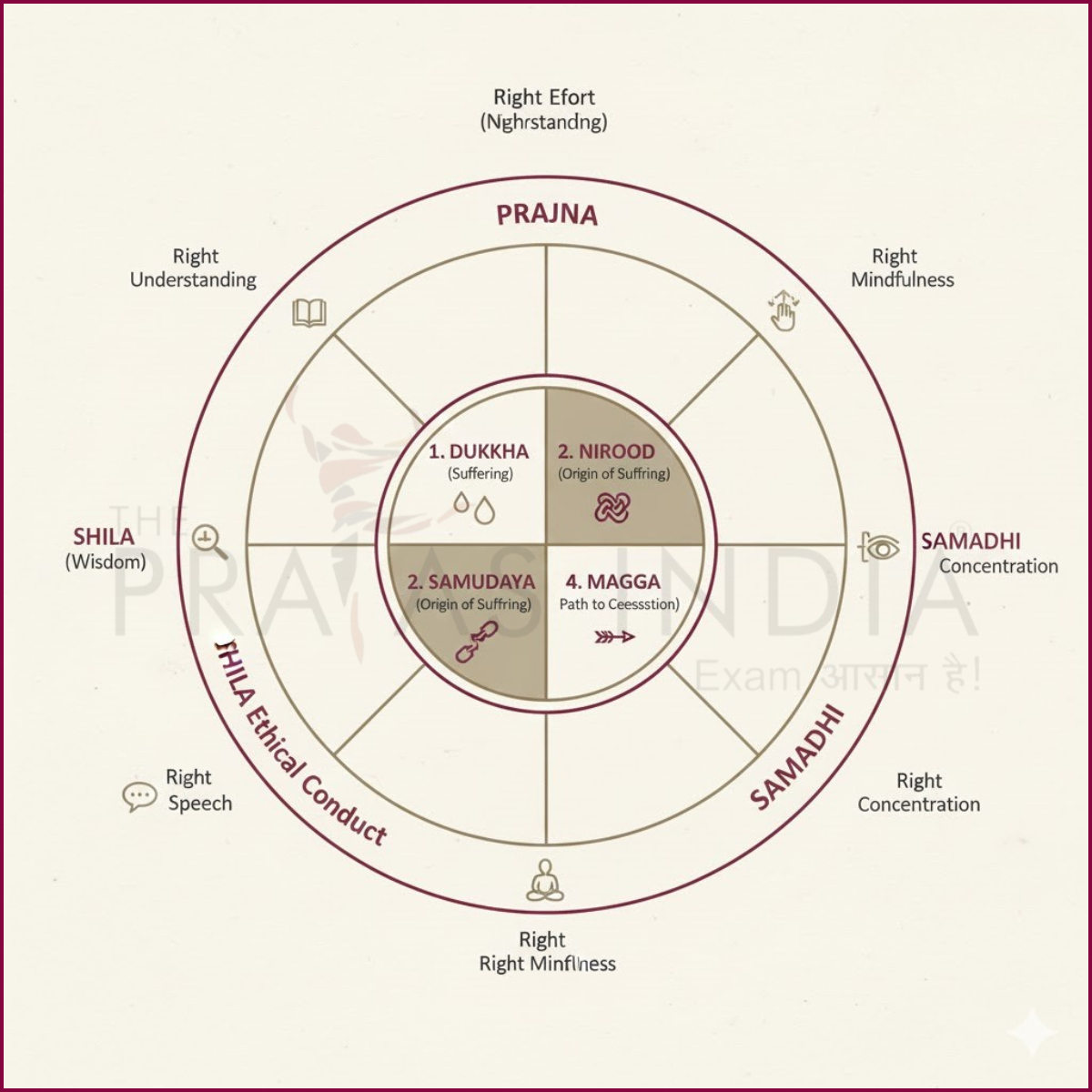
The Four Noble Truths form the philosophical backbone of Buddhism:
- Dukkha – Life is marked by suffering and dissatisfaction
- Samudaya – Desire (tanha) is the root cause of suffering
- Nirodha – Cessation of suffering is possible
- Magga – The Eightfold Path leads to liberation
These truths diagnose the human condition and prescribe a practical path for liberation.
Eightfold Path
The Eightfold Path represents the Middle Way and is divided into three components:
- Prajna (Wisdom): Right view, Right intention
- Shila (Ethical Conduct): Right speech, action, livelihood
- Samadhi (Mental Discipline): Right effort, mindfulness, concentration
Philosophical Foundations
Buddhist philosophy rests on key metaphysical and ethical principles:
Triratna
Buddhists take refuge in:
- Buddha – the enlightened teacher
- Dhamma – the doctrine
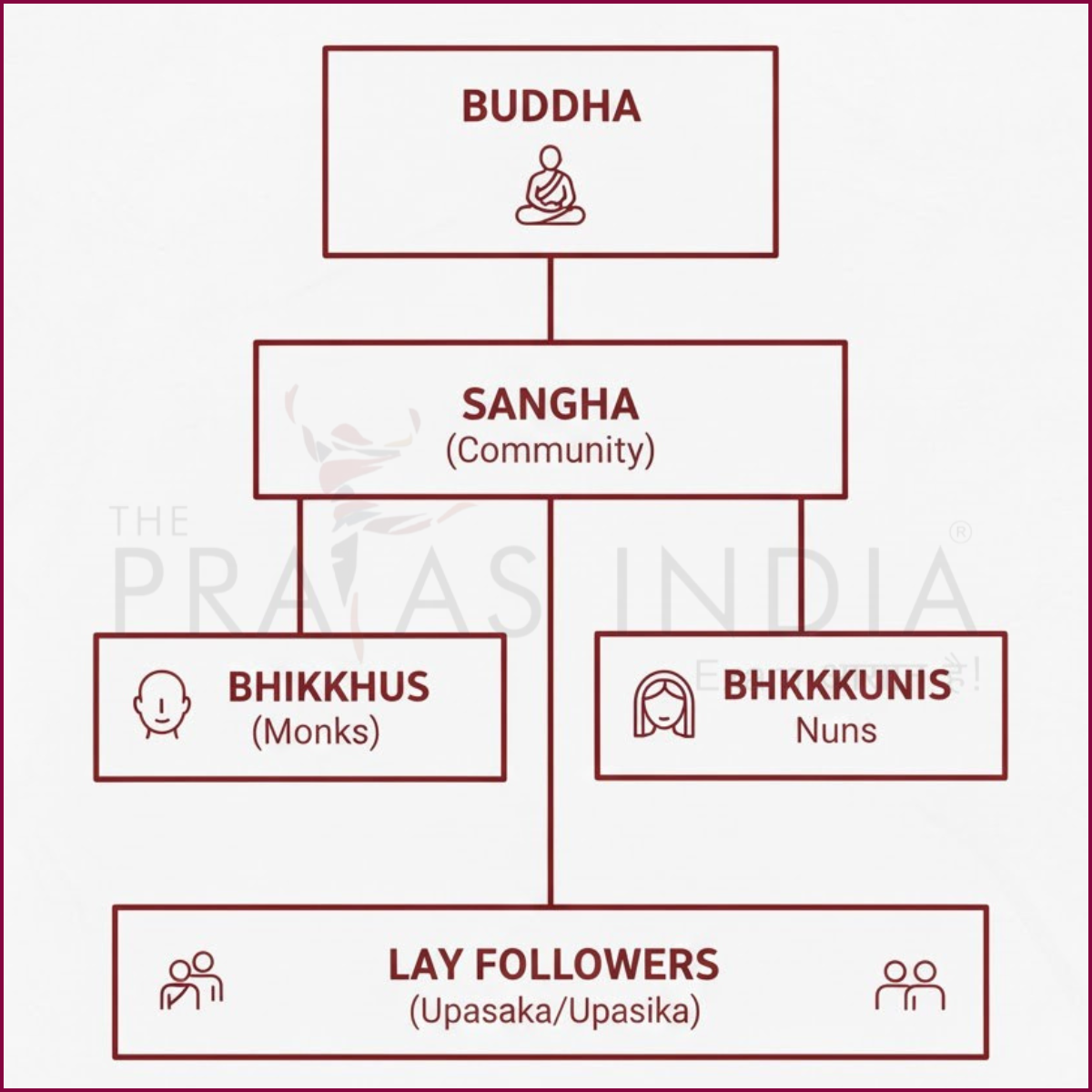
- Sangha – the monastic community
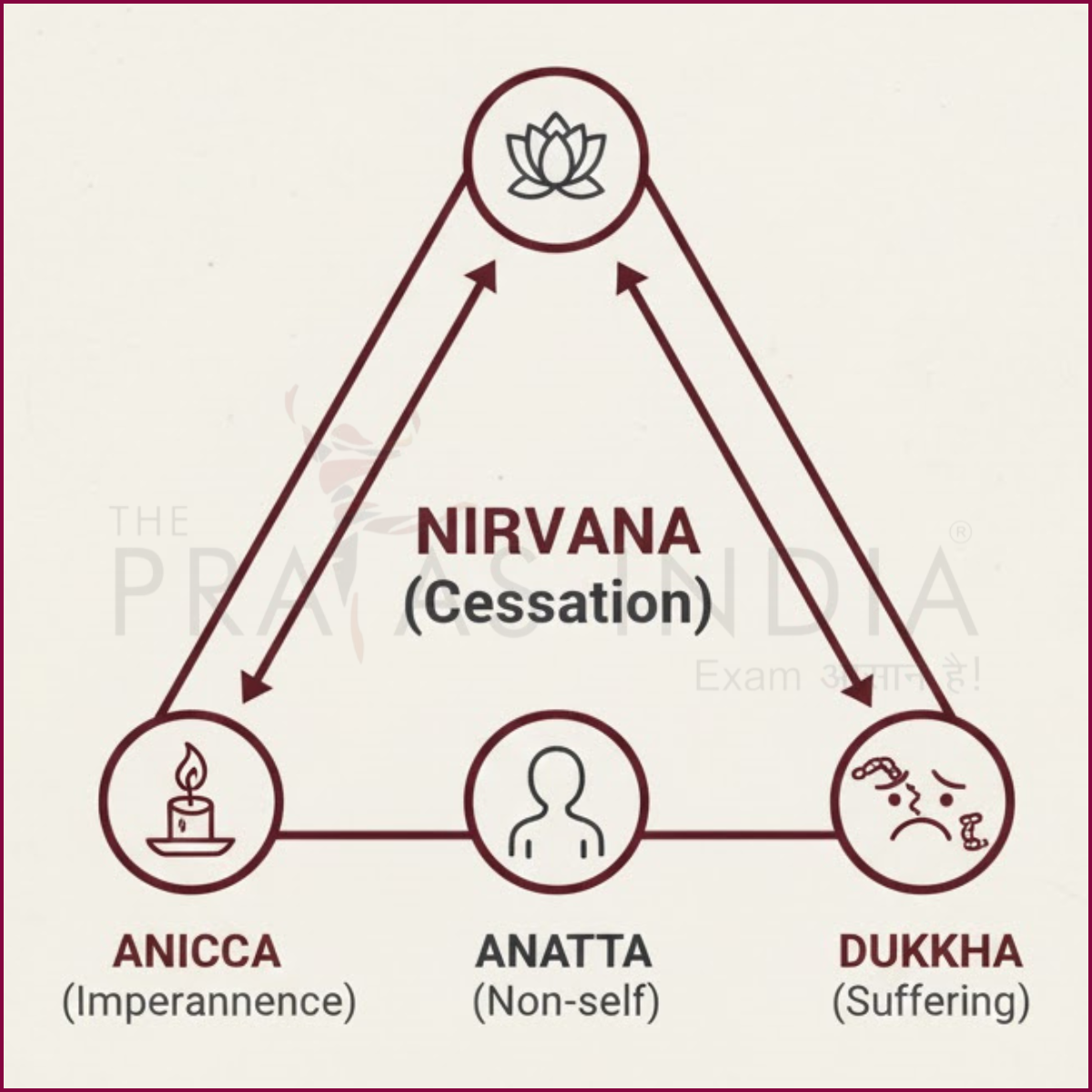
Anicca, Dukkha, Anatta
- Anicca: Impermanence of all phenomena
- Dukkha: Inherent unsatisfactoriness of existence
- Anatta: Rejection of a permanent soul
Nirvana
Nirvana represents the cessation of desire and liberation from the cycle of rebirth (samsara). Unlike moksha, it is conceived as a psychological and ethical state, not union with a supreme being.
Buddhist Sangha and Institutional Structure
The Sangha was the backbone of Buddhism’s organization and expansion.
Monastic Discipline
The Vinaya Pitaka regulated monastic life, prescribing ethical conduct, discipline, and communal decision-making.
Role of Monks and Nuns
Both Bhikkhus and Bhikkhunis were admitted, reflecting Buddhism’s relatively progressive outlook.
Democratic Functioning
Decisions were taken collectively, emphasizing equality and moral authority rather than birth.
Buddhist Literature
Buddhist teachings were compiled into the Tripitaka (Three Baskets):
- Vinaya Pitaka – Monastic rules
- Sutta Pitaka – Discourses of Buddha
- Abhidhamma Pitaka – Philosophical analysis
The use of Pali language made teachings accessible to the masses, unlike Sanskrit-dominated Brahmanical texts.
Buddhist Councils
Four major councils were convened to preserve and systematize Buddhist teachings:
- First Council: Rajgir – compilation of teachings
- Second Council: Vaishali – monastic discipline dispute
- Third Council: Pataliputra – purification of Sangha
- Fourth Council: Kashmir – systematization under Kanishka
Sects of Buddhism
Over time, Buddhism diversified into major sects:
- Theravada (Hinayana): Emphasis on original teachings
- Mahayana: Bodhisattva ideal and universal salvation
- Vajrayana: Tantric practices and rituals
Spread of Buddhism
Buddhism spread through royal patronage, trade routes, and missionary efforts.
Ashoka and Kanishka
Ashoka’s inscriptions and missions played a decisive role. Kanishka patronized Mahayana Buddhism.
Geographical Spread
Buddhism reached Sri Lanka, Southeast Asia, Central Asia, China, Korea, and Japan.
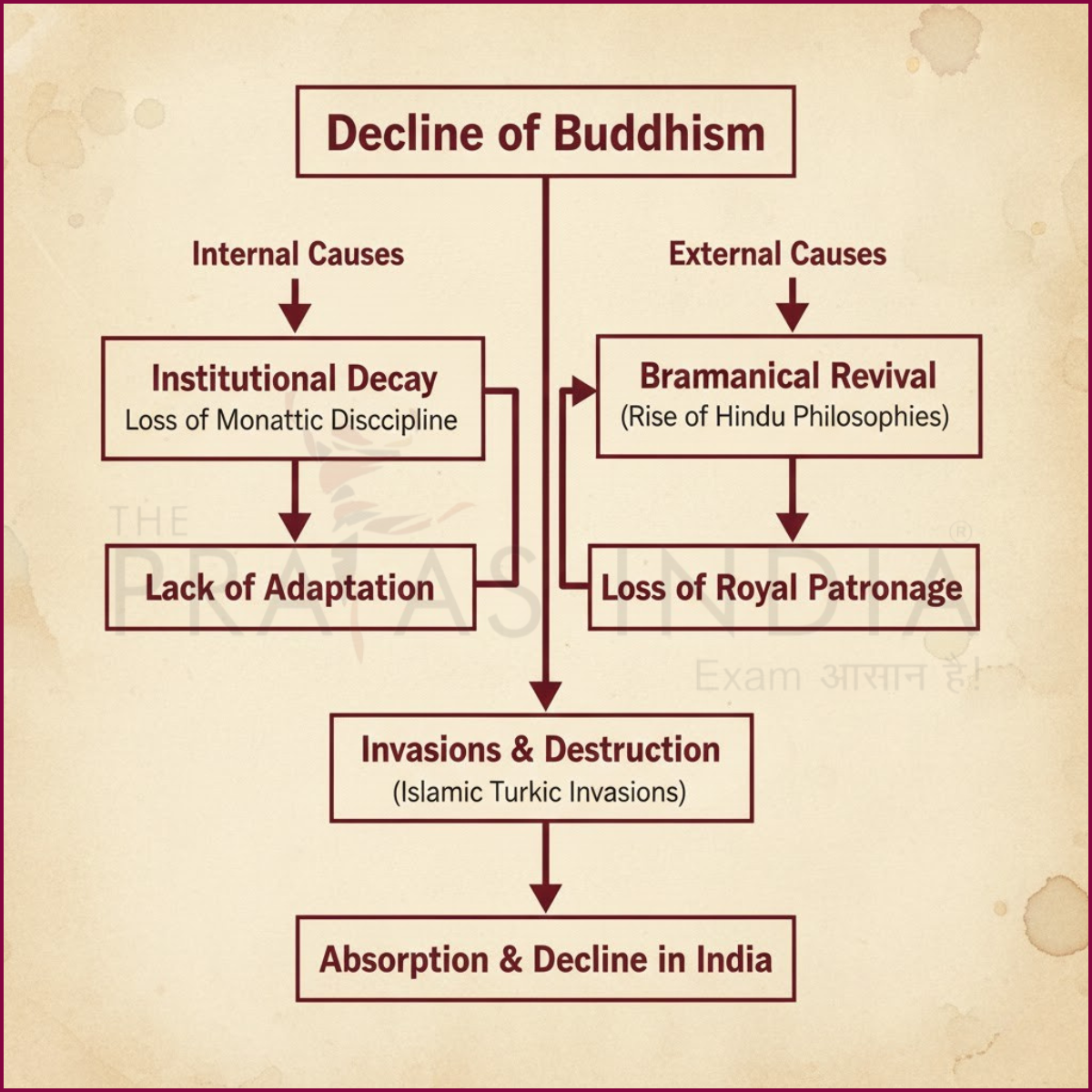
Decline of Buddhism in India
Internal Factors
- Institutional rigidity
- Loss of moral authority
- Dependence on patronage
External Factors
- Revival of Brahmanism
- Absorption into Hinduism
- Destruction of monasteries during invasions
Contribution of Buddhism to Indian Culture
- Art & Architecture: Stupas, Viharas, cave architecture
- Education: Nalanda, Vikramshila universities
- Ethics: Compassion, non-violence, equality
Buddhism as a World Religion
Today, Buddhism influences global ethics, peace movements, psychology, and mindfulness practices. It is studied not merely as a religion but as a philosophy of life.
FAQs (UPSC-Focused & SEO-Optimized)
Q1. Why did Buddhism emerge as a heterodox religion in ancient India?
Buddhism emerged in the 6th century BCE as a response to excessive Vedic ritualism, rigid caste hierarchy, and social inequalities. It emphasized ethical conduct, rational inquiry, and individual salvation without dependence on priests or sacrifices.
Q2. What are the Four Noble Truths in Buddhism?
The Four Noble Truths explain the nature of human suffering (Dukkha), its cause (Tanha), its cessation (Nirodha), and the path leading to liberation (Eightfold Path).
Q3. How is Buddhism different from Brahmanical Hinduism?
Buddhism rejects the authority of the Vedas, ritual sacrifices, and the concept of an eternal soul (Atman). It focuses on ethical living, impermanence, and self-effort rather than birth-based hierarchy.
Q4. What role did Ashoka play in the spread of Buddhism?
Ashoka patronized Buddhism after the Kalinga War, supported the Third Buddhist Council, sent missionaries across Asia, and propagated Dhamma through inscriptions and pillars.
Q5. What are the main sects of Buddhism?
The three major sects are:
- Theravada (Hinayana) – conservative, original teachings
- Mahayana – Bodhisattva ideal
- Vajrayana – tantric practices
Q6. Why did Buddhism decline in India?
Its decline resulted from internal degeneration of monasteries, loss of royal patronage, revival of Brahmanism, assimilation into Hinduism, and destruction during foreign invasions.
Q7. How is Buddhism relevant in the modern world?
Buddhism contributes to global peace, ethical living, mental health (mindfulness), non-violence, and conflict resolution, making it highly relevant today.
Conclusion
Buddhism represents a reformist, ethical, and rational tradition that challenged social inequalities and offered a universal path to liberation. Its teachings remain relevant in addressing modern challenges of conflict, alienation, and moral crisis. As both a historical force and a living philosophy, Buddhism continues to shape human thought across civilizations.