Dark Patterns in the Digital Economy: Ethical, Legal, and Governance Challenges
- GS Paper 1: Indian Society, Digital Behaviour, Social Change
- GS Paper 2: Governance, Consumer Rights, Regulatory Institutions
- GS Paper 3: Digital Economy, E-Commerce, Data Protection, Cyber Issues
- GS Paper 4: Ethics, Integrity, Corporate Ethics, Public Trust
- Prelims: Consumer Protection, Digital Terminology (conceptual awareness)
Introduction
Dark Patterns refer to deceptive user interface (UI) and user experience (UX) design practices that manipulate users into taking actions they may not have consciously intended or fully understood. These practices exploit cognitive biases, behavioural psychology, and information asymmetry to benefit digital platforms—often at the expense of consumer autonomy and informed consent.
The term “Dark Patterns” was coined in 2010 by user experience designer Harry Brignull, within the broader discourse on digital design ethics, to highlight manipulative design strategies that subvert user interests rather than serve them.
In the contemporary era of e-commerce, mobile applications, fintech platforms, and social media ecosystems, dark patterns have become increasingly prevalent due to intense competition, data-driven business models, and profit maximization imperatives. As India undergoes rapid digitalisation, these practices pose serious challenges to consumer rights, trust in digital governance, and ethical market functioning, creating a growing trust deficit between users and digital platforms.
Conceptual Understanding of Dark Patterns
At their core, dark patterns are intentional design choices that steer user behaviour in ways that primarily benefit platforms while undermining free, informed, and voluntary decision-making.
Unlike neutral or persuasive design—which aims to help users make efficient choices—dark patterns cross ethical boundaries by concealing information, creating false urgency, or emotionally pressuring users.
Key Features of Dark Patterns
- Lack of Transparency
Critical information is hidden, obscured, or disclosed too late in the decision-making process. - Psychological Manipulation
Use of cognitive biases such as fear of missing out (FOMO), default bias, or guilt framing. - Asymmetric Information
Platforms possess superior knowledge, which is selectively revealed to guide user behaviour. - Coercive or Misleading Design
Users are nudged toward outcomes they might otherwise reject if presented clearly and fairly.
Types of Dark Patterns (with Examples)
Dark patterns manifest in multiple forms across digital platforms. Some of the most commonly observed types include:
1. Forced Action
Users are compelled to perform certain actions—such as mandatory account creation or granting permissions—to access basic services, even when such actions are not strictly necessary.
2. Nagging
Repeated prompts, pop-ups, or notifications pressure users until they comply with a particular choice, often discouraging dissent.
3. Confirmshaming
Use of guilt-inducing language that frames refusal as irresponsible, ignorant, or socially undesirable, thereby emotionally manipulating users.
4. Hidden Costs
Additional charges such as convenience fees or service charges are revealed only at the final stage of payment, distorting price transparency.
5. Roach Motel
Users find it extremely easy to sign up for a service but disproportionately difficult to unsubscribe or exit, often involving complex procedures.
6. Drip Pricing
Price components are disclosed gradually throughout the transaction, preventing users from evaluating the total cost upfront.
7. Privacy Zuckering
Designs trick users into oversharing personal data by presenting privacy-invasive options as default or beneficial.
| Type of Dark Pattern | Core Definition | Impact on Consumer Behaviour |
|---|---|---|
| Bait and Switch | Advertises one offer but switches to a less desirable alternative at checkout. | Leads to unintended purchases, eroding trust and increasing regret. |
| Sneak into Basket | Adds extra items or subscriptions to cart without clear consent. | Boosts sales through unnoticed add-ons, causing surprise billing. |
| Roach Motel | Easy to enter (e.g., subscribe) but hard to exit (cancel). | Traps users in ongoing commitments, reducing churn. |
| Hidden Costs | Conceals fees or terms until late stages. | Discourages informed decisions, inflating perceived value. |
| Confirmshaming | Uses guilt-tripping language to discourage cancellations (e.g., “No, I don’t care about charity”). | Pressures compliance via social/emotional manipulation. |
| Nagging | Repeated prompts or interruptions to force action. | Wears down resistance, prompting hasty agreements. |
| Obscured Information | Buries critical details in fine print or complex layouts. | Prevents full understanding, favoring platform over user. |
| Forced Continuity | Auto-renews subscriptions with hard-to-cancel options. | Locks in revenue, complicating service exits. |
Dark Patterns in the Indian Digital Ecosystem
India’s digital ecosystem has expanded rapidly due to increased smartphone penetration, affordable data, and the growth of platform-based services. However, this growth has also created fertile ground for dark patterns.
A significant portion of Indian consumers, particularly those with low digital literacy, may not fully comprehend complex interface designs, terms and conditions, or data consent mechanisms. This makes them especially vulnerable to manipulative practices.
Further, elderly users, children, first-time internet users, and rural populations face disproportionate risks due to limited familiarity with digital norms. Dark patterns in such contexts can distort purchasing behaviour, encourage unnecessary spending, and compromise personal data security.
Ethical Dimensions
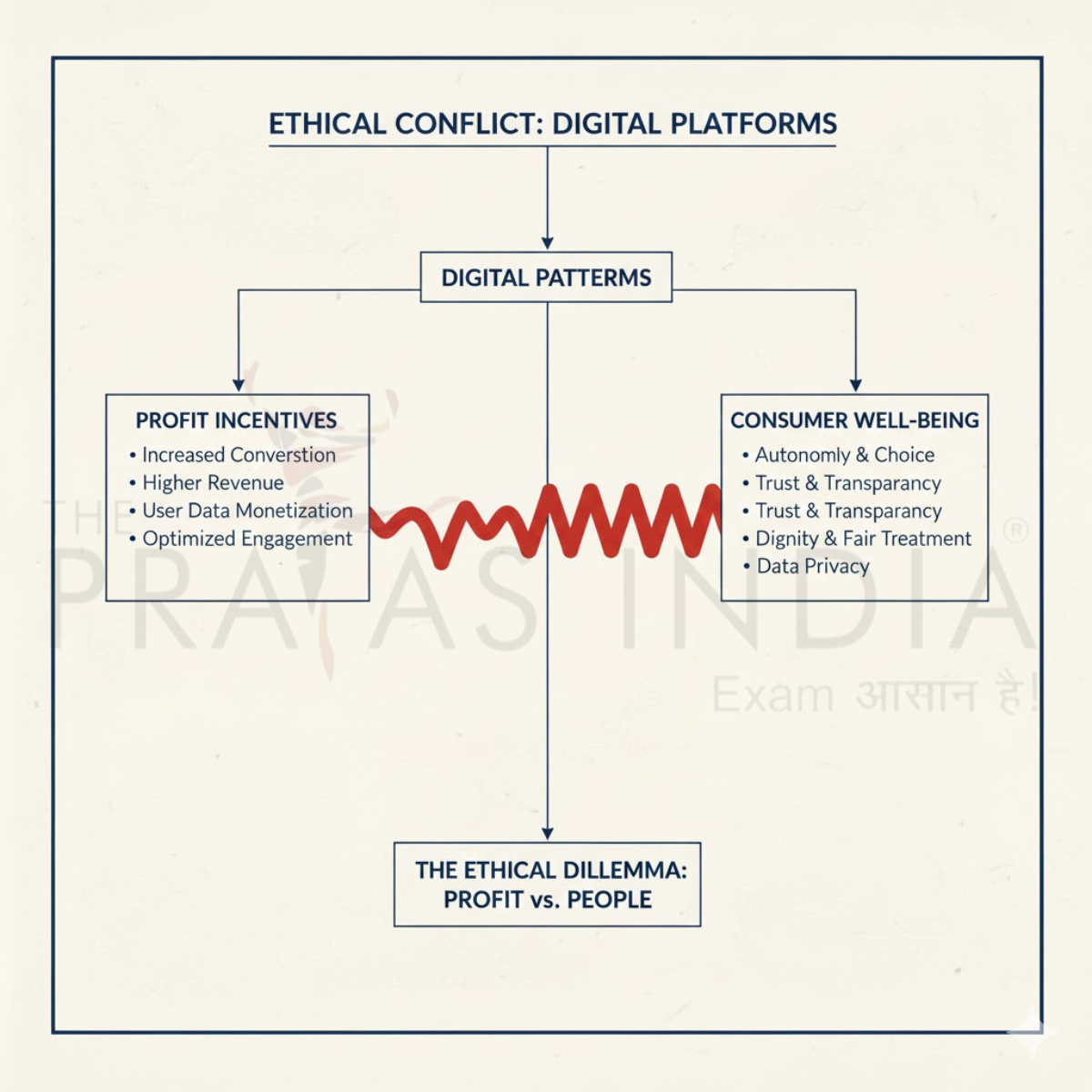
From an ethical standpoint, dark patterns raise serious concerns about autonomy, consent, and moral responsibility.
Key Ethical Issues
- Violation of Informed Consent:
Consent obtained through manipulation cannot be considered ethically valid. - Erosion of Consumer Autonomy:
Users are denied meaningful choice when decisions are pre-engineered. - Manipulation vs Persuasion:
Ethical persuasion respects user agency, whereas manipulation exploits cognitive weaknesses. - Corporate Ethics vs Profit Maximization:
Excessive focus on revenue undermines ethical obligations toward consumers.
Ethics Linkages
- Ends vs Means: Profit achieved through unethical means erodes institutional legitimacy.
- Trust as a Public Good: Digital trust is collectively shared and easily damaged.
Legal & Regulatory Framework in India
India has taken significant steps to address dark patterns through consumer protection and regulatory mechanisms.
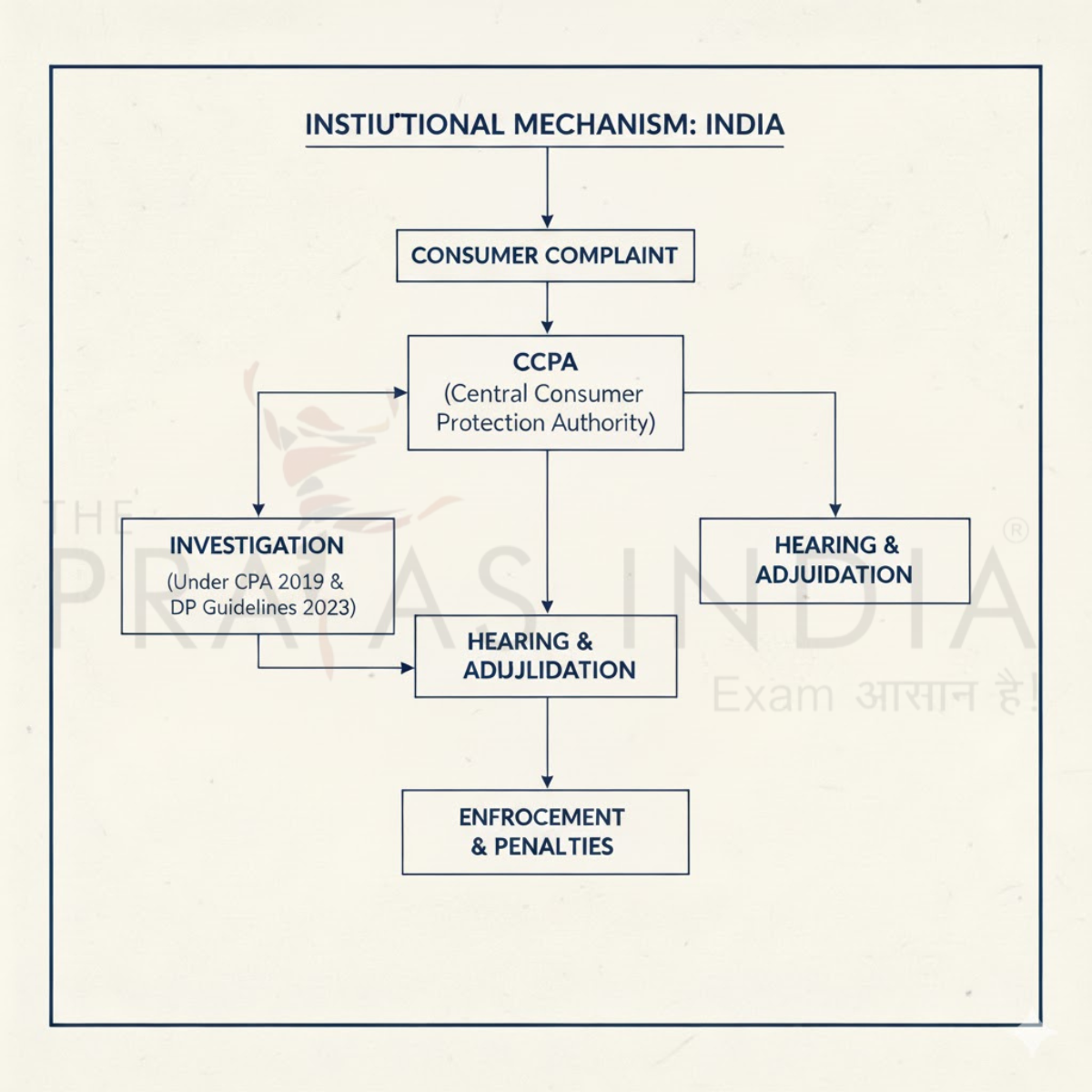
Consumer Protection Act, 2019
The Act empowers authorities to act against unfair trade practices, misleading advertisements, and consumer exploitation in digital markets.
Guidelines for Prevention and Regulation of Dark Patterns (2023)
Issued by the government, these guidelines explicitly define dark patterns and prohibit their use, marking a shift from implicit regulation to explicit legal recognition.
Role of Central Consumer Protection Authority (CCPA)
The CCPA is empowered to investigate, impose penalties, and issue directions against violative platforms.
Link with Data Protection Principles
Dark patterns related to data consent violate principles of purpose limitation, transparency, and user control, reinforcing the need for integrated digital regulation.
Global Perspective
Globally, regulators are increasingly recognising the harms posed by dark patterns:
- European Union: The Digital Services Act mandates transparency and user-centric design.
- United States: The Federal Trade Commission has taken enforcement action against deceptive interface practices.
- OECD: Emphasises fairness, transparency, and informed choice in digital consumer protection.
India’s regulatory approach aligns with these global norms, reflecting policy convergence.
Impact on Society & Economy
The unchecked proliferation of dark patterns leads to:
- Decline in Digital Trust: Users become sceptical of online platforms.
- Consumer Exploitation: Financial losses and privacy breaches increase.
- Market Distortion: Ethical businesses face unfair competition.
- Long-Term Governance Risks: Weak trust undermines digital public infrastructure.
Role of Governance & Institutions
Effective governance requires:
- Robust Regulatory Oversight
- Platform Accountability and Compliance Audits
- Digital Literacy and Consumer Awareness Campaigns
- Accessible Grievance Redressal Mechanisms
Institutions must balance innovation with consumer protection.
Way Forward
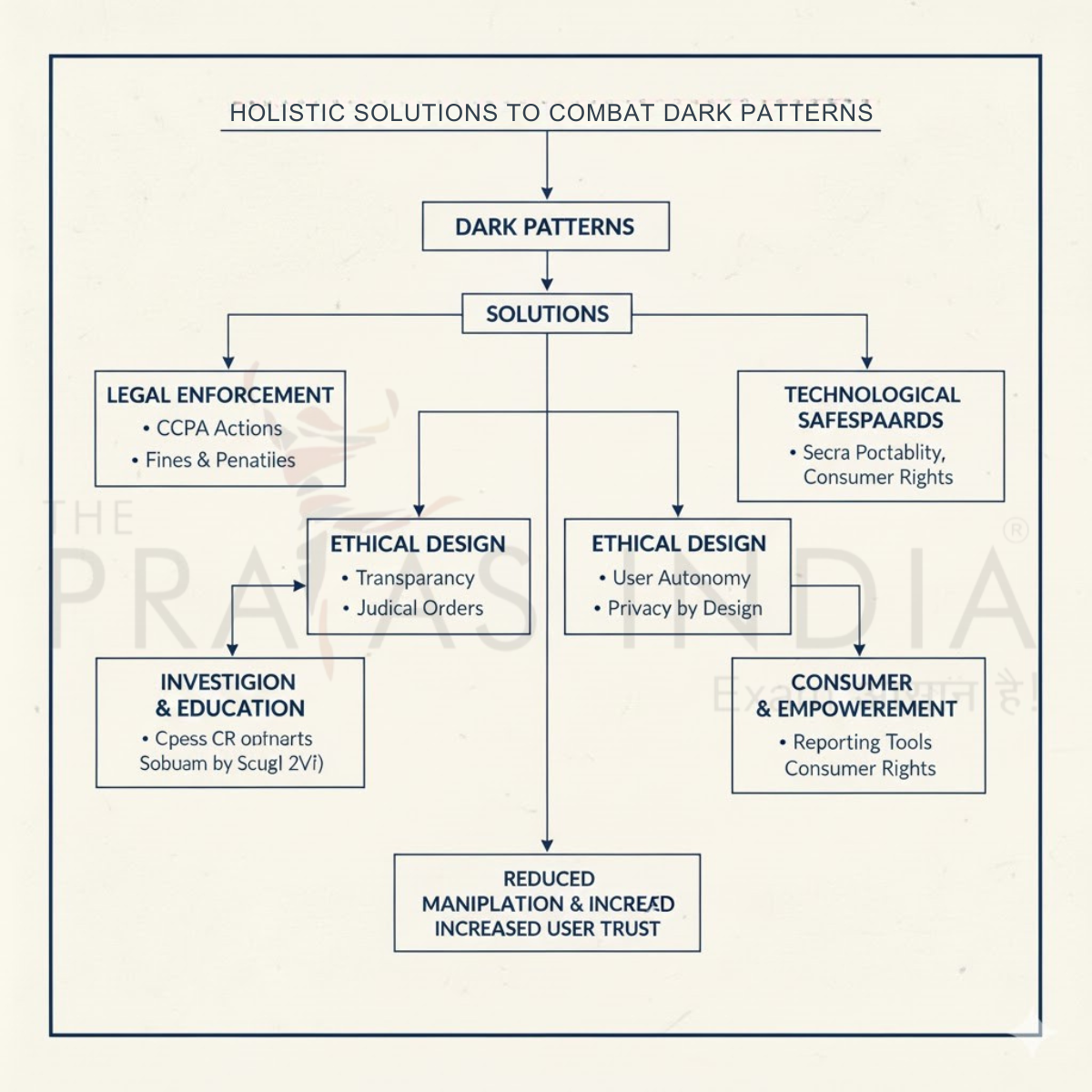
A comprehensive strategy to combat dark patterns should include:
- Clear UI/UX Transparency Standards
- Strict Enforcement and Deterrent Penalties
- Ethical-by-Design Principles in Platform Development
- Consumer Awareness and Digital Literacy Initiatives
- Independent Audits and Algorithmic Accountability
Conclusion
Dark patterns represent a subtle yet powerful threat to the integrity of the digital ecosystem. By undermining trust, autonomy, and informed choice, they weaken the foundations of consumer-centric governance. As India advances toward a digitally empowered society, ethical design, robust regulation, and empowered consumers must form the cornerstone of sustainable digital growth. The future of Digital India lies not merely in technological expansion but in trust-based, rights-oriented digital governance.
Frequently Asked Questions (FAQs) – Dark Patterns
Q1. What are Dark Patterns in simple terms?
Dark patterns are deceptive digital design techniques used in websites or apps to manipulate users into making choices that benefit platforms, often without the user’s full awareness or informed consent.
Q2. How are dark patterns different from nudges or persuasion?
While nudges and persuasion respect user autonomy and transparency, dark patterns manipulate cognitive biases, hide information, or use coercive language, thereby violating informed consent.
Q3. Why are dark patterns considered an ethical issue?
Dark patterns undermine consumer autonomy, dignity, and trust, violating ethical principles such as informed consent, fairness, and respect for individuals—key concerns in GS-IV ethics.
Q4. What are some common examples of dark patterns?
Common examples include forced sign-ups, hidden charges, confirmshaming, roach motel designs, drip pricing, and privacy manipulation, widely observed in e-commerce and digital services.
Q5. Why are Indian consumers particularly vulnerable to dark patterns?
Low digital literacy, language barriers, and rapid platform adoption make elderly users, first-time internet users, and rural populations more susceptible to manipulative design practices.
Q6. Which law governs dark patterns in India?
Dark patterns are regulated under the Consumer Protection Act, 2019, and explicitly addressed through the Guidelines for Prevention and Regulation of Dark Patterns, 2023.
Q7. What is the role of CCPA in regulating dark patterns?
The Central Consumer Protection Authority (CCPA) investigates complaints, issues directions, imposes penalties, and ensures compliance by digital platforms engaging in unfair trade practices.
Q8. How do dark patterns affect the digital economy?
They lead to erosion of trust, market distortion, consumer exploitation, and long-term damage to digital governance, affecting sustainable economic growth.
Q9. How does global regulation address dark patterns?
Globally, frameworks like the EU’s Digital Services Act, US FTC enforcement, and OECD consumer protection principles promote transparency and user-centric design.
Q10. What is the ideal way forward to tackle dark patterns?
The way forward includes ethical-by-design UI standards, strong enforcement, consumer awareness, digital literacy, and independent audits of digital platforms.