Dr. B. R. Ambedkar: Architect of Social Justice and Constitutional Democracy in India
- GS Paper 1: Modern Indian History (Dalit Movement, Social Reformers, Freedom Struggle)
- GS Paper 2: Polity – Constitution Making, Fundamental Rights, Social Justice
- GS Paper 4: Ethics – Justice, Equality, Constitutional Morality, Leadership
- Prelims: Constituent Assembly, Drafting Committee, key constitutional provisions
- Optional (Polity / History / Sociology / Ethics): Constitution Making, Social Justice, Political Thought
Introduction
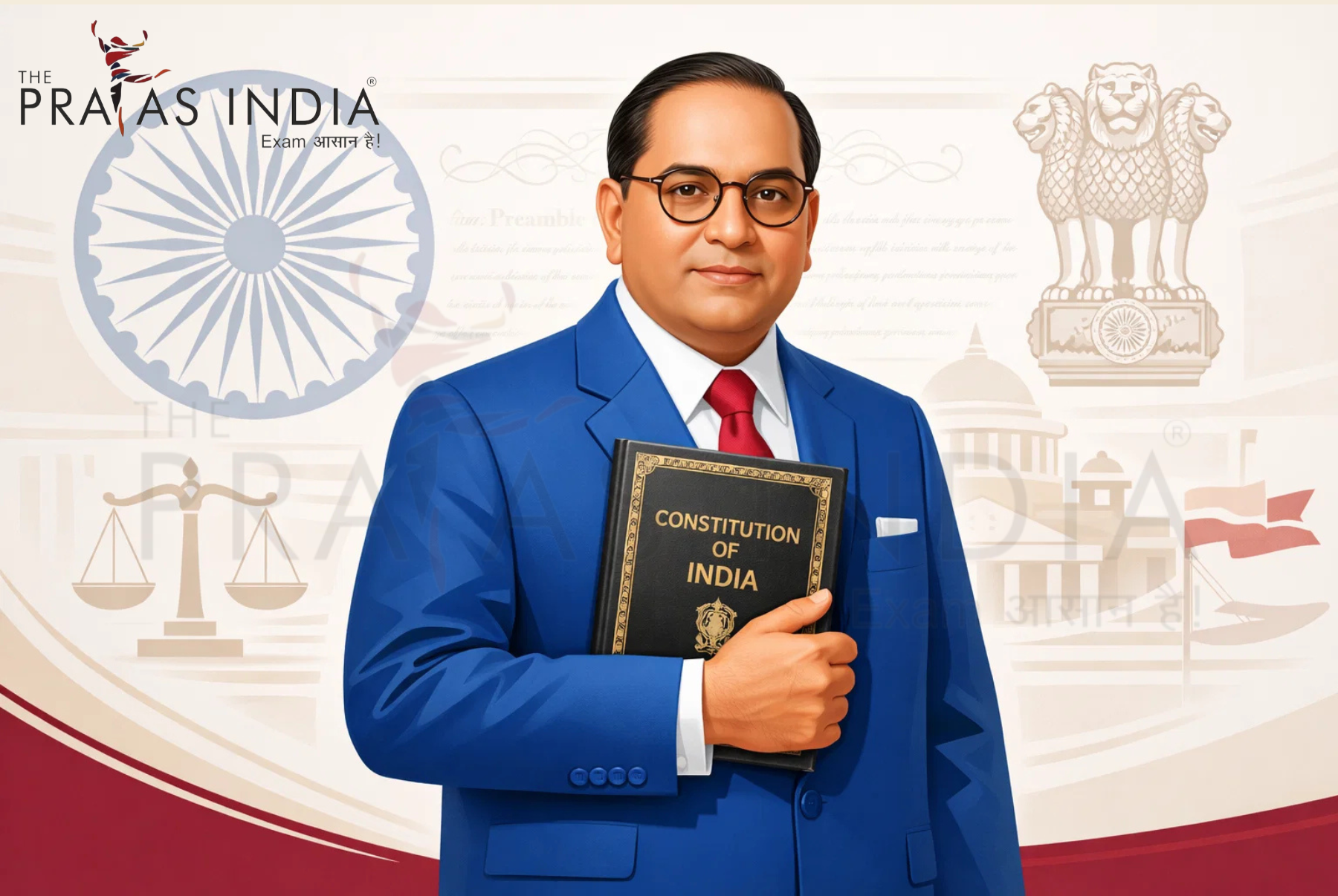
Dr. Bhimrao Ramji Ambedkar occupies a unique and unparalleled position in modern Indian history as a social reformer, political philosopher, jurist, economist, and the chief architect of the Indian Constitution. More than a leader of a community or a legal expert, Ambedkar emerged as a nation-builder whose ideas continue to shape India’s democratic and constitutional ethos.
Unlike many nationalist leaders whose focus lay primarily on political independence, Ambedkar viewed social democracy as the true foundation of political freedom. For him, independence without equality, dignity, and justice for the oppressed was hollow. His lifelong struggle against caste discrimination, his insistence on constitutional safeguards for the marginalised, and his commitment to democratic morality place him at the core of India’s modern political development.
Early Life and Education
Born in 1891 at Mhow (Central Provinces) into a Mahar family, Dr. Ambedkar experienced caste-based discrimination from an early age. Despite academic brilliance, he was denied basic human dignity—separate seating in school, denial of water, and social exclusion left a deep imprint on his consciousness.
Ambedkar’s education became the most powerful instrument of his emancipation:
- University of Bombay – Early academic excellence
- Columbia University, USA – Exposure to liberal democracy, pragmatism, and social justice (influenced by John Dewey)
- London School of Economics & Gray’s Inn – Training in economics, law, and constitutionalism
This rare blend of Western liberal thought and Indian social realities shaped Ambedkar into a thinker who combined moral urgency with institutional solutions.
Ambedkar as a Social Reformer
Ambedkar’s social reform efforts were radical, organised, and uncompromising. He rejected the idea that caste could be reformed from within Hindu society without structural change.
Key Movements
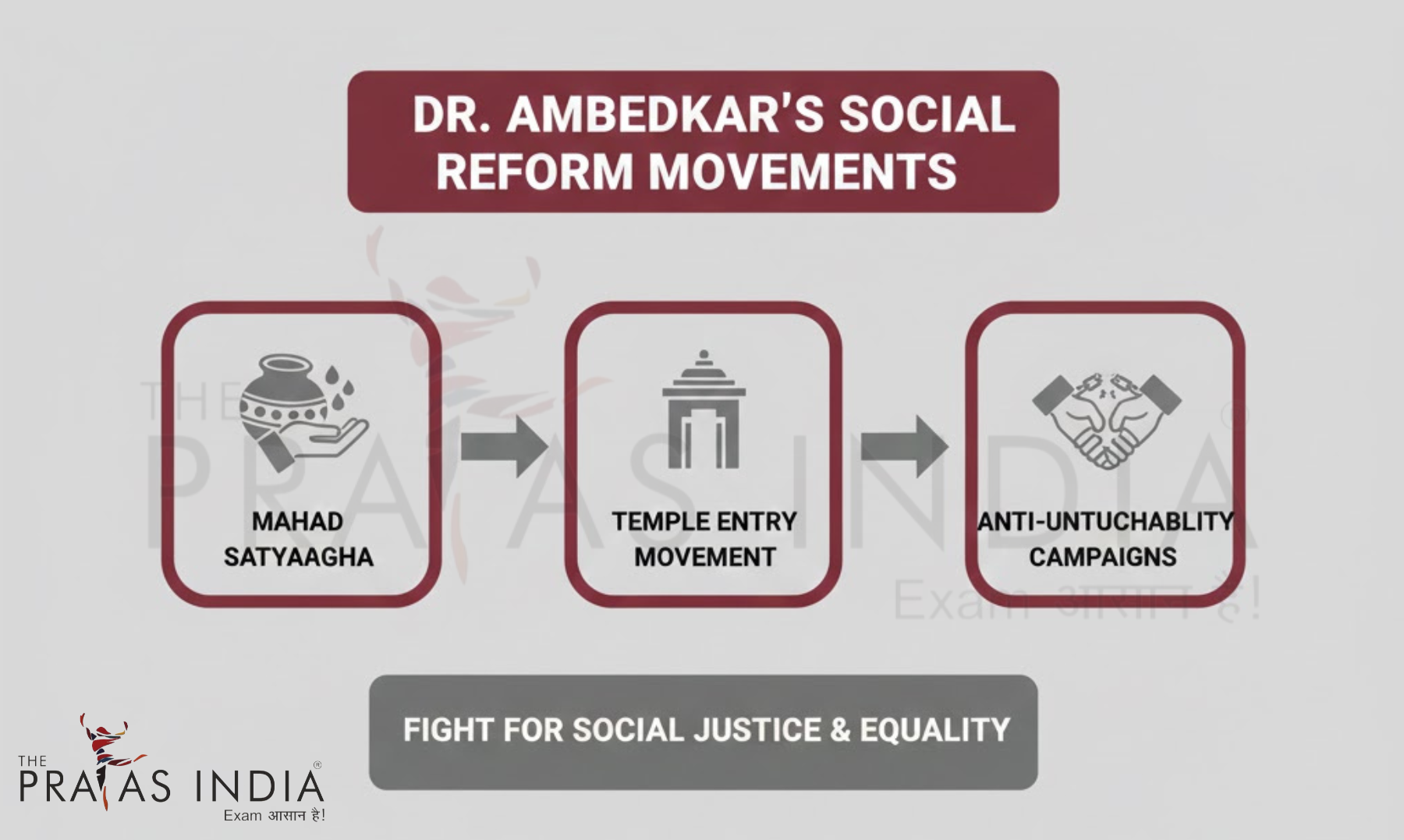
- Mahad Satyagraha (1927): Assertion of the right of untouchables to access public water sources
- Burning of Manusmriti: Symbolic rejection of scriptures legitimising caste hierarchy
- Temple Entry Movements: Challenging Religious Exclusion
Ambedkar believed that social equality must precede political equality, and that reform required law, agitation, and moral clarity rather than appeals to upper-caste conscience.
Political Thought and Ideology
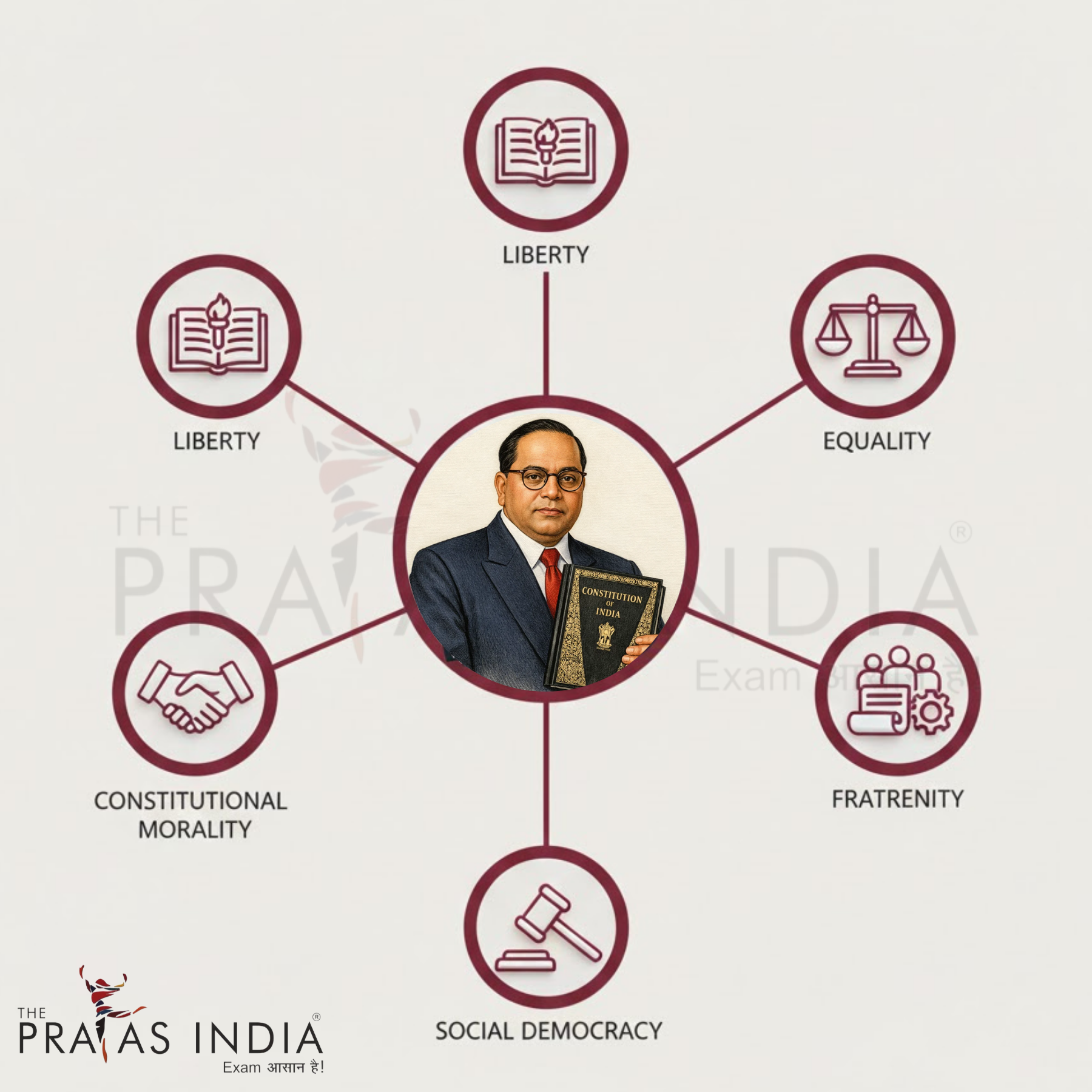
Ambedkar’s political philosophy rested on four interlinked pillars:
- Liberty: Individual freedom from social and religious tyranny
- Equality: Substantive, not merely formal, equality
- Fraternity: Social solidarity beyond caste divisions
- Justice: Social justice as the core of democracy
He famously warned that India lived a contradiction—political equality under one person-one vote but social inequality in everyday life.
Constitutional Morality
Borrowed from British constitutional thought, Ambedkar redefined constitutional morality as:
“A respect for the forms, processes, and spirit of the Constitution.”
Role in the Freedom Struggle
Ambedkar’s engagement with the freedom struggle differed from mainstream Congress politics. His priority remained social emancipation rather than symbolic nationalism.
Separate Electorates Debate
- Advocated separate electorates for Depressed Classes to ensure political voice
- Opposed by Gandhi, who feared social fragmentation
Poona Pact (1932)
- Separate electorates replaced with reserved seats within joint electorates
- Ambedkar accepted under pressure, but later criticised it as a moral defeat
Role in Constitution Making
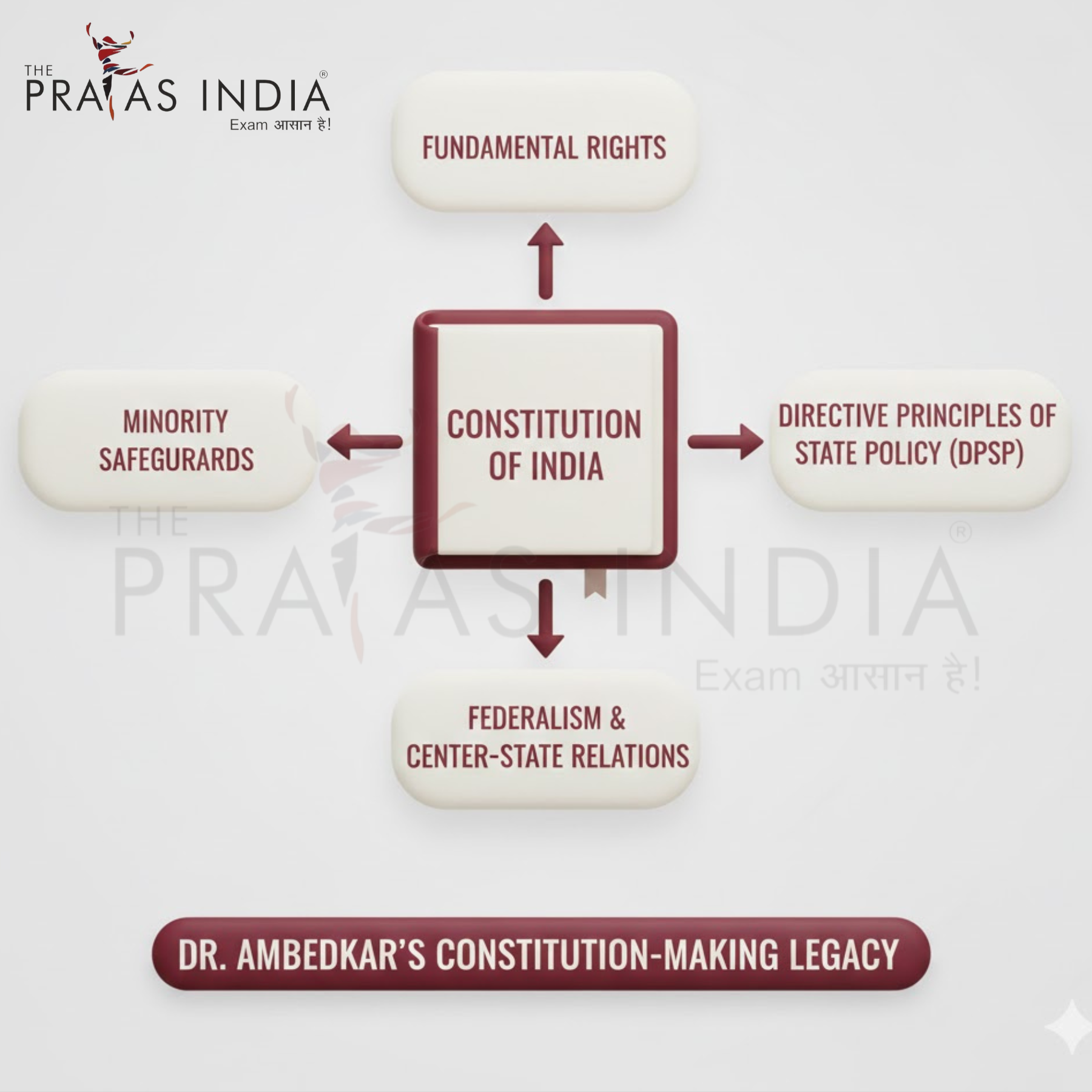
As Chairman of the Drafting Committee, Ambedkar emerged as the principal architect of the Indian Constitution. Granville Austin describes the Constitution as a document of “social revolution through law.”
Key Contributions
- Fundamental Rights: Equality before law, abolition of untouchability (Article 17)
- Safeguards: Reservations for SCs/STs, minority protections
- Strong Judiciary: Judicial review and constitutional supremacy
- Federal Structure: Balance between unity and diversity
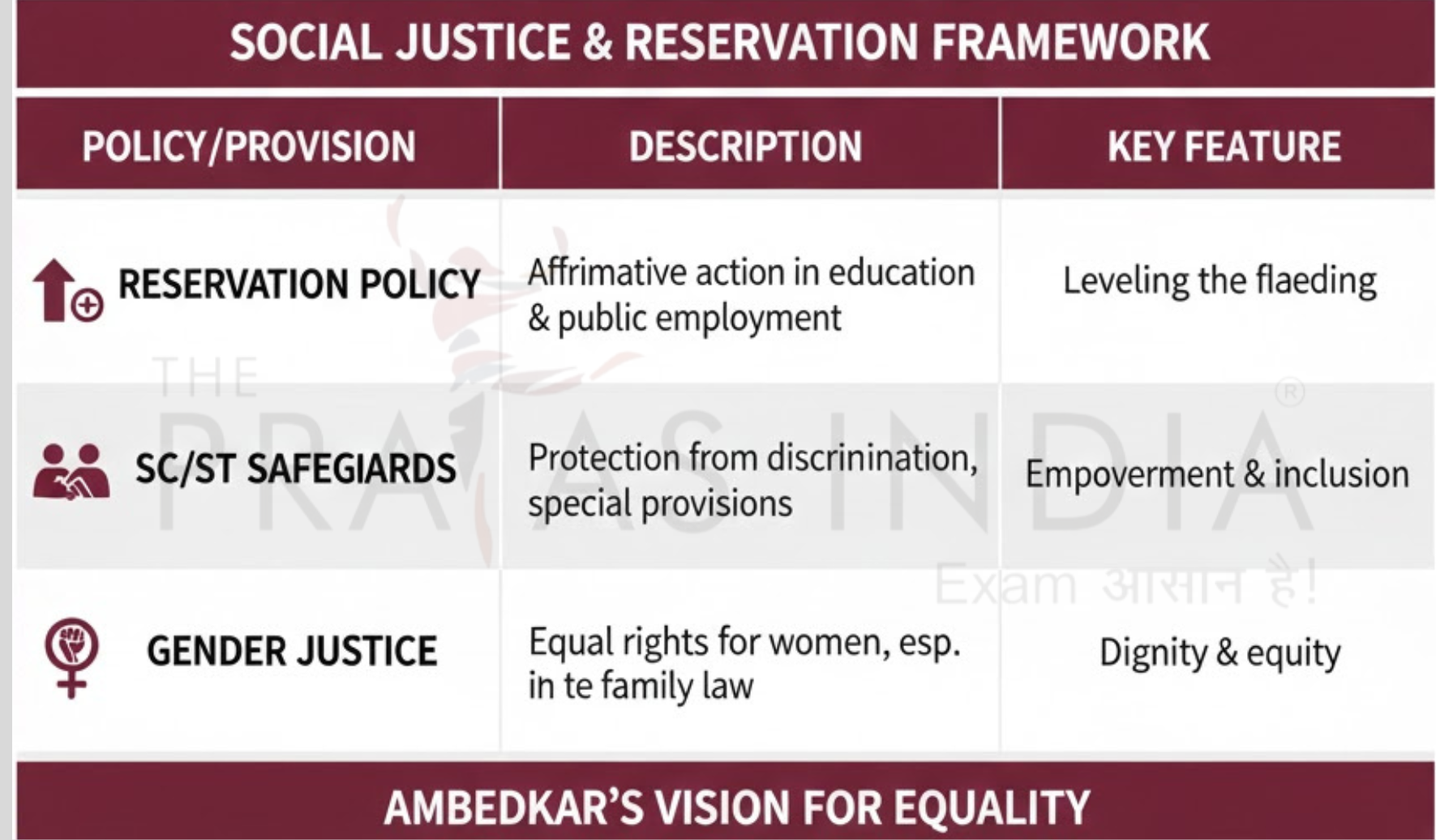
Ambedkar and Social Justice Framework
Ambedkar viewed reservations as instruments of empowerment, not charity.
Major Contributions
- Articles 15(4), 16(4): Affirmative action
- Special provisions for SCs/STs
- Strong emphasis on gender justice, including property and marriage reforms
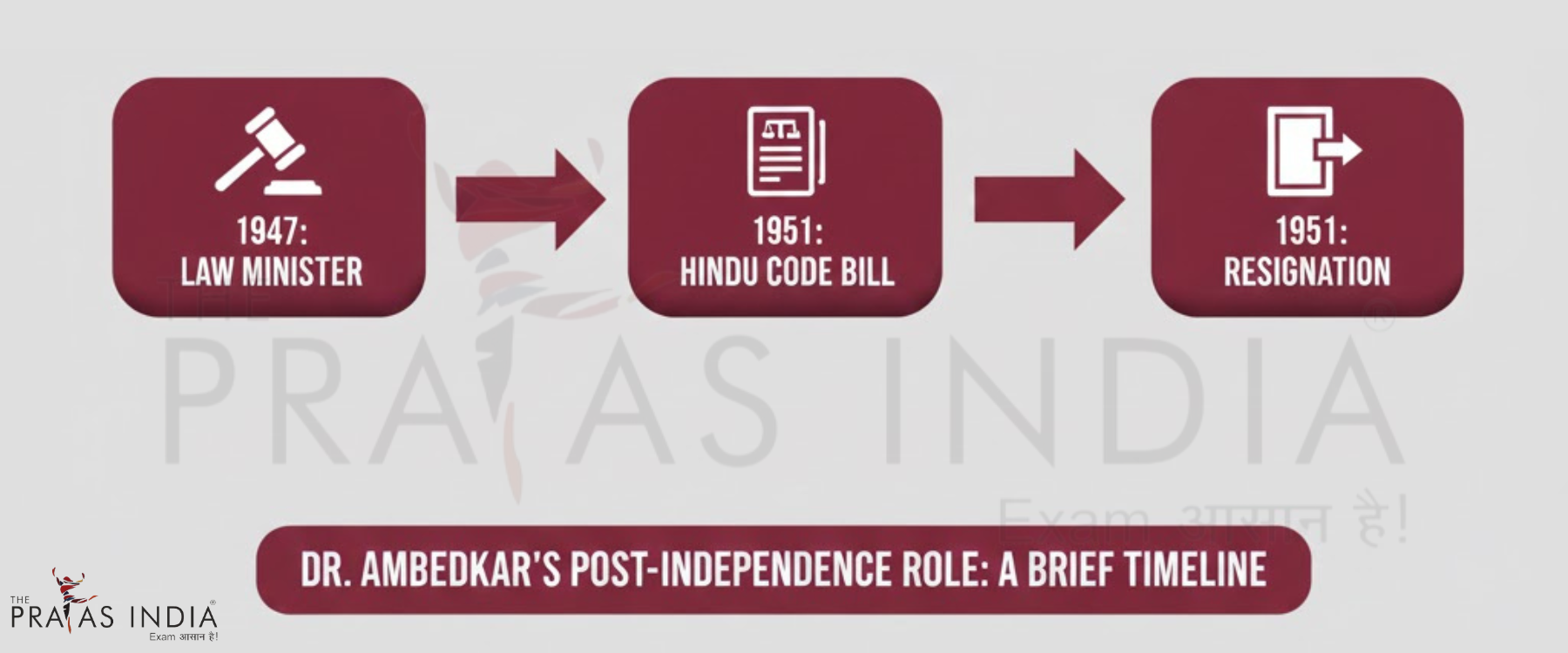
Ambedkar in Independent India
Appointed India’s first Law Minister, Ambedkar sought to reform Hindu personal laws through the Hindu Code Bill, promoting:
-
Gender equality
-
Property rights for women
-
Legal modernisation
Strong opposition forced dilution, leading to his resignation in 1951, a principled stand highlighting his ethical commitment over political office.
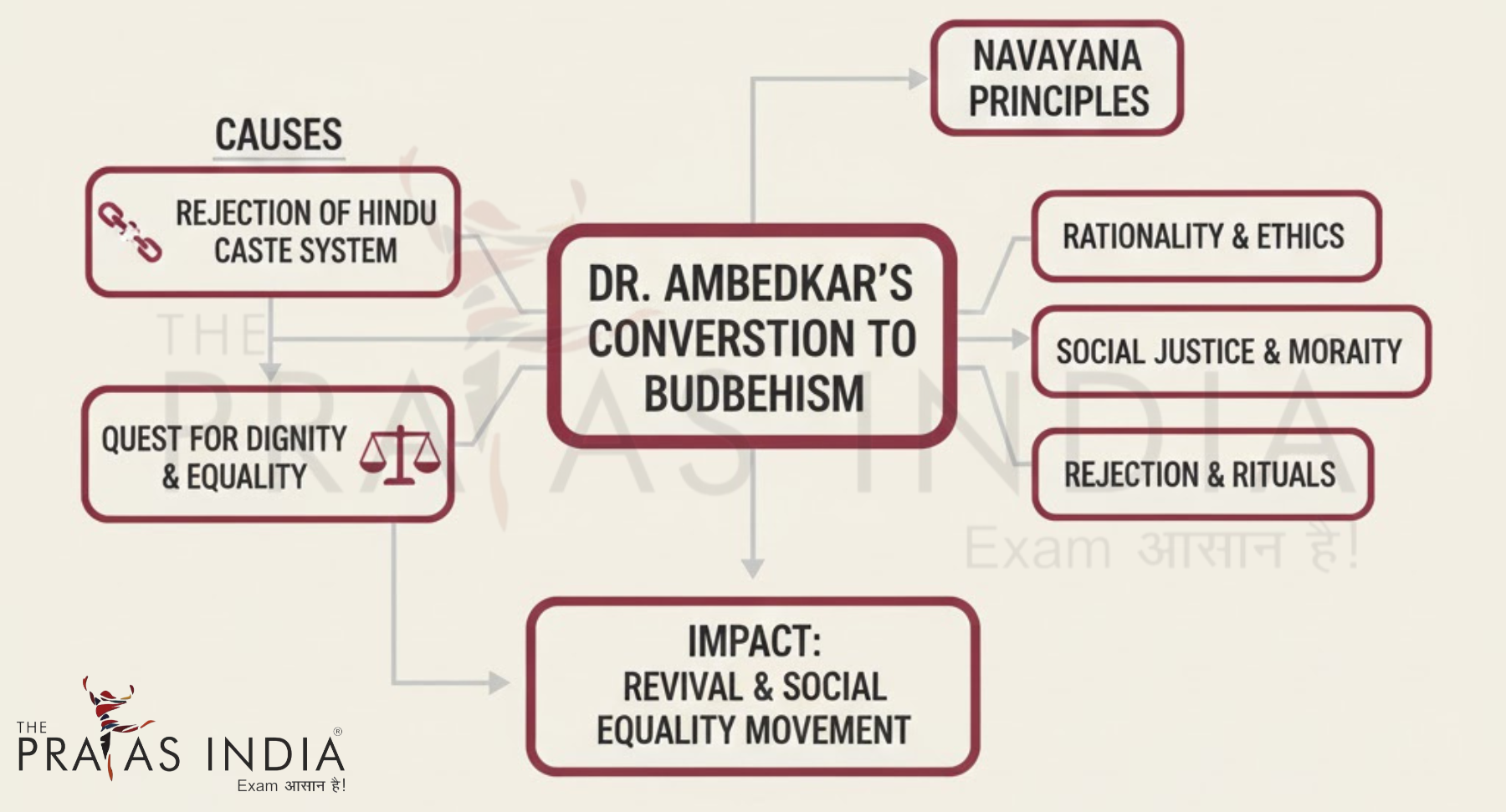
Conversion to Buddhism
In 1956, Ambedkar converted to Buddhism along with millions of followers, rejecting Hinduism which he saw as irredeemably hierarchical.
Navayana Buddhism
- Rational, ethical, socially engaged
- Rejection of ritualism
- Buddhism as a path to dignity and equality
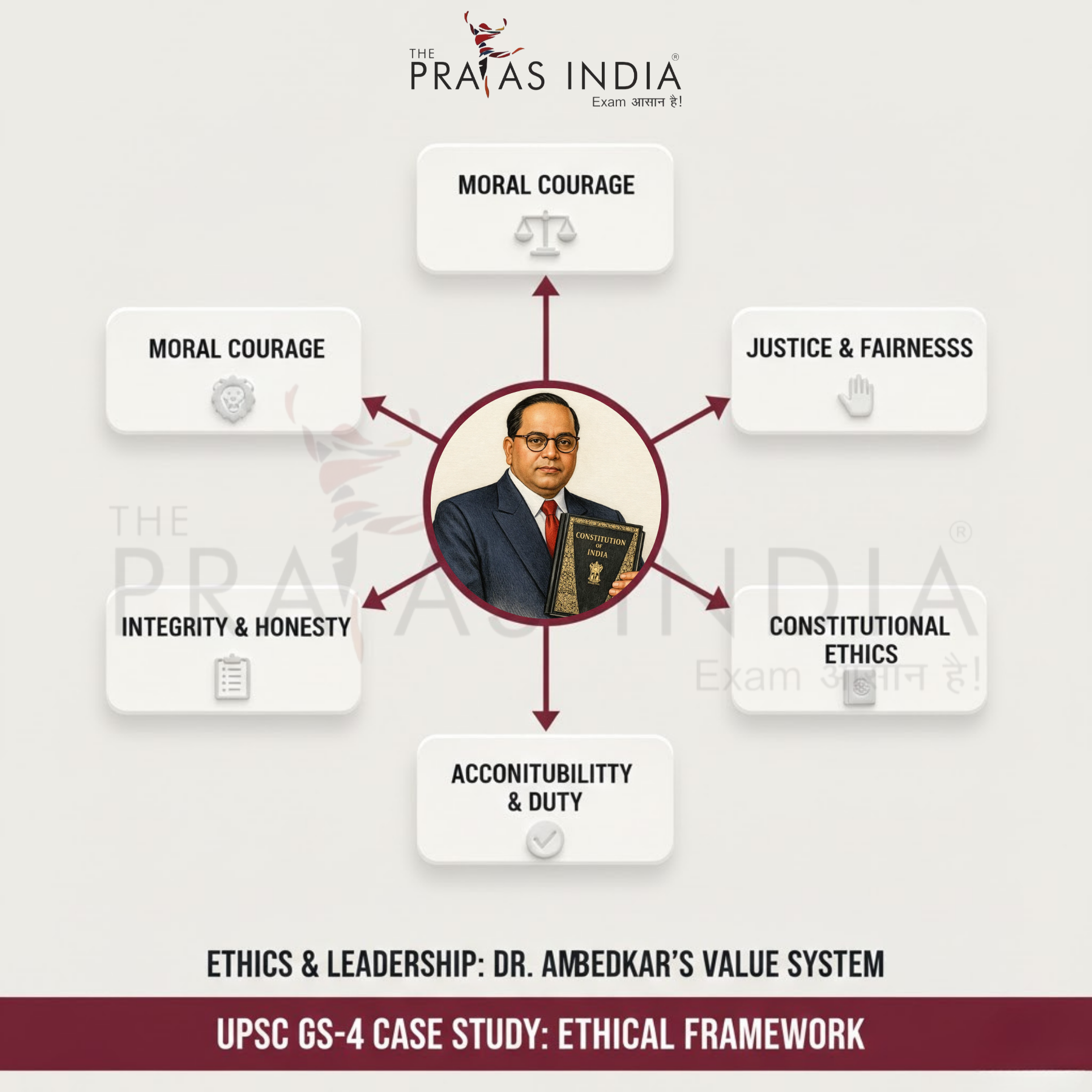
Ethical Dimensions and GS Paper IV Relevance
Ambedkar’s life exemplifies ethical leadership:
- Moral courage against majoritarian pressure
- Commitment to justice over popularity
- Institutional ethics over personal power
He offers rich case studies for GS-IV, especially on integrity, justice, and leadership.
Contemporary Relevance
Ambedkar remains central to:
- Debates on reservation and inclusion
- Judicial interpretation of constitutional morality
- Social justice policies
- Democratic dissent and rights-based governance
His warning against hero-worship in democracy and emphasis on institutions over individuals is particularly relevant today.
Conclusion
Dr. B. R. Ambedkar stands as the conscience keeper of Indian democracy. His vision transcended political independence to encompass social transformation through constitutional means. By embedding justice, equality, and dignity into India’s foundational law, Ambedkar ensured that democracy would remain a living, self-correcting process.
In a society still grappling with inequality, Ambedkar’s ideas remain not only relevant but indispensable.
Frequently Asked Questions (FAQs)
Q1. Why is Dr. B. R. Ambedkar called the Architect of the Indian Constitution?
Dr. Ambedkar was the Chairman of the Drafting Committee of the Constituent Assembly. He played a decisive role in framing Fundamental Rights, safeguards for minorities, federal structure, and embedding constitutional morality into India’s governance framework.
Q2. What were Dr. Ambedkar’s major social reform movements?
His major movements include the Mahad Satyagraha (1927) for water rights, temple entry movements, and sustained campaigns against untouchability and caste-based discrimination.
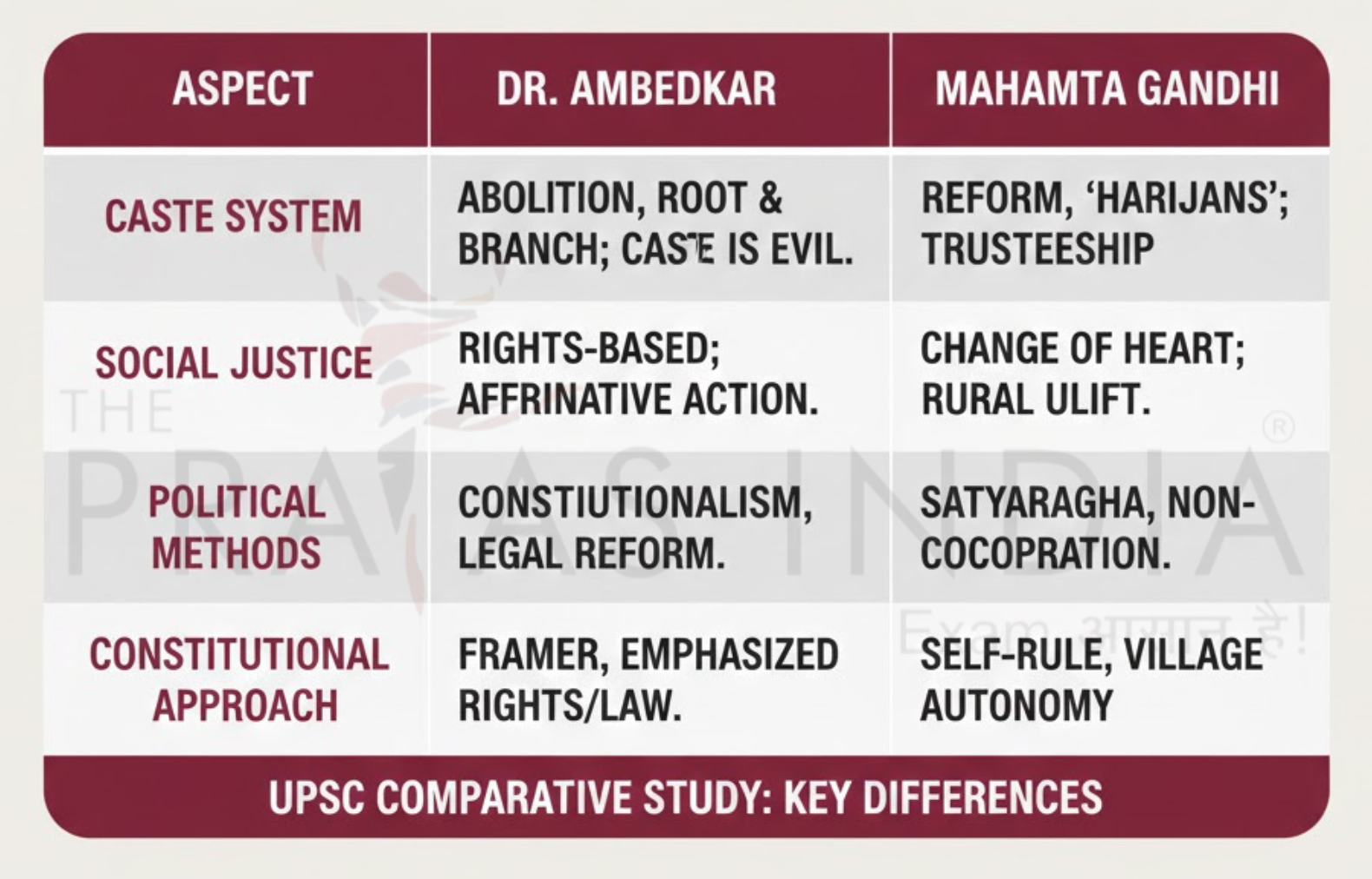
Q3. How did Ambedkar’s approach to social justice differ from Gandhi’s?
Ambedkar emphasized legal-constitutional safeguards and state intervention, whereas Gandhi focused more on moral reform and social harmony. Their differences culminated in the Poona Pact (1932).
Q4. What is constitutional morality according to Dr. Ambedkar?
Constitutional morality refers to respect for constitutional values such as liberty, equality, fraternity, rule of law, and institutional integrity beyond mere obedience to the text.
Q5. Why did Dr. Ambedkar convert to Buddhism?
Ambedkar converted to Buddhism in 1956 as a rejection of caste-based oppression in Hindu society and as an embrace of Navayana Buddhism, centered on equality, rationality, and social justice.
Q6. How is Dr. Ambedkar relevant for GS Paper 4 (Ethics)?
His life exemplifies moral courage, commitment to justice, integrity in public life, and ethical leadership—key themes in UPSC GS Paper 4 case studies.