
Elephant Reserves in India: A Detailed Analysis for Civil Services Preparation
- GS Paper 1: Physical Geography, Biogeography
- GS Paper 3: Environment, Biodiversity, Conservation, Human–Animal Conflict
- Prelims: Protected Areas, Elephant Corridors, Wildlife Acts, Project Elephant
- Geography Optional: Biogeography, Conservation Geography, Wildlife Distribution Patterns
Introduction
The Asian Elephant (Elephas maximus), specifically the subspecies Elephas maximus indicus, represents one of India’s most iconic megafauna species. India holds the largest population of Asian elephants in the world, accounting for over 60 percent of the global wild population. According to the Elephant Census (2017), India has approximately 27,312 elephants, distributed across diverse forest landscapes.
Elephants play a significant role in Indian ecology and culture. Ecologically, they function as keystone species, shaping forest structure, maintaining ecosystem heterogeneity, and enabling long-distance seed dispersal. Culturally, elephants occupy a prominent position in Indian mythology, religion, and traditional practices. From an economic standpoint, elephant landscapes contribute to eco-tourism and sustain the livelihoods of forest-dependent communities.
Given the pressures of habitat loss, fragmentation, and rising human–elephant conflict, Elephant Reserves in India serve as crucial conservation spaces aimed at ensuring long-term survival of the species and promoting coexistence between people and wildlife.
Distribution of Elephants in India
India’s elephants are distributed across four major bio-geographic regions, reflecting diverse habitats:
Natural Habitats
- Tropical evergreen forests
- Semi-evergreen forests
- Moist and dry deciduous forests
- Grasslands and alluvial floodplains
- Mountain forests of the Eastern Himalayas
- River valleys and swamp ecosystems
Major Elephant Landscapes
- Eastern Himalayas Landscape
Includes Arunachal Pradesh, Assam, and parts of West Bengal; rich in wet evergreen forests. - Brahmaputra Flood Plains
Highly productive grasslands and riverine forests; supports high-density elephant populations. - Central India Landscape
Covers Chhattisgarh, Madhya Pradesh, Odisha, and Jharkhand; characterized by fragmented deciduous forests. - Western Ghats Landscape
One of the most important elephant habitats; largest contiguous populations in India. - Northern Plains and Terai Landscape
Includes Uttarakhand and Uttar Pradesh; dense sal forests and grasslands.
What Are Elephant Reserves?
Elephant Reserves (ERs) are large, landscape-scale conservation areas designated for the protection of wild elephants and their habitats. They are notified under Project Elephant (1992) but are not legally protected areas under the Wildlife Protection Act, 1972. This gives them a more flexible structure, often overlapping with:
- National Parks
- Wildlife Sanctuaries
- Reserved Forests
- Village Forests
- Private lands
How Elephant Reserves Differ:
| Category | Legal Status | Objective | Human Use |
|---|---|---|---|
| National Parks | Strictly Protected | Biodiversity | No human use |
| Wildlife Sanctuaries | Moderately Protected | Wildlife | Regulated |
| Tiger Reserves | WPA + NTCA rules | Tiger & habitat | Buffer zone allows use |
| Elephant Reserves | Administrative designation | Elephant & corridor protection | Mixed land use allowed |
The flexibility of ERs allows holistic conservation across fragmented landscapes that elephants naturally use.
List of Elephant Reserves in India
India has 33 Elephant Reserves (as of 2024), covering over 76,500 sq km. The number has increased with the addition of new reserves such as the Rayala Elephant Reserve (Andhra Pradesh).
| Elephant Reserve | State | Year Established | Elephant Population | Key Features |
|---|---|---|---|---|
| Nilgiri ER | Tamil Nadu, Karnataka, Kerala | 1980 | 6000+ | Largest ER; critical corridors like Mudumalai–Wayanad–Bandipur |
| Periyar ER | Kerala | 2002 | 1800+ | Evergreen forests; Periyar–Agasthyamalai corridor |
| Mayurjharna ER | West Bengal | 2002 | 120+ | Lateritic forests; human–elephant conflict hotspots |
| Garo Hills ER | Meghalaya | 2001 | 1800+ | Wet evergreen forests; global elephant conservation priority |
| Kameng ER | Arunachal Pradesh | 2005 | 1000+ | Continuous Himalayan habitat; high biodiversity |
| Singhbhum ER | Jharkhand | 2001 | 700+ | Deciduous forests; mining pressure |
| Rayala ER | Andhra Pradesh | 2022 | New population records | Emerging elephant range; Eastern Ghats linkage |
Elephant Corridors in India
Elephant corridors are narrow, natural pathways that connect larger elephant habitats. They enable safe movement for foraging, migration, and genetic exchange.
Why Corridors Matter
- Reduce habitat fragmentation
- Prevent genetic isolation
- Minimize human–elephant conflict
- Provide seasonal migration routes
India has 101 officially identified elephant corridors (WTI Report).
Major Corridors
- Brahmagiri–Nilgiris corridor
- Kaziranga–Karbi Anglong corridor
- Terai Arc corridors
- Eastern Ghats link corridors
- Kerala–Karnataka–Tamil Nadu tri-junction corridors

Ecological Importance of Elephant Reserves
Elephants are ecosystem engineers. Their presence ensures:
- Seed Dispersal: Elephants disperse large seeds over long distances.
- Forest Regeneration: By breaking branches and uprooting shrubs, they create microhabitats.
- Water Availability: They dig water holes, benefiting multiple species.
- Grassland Maintenance: Grazing and trampling maintain open habitats.
- Biodiversity Enhancement: Many species follow elephant-created paths.
Threats to Elephant Reserves in India
1. Habitat Loss and Fragmentation
Agricultural expansion, mining, infrastructure, and unplanned development reduce habitats.
2. Linear Infrastructure
- Railways causing elephant deaths
- Highways blocking movement
- Transmission lines causing electrocution
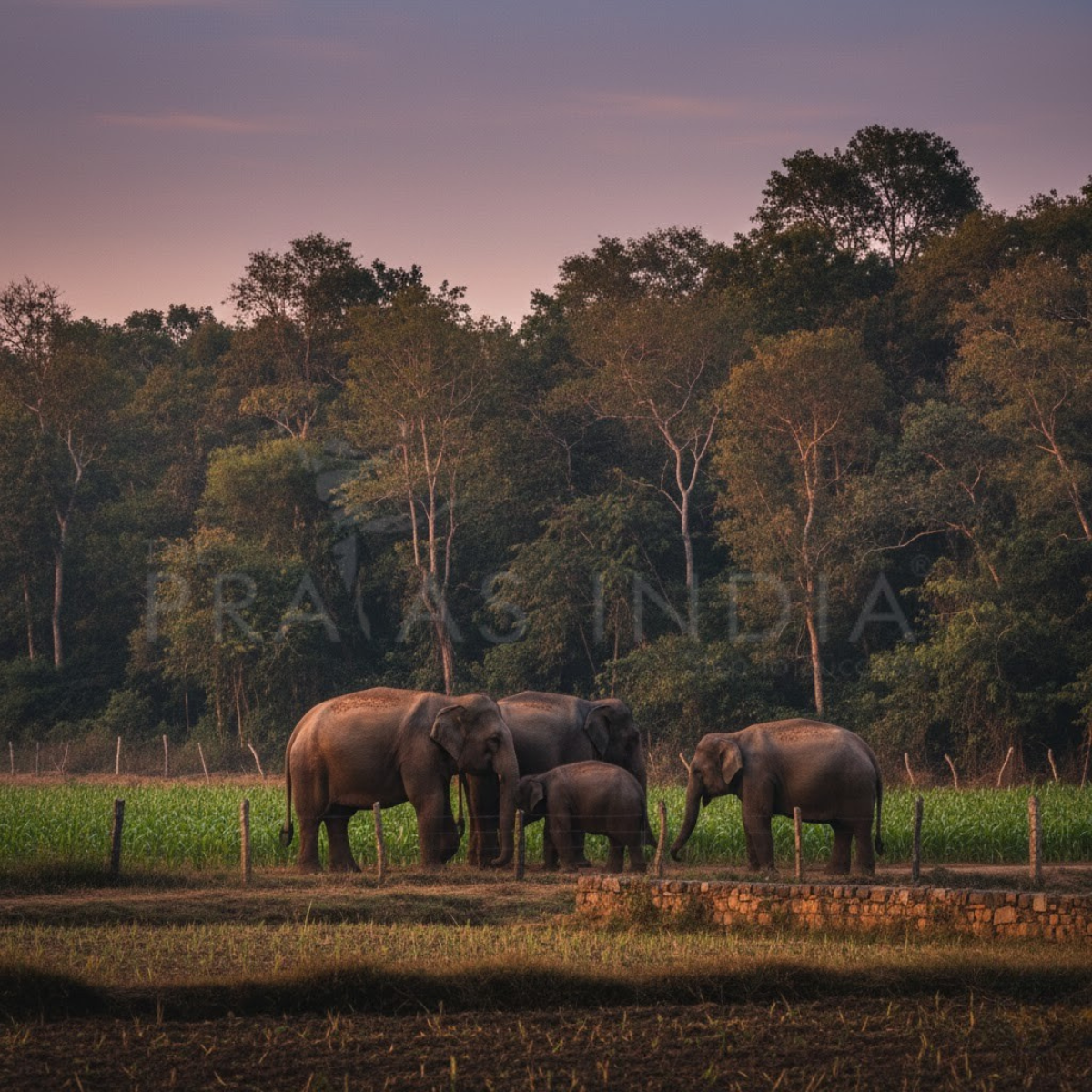
3. Human–Elephant Conflict
Crop raiding, property damage, and accidental human deaths fuel tensions.
4. Poaching
Illegal ivory trade affects bull elephants disproportionately.
5. Climate Change
Altered rainfall changes food and water availability, influencing migration patterns.
Conservation Measures in India
Government Initiatives
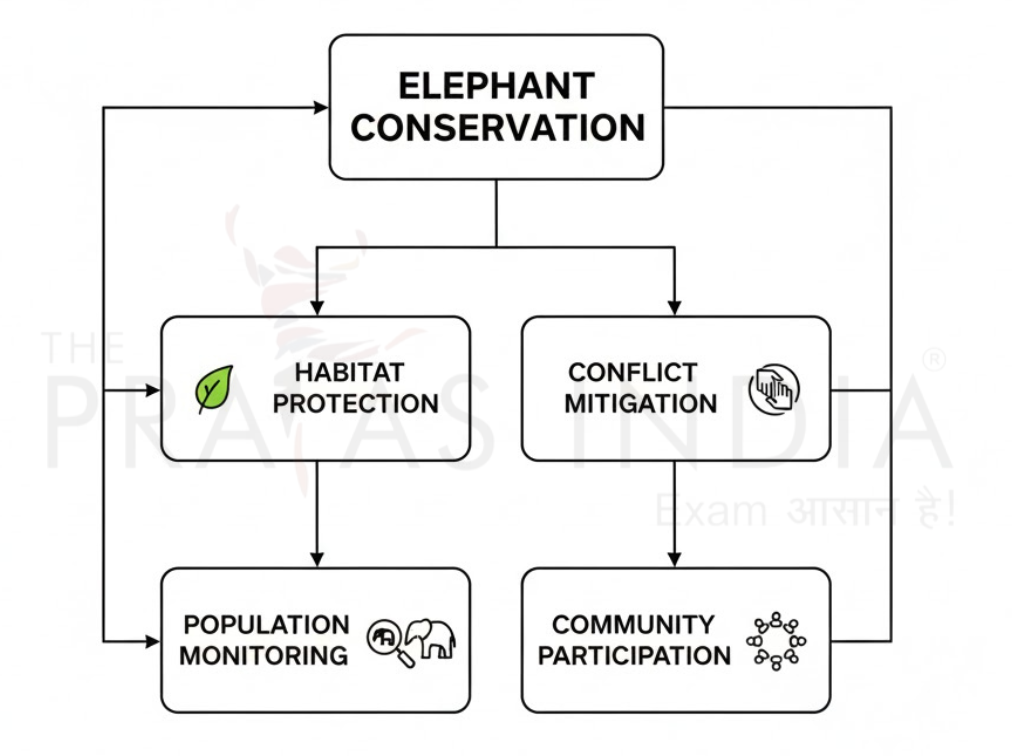
Project Elephant (1992)
Objectives include:
- Habitat protection and restoration
- Reducing human–elephant conflict
- Captive elephant welfare
- Population monitoring
Monitoring of Illegal Killing of Elephants (MIKE)
Implemented in designated sites like:
- Kaziranga
- Chirang Ripu
- Wayanad
- Nilgiris
- Similipal
Eco-Sensitive Zones
Buffer protection around crucial habitats.
Corridor Recognition by WTI
Encourages states to notify corridors as conservation reserves.
Technological Interventions
- Early warning sensor systems
- Thermal cameras along railway tracks
- GPS collaring
- Drone-based surveillance
- Solar-powered fencing
Community Participation
- Rapid compensation schemes
- Community forest management institutions
- Elephant-friendly cropping patterns
- Training for local youth as trackers
Case Studies
Nilgiri Elephant Reserve
Largest ER in India
Complex network of corridors
Cross-state coordination is critical
Kaziranga–Karbi Anglong Landscape
Seasonal migration intensified
High roadkill risk due to highways
North Bengal
Severe fragmentation
High human–elephant conflict
Odisha’s Corridor Expansion
State-led efforts to secure corridors
Landscape-level planning under scrutiny
International Context
IUCN Red List: Asian Elephant is Endangered
CITES: Appendix I, strict international trade restrictions
Global Corridors Movement: India is a leading voice promoting ecological connectivity
Asian Elephant Alliance: India contributes significantly to transboundary conservation dialogues
FAQs on Elephant Reserves in India
1. What is an Elephant Reserve?
An Elephant Reserve is a landscape-level conservation area notified under Project Elephant (1992) for protecting elephant habitats, corridors, and populations. Unlike National Parks, ERs may include multiple land-use categories such as reserved forests, village forests, and revenue land.
2. How many Elephant Reserves are there in India?
As of 2024, India has 33 notified Elephant Reserves, covering over 76,500 sq km across various ecological landscapes.
3. Which is the largest Elephant Reserve in India?
The Nilgiri Elephant Reserve (Tamil Nadu–Karnataka–Kerala) is the largest ER in India, supporting over 6,000 elephants and several critical corridors.
4. Why are elephant corridors important?
Corridors enable safe movement of elephants between habitats, preventing genetic isolation, reducing human–elephant conflict, and maintaining ecosystem connectivity.
5. What is Project Elephant?
Project Elephant, launched in 1992, aims at habitat protection, human–elephant conflict mitigation, scientific monitoring of elephant populations, welfare of captive elephants, and securing corridors.
6. What are the major threats to elephants in India?
Key threats include habitat fragmentation, linear infrastructure (railways, highways, transmission lines), human–elephant conflict, poaching, encroachment, and climate-driven habitat changes.
7. What is the MIKE Programme?
The Monitoring of Illegal Killing of Elephants (MIKE) is an international initiative under CITES implemented in selected Indian sites such as Kaziranga, Chirang Ripu, Wayanad, Nilgiris, and Similipal to track poaching trends.
8. Are Elephant Reserves legally protected like National Parks?
No. ERs are administrative designations under Project Elephant and do not carry the same legal protection as National Parks or Wildlife Sanctuaries. However, they often overlap with legally protected areas.
9. How does climate change affect elephants?
Climate variability alters water availability, vegetation patterns, and seasonal migration routes, increasing stress on elephant populations and intensifying conflict in some landscapes.
10. Which states have the highest elephant populations?
Karnataka, Assam, Kerala, and Tamil Nadu host the largest wild elephant populations in India.
Conclusion
Elephant Reserves in India function as essential ecological spaces that secure habitats, corridors, and long-term survival of the country’s most important species. As India urbanizes rapidly, conserving elephants requires landscape-level planning, community-centered solutions, climate-adapted strategies, and ecologically sensitive infrastructure development. The future of elephant conservation depends not only on protected areas but on India’s ability to integrate human development with ecological integrity, ensuring that elephants continue to thrive across their natural ranges.