Everything You Should Know Before Preparing for Railway Exams | Best Railway Exam Coaching in Mumbai | The Prayas India
Every Successful Railway Aspirant Starts with Clarity, Not Just Books.
Every year, lakhs of aspirants across India apply for various Railway recruitment examinations with the dream of securing a stable government job. The Indian Railways is one of the country’s largest employers, offering opportunities across technical and non-technical roles through examinations such as RRB NTPC, RRB Group D, RRB ALP, RRB Technician, Junior Engineer (JE), and Paramedical recruitments.
The attraction is understandable. Railway jobs offer job security, attractive salaries, career progression, government benefits, and the opportunity to work in one of India’s most respected public sector organisations.
However, while many candidates enthusiastically begin their preparation, a significant number struggle within the first few months—not because the examination is impossible to crack, but because they begin without understanding what the journey actually demands.
Some collect dozens of books before understanding the syllabus. Others spend weeks watching random strategy videos instead of building a practical study routine. Many attempt mock tests without completing the fundamentals, while others keep changing resources whenever they encounter a difficult topic.
These mistakes are rarely caused by a lack of intelligence.
They are usually caused by a lack of direction.
Before solving your first practice paper or opening your first textbook, you should understand how Railway examinations are structured, what skills they test, how much preparation they require, and how to build a roadmap that remains effective throughout your journey.
This article is designed to help you begin with that clarity.
Railway Recruitment Is Not One Examination
One of the biggest misconceptions among beginners is believing that there is only one “Railway Exam.”
In reality, the Railway Recruitment Boards (RRBs) conduct multiple examinations throughout the year for different posts, qualifications, and departments.
Some of the major Railway examinations include:
- RRB NTPC (Non-Technical Popular Categories)
- RRB Group D
- RRB ALP (Assistant Loco Pilot)
- RRB Technician
- RRB Junior Engineer (JE)
- RRB Paramedical Recruitment
Each examination has its own:
- Eligibility criteria
- Educational qualifications
- Selection process
- Examination pattern
- Difficulty level
- Job responsibilities
Understanding which examination aligns with your educational background and career goals should always be your first step.
Preparing without selecting the right target examination often leads to wasted effort and unnecessary confusion.
Preparation Begins Long Before You Start Studying
Many aspirants believe that preparation begins on the day they purchase their first book.
In reality, successful preparation begins much earlier—with planning.
Before deciding how many hours to study, which coaching to join, or which mock tests to attempt, you should first answer a few practical questions.
For example:
- Which Railway examination am I targeting?
- What is the latest examination pattern?
- Which subjects require the most attention?
- How much preparation time can I realistically dedicate every day?
- Which study resources will I follow consistently?
Answering these questions creates a structured preparation plan instead of an unorganised study routine.
Without a roadmap, even sincere effort can become inefficient.
Railway Exams Test More Than Subject Knowledge
Most Railway examinations evaluate a combination of aptitude, logical thinking, accuracy, speed, and consistency rather than memorisation alone.
Although the exact syllabus varies depending on the examination, aspirants commonly prepare subjects such as:
- Mathematics
- General Intelligence & Reasoning
- General Awareness
- Current Affairs
- General Science
- Basic Computer Knowledge (for selected examinations)
Success depends not only on understanding these subjects but also on solving questions accurately within strict time limits.
This makes regular practice, revision, and mock tests just as important as theoretical learning.
Students who balance concept-building with consistent practice generally perform better than those who rely only on reading books.
A Clear Preparation Strategy Reduces Confusion
One of the biggest reasons aspirants lose momentum is that they constantly change their preparation methods.
Some keep purchasing new books.
Others follow multiple YouTube channels simultaneously.
Many switch study plans every week after comparing themselves with other aspirants.
Instead of increasing productivity, these habits often create confusion and reduce confidence.
A better approach is to create one structured preparation plan and follow it consistently.
Your strategy should clearly define:
- Daily study schedule
- Weekly revision
- Practice sessions
- Mock test routine
- Performance review
When every study session has a purpose, preparation becomes more organised and measurable.
Expert Guidance Helps You Begin on the Right Path
Starting Railway exam preparation without proper guidance often leads to unnecessary trial and error. Many aspirants spend months following ineffective study plans, collecting excessive resources, or preparing for the wrong examination. A structured learning environment provides clarity from the beginning, helping students understand the exam pattern, prioritise important topics, and build a preparation strategy that remains effective throughout the journey.
At The Prayas India, Railway exam preparation is designed around expert faculty guidance, structured study plans, comprehensive classroom programmes, regular practice sessions, mock tests, and personalised mentoring. Students receive the direction needed to prepare confidently for examinations such as RRB NTPC, Group D, ALP, JE, Technician, and other Railway recruitments.

Build a Strong Foundation Before You Begin Serious Preparation
A Strong Preparation Strategy Is Built on the Right Decisions Made at the Beginning.
Many Railway aspirants believe that success depends on studying for long hours from the very first day. While dedication is important, the quality of your preparation matters far more than the number of hours you spend with your books.
Imagine two aspirants starting their Railway preparation on the same day.
The first candidate immediately purchases multiple books, joins several Telegram groups, watches different YouTube channels every day, and keeps changing study schedules based on online advice.
The second candidate spends the first few days understanding the syllabus, selecting a limited number of reliable resources, preparing a practical timetable, and defining clear weekly goals.
After a few months, the difference between these two aspirants becomes obvious.
The first candidate feels overwhelmed by information.
The second candidate follows a structured routine with confidence.
Before you attempt to complete the syllabus quickly, invest time in building a preparation system that remains effective until the examination.
Understand the Syllabus Before Choosing Study Material
One of the most common mistakes beginners make is buying books before understanding the examination syllabus.
Without knowing what the exam actually demands, it becomes difficult to decide which resources are genuinely useful.
Although the syllabus varies slightly depending on the Railway examination, most aspirants encounter subjects such as:
- Quantitative Aptitude
- General Intelligence & Reasoning
- General Awareness
- General Science
- Current Affairs
- Basic Computer Knowledge (for selected examinations)
Instead of collecting multiple books for every subject, begin with one reliable source and complete it thoroughly.
Mastering one quality resource is far more effective than partially studying from several different books.
Create a Daily Routine That You Can Actually Follow
Many study plans fail because they are designed around unrealistic expectations.
A timetable that demands twelve hours of study every day may appear impressive on paper, but if it cannot be maintained consistently, it quickly becomes discouraging.
A practical Railway preparation routine should balance learning, practice, revision, and rest.
A productive day generally includes:
- Learning new concepts
- Solving topic-wise practice questions
- Revising previously studied chapters
- Reading current affairs regularly
- Analysing practice performance
- Taking short breaks to maintain concentration
Consistency over several months always produces better results than occasional bursts of excessive study.
Practice Questions from the Beginning
Some aspirants postpone question-solving until they finish the entire syllabus.
This approach often creates unnecessary pressure later.
Concepts become stronger when they are immediately followed by practice.
For example, after completing a chapter on Percentage or Blood Relations, solve sufficient questions before moving to the next topic.
Regular practice helps you:
- Improve conceptual understanding.
- Recognise frequently asked question patterns.
- Increase solving speed.
- Build examination confidence.
- Identify weak areas early.
Learning and practising should progress together rather than separately.
Make Mock Tests a Regular Part of Preparation
Mock tests are not reserved only for the final months before the examination.
Even beginners benefit from attempting sectional tests and topic-based assessments.
As preparation progresses, full-length mock tests should become a regular habit.
Mock tests help you evaluate:
- Speed
- Accuracy
- Time management
- Question selection
- Overall examination readiness
However, remember that attempting mock tests alone is not enough.
Each mock should be followed by careful analysis to understand where improvement is needed before the next attempt.
A well-analysed mock test contributes far more to preparation than several mocks attempted without review.
Develop Preparation Habits That Last Until the Exam
Railway examinations require sustained preparation over several months.
Motivation naturally rises and falls during this period.
What keeps successful aspirants moving forward is not temporary motivation but disciplined daily habits.
Simple habits such as revising regularly, solving practice questions every day, maintaining short notes, analysing mistakes, and following a fixed timetable gradually become the foundation of consistent performance.
Strong habits reduce decision fatigue and make preparation more organised.
When preparation becomes a routine rather than a daily struggle, long-term consistency becomes much easier.
The Right Guidance Helps Build a Strong Foundation
Many aspirants spend months experimenting with different resources before discovering what actually works. This trial-and-error approach often delays progress and reduces confidence. Beginning with expert guidance helps students understand the syllabus correctly, prioritise important topics, follow a structured study plan, and avoid common preparation mistakes from the very beginning.
At The Prayas India, Railway aspirants receive a well-planned learning framework that includes experienced faculty, structured classroom programmes, comprehensive study material, regular practice sessions, mock tests, and personalised mentorship. This systematic approach enables students to build a solid foundation for examinations such as RRB NTPC, Group D, ALP, Technician, JE, and other Railway recruitments.

Avoid the Mistakes That Keep Railway Aspirants Away from Selection
Success in Railway Exams Is Often Determined by the Mistakes You Avoid, Not Just the Topics You Study.
Most aspirants begin their Railway preparation with enthusiasm and clear goals. They purchase study material, prepare timetables, and promise themselves that they will study consistently every day. Yet after a few months, many lose momentum. Their preparation becomes irregular, confidence starts declining, and mock test scores remain almost unchanged.
Interestingly, this usually doesn’t happen because the syllabus is too difficult.
It happens because small preparation mistakes slowly accumulate over time.
These mistakes may appear insignificant individually, but together they reduce productivity, waste valuable study hours, and prevent steady improvement. Recognising these problems early allows you to build a preparation journey that remains focused until the examination.
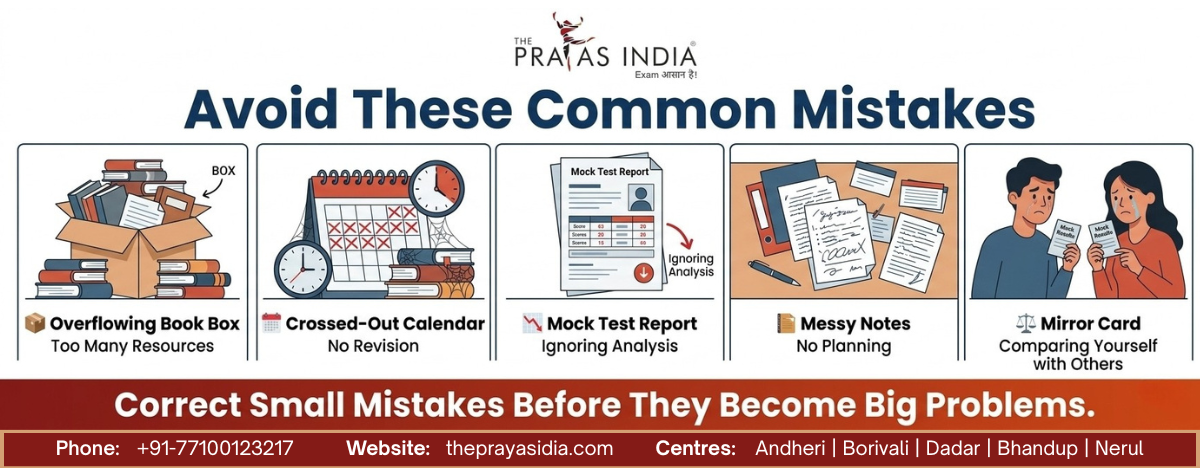
Changing Resources Repeatedly Slows Down Learning
One of the most common habits among Railway aspirants is constantly switching between books, online courses, PDFs, and YouTube channels.
Whenever they encounter a difficult chapter, they assume another resource will explain it better.
As a result:
- One book remains half-finished.
- Several online courses remain incomplete.
- Notes become scattered.
- Revision becomes difficult.
Instead of strengthening concepts, this habit creates confusion.
A far better approach is to select a limited number of reliable resources and complete them thoroughly before looking elsewhere.
Depth of understanding is always more valuable than the number of resources collected.
Ignoring Revision Creates the Illusion of Progress
Learning new topics every day feels productive.
However, learning without revision often leads to forgetting previously studied concepts.
Many aspirants realise this only after attempting mock tests, where questions from chapters they studied a month earlier suddenly become difficult.
Revision is not a separate activity.
It is an essential part of preparation.
A balanced study schedule should always include:
- Daily revision of recently studied topics.
- Weekly revision of important concepts.
- Monthly revision of complete sections.
- Regular review of personal short notes.
When revision becomes a routine, concepts remain fresh until the examination.
Attempting Mock Tests Without Learning from Them
Mock tests are one of the most powerful preparation tools available.
Unfortunately, many students use them only to check their scores.
After completing a mock test, they immediately move on to another one without understanding why mistakes occurred.
This approach limits improvement.
A productive mock review should answer questions such as:
- Which section consumed the most time?
- Which mistakes were avoidable?
- Which topics repeatedly reduced accuracy?
- Which questions should have been skipped initially?
- What should change before the next mock?
Every mock should influence your future preparation.
Otherwise, it becomes little more than another practice session.
Preparing Without a Long-Term Plan
Studying without a clear roadmap often creates unnecessary stress.
Many aspirants wake up each morning wondering what to study next.
This uncertainty leads to inconsistent preparation.
Instead, divide your journey into manageable stages.
For example:
Foundation Stage
- Learn concepts.
- Complete the syllabus.
- Build strong basics.
Practice Stage
- Solve topic-wise questions.
- Improve speed.
- Strengthen weak subjects.
Performance Stage
- Attempt full-length mock tests.
- Analyse performance.
- Refine examination strategy.
Breaking preparation into stages makes long-term goals much easier to achieve.
Comparing Yourself with Other Aspirants
Competitive examinations naturally encourage comparison.
Social media often amplifies this tendency.
One aspirant completes the syllabus quickly.
Another shares impressive mock scores.
Someone else posts long daily study hours.
While these updates may appear motivating, excessive comparison often creates unnecessary pressure.
Remember that every aspirant begins with different strengths, educational backgrounds, available study time, and learning speed.
The only meaningful comparison is with your own previous performance.
Ask yourself:
- Am I solving questions faster than last month?
- Has my accuracy improved?
- Are my mock scores becoming more consistent?
- Am I making fewer careless mistakes?
If the answer is yes, your preparation is moving in the right direction.
Expert Mentorship Helps You Avoid Costly Preparation Mistakes
Many Railway aspirants spend months correcting mistakes that could have been avoided with timely guidance. Experienced mentors not only explain concepts but also help students follow the right preparation sequence, choose appropriate resources, analyse mock tests effectively, and stay focused throughout the preparation journey. This structured support saves valuable time and increases confidence.
At The Prayas India, Railway exam preparation combines expert faculty, comprehensive classroom coaching, regular mock tests, personalised mentoring, doubt-solving sessions, and continuous performance reviews. Instead of relying on trial and error, students prepare with a systematic approach designed to maximise their chances of success in RRB NTPC, Group D, ALP, JE, Technician, and other Railway recruitment examinations.
Start Smart, Stay Consistent, and Keep Moving Towards Your Railway Career
The Best Time to Build the Right Preparation System Is Before the Competition Becomes Stronger.
Railway examinations reward candidates who prepare with clarity, consistency, and discipline. While every aspirant dreams of securing a government job, only those who follow a structured preparation plan are able to convert that dream into reality.
Success is rarely the result of studying endlessly for a few weeks. Instead, it comes from understanding the examination, building strong fundamentals, revising regularly, analysing performance, and improving continuously over several months.
Whether you are preparing for RRB NTPC, Group D, ALP, Technician, Junior Engineer (JE), or other Railway recruitment examinations, remember that every chapter you complete, every mock test you analyse, and every mistake you correct moves you one step closer to selection.
Your preparation journey should not be rushed.
It should be organised.
When you begin with the right direction and continue with the right strategy, consistent improvement becomes much easier to achieve.
Frequently Asked Questions About Railway Exam Preparation
When should I start preparing for Railway exams?
The earlier you begin, the better your preparation becomes.
Starting early gives you sufficient time to understand concepts, practise regularly, revise multiple times, and attempt mock tests without unnecessary pressure before the examination.
Can I prepare for Railway exams while studying or working?
Yes.
Thousands of successful candidates prepare alongside college or full-time jobs.
The key is following a realistic daily timetable and maintaining consistency instead of depending on long study sessions only during weekends.
How many hours should I study every day?
There is no fixed number.
A productive four to six hours of focused study is often more valuable than spending ten hours without concentration.
Quality, discipline, and regular revision always matter more than simply counting study hours.
Should I solve previous years’ Railway question papers?
Absolutely.
Previous year papers help you understand the examination pattern, frequently asked topics, question difficulty, and time management requirements.
They should remain an important part of every aspirant’s preparation.
When should I begin attempting mock tests?
Begin with topic-wise and sectional tests after learning the basics.
As your syllabus progresses, gradually include full-length mock tests followed by detailed performance analysis to improve speed, accuracy, and examination strategy.
Railway Preparation Checklist
Before your preparation gains momentum, make sure these essential steps are part of your routine.
Planning
✓ Selected the correct Railway examination.
✓ Understood the latest syllabus and exam pattern.
✓ Chosen limited, high-quality study resources.
Daily Preparation
✓ Following a realistic study timetable.
✓ Studying concepts before memorisation.
✓ Solving practice questions regularly.
Revision
✓ Revising important topics every week.
✓ Maintaining short notes for quick revision.
✓ Reviewing previous mistakes.
Practice
✓ Solving previous year question papers.
✓ Attempting sectional and full-length mock tests.
✓ Analysing every mock carefully.
Performance Improvement
✓ Monitoring weak topics.
✓ Improving speed and accuracy.
✓ Updating preparation strategy regularly.
Following this checklist consistently helps transform preparation into measurable progress.
Why Structured Coaching Helps Railway Aspirants Progress Faster
Although self-study is valuable, many aspirants struggle to maintain direction over several months of preparation. Common challenges include selecting the right study material, following an effective timetable, analysing mock tests correctly, and identifying weak areas early. A structured coaching environment reduces these challenges by providing a clear roadmap and continuous academic support.
At The Prayas India, Railway aspirants receive expert classroom coaching, comprehensive study material, regular mock tests, detailed performance analysis, personalised mentoring, and systematic revision support. The focus is not only on completing the syllabus but also on building the confidence, speed, and accuracy required to perform well in competitive Railway examinations.

Admission Scorecard
Preparing for Railway examinations is not just about covering the syllabus—it is about following the right strategy with consistency, expert guidance, and continuous performance improvement. Aspirants who receive structured mentoring often avoid common preparation mistakes, stay motivated throughout the journey, and improve their performance through systematic practice and mock analysis.
Why Choose The Prayas India for Railway Exam Preparation?
- Experienced faculty for Railway recruitment exams
- Comprehensive coaching for RRB NTPC, Group D, ALP, JE, Technician, and other Railway exams
- Structured classroom and online learning programmes
- Updated study material based on the latest exam pattern
- Regular sectional and full-length mock tests
- Detailed mock performance analysis
- Personalised mentoring and doubt-solving sessions
- Speed, accuracy, and time-management strategies
- Revision plans and performance tracking
- A supportive academic environment focused on final selection
Whether you are starting your preparation from scratch or looking to improve your existing performance, a structured learning system can significantly increase your confidence and readiness for the Railway examination.
Conclusion
Beginning Railway exam preparation with the right mindset is one of the most important decisions an aspirant can make. Understanding the examination, choosing reliable resources, following a disciplined study routine, revising consistently, and learning from every mock test are the habits that separate successful candidates from the rest.
Remember that Railway recruitment is a marathon, not a sprint. Every productive study session, every solved question, and every carefully analysed mistake strengthens your preparation. Stay patient, remain consistent, and continue improving one step at a time. With the right strategy and dedicated effort, your goal of securing a Railway job can become a reality.
Contact Us
📞 Call: +91-77100 13217
🌐 Website: https://theprayasindia.com