
Grasslands of the World – Distribution, Ecology & Global Significance
- GS Paper 1: Physical Geography, Biogeography, Natural Vegetation
- GS Paper 3: Environment, Climate Change, Conservation
- Prelims: Vegetation Types, Climatic Regions, Location-based Mapping, Ecology
- Geography Optional: Biogeography, Savanna & Steppe Systems, Human–Environment Interaction, Environmental Geography
Introduction
Grasslands are extensive terrestrial biomes dominated by grasses, herbs, and scattered shrubs, found between forest and desert ecosystems. They occur primarily in temperate regions (mid-latitudes) and tropical regions (between 5°–20° N/S). Globally, grasslands cover about 25–40% of Earth’s land surface, forming one of the most productive yet fragile ecosystems on the planet.
Climatically, grasslands occur in areas with moderate to low rainfall (250–900 mm annually), strong seasonality, and frequent drought conditions. Soils range from extremely fertile chernozems in temperate zones to nutrient-poor lateritic soils in tropical savannas.
Grasslands play a critical role in:
- supporting unique biodiversity
- acting as major carbon sinks
- sustaining global grazing-based livelihoods
- providing fertile soils that support large-scale agriculture
- hosting migratory species and keystone predators
Classification of World Grasslands
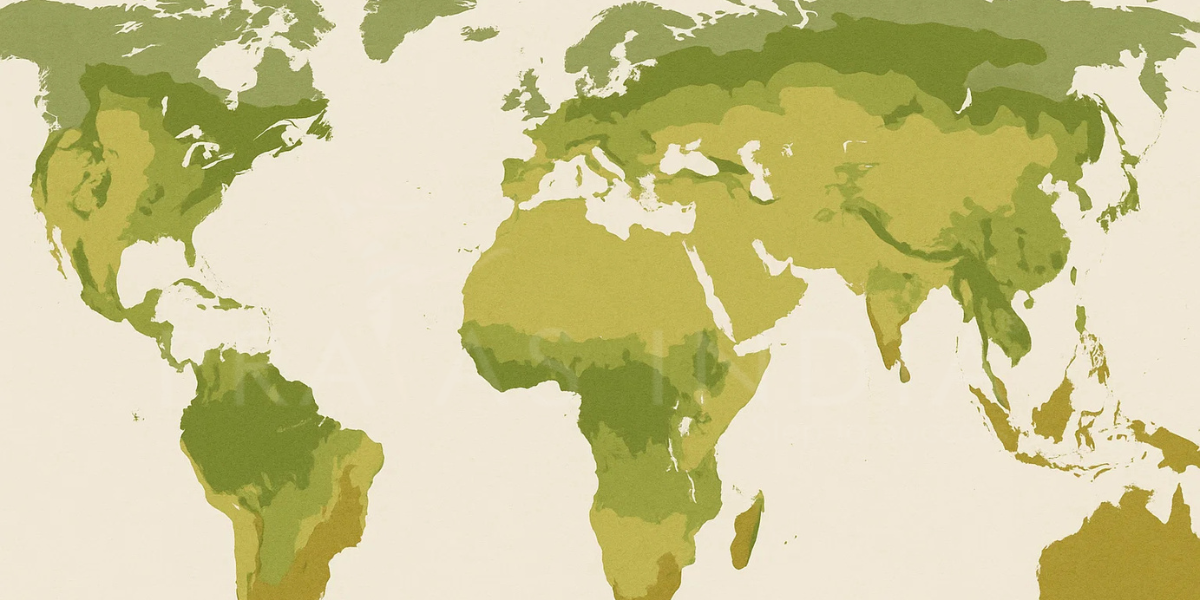
Grasslands differ widely in their climate, vegetation structure, fauna, and human usage. They are broadly classified into tropical, temperate, and polar/arctic grasslands.
1. Tropical Grasslands (Savannas)
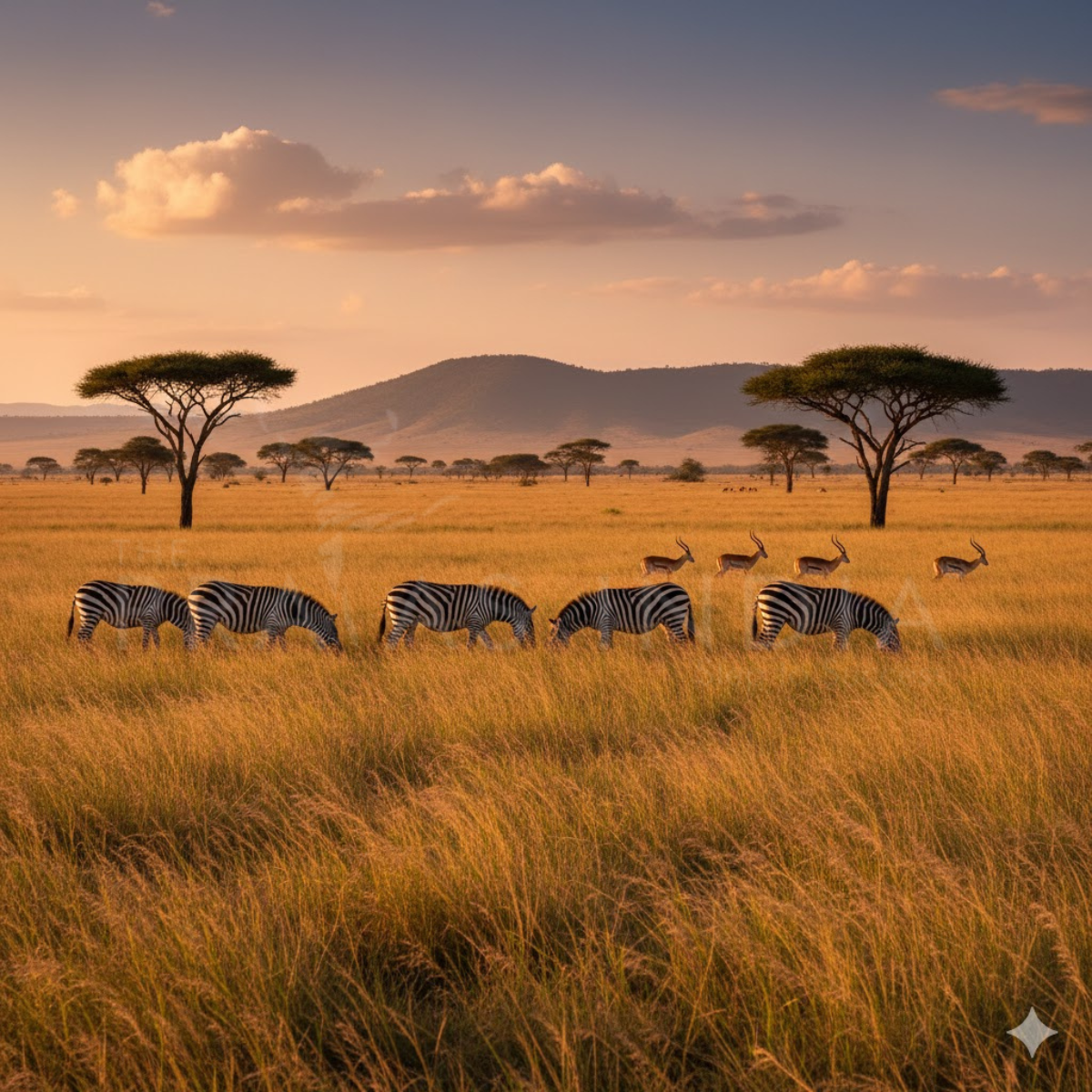
Found near the equator, they have distinct wet and dry seasons. Dominant vegetation includes tall grasses and scattered trees (acacia, baobab).
Major Tropical Grasslands
- Africa: Sudan Savanna, Serengeti
- South America: Llanos (Venezuela), Campos (Brazil)
- Australia: Downs
2. Temperate Grasslands
Located in mid-latitudes, these grasslands experience continental climates with hot summers and cold winters. They contain the world’s most fertile agricultural soils.
Major Temperate Grasslands
- North America: Prairies
- Eurasia: Steppes
- Argentina: Pampas
- South Africa: Veld
- New Zealand: Canterbury Grasslands
3. Polar/Arctic Tundra Grasslands (if extended classification is needed)
While primarily shrubs and moss occur here, certain regions are grass-dominated during the short summer, acting as “cold grasslands.”
Climatic Conditions
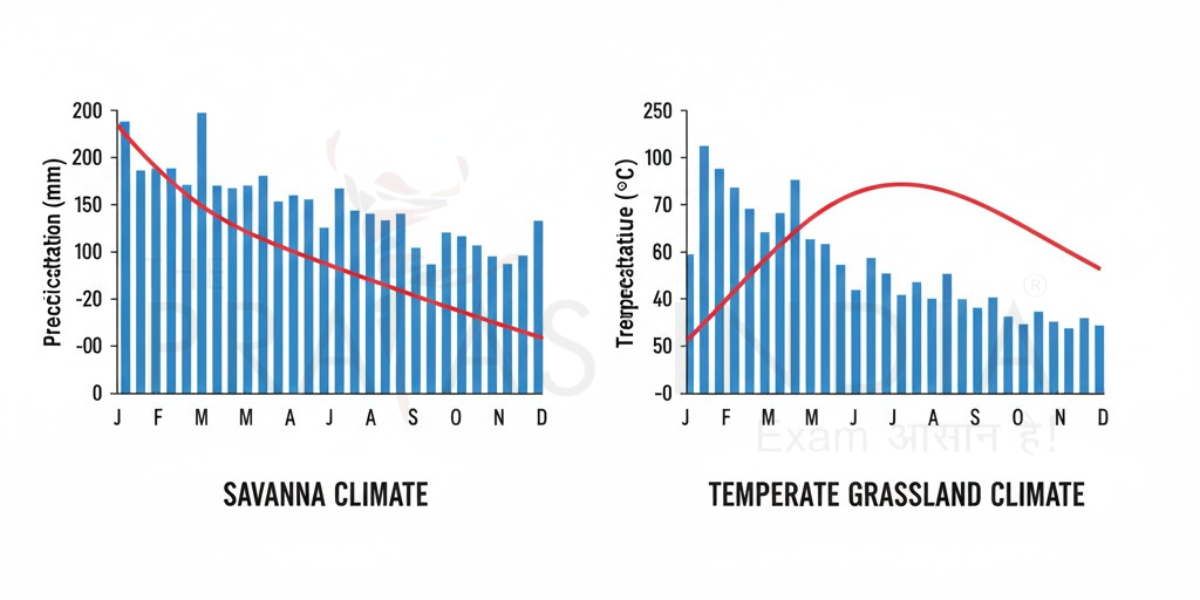
Tropical Savannas
- Temperature: 20–30°C
- Rainfall: 500–1500 mm annually
- Seasonality: Long dry season + short intense wet season
- Influences: ITCZ shifts, trade winds, subtropical highs
Temperate Grasslands
- Temperature: –20°C (winter) to 35°C (summer)
- Rainfall: 300–900 mm
- Seasonality: Strong continental effect
- Influences: Westerlies, continentality, rain shadow zones
Soil Characteristics of Grasslands
Grassland soils are among the most productive on Earth:
- Chernozem (Prairies):
Thick humus layer, dark color, extremely fertile → world’s top grain-producing areas. - Chestnut Soils (Steppes):
Moderately fertile, calcium-rich, suitable for drought-resistant crops. - Lateritic/Red Soils (Savannas):
Iron-rich, low humus, nutrient-poor; productivity depends on moisture availability. - Erosion Potential:
Grasslands are highly vulnerable to wind erosion, desertification, and loss of soil structure when overgrazed or ploughed.
Biodiversity of Grasslands
Flora
- Tropical: Tall grasses (up to 3–4 m), acacia, baobab
- Temperate: Short bunch grasses, drought-resistant species
- Cold grasslands: Mosses, lichens, sedges
Fauna
- African savannas: Lions, cheetahs, zebras, wildebeest, hyenas
- Prairies: American bison, pronghorn antelope, coyotes
- Pampas: Rhea, armadillo
- Steppes: Saiga antelope, steppe wolves
- Veld: Springbok, ostrich, large herbivores
Keystone species (e.g., bison, wildebeest) maintain ecological balance by grazing patterns that prevent shrub encroachment.
Regional Case Studies
1. African Savannas
- Serengeti Migration: World’s largest terrestrial migration of wildebeests and zebras.
- Fire Ecology: Seasonal fires maintain grass dominance and prevent woody encroachment.
- Human–Wildlife Conflict: Expansion of agriculture threatens large carnivores and migratory routes.
2. North American Prairies
- Dust Bowl (1930s): Overploughing + drought → massive wind erosion, soil loss.
- Mechanized Agriculture: Large-scale wheat, maize farming.
- Conservation Initiatives: Prairie restoration, no-till farming, shelterbelts.
3. Eurasian Steppes
- Extreme continental climate.
- Nomadic lifestyle of Mongols historically adapted to steppe ecology.
- Land-use changes → increased cultivation in Ukraine & Russia.
4. Pampas (Argentina)
- Rich chernozem soils → global hub for beef production and soy/wheat export.
- Grasslands converted extensively to agriculture.
5. Veld (South Africa)
- Dominated by shrubs and mixed grasses.
- Supports mixed farming: wool, cattle, cereals.
- Fire-prone landscape requiring controlled burns.
Threats to Global Grasslands
- Overgrazing and pasture degradation
- Agricultural expansion & monoculture farming
- Desertification (notably in African Sahel)
- Climate change shifting rainfall patterns
- Invasive plant species replacing native grasses
- Urbanization and fencing blocking wildlife migration
- Mismanaged fire regimes
Grasslands are now among the most altered biomes, with temperate grasslands losing nearly 50% of their natural area.
Conservation Efforts
Global Initiatives
- IUCN global grassland conservation frameworks
- FAO sustainable rangeland management programmes
- UNCCD initiatives to combat desertification
Regional Examples
- Serengeti (Tanzania): Anti-poaching, corridor protection
- Bison Restoration (USA–Canada): Rewilding grasslands
- Mongolian Steppe Reserves: Safeguarding nomadic pastoral systems
- South African Veld Management: Fire control, rotational grazing
- Pampas Restoration: Sustainable ranching, soil regeneration projects
Grasslands in India
Though global in focus, India’s grasslands form crucial ecological zones.
Major Indian Grasslands
- Tropical Savannas: Central India
- Semi-Arid Grasslands: Rajasthan, Gujarat
- Terai Grasslands: Uttar Pradesh, Uttarakhand, Bihar
- Banni Grasslands (Kutch)
- Shola Grasslands (Western Ghats)
- Chambal Ravines Grasslands
Key Species
- Blackbuck
- Indian wolf
- Great Indian Bustard (GIB)
- Nilgai
- Caracal
Conservation Concerns
- Grasslands often misclassified as “wastelands”
- Habitat loss for GIB (critically endangered)
- Overgrazing and invasive Prosopis juliflora
- Encroachment and agricultural expansion
Economic Importance of Grasslands
- Major global centers for grain production (wheat, corn, barley)
- Foundation of grazing economies
- Crucial for livestock rearing: cattle, sheep, goats
- Tourism revenue: safaris in Africa, steppe expeditions
- Support ecosystem services: soil carbon storage, flood regulation
- Provide raw materials: wool, dairy, meat, hides
Grasslands & UPSC Integration
Grasslands are frequently tested in UPSC Prelims and Mains:
Prelims Themes
- Matching grasslands with continents (Prairies, Pampas, Veld)
- Soil types (chernozem, chestnut)
- Climate belts (tropical vs temperate)
- Species identification (bison, wildebeest)
Mains Themes
- Desertification
- Land degradation
- Biodiversity conservation
- Pastoralism and nomadic cultures
- Human–environment interactions
FAQs on Grasslands of the World
1. What are grasslands and where are they found?
Grasslands are ecosystems dominated by grasses, occurring in tropical, temperate, and polar regions. Major grasslands include Savannas (Africa), Prairies (North America), Steppes (Eurasia), Pampas (Argentina), and Veld (South Africa).
2. Why do grasslands develop in regions with moderate rainfall?
Rainfall between 250–900 mm supports grasses but is insufficient for dense forests. Seasonal droughts and continental climates further favor grassland formation.
3. How do temperate and tropical grasslands differ?
Tropical grasslands (savannas) have a marked wet and dry season with scattered trees, while temperate grasslands (prairies/steppes) have cold winters, hot summers, and short grasses due to lower moisture.
4. Which soils are commonly associated with grasslands?
Prairies have fertile chernozem soils, steppes have chestnut soils, and savannas contain lateritic soils. Grassland soils generally have high organic content.
5. What is the ecological importance of grasslands?
Grasslands support herbivores and predators, prevent soil erosion, act as major carbon sinks, and sustain pastoral and agricultural economies.
6. Why are grasslands among the most threatened biomes?
Conversion to agriculture, overgrazing, desertification, invasive species, climate change, and urbanization are major threats.
7. What was the Dust Bowl and how did it affect grasslands?
The Dust Bowl (1930s USA) was a period of severe wind erosion caused by overploughing and drought, demonstrating the fragility of temperate grassland soils.
8. Which are the major grasslands found in India?
India’s major grasslands include Banni (Kutch), Shola (Western Ghats), Terai grasslands, semi-arid Rajasthan grasslands, and Chambal ravines.
9. What species are considered keystone in grassland ecosystems?
Species like bison (Prairies), wildebeest (Savannas), and blackbuck (India) regulate grazing patterns and maintain ecosystem balance.
10. How are grasslands relevant for UPSC?
Grasslands are important for questions on biomes, climate, soils, biodiversity, desertification, and matching grasslands to continents.
Conclusion
Grasslands, whether tropical savannas or temperate prairies, are vital ecological systems supporting biodiversity, food production, and carbon balance. However, they remain among the most degraded biomes due to agricultural expansion, climate change, and unsustainable grazing.
Protecting global grasslands requires:
- sustainable land-use planning
- restoration of degraded rangelands
- safeguarding migratory corridors
- strengthened protected area networks
- community involvement in rangeland management
Healthy grasslands ensure ecological stability, food security, and climate resilience for future generations.