International Day of Commemoration in Memory of the Victims of the Holocaust
UPSC Current Affairs Article for The Prayas India
Introduction
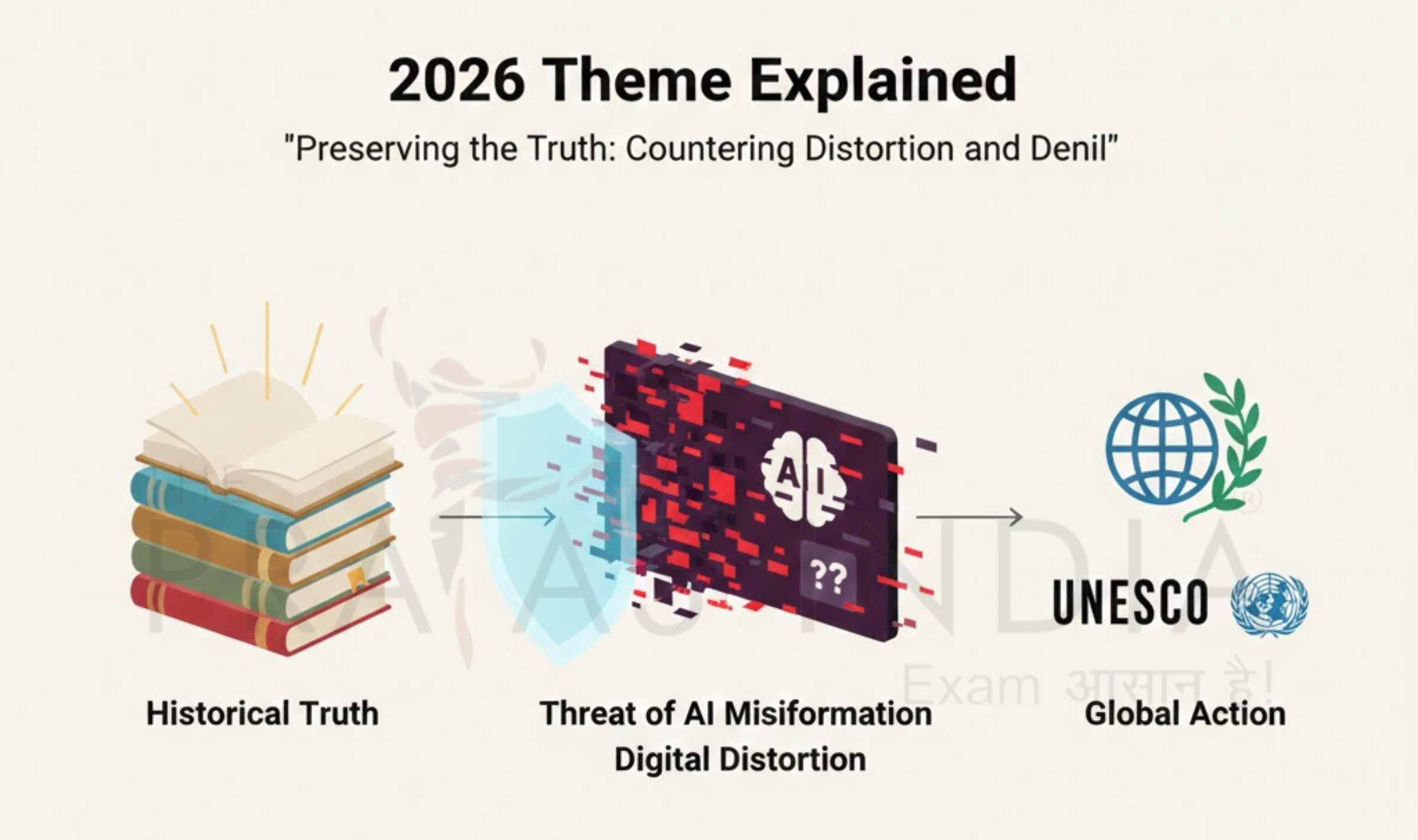
Today, January 27, 2026, the world observes the International Day of Commemoration in Memory of the Victims of the Holocaust, a United Nations–designated day to honor the six million Jews and millions of other victims murdered by Nazi Germany during World War II. The date marks the 81st anniversary of the liberation of the Auschwitz-Birkenau concentration camp in 1945, one of the largest and most infamous extermination camps in history.
Beyond remembrance, this day serves as a global call to preserve historical truth, combat hatred, and reinforce humanity’s commitment to human rights, justice, and the prevention of genocide.
Historical Background: Why January 27 Matters
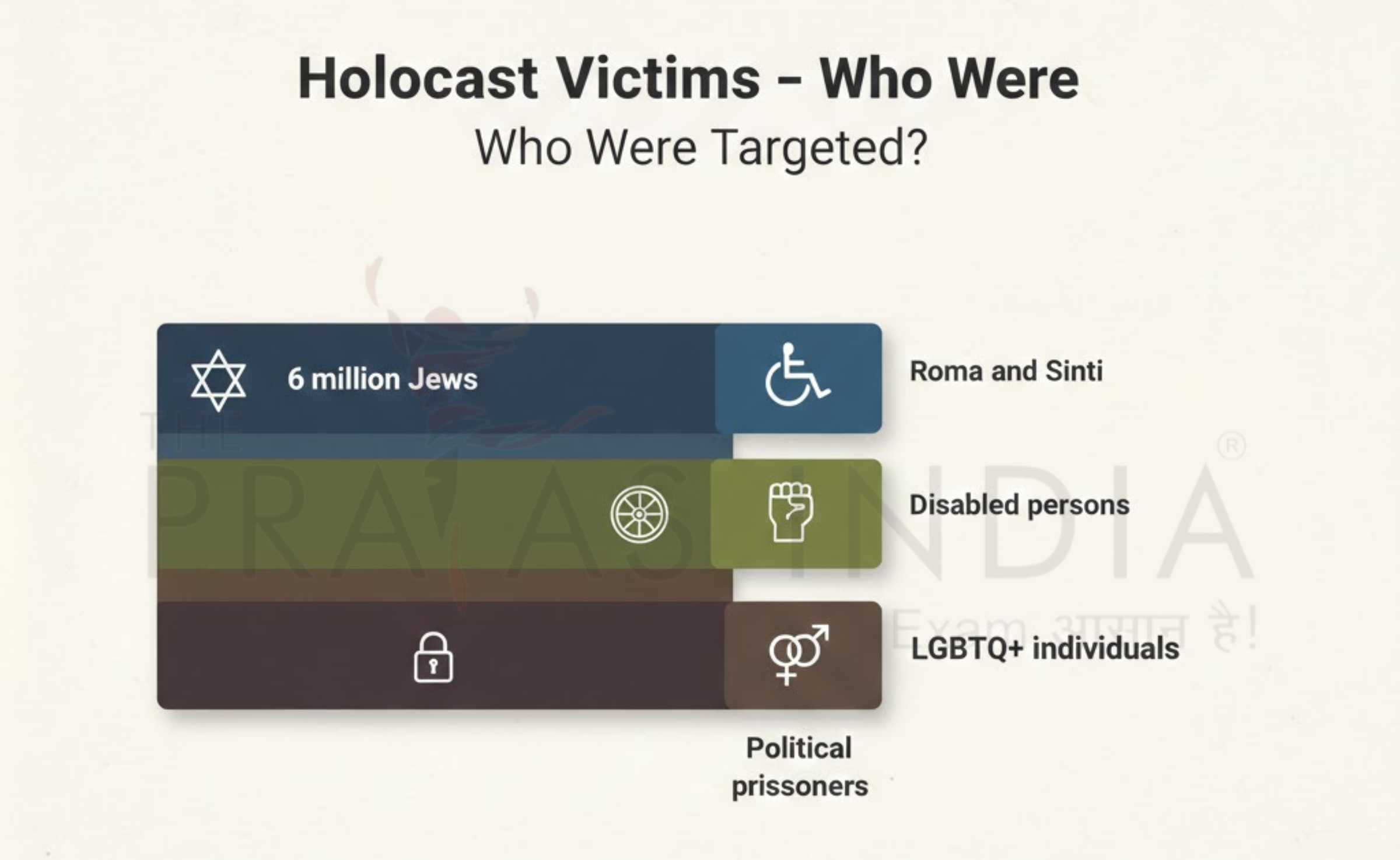
The Holocaust (1933–1945) represents one of the darkest chapters in human history, where the Nazi regime systematically persecuted and exterminated Jews, Roma, disabled persons, political dissidents, LGBTQ+ individuals, and others.
On January 27, 1945, Soviet forces liberated Auschwitz-Birkenau in Poland, exposing the scale of mass murder and industrialized genocide. In 2005, the United Nations General Assembly officially designated January 27 as a day of international remembrance, emphasizing:
- Education about genocide
- Prevention of future atrocities
- Honoring victims and survivors
- Countering hatred, racism, and denial
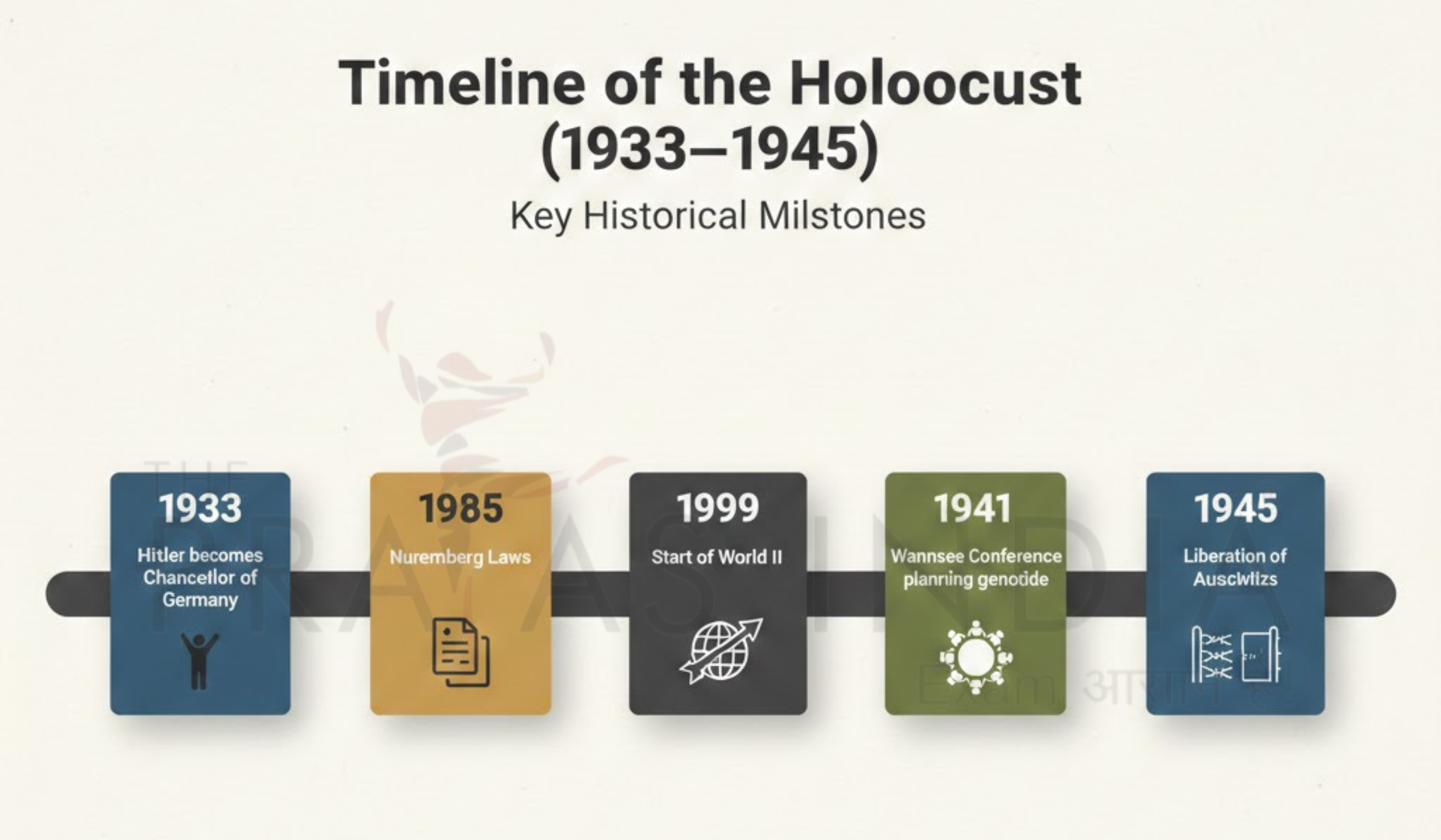
2026 Theme: “Preserving the Truth: Countering Distortion and Denial”
The 2026 theme reflects modern challenges in an era of AI-generated misinformation, deepfakes, and historical distortion. As survivor numbers decline, there is a rising risk that false narratives and denial could undermine historical truth.
The theme underscores three urgent priorities:
- Protecting authentic historical records
- Combating Holocaust denial and distortion
- Ensuring accurate education for future generations
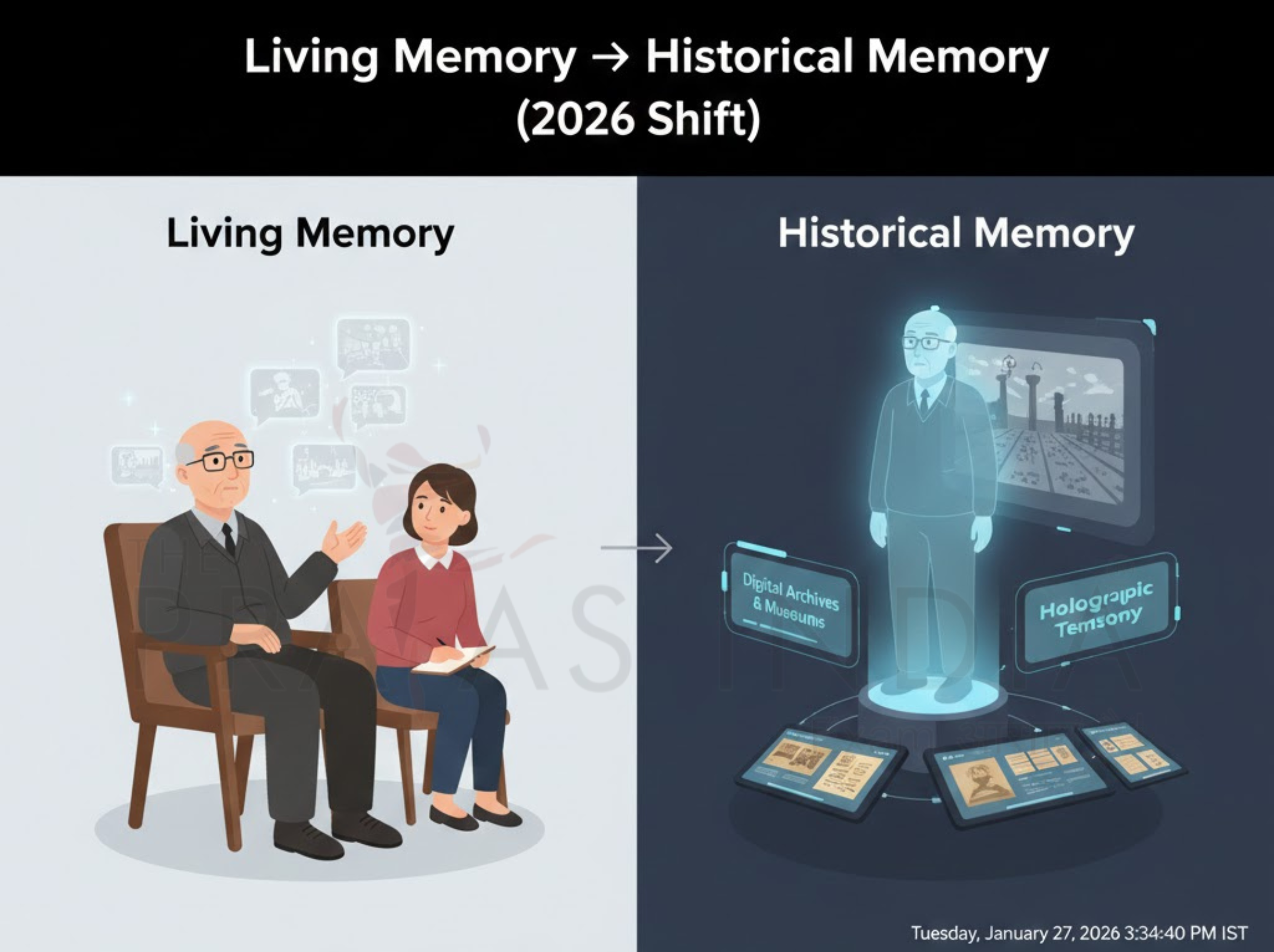
This year’s observance highlights the transition from “living memory” (survivor testimony) to “historical memory” (archival, digital, and institutional preservation).
Key Global Observances in 2026
1. UNESCO’s Global Digital Education Initiative
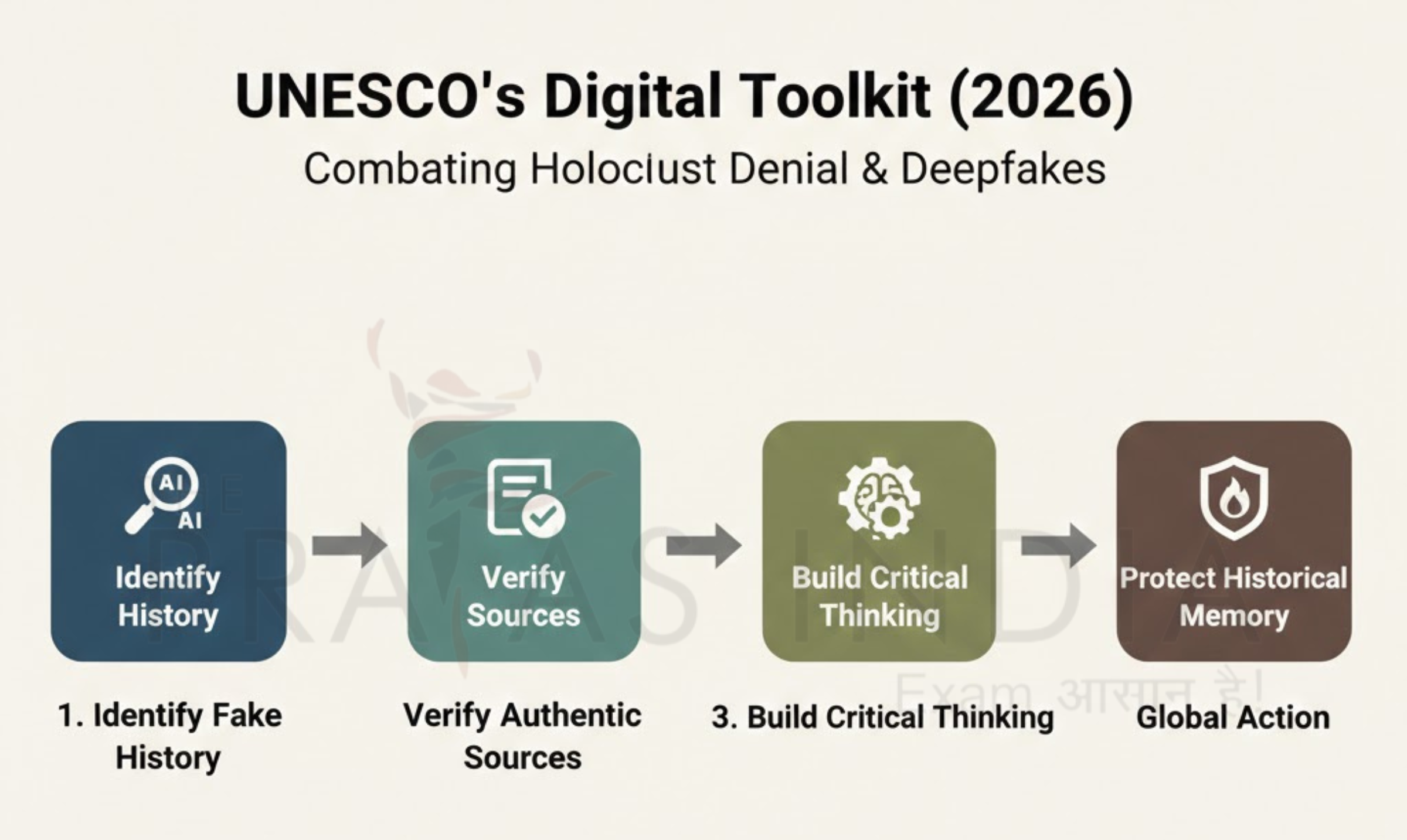
In response to growing online misinformation, UNESCO has launched a digital toolkit for educators designed to:
- Address Holocaust denial
- Teach students how to verify historical sources
- Identify fabricated content created using generative AI
- Strengthen critical thinking and media literacy
This initiative aims to protect younger generations from manipulated narratives and preserve the integrity of historical truth.
2. “The Last Survivors” Initiative – Preserving Eyewitness Testimonies
With the number of living Holocaust survivors rapidly declining, the 2026 commemorations focus on digitizing survivor voices through:
- Interactive holograms that simulate survivor conversations
- Recorded oral histories and testimonies
- AI-assisted archival projects to preserve firsthand accounts
This effort ensures that future generations can continue to learn directly from survivor experiences, even after the last eyewitnesses are gone.
3. Holocaust Remembrance and Human Rights in the Digital Age
Global events in 2026 strongly link the Holocaust’s lessons to modern human rights challenges, especially:
- Rising antisemitism worldwide
- Online hate speech and extremist propaganda
- Digital platforms being used to spread historical denial and dehumanization
The core message: Remembering the Holocaust is not only about the past—it is about preventing future atrocities.
Broader Significance: Lessons for Humanity
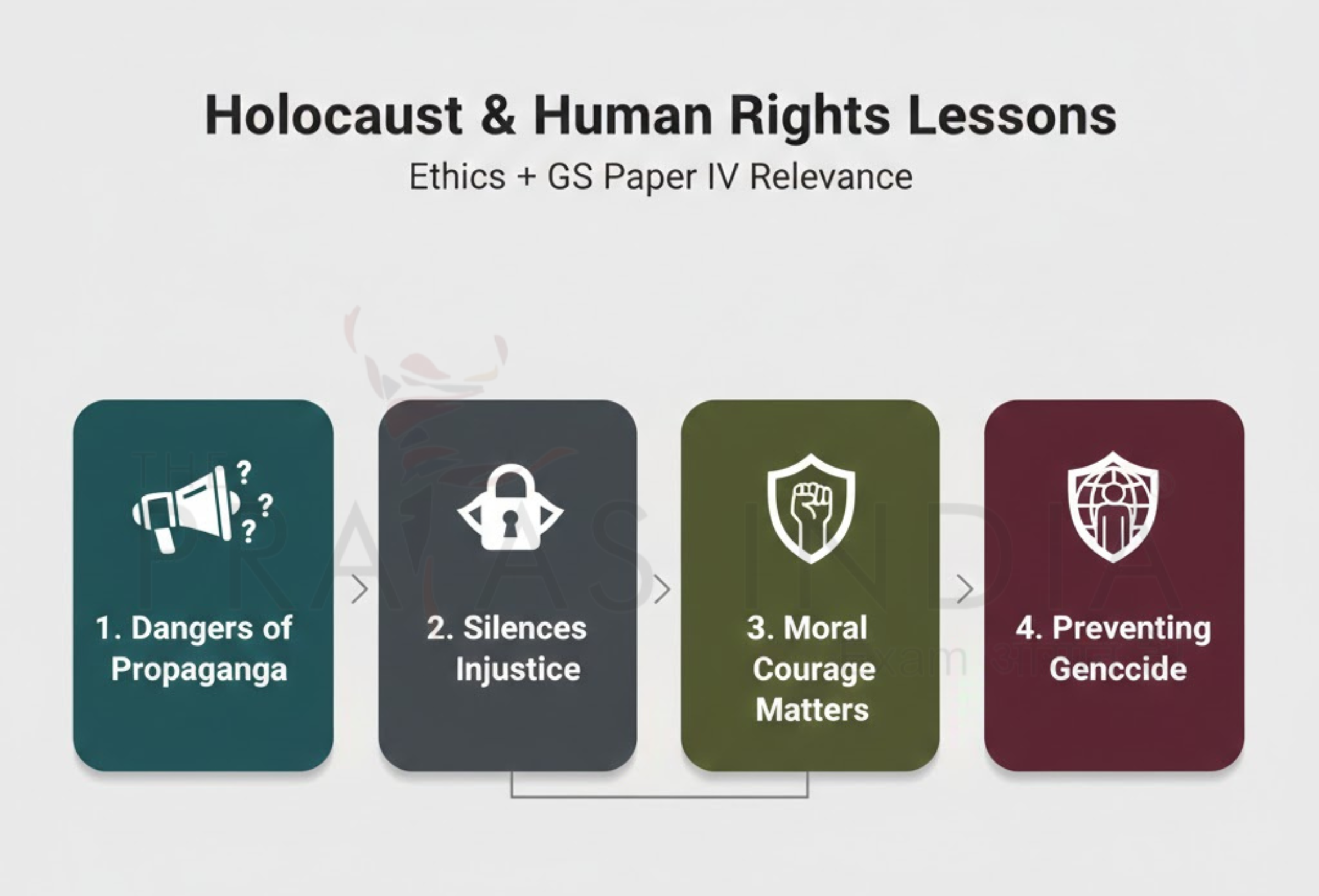
The Holocaust teaches enduring moral and political lessons:
- Unchecked propaganda can normalize hatred
- State power can be misused for systematic violence
- Silence and indifference enable atrocities
- Every individual holds moral responsibility to resist injustice
The commemoration reinforces the principle that genocide prevention requires vigilance, education, and collective action.
Holocaust Memory in a Post-Survivor Era (2026 Context)
The 81st anniversary of Auschwitz’s liberation marks a symbolic shift:
- From living testimony to digital and archival preservation
- From personal storytelling to institutional memory
- From remembrance through survivors to remembrance through education, technology, and global cooperation
This transition increases the importance of accurate documentation, ethical education, and international accountability.
UPSC Relevance
- GS Paper I (World History): Holocaust, totalitarianism, and roots of genocide
- GS Paper II (International Relations): Role of UN, UNESCO, and the Genocide Convention
- GS Paper IV (Ethics): Moral responsibility, “banality of evil”, and standing against dehumanization
Conclusion
The International Day of Commemoration in Memory of the Victims of the Holocaust (2026) serves as both a tribute to the victims and a warning to the world. As technology reshapes information and memory, the responsibility to preserve truth, fight denial, and defend human dignity becomes more critical than ever.
For students, policymakers, and global citizens alike, Holocaust remembrance remains a powerful reminder that history must never be forgotten, distorted, or repeated.
FAQs
1. Why is January 27 observed as the International Holocaust Remembrance Day?
January 27 marks the liberation of the Auschwitz-Birkenau concentration camp in 1945, symbolizing the end of one of the most horrific sites of Nazi genocide. The UN General Assembly designated this date in 2005 to honor victims and promote Holocaust education.
2. What is the theme of Holocaust Remembrance Day in 2026?
The 2026 theme is “Preserving the Truth: Countering Distortion and Denial.” It focuses on combating Holocaust denial, misinformation, and AI-generated historical distortion, while safeguarding authentic historical records.
3. Why is Holocaust remembrance still relevant today?
Holocaust remembrance helps the world combat hatred, antisemitism, racism, and mass violence, while reinforcing the importance of human rights, democratic values, and genocide prevention in modern societies.
4. What role does UNESCO play in Holocaust education in 2026?
In 2026, UNESCO launched a digital toolkit for educators to help address Holocaust denial, improve media literacy, and teach students how to distinguish factual history from fabricated or manipulated content.
5. What is the “Last Survivors” Initiative?
The Last Survivors Initiative preserves the testimonies of Holocaust survivors using digital archives, recorded interviews, and interactive holograms, ensuring that future generations can continue to learn from firsthand accounts.
6. How is the Holocaust linked to contemporary human rights issues?
Holocaust remembrance highlights the dangers of hate speech, propaganda, dehumanization, and authoritarianism, and is connected to current efforts to combat antisemitism, online extremism, and discrimination worldwide.
7. Why is this topic important for UPSC aspirants?
The topic is relevant to World History, International Relations, Human Rights, Ethics, and Genocide Prevention, making it useful for Prelims, GS Mains (Papers I, II, IV), and Essay writing.
8. What does the shift from “living memory” to “historical memory” mean in 2026?
As Holocaust survivors decline in number, the world is transitioning from direct eyewitness accounts to archival, digital, and institutional preservation to ensure the truth remains intact for future generations.