
ISRO’s LVM3-M5 Rocket Launches GSAT-7R: A Game-Changer for Indian Navy Communications
Introduction
On November 2, 2025, the Indian Space Research Organisation (ISRO) marked a historic achievement with the successful launch of GSAT-7R, the heaviest communication satellite ever launched from Indian soil. The mission was executed by ISRO’s flagship heavy-lift launch vehicle, LVM3-M5, popularly known as “Bahubali” for its immense lifting capabilities. This milestone not only boosts India’s strategic maritime communication but also reflects India’s growing self-reliance and technological advanced status in space technology and defense communications.
LVM3-M5 ‘Bahubali’: India’s Powerful Heavy-Lift Launcher
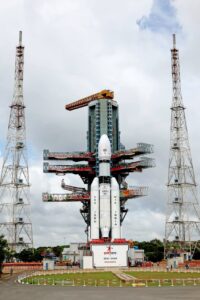
The LVM3-M5 rocket stands 43.5 meters tall with a lift-off mass of 642 tons, making it India’s most potent operational launch vehicle to date. It carries a three-stage propulsion system: two solid rocket boosters, a core liquid stage, and a cryogenic upper stage, which was reignited multiple times in this mission for precise orbital insertion. The LVM3’s robustness was previously demonstrated in the Chandrayaan-3 lunar mission and the Gaganyaan human spaceflight test, underpinning its reliability for high-value payload deliveries.
For the GSAT-7R mission, the rocket followed a complex sequence of launch phases, culminating in the satellite’s separation roughly 16 minutes after liftoff at an altitude near 179 kilometers, traveling at a velocity of approximately 10 km/s. The mission successfully placed the GSAT-7R satellite into a Geosynchronous Transfer Orbit (GTO), from which the satellite will move to its final geostationary orbit.
GSAT-7R: The Pinnacle of Naval Communication Satellites
Weighing approximately 4,410 kg, GSAT-7R stands as the heaviest communication satellite launched from India. It is a significant upgrade over its predecessor, GSAT-7 (Rukmini), launched in 2013, and is purpose-built to support India’s naval operations through advanced multi-band communication.
Technical Specifications
- Weight: 4,410 kg
- Orbit: Geosynchronous Transfer Orbit (initial), transitioning to geostationary
- Frequency Bands: Multi-band operation including Ku, S, UHF, and C bands
- Payload: Multiple transponders supporting secure voice, data, and video communication
- Mission Life: Estimated 12-15 years
- Cost: Approx. ₹1,589 crore (around $225 million)
- Operator: Indian Navy
Strategic Role and Capabilities
GSAT-7R is designed to enable robust, real-time, multi-domain communication for Indian Navy forces spread over an extensive area including the entire Indian Ocean Region (IOR) and the Indian mainland. The satellite supports secure voice, data, and video links facilitating command and control between warships, submarines, aircraft, unmanned aerial vehicles, and shore command centers.
With increasing strategic competition and complexity in the IOR, this satellite is a critical tool for enhancing maritime domain awareness and operational coordination. It supports network-centric warfare by providing encrypted, uninterrupted communication pathways, which are essential for tactical decision-making and situational awareness in high-stakes naval operations.
Enhancing India’s Security and Self-Reliance
The GSAT-7R mission is a cornerstone in India’s Aatmanirbhar Bharat initiative, underscoring India’s commitment to developing and deploying homegrown space technology to meet sensitive defense needs. By augmenting India’s indigenous defense satellite network, GSAT-7R reduces reliance on foreign satellites and communication infrastructure, thus safeguarding national security from external dependencies.
Its integration with other defense satellites like GSAT-7A, which supports Indian Air Force communications, creates a seamless and comprehensive space-based secure communication network for the Indian Armed Forces.
ISRO’s Technological Prowess and Economic Impact
This launch highlights ISRO’s expanding technological capabilities in heavy-lift launch vehicles and advanced satellite manufacturing. The LVM3 series, with its robust cryogenic propulsion and precision orbital insertion capability, sets the stage for future high-value missions, including interplanetary exploration and crewed spaceflight.
From an economic perspective, the GSAT-7R project, costing ₹1,589 crore, represents major investments into indigenous aerospace research, manufacturing, and launch infrastructure. The ability to develop, launch, and operate such complex satellites domestically accelerates India’s stature as a leading space power with strategic and commercial benefits.
Conclusion
The successful launch of GSAT-7R on November 2, 2025, aboard the LVM3-M5 ‘Bahubali’ rocket marks a new chapter in India’s space and defense journey. This milestone vastly improves the Indian Navy’s communication capabilities, providing secure, rapid, and wide-ranging connectivity crucial for maritime security in the Indian Ocean. Moreover, it underlines India’s emergence as a self-reliant leader in space technology, ready to take on evolving challenges in defense, communications, and exploration.
With GSAT-7R now in orbit, India strengthens its strategic posture in a highly dynamic maritime region while showcasing the technological maturity and mission execution efficiency of ISRO, inspiring confidence in future ambitious space endeavors.