Kuril Islands – Geography, Tectonics, Ecology & Geopolitics
- GS Paper 1: Physical Geography, Geomorphology, Ocean Geography
- GS Paper 3: Environment, Climate Change, Marine Ecology, Natural Resources
- Prelims: Islands, Straits, Tectonic Features, Volcanism, Pacific Geography
- Geography Optional: Oceanography, Biogeography, Plate Tectonics, Geopolitical Geography
Introduction
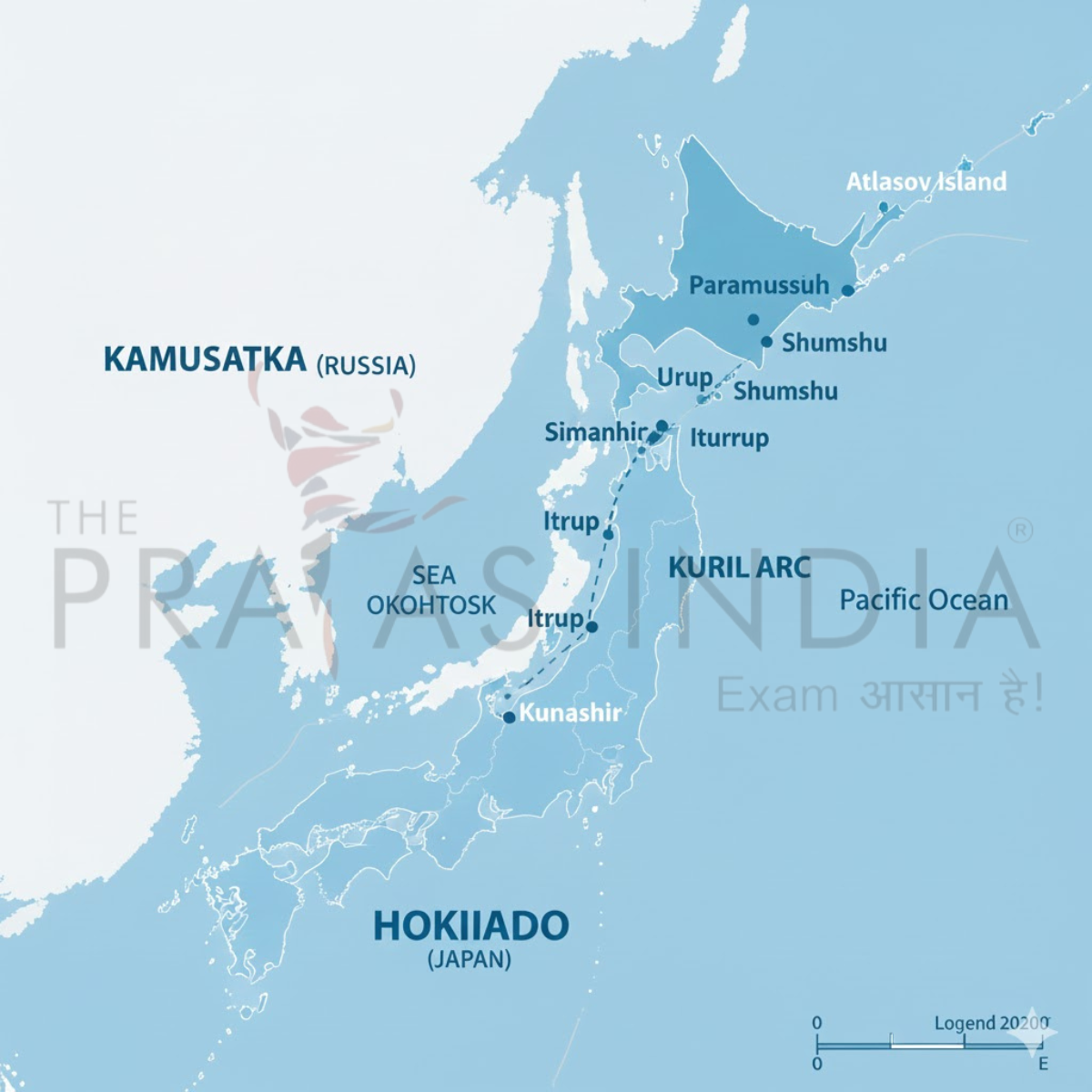
The Kuril Islands are a volcanic island chain stretching between Japan’s Hokkaido and Russia’s Kamchatka Peninsula, forming a major arc in the northwestern Pacific Ocean. Geographically, they form a natural boundary between the Sea of Okhotsk to the west and the North Pacific Ocean to the east.
The chain is known for:
- Intense volcanic and seismic activity
- Cold maritime climate
- Rich marine biodiversity
- Strategic maritime routes
- Long-standing Russia–Japan territorial dispute
The islands form part of the Pacific Ring of Fire, making them one of the most tectonically active island arcs on Earth.

Geographical Location & Extent
The Kurils extend approximately 1,300 km in a northeast–southwest orientation. They are divided into:
- Northern Kurils
- Central Kurils
- Southern Kurils
They separate two major water bodies:
- Sea of Okhotsk (west)
- Pacific Ocean (east)
The archipelago consists of:
- 56 large islands
- ~100 smaller islets and rocks
The islands lie entirely within the high-latitude North Pacific, with rugged terrain dominated by stratovolcanoes, volcanic cones, and steep cliffs.
Geological Formation & Tectonic Setting
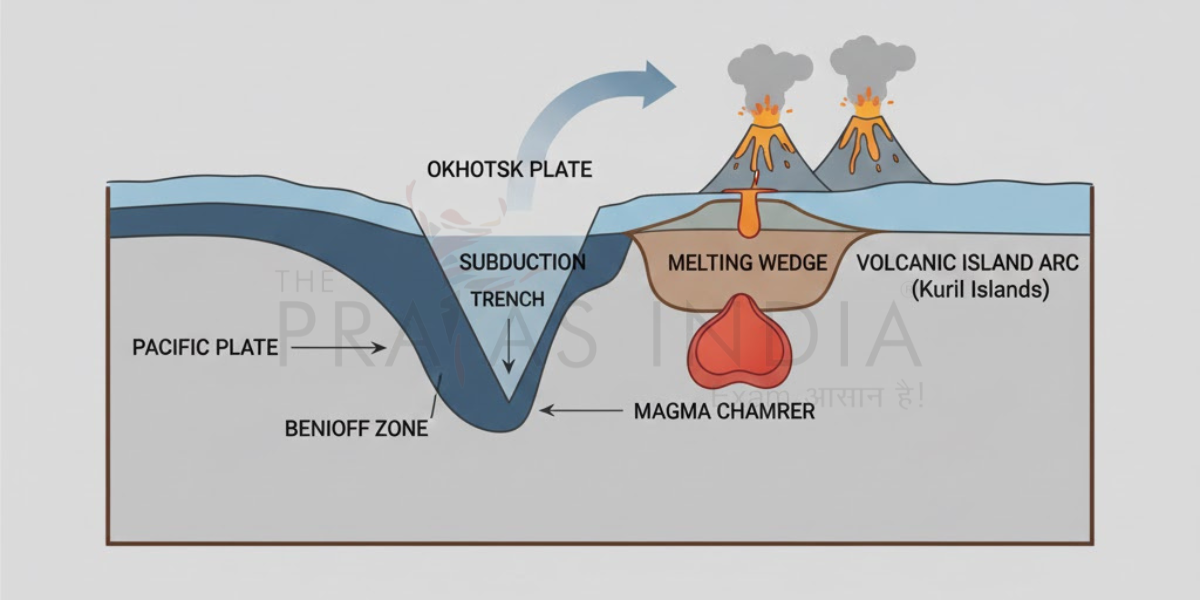
The Kuril Islands were formed by the subduction of the Pacific Plate beneath the Okhotsk Plate, a microplate of the larger North American Plate. This subduction has produced:
- A classic volcanic island arc
- Deep trenches (Kuril–Kamchatka Trench)
- Frequent earthquakes (magnitude 7–8 common)
- Submarine volcanic eruptions
- Potential tsunami generation
Many islands contain active volcanoes, including:
- Alaid
- Ebeko
- Sarychev Peak (notable 2009 plume seen from ISS)
The Kuril arc is part of the world’s most seismically active belts.
Major Islands in the Kuril Chain
Below are profiles of key islands relevant for UPSC:
(a) Kunashir (Southern Kurils)
- Closest to Hokkaido (Japan)
- Several active volcanoes: Tyatya, Ruruy
- Rich forests; significant biodiversity
- Administrative center: Yuzhno-Kurilsk
(b) Iturup (Largest Island)
- Largest island (3,200 sq. km)
- Contains Atsuta and Stokap volcanoes
- Famous for the Goryachaya mineral springs
- Economically important for fisheries
(c) Shikotan
- Hilly terrain, no active volcanoes
- Historically Ainu settlements
- Important fishing hub
(d) Habomai Islets
- Small, rocky islets near Hokkaido
- No permanent settlements, rich marine resources
Other notable islands
- Paramushir – Ebeko volcano; frequent eruptions
- Urup – mostly uninhabited; dramatic cliffs
- Simushir – contains a deep caldera (Zavari)
These island profiles are central for understanding the geopolitics and ecology of the region.
Climate & Weather Patterns
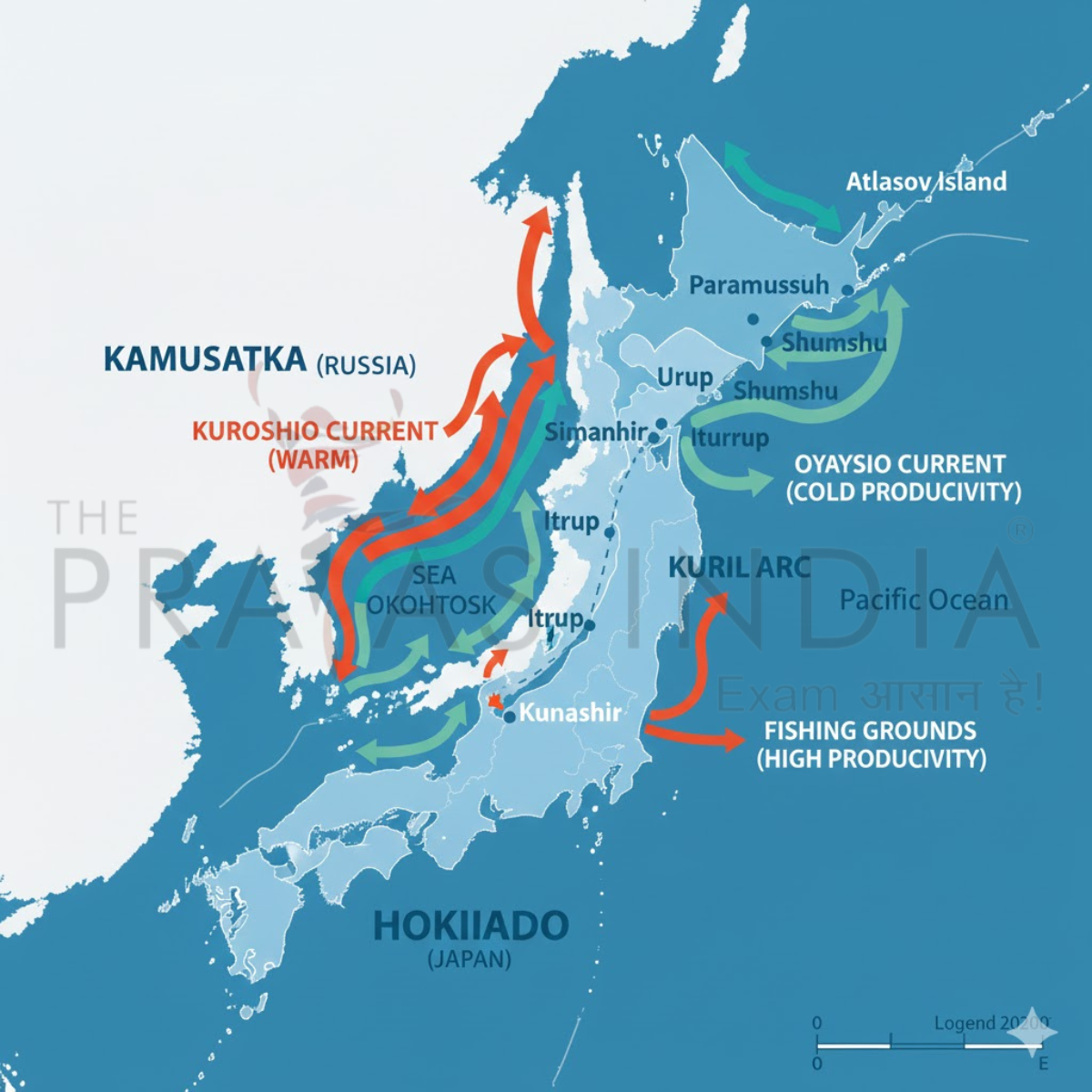
The Kuril Islands experience a cold maritime climate, shaped by the strong influence of the Oyashio Current, which brings:
- Cold waters
- High nutrient levels
- Frequent fog
- Harsh winters with heavy snow
Key climate characteristics:
- Short, cool summers (5–12°C)
- Long, freezing winters (-6 to -15°C)
- High precipitation (mostly snow)
- Strong winds & storms
The interaction of the Oyashio with the warmer Kuroshio Current creates highly productive marine zones.
Flora & Fauna (Biogeography)
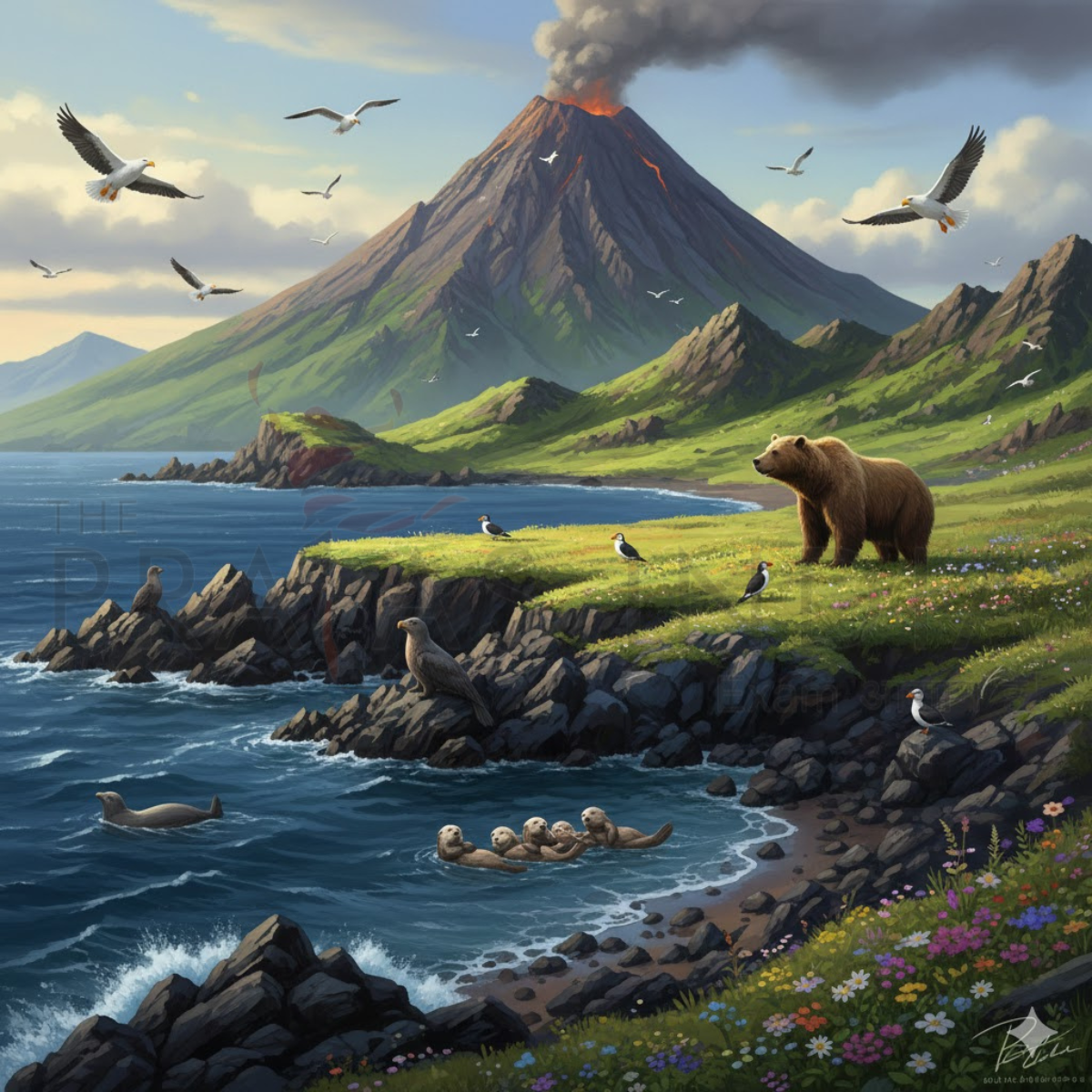
The islands possess unique subarctic ecosystems, combining elements of boreal and maritime biodiversity.
Flora
- Subarctic forests (spruce, larch)
- Tundra vegetation in northern islands
- Mosses, lichens, volcanic soils
Fauna
- Brown bears
- Arctic foxes
- Sea otters
- Stellar sea lions
Marine Ecosystem
- Whales (gray, minke, humpback)
- Seals & sea lions
- Salmonid species (critical for fisheries)
- Numerous seabird nesting colonies
The presence of cold currents and volcanic upwelling makes the region one of the richest marine ecosystems in the North Pacific.
Economic Significance
(a) Fisheries
The Kurils are among the world’s richest fishing zones due to nutrient upwelling.
Key species:
- Salmon
- Crab
- Pollock
- Herring
Russia’s Far East economy depends heavily on Kuril fisheries.
(b) Natural Resources
Potential resources include:
- Offshore hydrocarbons
- Rare earth elements from volcanic soils
- Geothermal energy potential
- Sulfur and other volcanic products
(c) Shipping & Maritime Routes
The channels between islands function as:
- Access routes to the Sea of Okhotsk
- Strategic maritime passages between Russia, Japan, and the Pacific
Simushir island even hosts former Soviet naval facilities.
Human Settlements & Demography
The Kurils are sparsely populated, with:
- ~20,000 inhabitants (majority Russians)
- Main settlements on southern islands
- Limited infrastructure; supply lines depend on Sakhalin
Ainu people, the indigenous population, historically lived across the islands but were displaced during the 19th–20th centuries.
The Kuril Islands Dispute: Russia vs Japan
The Kuril Islands dispute is one of the world’s longest unresolved territorial conflicts. Japan claims the Southern Kurils, calling them the Northern Territories.
The Four Disputed Islands
- Iturup (Etorofu)
- Kunashir (Kunashiri)
- Shikotan
- Habomai Islets
Historical Background
- Yalta Agreement (1945): Assigned Kurils to USSR.
- San Francisco Peace Treaty (1951): Japan renounced Kurils but argued the four islands were not part of “Kurils”.
- Soviet occupation after WWII consolidated Russian control.
Current Dynamics
- Russia fortifies its military presence.
- Japan continues diplomatic talks but with limited progress.
- The dispute prevents a formal peace treaty between Japan and Russia even today.
Strategic reasons for Russian hold:
- Military control of Sea of Okhotsk
- Missile defense and naval bases
- Rich marine & mineral resources

Environmental Issues & Vulnerabilities
The Kurils face several environmental threats:
- Volcanic hazards – frequent eruptions
- Seismic activity – high tsunami risk
- Climate change – affects cold-water ecosystems
- Overfishing – threatens salmon and crab stocks
- Marine pollution – from ships & coastal settlements
- Ecosystem fragility – tundra and boreal forests highly vulnerable
The remote location makes disaster response challenging.
Strategic & Geopolitical Importance
The Kurils hold high geopolitical value due to:
(a) Military Importance
- Russia’s Pacific Fleet operates in the region.
- Acts as a defensive perimeter for the Sea of Okhotsk, a strategic submarine zone.
(b) Regional Power Dynamics
- Proximity to Japan, USA, and China
- Influence over North Pacific security architecture
- Control over critical maritime routes
(c) Economic & Resource Control
- Fisheries
- Offshore resource exploration
- Maritime passage rights
The dispute ties into broader Indo-Pacific geopolitics.
Comparison Table (Kuril Islands vs Aleutian Islands vs Japanese Archipelago)
| Feature | Kuril Islands | Aleutian Islands | Japanese Archipelago |
|---|---|---|---|
| Tectonic Setting | Pacific–Okhotsk Plate subduction | Pacific–North American subduction | Multiple subduction zones (Nankai, Japan Trench) |
| Climate | Cold maritime, foggy | Subarctic maritime | Temperate to subarctic |
| Strategic Value | Controls Sea of Okhotsk | US–Russia maritime boundary | Major global power with naval bases |
| Biodiversity | Subarctic forests, marine mammals | Bird colonies, marine life | High endemism, diverse ecosystems |
Conclusion
The Kuril Islands represent a unique confluence of geological dynamism, rich marine ecosystems, and intense geopolitical contestation. Their location along the Pacific Ring of Fire makes them vital for understanding plate tectonics and natural hazards. At the same time, their strategic value has ensured their centrality in Russia–Japan relations.
For UPSC aspirants, the Kurils are important for:
- World Geography (location, tectonics, climate)
- Biogeography (unique ecosystems)
- International Relations (territorial disputes)
- Current Affairs (Indo-Pacific geopolitics)
Their significance spans physical geography, environment, economy, and global strategic studies—making the Kuril Islands a recurring topic in examinations.