
MPSC Exam – Complete Syllabus, Pattern & Preparation Tips
The Maharashtra Public Service Commission (MPSC) is the constitutional body responsible for conducting recruitment examinations for various Group A and Group B posts within the Maharashtra state government. Every year, thousands of administrative aspirants prepare for this highly competitive exam with the dream of securing prestigious positions such as Deputy Collector, Deputy Superintendent of Police (DySP), and Assistant Commissioner of State Tax.
In this comprehensive guide, The Prayas India delivers the most updated and complete blueprint of the MPSC State Services Examination, covering key eligibility criteria, detailed section-wise exam patterns, syllabus breakdowns, and proven preparation strategies to crack the test.
MPSC OTR Link
MPSC Previous Yeras’ Question Paper
Exam Levels: The MPSC Exam consists of three levels:
To select top-tier administrative talent, the MPSC examination filter is systematically structured across three distinct levels:
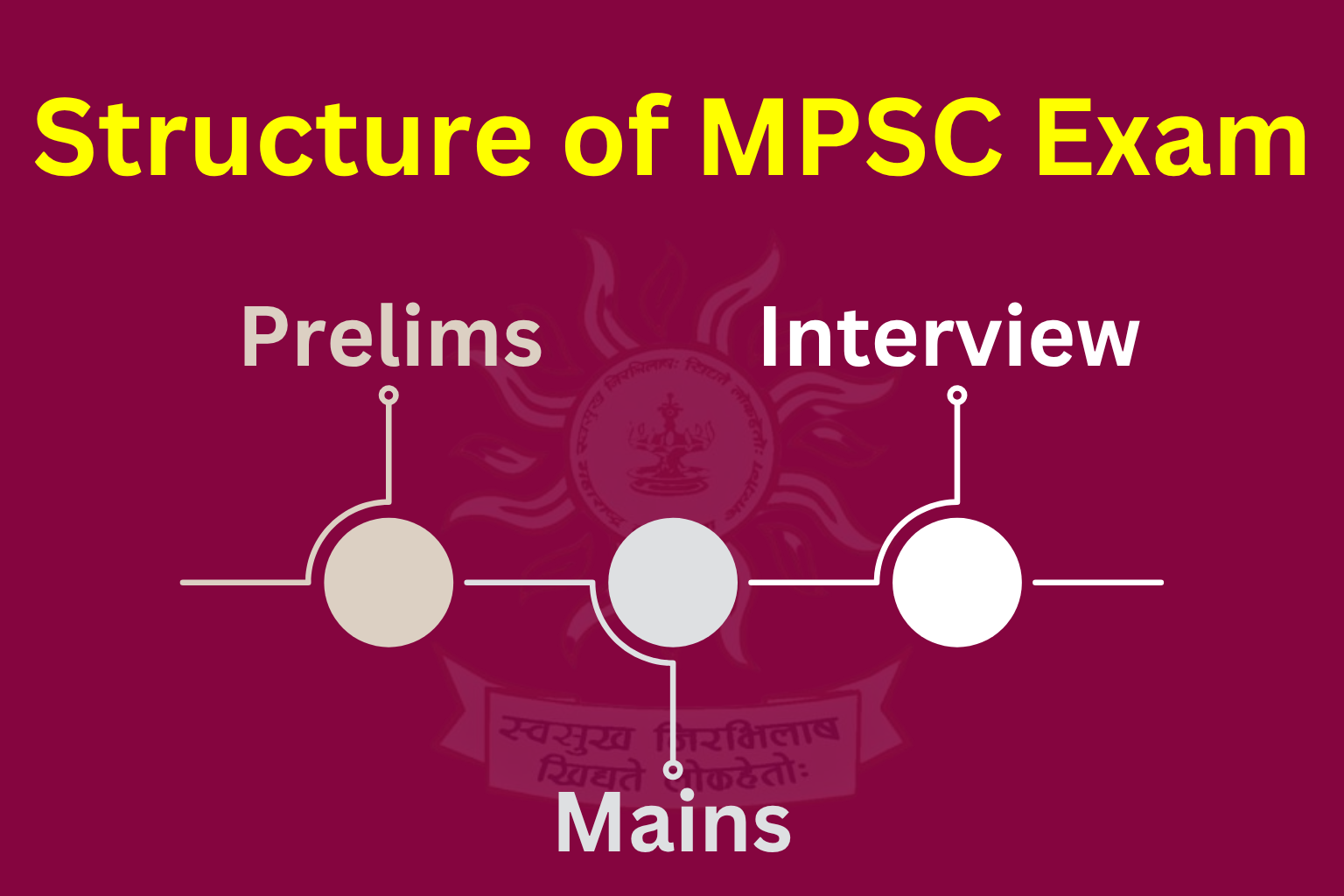
- Preliminary Examination (MPSC Prelims): The initial screening stage of the selection process. It is entirely objective in nature, featuring multiple-choice questions (MCQs) designed to shortlist eligible candidates for the next round.
- Main Examination (MPSC Mains): The core written assessment phase. It follows a descriptive format to comprehensively evaluate a candidate’s in-depth conceptual knowledge, analytical thinking, and clear written expression across a vast range of subjects.
- Interview (Personality Test): The final evaluation round. Candidates who comfortably clear the descriptive Mains cutoff are invited for a face-to-face personality assessment to gauge their overall communication skills, presence of mind, leadership traits, and general suitability for public administration.
MPSC Eligibility Criteria
To apply for the MPSC State Services Examination, candidates must thoroughly fulfill the eligibility conditions laid down by the Commission regarding nationality, age limits, educational qualifications, and language proficiency.
1. Nationality & Domicile
- Indian Citizenship: The candidate must be a citizen of India.
- Maharashtra Domicile: While citizens of India can apply, candidates possessing a valid Domicile Certificate of Maharashtra are eligible for standard reservation benefits and state-specific relaxations.
2. Age Limit & Relaxations
The minimum age to appear for the MPSC exam is 19 years. The upper age limit varies significantly based on the candidate’s category:
- General / Unreserved Category: Maximum 38 years.
- OBC / SC / ST / Reserved Categories: Maximum 43 years.
- Ex-Servicemen (General): Maximum 43 years (with specific service extensions).
- Persons with Disabilities (PwD): Maximum 45 years.
3. Educational Qualification
- Graduation Degree: Candidates must possess a Bachelor’s degree in any discipline from a recognized university or an institute deemed equivalent by the University Grants Commission (UGC).
- Final Year Students: Students appearing in the final year of their graduation are fully eligible to apply for the Preliminary Examination. However, they must pass their degree exam before submitting the application for the Main Examination.
- Specialized Posts: Certain technical or departmental posts (like Assistant Director of Health Services or Assistant Commissioner of State Tax) may require specific professional degrees in commerce, science, engineering, or medicine as per the official notification.
4. Language Proficiency
- Marathi Language: Absolute proficiency in reading, writing, and speaking the Marathi language is mandatory.
- Candidates are tested on their language capabilities during the descriptive Mains exam and the final interview round.
5. Physical Standards (For Specific Posts)
For uniform-clad administrative roles such as Deputy Superintendent of Police (DySP), Assistant Regional Transport Officer (ARTO), and Superintendent of State Excise, candidates must meet specific physical benchmarks:
- Height (Male): Minimum 165 cm (Chest: Minimum 84 cm with a compulsory expansion capability of 5 cm).
- Height (Female): Minimum 157 cm.
MPSC State Services Examination (SSE) Exam Pattern:
The Maharashtra Public Service Commission (MPSC) State Services Examination (SSE) is conducted in three distinct, successive stages: Prelims, Mains, and Interview. Each stage follows a specific exam pattern aimed at assessing a candidate’s knowledge, comprehensive analytical ability, and overall suitability for high-level administrative roles.
MPSC SSE Exam Stages Overview
| Stage | Key Features | Number of Papers | Marks Breakdown |
|---|---|---|---|
| Prelims | Objective-type screening examination to shortlist candidates for the Mains. | 2 Compulsory Papers | Paper 1: 200 Marks Paper 2: 200 Marks |
| Mains | Descriptive written papers for candidates who successfully qualify the Prelims. | 9 Descriptive Papers | 1750 Marks (Total) |
| Interview | Face-to-face personality test to evaluate suitability for public service. | — | 275 Marks |
The Selection Process Workflow:
- Candidates must first clear the objective Prelims cutoff to become eligible for the next level.
- Those who qualify for the screening round take the comprehensive descriptive Mains examination.
- Candidates clearing the Mains cutoff are called for the final Interview stage.
- The final merit list and rank matrix are calculated based exclusively on the cumulative marks obtained in the Mains and Interview stages.
MPSC Prelims Exam Pattern
MPSC SSE Prelims Exam Pattern
The Preliminary Examination serves purely as a screening round. It features two compulsory papers administered on a single day.
| Paper Name | Core Subject | Total Questions | Total Marks | Duration | Question Format |
|---|---|---|---|---|---|
| Paper 1 | General Studies (GS) | 100 Questions | 200 Marks | 2 Hours | Objective (MCQs) |
| Paper 2 | Civil Services Aptitude Test (CSAT) | 80 Questions | 200 Marks | 2 Hours | Objective (MCQs) |
Key Points About MPSC SSE Prelims
- Negative Marking Penalty: A standard negative marking of 1/4th (25%) of the marks allotted to a question will be deducted for each incorrect answer.
- Qualifying Criteria (CSAT): Candidates must pass both papers individually. Paper 2 (CSAT) is strictly qualifying in nature, requiring a minimum passing threshold of 33% (66 marks out of 200).
- Merit Gatekeeping: The final cutoff to qualify for the Mains is calculated based entirely on your score in Paper 1 (General Studies), provided you clear the CSAT passing barrier.
- Bilingual Framework: The examination paper is printed bilingually in both Marathi and English (except for sections testing specific language comprehension).
- Screening Nature: Marks scored in the Prelims serve only to screen candidates for the Mains and are not added to the final merit selection score.
MPSC SSE Exam Flow
- Prelims → Shortlisting stage (Objective format)
- Mains → Descriptive written examination
- Interview → Final personality assessment
MPSC Mains Exam Pattern
MPSC Mains Exam Pattern – Detailed Overview
The MPSC Mains Examination is the highly crucial second stage of the selection process. It features a descriptive framework designed to test a candidate’s depth of knowledge, logical flow, analytical skills, and clarity of written expression.
The Mains layout consists of nine descriptive papers taken over a multi-day schedule. Papers 1 and 2 are language-based qualifying papers, while Papers 3 to 9 are evaluated to determine the main selection score.
Detailed Paper-wise Structure
| Paper | Subject / Domain | Maximum Marks | Time Duration | Medium of Exam | Nature of Paper |
|---|---|---|---|---|---|
| Paper 1 | Marathi Language | 300 Marks | 3 Hours | Marathi | Qualifying (Non-Merit) |
| Paper 2 | English Language | 300 Marks | 3 Hours | English | Qualifying (Non-Merit) |
| Paper 3 | Essay Paper | 250 Marks | 3 Hours | Marathi / English | Counted for Merit |
| Paper 4 | General Studies–1 (Indian Heritage & Culture, World History & Geography, and Society with a special focus on Maharashtra) | 250 Marks | 3 Hours | Marathi / English | Counted for Merit |
| Paper 5 | General Studies–2 (Governance, Constitution, Polity, Social Justice, and International Relations with a special focus on Maharashtra) | 250 Marks | 3 Hours | Marathi / English | Counted for Merit |
| Paper 6 | General Studies–3 (Technology, Economic Development, Biodiversity, Environment, Security, and Disaster Management with a special focus on Maharashtra) | 250 Marks | 3 Hours | Marathi / English | Counted for Merit |
| Paper 7 | General Studies–4 (Ethics, Integrity, and Aptitude) | 250 Marks | 3 Hours | Marathi / English | Counted for Merit |
| Paper 8 | Optional Subject – Paper 1 | 250 Marks | 3 Hours | Marathi / English | Counted for Merit |
| Paper 9 | Optional Subject – Paper 2 | 250 Marks | 3 Hours | Marathi / English | Counted for Merit |
Important Mains Parameters to Remember
- Qualifying Language Papers (Paper 1 & 2): Candidates must secure the minimum qualifying marks defined by the Commission in both Marathi and English. If a candidate fails to pass either of these language components, the remaining merit papers (Papers 3 to 9) will not be evaluated, leading to automatic disqualification.
- Essay Writing (Paper 3): This paper assesses structured writing capability, logic cohesion, and the ability to formulate balanced arguments on multi-dimensional socio-economic, political, cultural, or environmental issues.
- General Studies (Papers 4 to 7): These papers span a comprehensive matrix of core subjects. Factual knowledge is evaluated alongside critical awareness, with Maharashtra-specific sub-topics thoroughly integrated across the modules.
- Optional Subject Specialization (Paper 8 & 9): Candidates select one optional subject from the official list published by the Commission (e.g., History, Political Science, Public Administration). This chosen subject is evaluated across two distinct specialized papers.
The Interview & Final Merit Phase
- Interview Board Stage (275 Marks): Only candidates clearing the cumulative cutoff across the descriptive merit papers are invited for the personality test. The panel evaluates character suitability, interpersonal skills, problem-solving capabilities, and general awareness regarding ongoing state or national challenges.
- Final Score Formulation: The final selection roster and executive post-allocation are computed out of a Total Score of 2025 Marks (1750 Written Marks from Papers 3-9 + 275 Interview Marks).
MPSC Exam Syllabus
Syllabus:
The syllabus for the MPSC State Services Examination is meticulously designed to assess a candidate’s grasp of general awareness, administrative aptitude, and in-depth analytical capabilities.
MPSC Preliminary Examination Syllabus (Screening Stage)
Paper I: General Studies (200 Marks)
This paper focuses on conceptual knowledge and factual accuracy regarding state, national, and international domains.
- Current Affairs: Comprehensive coverage of daily updates, events, and milestones across state, national, and international horizons.
- History of India & the National Movement: Broad chronological study of ancient, medieval, and modern Indian timelines, featuring an exhaustive integration of social reforms, revolutionary leaders, and historical milestones of Maharashtra.
- Geography (Maharashtra, India, and the World): Structural analysis of physical landforms, climate zones, demographic distributions, social structures, and economic industrial belts globally, nationally, and state-wide.
- Polity & Governance: Deep study of the Indian Constitution, multi-tier statutory bodies, political frameworks, urban governance, rights issues, and public policies alongside the operational mechanism of the Panchayati Raj system in Maharashtra.
- Economic & Social Development: Core focus on sustainable expansion targets, macroeconomics, poverty indices, structural demographics, inclusive finance models, and flagship social sector welfare schemes.
- Environmental Ecology & Climate Change: Broad awareness of biodiversity preservation tracks, ecological balances, global warming impacts, and international climate pacts (no academic specialization required).
- General Science: Foundational concepts, daily life applications, and modern developments in Physics, Chemistry, Biology, and Life Sciences.
Paper II: Civil Services Aptitude Test / CSAT (200 Marks – Qualifying)
This paper evaluates problem-solving logic, communication speed, and basic numerical faculties.
- Reading Comprehension: Advanced passage reading, main idea extraction, and contextual understanding.
- Interpersonal & Communication Skills: Evaluating administrative situational management and linguistic precision.
- Logical Reasoning & Analytical Ability: Solving puzzles, sequence patterns, coding-decoding, blood relations, and structural logic.
Decision Making & Problem Solving: Assessing situational choice mechanics under strict operational boundaries. - General Mental Ability: Syllogisms, directional tracking, and relational models.
- Basic Numeracy (Class 10 Standard): Number systems, ratios, percentages, averages, and orders of magnitude.
- Data Interpretation (Class 10 Standard): Extracting insights from charts, complex tables, graphs, and data sufficiency parameters.
- Bilingual Language Comprehension (Class 10/12 Standard): Evaluating baseline reading efficiency via untranslated Marathi and English passages.
MPSC Main Examination Syllabus (Descriptive Stage)
The Mains framework transitions from objective filters to deep written descriptive papers, testing coherence, structure, and original expression across nine papers.
Paper I: Marathi Language (300 Marks – Qualifying)
- Descriptive Essay: Coherent, structured long-form writing on contemporary social, administrative, or cultural issues relevant to Maharashtra.
- Linguistic Translation: Precision-based translation of passages from English to Marathi, evaluating formal vocabulary.
- Precis Condensation: Condensing dense, extensive blocks of text into a concise one-third format while maintaining original core insights.
- Comprehension Exercises: Reading advanced Marathi passages and solving subjective question arrays.
- Grammar & Syntax Rules: Correcting sentence structures, idioms, standard proverbs, and structural syntax.
Paper II: English Language (300 Marks – Qualifying)
- Descriptive Essay Writing: Drafting structured arguments on socio-political, global, or economic frameworks.
- Linguistic Translation: Translating contextual passages from Marathi to English while preserving tone and administrative context.
- Precis Condensation: Summarizing detailed reports or long text layouts into highly punchy, precise fragments.
- Comprehension Skills: Reading, analyzing, and answering advanced text passages.
- Functional Grammar & Vocabulary: Correcting error patches, punctuation flaws, phrase usage, and vocabulary replacement.
Paper III: Essay Paper (250 Marks – Counted for Merit)
- Candidates must author two distinct, long-form essays selected from multiple thematic choices.
- Topics cover global current affairs, public policies, technological revolutions, environmental ethics, and socio-economic challenges, with an integrated focus on Maharashtra’s operational paradigm.
- Evaluates conceptual originality, logical argumentation, persuasive writing, and smooth structural transitions.
Paper IV: General Studies I (250 Marks – Counted for Merit)
- History of India & Maharashtra: Detailed study of social change, major reform movements, prominent personalities, and political transformations from modern times to the post-independence consolidation phase.
- Heritage, Art & Culture: Architecture, traditional art forms, classical literature, and the evolutionary history of cultural assets across India and Maharashtra.
- Physical & Social Geography: Landforms, river networks, climate variations, seismic lines, urbanization speeds, and migration impacts.
- Economic & World Geography: Distribution of global resources, core industrial centers, agricultural models, and global logistics networks.
Paper V: General Studies II (250 Marks – Counted for Merit)
- Constitution & Governance: Working of the executive, legislative, and judicial branches; constitutional amendments; and federal friction points.
- Administrative Framework of Maharashtra: Operational mechanisms of state departments, local urban bodies, and administrative reforms.
- Social Justice & Welfare Policies: Empowering vulnerable demographics through structural safety nets, tribal development budgets, health insurance programs, and basic education policies.
- International Relations: India’s foreign policies, neighborhood relations, defense partnerships, and global groupings (UN, WTO, G20, BRICS) with an emphasis on Maharashtra’s trade contributions.
Paper VI: General Studies III (250 Marks – Counted for Merit)
- Indian & State Economy: Budget allocation rules, GST mechanics, agricultural export guidelines, infrastructural investments, and industrial growth matrices in Maharashtra.
- Science & Technological Innovations: Advancements in Space Technology, IT networks, nanotechnology, artificial intelligence, and e-governance implementation tools.
- Environment, Bio-diversity & Security: Conservation maps, climate resilience plans, disaster risk reduction systems, and internal security challenges like cybercrimes and border security management.
Paper VII: General Studies IV (250 Marks – Counted for Merit)
- Ethics & Human Interface: Values, ethical behaviors in public administration, and life lessons from historic icons and leaders.
- Attitude & Emotional Intelligence: Managing psychological resilience, emotional regulation, and administrative balance during crises.
- Public Service Values & Probity: Ensuring transparency, absolute institutional accountability, anti-corruption frameworks, and citizen-charter implementation.
- Practical Case Studies: Analyzing real-world administrative dilemmas, ethical conflicts, and stakeholders’ trade-offs.
Paper VIII & IX: Optional Subject Specialization (250 Marks Each – Merit)
- In-depth academic assessment of one specific optional subject chosen by the candidate from the Commission’s designated list (e.g., History, Public Administration, Geography, Sociology, etc.).
- Paper I deals with fundamental theories, structural paradigms, and conceptual models.
- Paper II focuses on practical domain application, case studies, analytical critiques, and contemporary relevance.
Why Choose The Prayas India for MPSC Preparation?
The Prayas India is recognized for delivering premium, result-oriented coaching for civil services exams, including the MPSC State Services Examination. Here is why thousands of administrative aspirants trust us to guide them toward success:
- Expert Faculty Panel: Learn from highly experienced educators and subject-matter experts who possess an intimate understanding of the shifting MPSC descriptive pattern.
- Meticulously Updated Study Material: Gain access to well-structured concept notes, monthly current affairs booklets, and extensive practice sets aligned perfectly with the latest syllabus.
- Data-Driven Mock Tests & Analysis: Practice with regular full-length and sectional test series that simulate real exam conditions, backed by granular performance evaluation to track your progress.
- Flexible Hybrid Learning Modes: Balance your schedule comfortably by choosing between interactive offline classroom batches and comprehensive online live-learning formats.
- Personalized Mentorship & Doubt Sessions: Benefit from dedicated one-on-one guidance sessions and weekly doubt-solving clinics designed to iron out academic hurdles and refine your descriptive answer-writing skills.
Expert Preparation Tips for the MPSC Exam
Achieving success in the highly competitive MPSC State Services Examination requires a structured approach that blends conceptual depth with rigorous daily practice.
Below is the high-performance preparation framework recommended by the core mentors at The Prayas India:
- Master the Blueprint and Syllabus: Analyze every section of both the Prelims and the descriptive Mains syllabus thoroughly to ensure your study targets align with official expectations.
- Construct a Balanced Daily Study Plan: Build a realistic time-allocation routine that splits your hours between core General Studies static chapters and dynamic current affairs updates.
- Consume National and Regional News Daily: Read leading newspapers (like The Hindu or Loksatta) regularly, focusing heavily on socio-economic developments, legislative bills, and public policies unique to Maharashtra.
- Cultivate a Daily Answer-Writing Habit: Dedicate explicit time to practicing descriptive answer writing to significantly improve your structural presentation, logical flow, and speed for the Mains papers.
- Deconstruct Previous Years’ Question Papers (PYQs): Solve past exam sets carefully to evaluate recurring core topics, weightage distributions, and the structural difficulty level of questions asked by the Commission.
- Take Timed Sectional and Full-Length Mock Tests: Simulate authentic exam environments periodically to evaluate your situational decision-making speed, minimize negative marking errors, and actively work on weak areas.
Success in the MPSC exam is not just about hard work—it’s about smart work with the right guidance. The Prayas India has consistently helped aspirants achieve top ranks through its expert faculty, structured study material, and regular performance monitoring. If you are serious about your MPSC dream, now is the time to take the right step.


