National Panchayati Raj Day 2026: Strengthening Grassroots Democracy in India
Every year on April 24, India observes National Panchayati Raj Day, a significant occasion that highlights the country’s commitment to decentralized governance and grassroots democracy. This day marks the historic implementation of the 73rd Constitutional Amendment Act, 1992, which came into force in 1993 and transformed rural governance by granting constitutional status to Panchayati Raj Institutions (PRIs).
As India progresses toward its vision of Viksit Bharat 2047, the role of Panchayats has become more crucial than ever in ensuring inclusive development, transparency, and citizen participation.
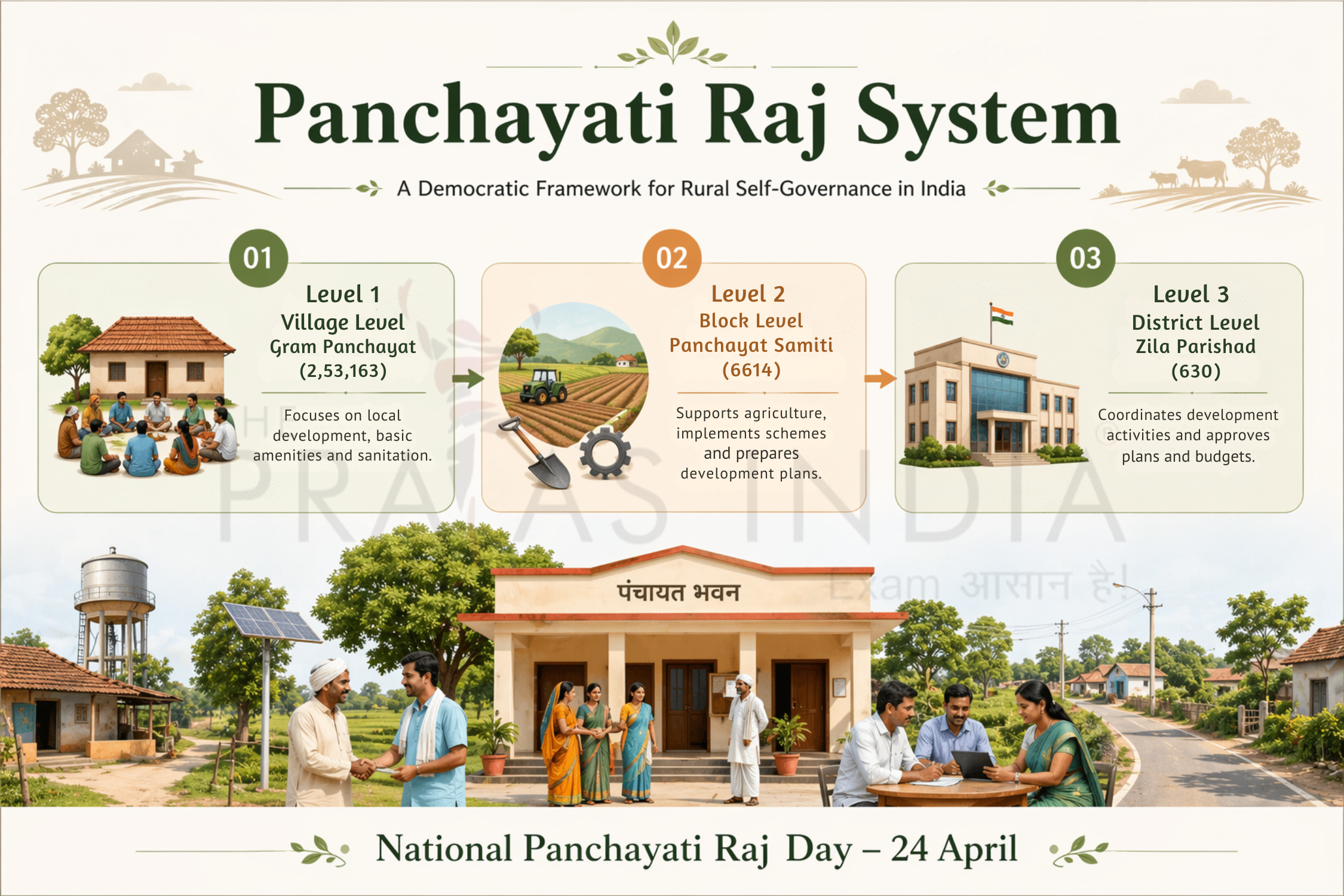
Historical Background: The 73rd Constitutional Amendment
The foundation of National Panchayati Raj Day lies in the 73rd Constitutional Amendment Act, which institutionalized local self-governance in rural India. Before this reform, Panchayats functioned without a strong constitutional backing, limiting their effectiveness.
The amendment introduced:
- A three-tier system of Panchayati Raj:
- Gram Panchayat (village level)
- Panchayat Samiti (block level)
- Zila Parishad (district level)
- Regular elections every five years
- Establishment of State Election Commissions
- Creation of State Finance Commissions
- Inclusion of the 11th Schedule, covering 29 subjects like agriculture, health, and education
This reform marked the emergence of Panchayats as the third tier of Indian democracy, alongside the Union and State governments.
Core Philosophy: Decentralization of Power
The essence of Panchayati Raj lies in decentralization—bringing governance closer to the people. It ensures that decision-making is not confined to central or state authorities but extends to villages themselves.
This shift from a top-down approach to a bottom-up model allows local communities to:
- Identify their own needs
- Design development plans
- Monitor implementation effectively
The concept resonates strongly with Mahatma Gandhi’s vision of Gram Swaraj, where villages function as self-reliant units of governance.
Key Pillars of Panchayati Raj Institutions
1. Empowerment of Women
One of the most transformative aspects of the Panchayati Raj system is the reservation for women. The Constitution mandates at least one-third reservation, though many states have increased it to 50%.
- Over 1.5 million women representatives are currently part of PRIs
- Women leaders have improved governance outcomes in areas like health, sanitation, and education
- It has led to a shift in social attitudes and increased political participation
2. Financial Autonomy
Panchayats have evolved from mere implementing agencies to local self-governments with financial powers.
They now:
- Prepare and manage local budgets
- Receive funds through Finance Commission grants
- Collect certain taxes and fees
This financial independence enhances accountability and ensures better utilization of resources at the grassroots level.
3. Role of Technology and e-Governance
In recent years, digital tools have strengthened transparency and efficiency in Panchayati Raj systems.
Key initiatives include:
- e-GramSwaraj Portal – for planning and monitoring village development
- AuditOnline – for real-time financial auditing
- GIS-based planning and digital record-keeping
These platforms ensure that public funds are tracked, corruption is minimized, and citizens can access information easily.
Importance in 2026: Panchayats as Drivers of Development
In 2026, Panchayati Raj Institutions are central to achieving national and global development goals. They act as the last-mile delivery mechanism for flagship schemes and policies.
Key Focus Areas:
- Jal Jeevan Mission – ensuring tap water to every rural household
- Digital India – promoting digital literacy in villages
- Climate Action – initiatives like carbon-neutral villages
- Sustainable Development Goals (SDGs) – localizing global goals
Panchayats are no longer passive bodies; they are active partners in nation-building.
The Role of Gram Sabha: Heart of Democracy
At the core of the Panchayati Raj system lies the Gram Sabha, which includes all eligible voters in a village.
It serves as:
- A platform for direct democracy
- A forum for discussing local issues
- A mechanism for social audit and accountability
Active participation in Gram Sabhas ensures transparency and strengthens democratic values at the grassroots.
Challenges in Panchayati Raj System
Despite progress, several challenges remain:
- Limited financial resources in some regions
- Capacity gaps among elected representatives
- Political interference
- Uneven implementation across states
Addressing these issues is essential for realizing the full potential of decentralized governance.
Conclusion
National Panchayati Raj Day is not just a commemorative event—it is a reminder of India’s commitment to inclusive and participatory governance. The Panchayati Raj system has empowered millions, especially women, and brought governance closer to the people.
As India moves toward Viksit Bharat 2047, strengthening Panchayats will be key to ensuring sustainable and equitable development. A truly vibrant democracy is built not only in Parliament but also in the Gram Sabha, where citizens directly shape their future.