Sardar Vallabhbhai Patel: Architect of India’s Unity and Pillar of Administrative Statecraft
- GS Paper 1: Modern Indian History (Freedom Struggle, National Integration)
- GS Paper 2: Polity & Governance (Federalism, State Reorganisation, Administrative Integration)
- GS Paper 4: Ethics – Leadership, Integrity, Decisiveness, Nation-Building
- Prelims: Indian National Movement, Integration of Princely States, Personalities
- Optional (History / PSIR): Freedom Struggle, Post-Independence Consolidation, Leadership Studies
Introduction
Sardar Vallabhbhai Patel, revered as the “Iron Man of India”, occupies a central place in India’s freedom struggle and the complex process of post-Independence nation-building. While he emerged as a formidable leader during the Gandhian phase of mass movements, his most enduring contribution lies in the integration of princely states, which ensured the political and territorial unity of India.
Patel’s life represents a unique blend of mass mobilisation, organisational discipline, administrative realism, and ethical firmness. He served as a bridge between the freedom struggle and the practical challenges of governance after 1947, making him one of the chief architects of modern India’s political consolidation.
Early Life and Political Awakening
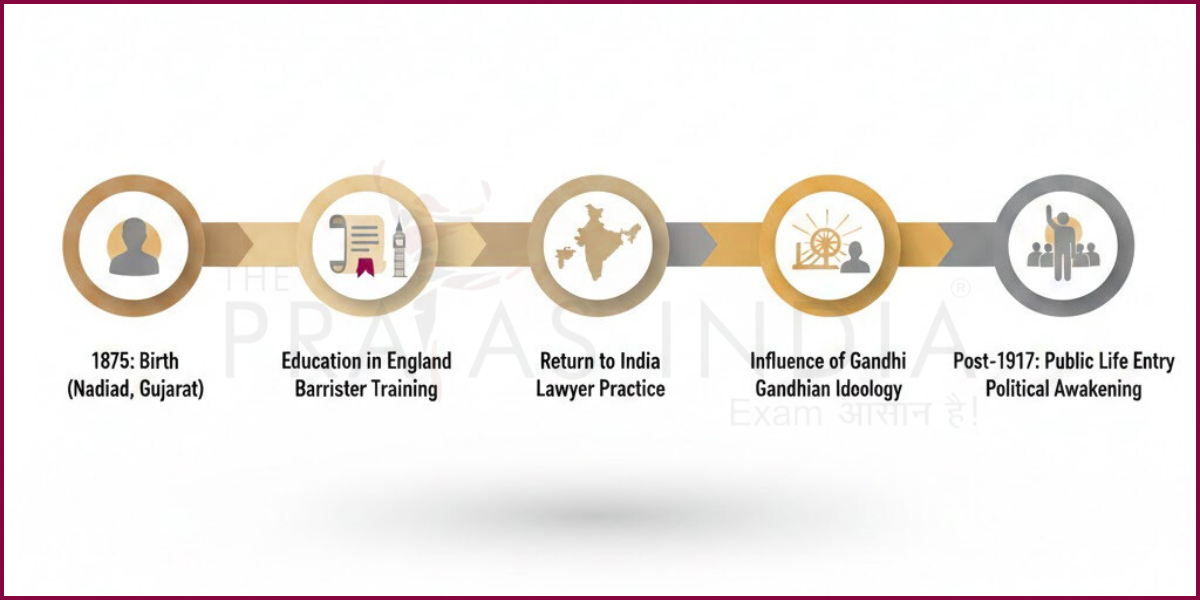
Sardar Vallabhbhai Patel was born on 31 October 1875 in Nadiad, Gujarat, into a peasant family. Trained as a lawyer, he established a successful legal practice and lived a relatively apolitical life in his early years. His political awakening came after encountering Mahatma Gandhi in Gujarat, whose ideas of satyagraha, discipline, and mass mobilisation deeply influenced him.
Patel’s transition from a lawyer to a nationalist leader was gradual but decisive. Gandhi’s leadership convinced him that political freedom required organised collective action rather than individual success. He soon emerged as a trusted lieutenant of Gandhi, particularly in organising peasants and translating Gandhian ideals into effective grassroots movements.
Role in the Indian National Movement
Kheda Satyagraha (1918)
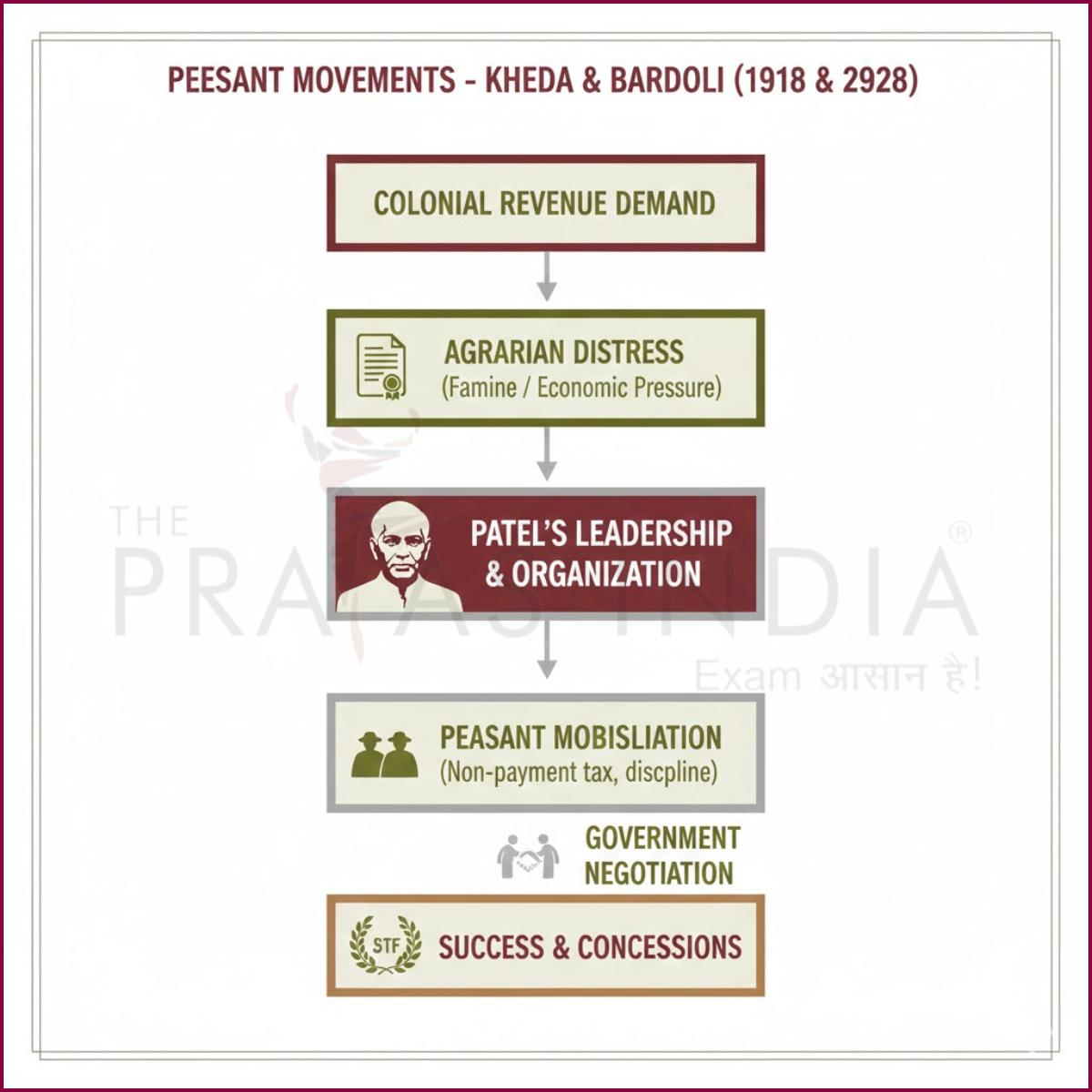
Patel first demonstrated his leadership abilities during the Kheda Satyagraha, which was launched to demand remission of land revenue due to crop failure and famine conditions. Patel organised peasants, negotiated with authorities, and ensured unity and discipline among protesters. The movement succeeded in compelling the British government to suspend revenue collection, establishing Patel’s reputation as a skilled organiser and negotiator.
Bardoli Satyagraha (1928)
The Bardoli Satyagraha marked a turning point in Patel’s political career. Leading peasants against unjust land revenue hikes, Patel adopted non-violent resistance combined with meticulous organisation. The movement’s success earned him the title “Sardar”, reflecting both popular admiration and political authority.
Role in the Indian National Congress
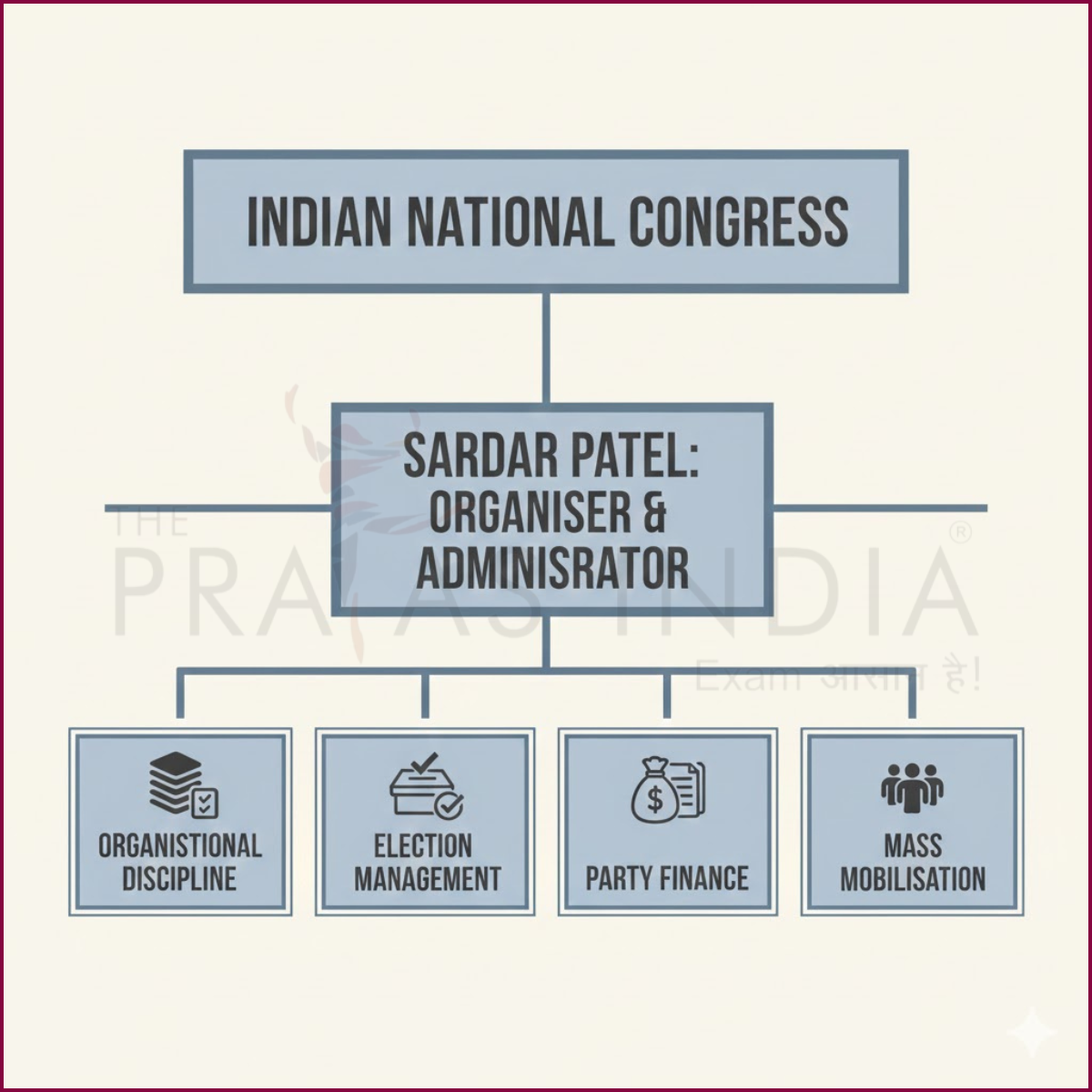
Within the Indian National Congress, Sardar Patel emerged as a master organiser and disciplinarian. He played a critical role in strengthening the party’s organisational structure, overseeing election strategies, and maintaining unity during periods of internal conflict.
Patel’s relationship with Gandhian leadership was marked by loyalty and pragmatism. He implemented Gandhian directives efficiently, even when they involved difficult decisions such as the suspension of movements. His emphasis on discipline and collective responsibility helped transform the Congress into a mass-based, well-organised political force.
Sardar Patel and Integration of Princely States
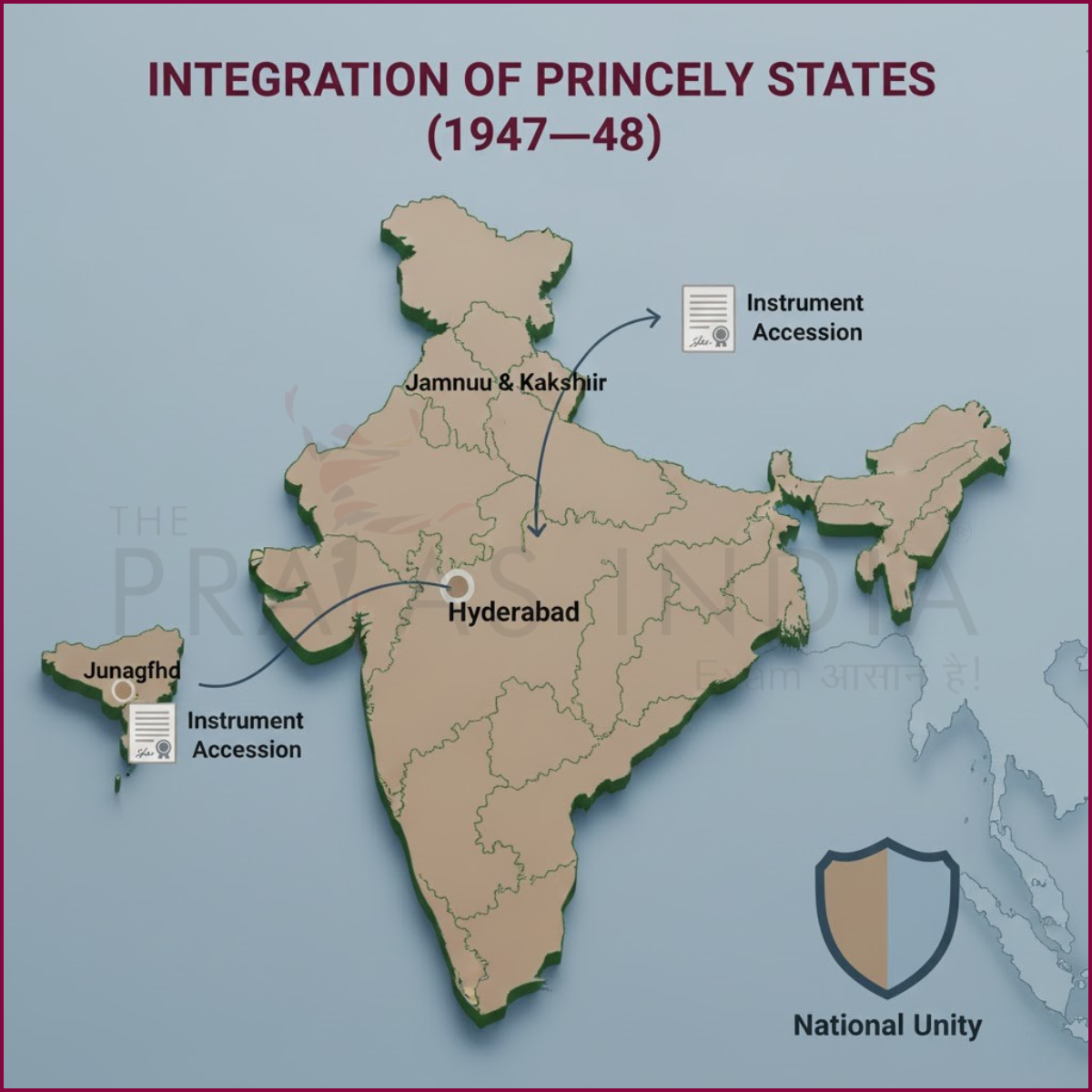
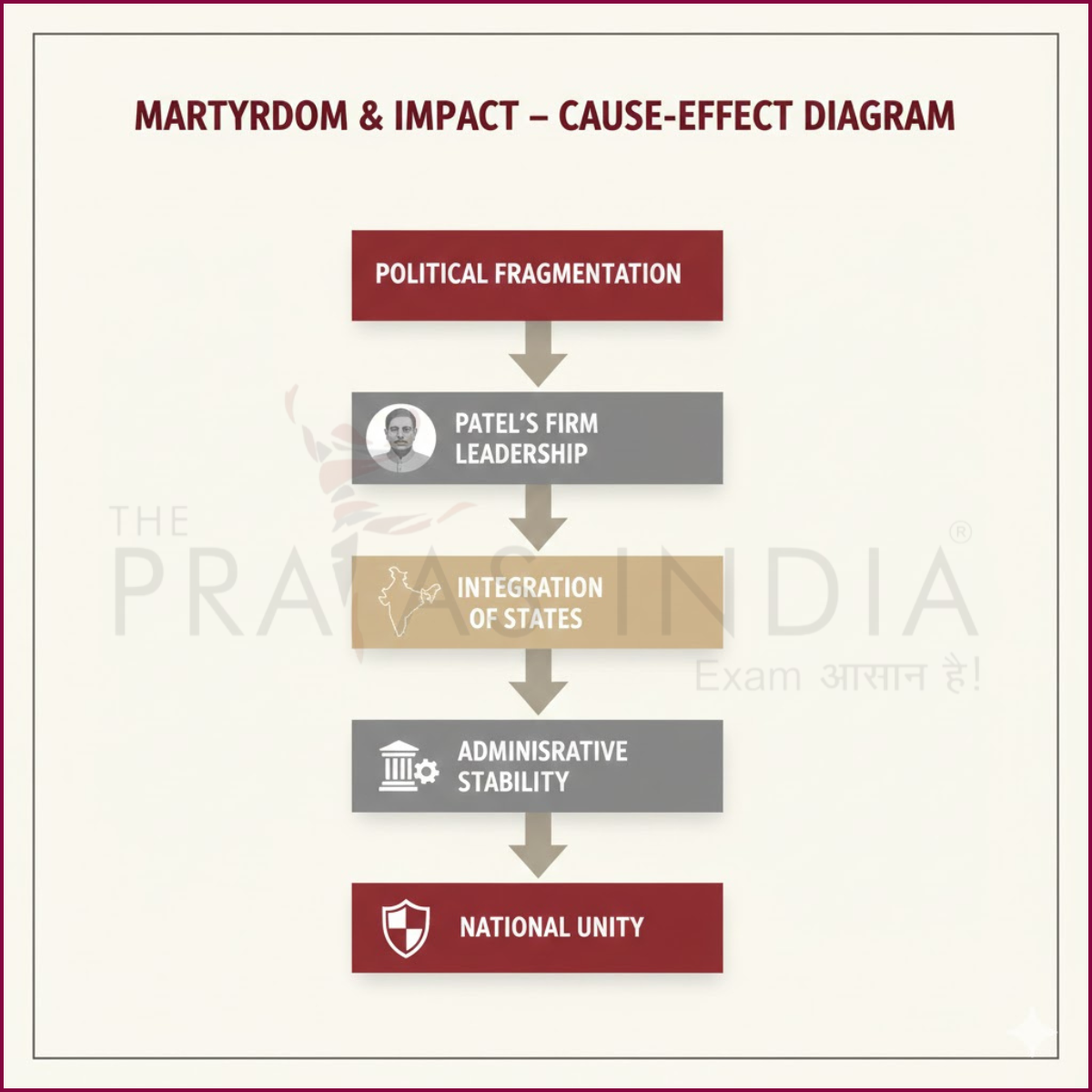
The most defining chapter of Patel’s career began after Independence, when India faced the challenge of integrating over 560 princely states into the Indian Union. As Deputy Prime Minister and Home Minister, Patel took charge of this monumental task.
Through a combination of diplomacy, persuasion, administrative incentives, and, when necessary, firm action, Patel ensured that the princely states acceded to India. The Instrument of Accession became the legal mechanism for integration.
Key case studies include:
- Junagadh, where popular will and administrative intervention ensured accession to India.
- Hyderabad, where military action (Operation Polo) was undertaken to prevent fragmentation.
- Kashmir, where accession followed invasion, highlighting complexities beyond simple negotiation.
Administrative Vision and Nation-Building
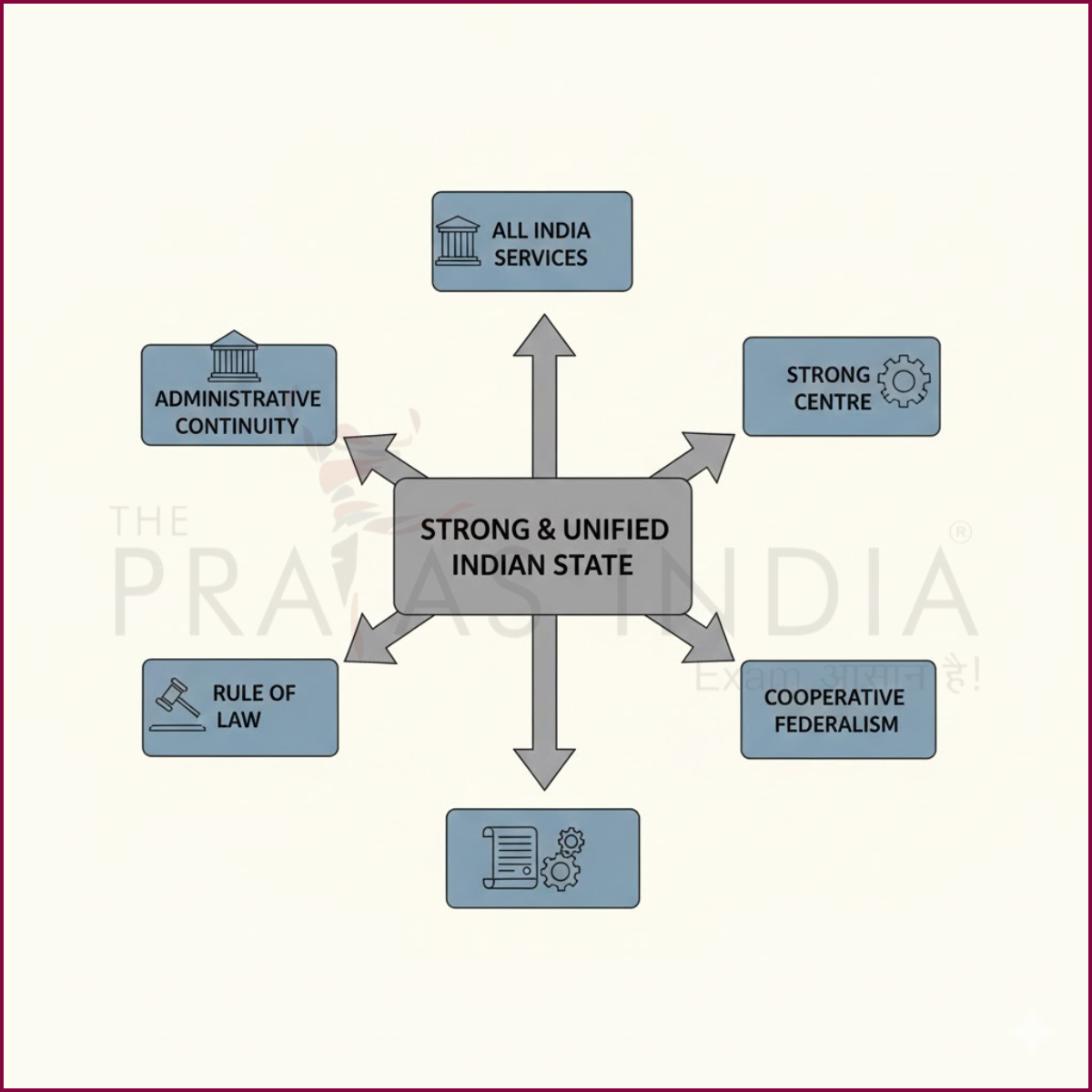
Sardar Patel played a decisive role in shaping India’s administrative framework. He strongly advocated the creation of All India Services, particularly the Indian Administrative Service (IAS) and Indian Police Service (IPS), which he famously described as the “steel frame of India.”
His administrative philosophy emphasised:
- A strong but not authoritarian Centre
- Cooperative federalism
- Professional, politically neutral civil services
Patel understood that political unity required administrative cohesion, rule of law, and institutional continuity.
Ethical Leadership and Personal Values
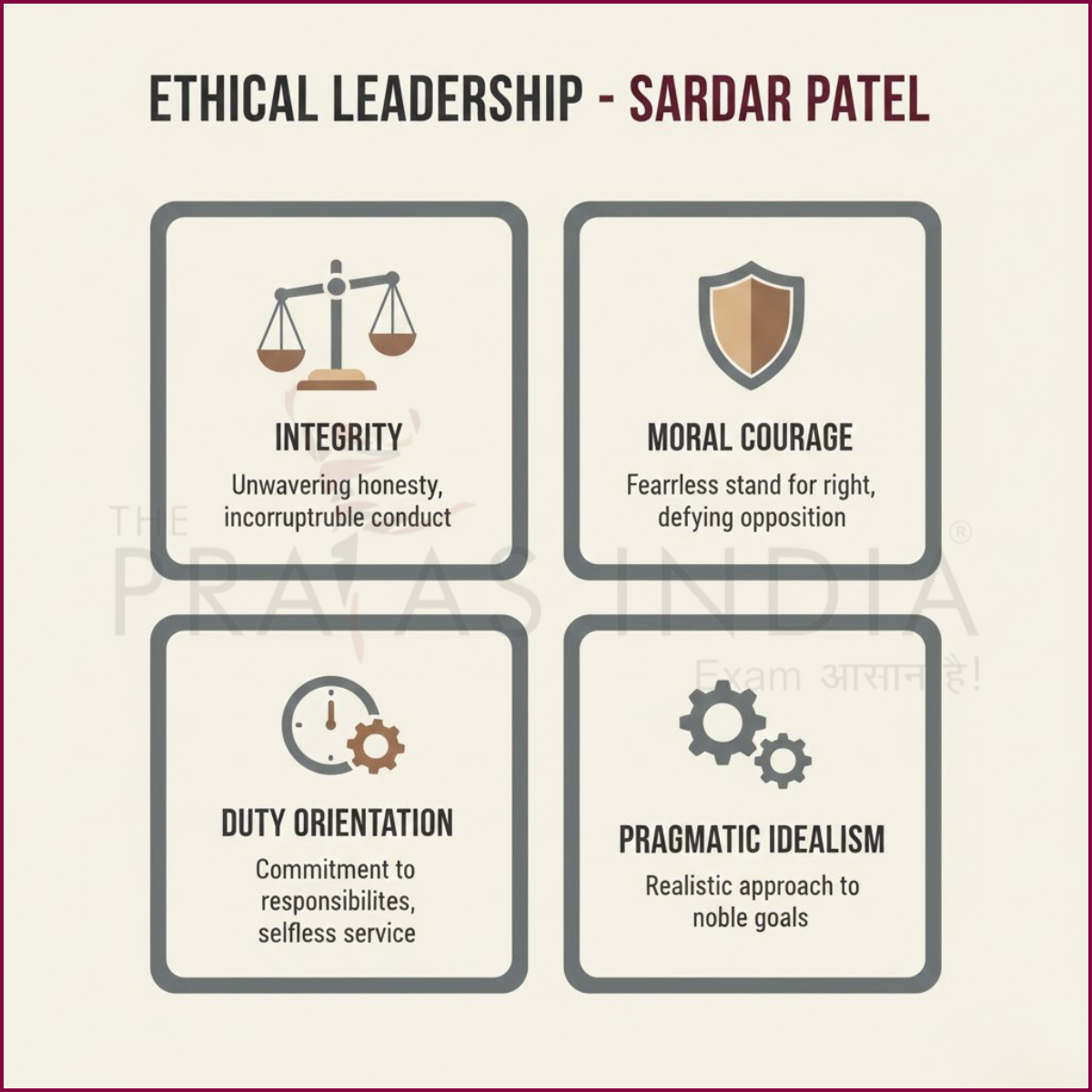
Sardar Patel’s leadership style was characterised by integrity, firmness, realism, and moral courage. Unlike charismatic idealism, his ethics were grounded in responsibility and outcomes. He took tough decisions in moments of crisis, prioritising national unity over short-term popularity.
His ethical leadership is relevant for GS Paper IV, particularly in understanding:
- Integrity in public life
- Courage of conviction
- Ethical pragmatism in governance
Differences with Other Leaders
Sardar Patel’s relationship with Jawaharlal Nehru is often analysed in historical debates. While Patel favoured administrative realism, fiscal prudence, and political consolidation, Nehru emphasised idealism, internationalism, and socialist planning.
Despite differences, their roles were largely complementary:
- Patel ensured unity and internal stability
- Nehru focused on global positioning and economic vision
9. Legacy and Historical Significance
Sardar Patel’s legacy lies in the survival and consolidation of India as a unified nation-state. His contributions ensured that political freedom translated into territorial integrity and administrative coherence.
The Statue of Unity, erected in his honour, symbolises recognition of his unparalleled role in national integration. Beyond monuments, his influence persists in India’s civil services, federal structure, and governance ethos.
Critical Evaluation
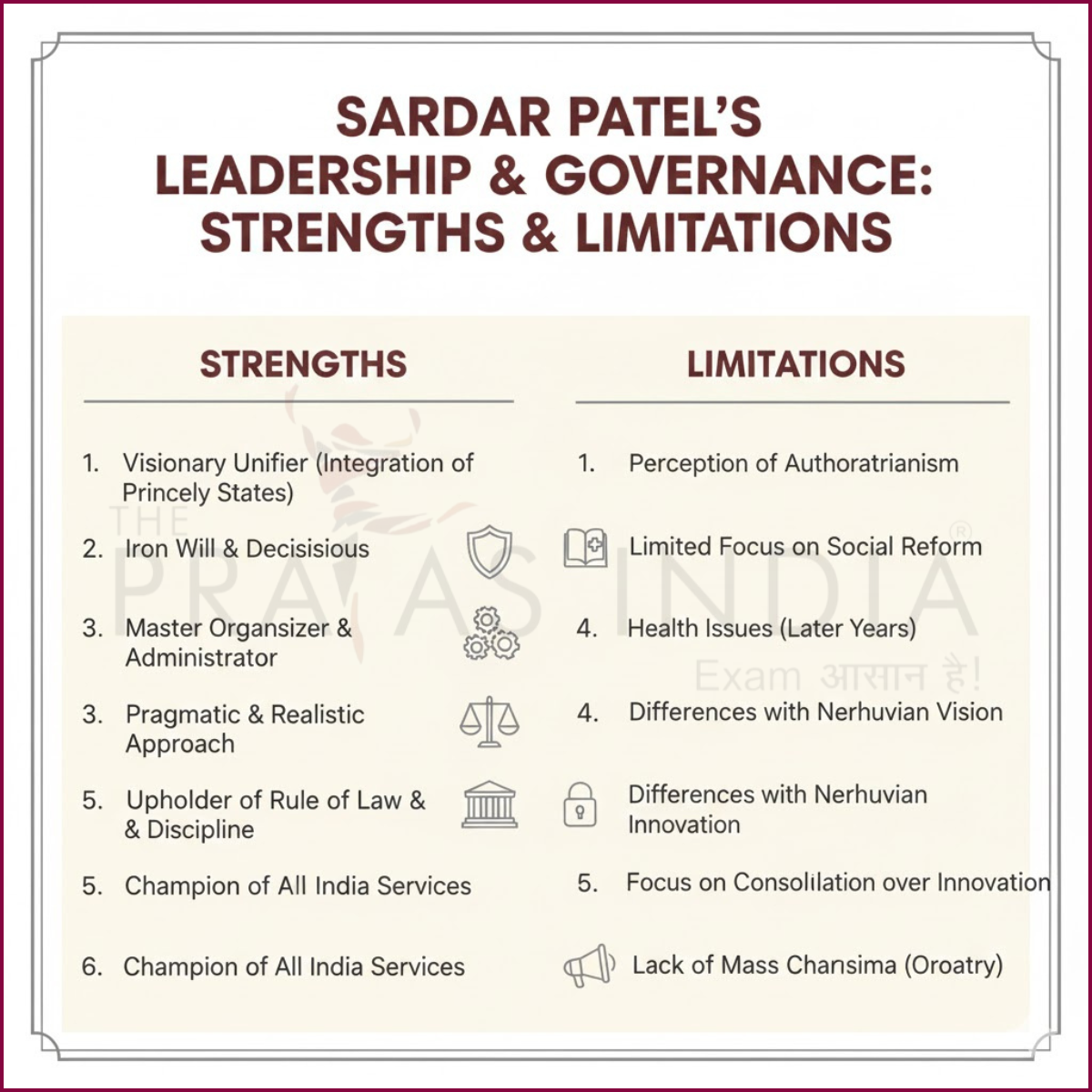
Strengths:
- Exceptional organisational ability
- Pragmatic and decisive leadership
- Successful integration of princely states
Criticisms and Limitations:
- Perceived rigidity in some decisions
- Limited engagement with ideological debates compared to Nehru
A balanced historical assessment recognises Patel’s indispensable role without idealising him beyond context.
Conclusion
Sardar Vallabhbhai Patel stands as the architect of India’s unity, whose leadership ensured that freedom did not dissolve into fragmentation. His blend of ethical firmness, administrative vision, and political realism remains deeply relevant in contemporary debates on federalism, governance, and national integration.
In India’s historical journey, Patel represents the essential truth that nation-building requires not only ideals but also discipline, institutions, and courageous decision-making. His legacy continues to offer valuable lessons for modern India and its administrators.
📝 GS Model Answers (10 & 15 Markers)
GS PAPER I (Modern Indian History)
Q1 (10 Marks)
Discuss Sardar Vallabhbhai Patel’s role in peasant movements during the freedom struggle.
Answer:
Sardar Vallabhbhai Patel emerged as a key mass leader through peasant movements in Gujarat. In the Kheda Satyagraha (1918), he mobilised peasants against unjust land revenue during famine conditions. The Bardoli Satyagraha (1928) marked a decisive victory against colonial taxation, earning him the title ‘Sardar’. These movements combined Gandhian methods with organisational discipline and strengthened nationalist mobilisation at the grassroots level.
Q2 (15 Marks)
Evaluate the contribution of Sardar Vallabhbhai Patel to India’s freedom struggle beyond his role in the integration of princely states.
Answer:
Beyond post-Independence integration, Patel played a critical role in mass mobilisation, Congress organisation, and civil resistance. His leadership in peasant movements expanded the social base of nationalism. As a Congress organiser, he ensured discipline and unity during difficult phases. Patel’s pragmatic leadership complemented Gandhian ideals, making him indispensable to the freedom struggle.
GS PAPER II (Governance & Polity)
Q3 (10 Marks)
Examine Sardar Patel’s contribution to national integration after Independence.
Answer:
As Home Minister, Patel addressed the challenge of political fragmentation by integrating over 560 princely states. Through diplomacy, persuasion, and limited force, he ensured territorial unity. The successful accession of Junagadh and Hyderabad demonstrated his firm yet pragmatic approach to governance.
Q4 (15 Marks)
Analyse Sardar Vallabhbhai Patel’s administrative vision and its relevance for contemporary India.
Answer:
Patel viewed civil services as the “steel frame” of India and championed the All India Services to ensure administrative continuity. His emphasis on a strong Centre with cooperative federalism remains relevant in addressing regionalism, internal security, and governance challenges today.
GS PAPER IV (Ethics)
Q5 (10 Marks)
Highlight the ethical dimensions of Sardar Vallabhbhai Patel’s leadership.
Answer:
Patel’s leadership reflected integrity, courage, and commitment to national interest. He prioritised duty over popularity, demonstrated moral firmness during integration challenges, and upheld institutional ethics in governance.
Q6 (15 Marks)
“Sardar Patel exemplified ethical pragmatism in public life.” Discuss with suitable examples.
Answer:
Patel balanced moral principles with practical decision-making. His handling of princely states, insistence on administrative discipline, and willingness to take firm decisions for national unity illustrate ethical pragmatism. His approach underscores the importance of values-driven yet realistic leadership in public administration.
Frequently Asked Questions (FAQs)
Q1. Why is Sardar Vallabhbhai Patel called the “Iron Man of India”?
Sardar Patel earned the title due to his firmness, decisiveness, and political will, particularly in integrating over 560 princely states into the Indian Union using diplomacy, persuasion, and limited coercion when necessary.
Q2. What was Sardar Patel’s role in peasant movements?
He led major agrarian struggles such as the Kheda Satyagraha (1918) and Bardoli Satyagraha (1928), mobilising peasants against unjust taxation and demonstrating Gandhian mass leadership with administrative precision.
Q3. How did Sardar Patel contribute to the Indian National Congress?
Patel was a master organiser who strengthened party discipline, supervised elections, managed finances, and ensured cohesion within the INC during critical phases of the freedom struggle.
Q4. What was Sardar Patel’s role in the integration of princely states?
As Deputy Prime Minister and Home Minister, Patel used the Instrument of Accession, negotiations, and strategic action to integrate states like Junagadh, Hyderabad, and Kashmir, ensuring territorial unity.
Q5. How is Sardar Patel relevant for GS Paper IV (Ethics)?
His leadership reflected integrity, duty-oriented governance, moral courage, and commitment to national interest over personal or ideological considerations.