
Sculptures in Ancient India – Evolution, Characteristics & Cultural Significance
GS Paper 1: Indian Culture, Ancient Art Forms, Architecture & Sculpture
GS Paper 2: Cultural Heritage & Soft Power Diplomacy (Indo-UNESCO Sites)
Prelims: Ancient India, Schools of Art, Buddhism–Jainism, Mauryan–Gupta Art
Art & Culture Optional: Iconography, Stylistic Evolution, Chronological Analysis
Introduction
Sculpture in ancient India represents a continuous artistic tradition shaped by geography, religion, social change, and technological evolution. From prehistoric figurines carved in bone and stone to the refined Gupta masterpieces, Indian sculpture demonstrates a deep relationship between material resources, religious philosophy, and regional identity.
The availability of materials—such as steatite in the Indus valley, sandstone in the Gangetic plains, limestone in the Deccan, and granite in South India—deeply influenced the sculptural outcomes. Indian sculpture is not merely aesthetic; it is a visual text that documents belief systems, trade, political ideology, and technological capabilities of each age.
Broadly, the sculptural history of India evolves through:
- Prehistoric → Protohistoric (Harappan) → Mauryan → Post-Mauryan Schools → Gupta Period
- Followed by significant regional developments that shaped later Indian art.
This article provides a comprehensive, UPSC-oriented analysis of this evolution.
Prehistoric & Protohistoric Sculptures
(a) Prehistoric Figurines
The earliest forms of artistic expression in India date to the Upper Palaeolithic and Mesolithic periods:
Key Features
- Mostly small figurines made of bone, ivory, stone.
- Themes centered on fertility, hunting, and mother goddess imagery.
- Many figures have exaggerated sexual features, symbolizing fertility and continuity of life.
- Petroglyphs and rock engravings (Bhimbetka, Kupgal) show early artistic tendencies.
These early objects highlight a symbolic, ritualistic worldview, laying the foundation for anthropomorphic representations in later periods.
(b) Indus Valley Civilization (2600–1900 BCE)
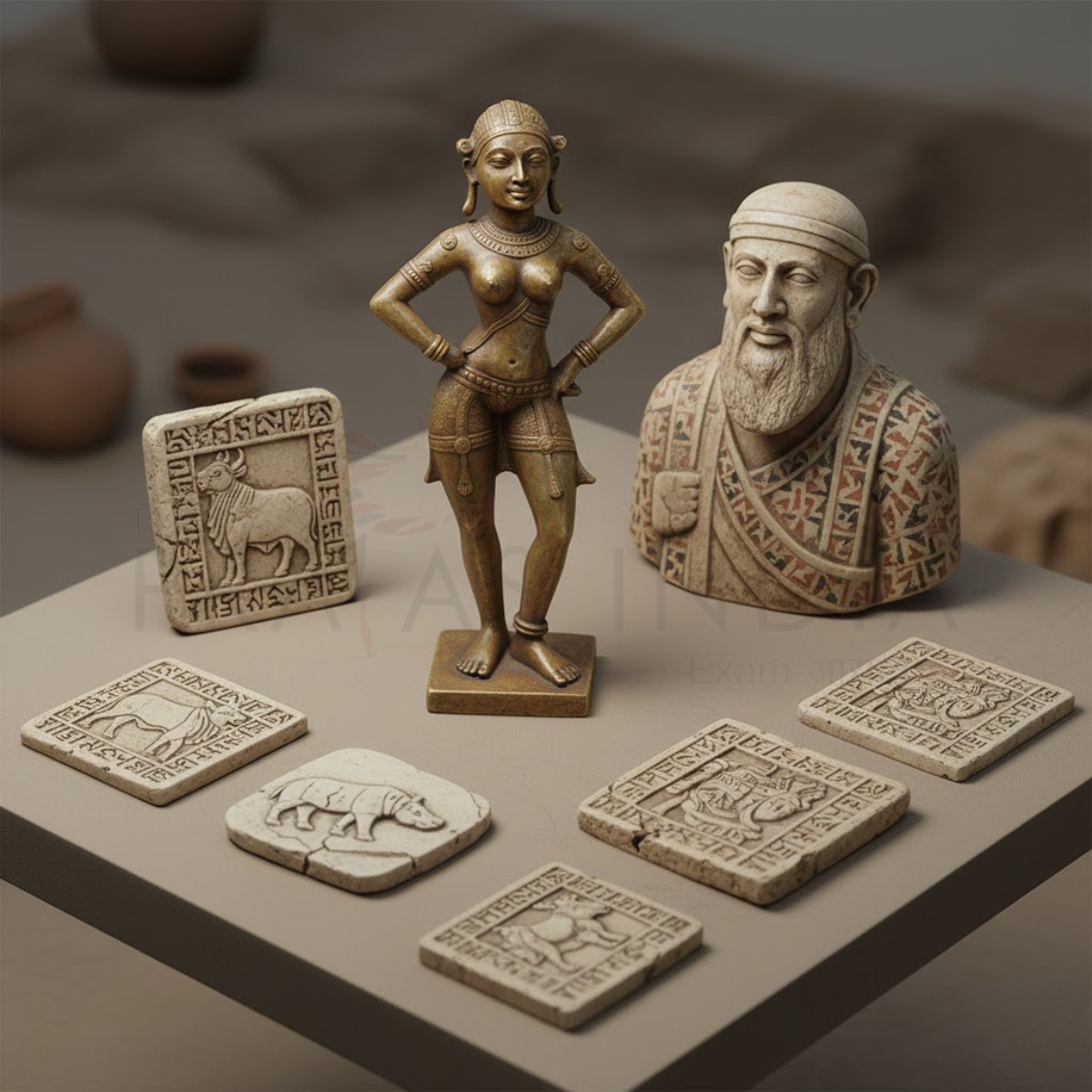
The Harappan civilization produced one of the most sophisticated sculptural traditions of the ancient world.
Materials Used
- Steatite – for seals and figurines
- Terracotta – for mass-produced figurines
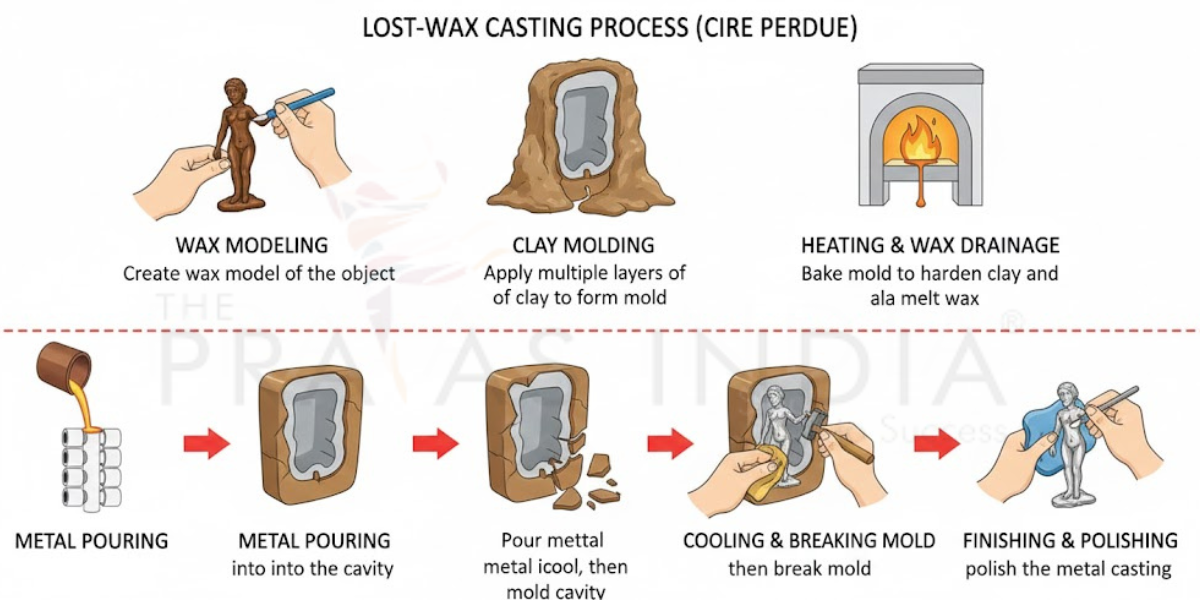
- Bronze (lost-wax method) – technologically advanced sculptures
Major Sculptures
1. Dancing Girl (Bronze)
- Found at Mohenjo-daro.
- Created using cire perdue (lost-wax) casting.
- Represents movement, confidence, and anatomical understanding.
- Symbolizes early metallurgical advancement.
2. Priest King (Steatite)
- Draped in a trefoil-patterned shawl.
- Depicts authority, ritual importance, and stylized facial features.
3. Terracotta Figurines
- Mother goddess figures.
- Bulls, carts, animals.
- More expressive and symbolic.
4. Seals
- Animals like unicorns, humped bulls, rhinoceros.
- Proto-script inscriptions.
- Religious motifs (pashupati figure).
Significance
- Showcases early use of iconography, symbolism, and technical mastery.
- Provides insight into socio-cultural and ritual life.
Mauryan Sculpture (4th–2nd century BCE)
The Mauryan Empire marked a watershed moment for Indian art due to state patronage, Buddhist expansion, and imperial ideology.
Key Characteristics
- Highly polished sandstone (Mauryan polish)
- Monumental forms
- Royal symbolism and Buddhist influence
Major Artistic Contributions
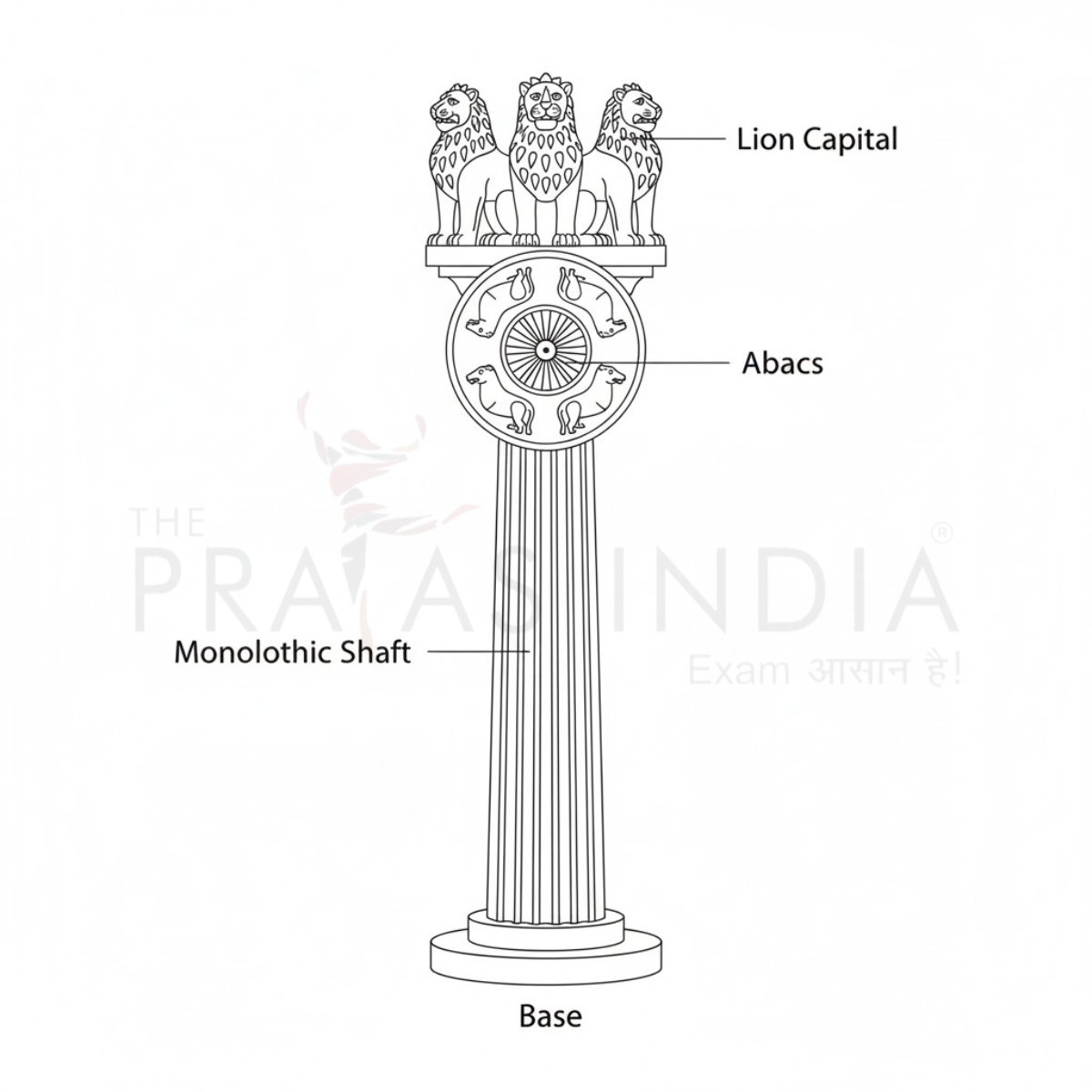
1. Ashokan Pillars
- Erected to spread Dhamma.
- Monolithic sandstone shafts.
- Polished like mirror surfaces.
- Inscriptions engraved in Brahmi script.
The Lion Capital of Ashoka (Sarnath)
- National Emblem of India.
- Four lions atop an abacus with animal frieze.
- Represents power, Dhamma, and universal peace.
2. Yaksha and Yakshi Sculptures
- Terracotta and stone.
- Symbol of fertility, prosperity, rural belief systems.
- Semi-divine beings bridging folk religion and organized faith.
3. Animal Capitals
- Bull, elephant, lion capitals.
- Sculpted with realism and anatomical precision.
Importance
- Marks emergence of imperial Indian art.
- Serves as model for later Buddhist and state-sponsored sculpture.
Post-Mauryan Sculptural Traditions (2nd century BCE – 3rd century CE)
This period saw cultural pluralism and artistic diversity due to interactions with foreign cultures, rise of Buddhism, and development of regional schools.
Three major schools developed:
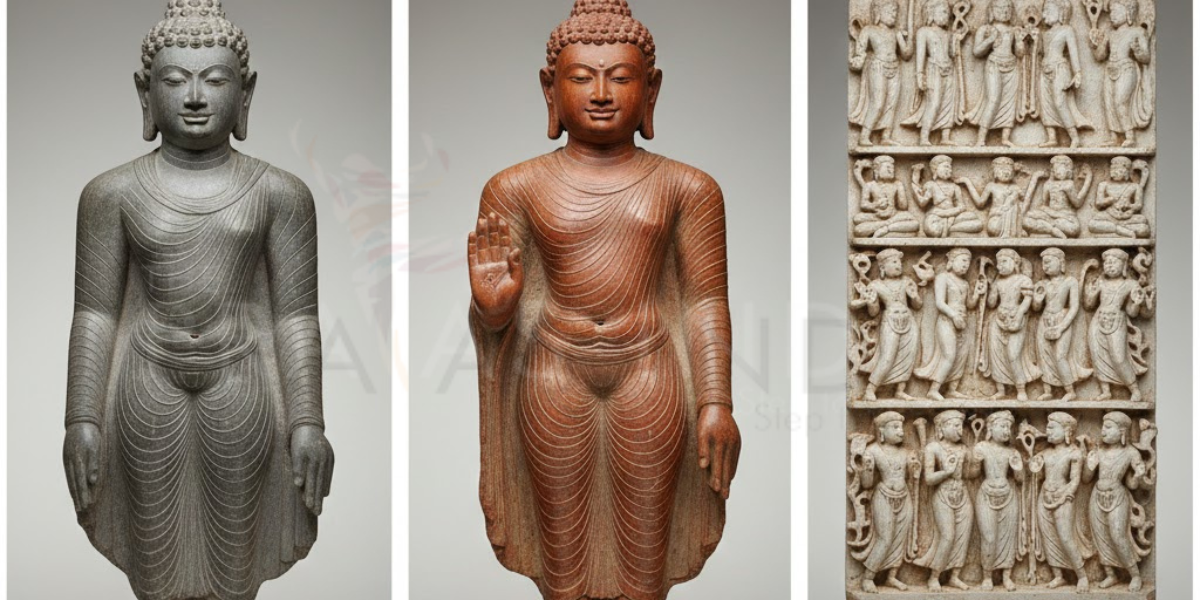
(a) Gandhara School
Key Features
- Greco-Roman influence (Hellenistic style).
- Grey schist stone.
- Realistic depiction of human body.
- Iconic wavy hair, sharp nose, heavy drapery.
- High relief and deep carving.
Significance
- First anthropomorphic images of Buddha created here.
(b) Mathura School
Key Features
- Indigenous Indian aesthetic.
- Red sandstone from Sikri.
- Robust bodies, round smiling faces.
- Thin, transparent drapery.
- Strong spiritual aura.
Contribution
- First Indian-made anthropomorphic Buddha and Jina images.
(c) Amaravati School
Key Features
- White limestone.
- Intense narrative storytelling.
- Elaborate decorative motifs.
- Graceful body forms and dynamic movement.
Major Site
-
Great Stupa at Amaravati.
Gupta Period Sculpture (4th–6th century CE)
The Gupta era is known as the Golden Age of Indian Art.
Key Characteristics
- Classical perfection and idealized forms.
- Smooth, graceful contours.
- Emphasis on spiritual calm (śānta rasa).
- Iconography developed to mature forms.
Sarnath School
- Buddha with sharp features, slender body, transparent drapery.
- Halo (Prabhamandala) with complex motifs.
- Ideal proportions based on Shilpa Shastra.
Other Iconographies
- Vishnu in chaturvyuha form.
- Shiva in yogic posture.
- Durga Mahishasuramardini.
- Bodhisattvas with elaborate jewelry.
Significance
- Established enduring sculptural norms of Hindu, Buddhist, and Jain art.

Regional Sculptural Developments
(a) Deccan & Western India
- Satavahana terracotta figures.
- Ajanta and Ellora rock-cut caves:
- Chaityas & Viharas
- Intricate Buddhist, Hindu, Jain panels
- Sculpting directly into basalt rock.
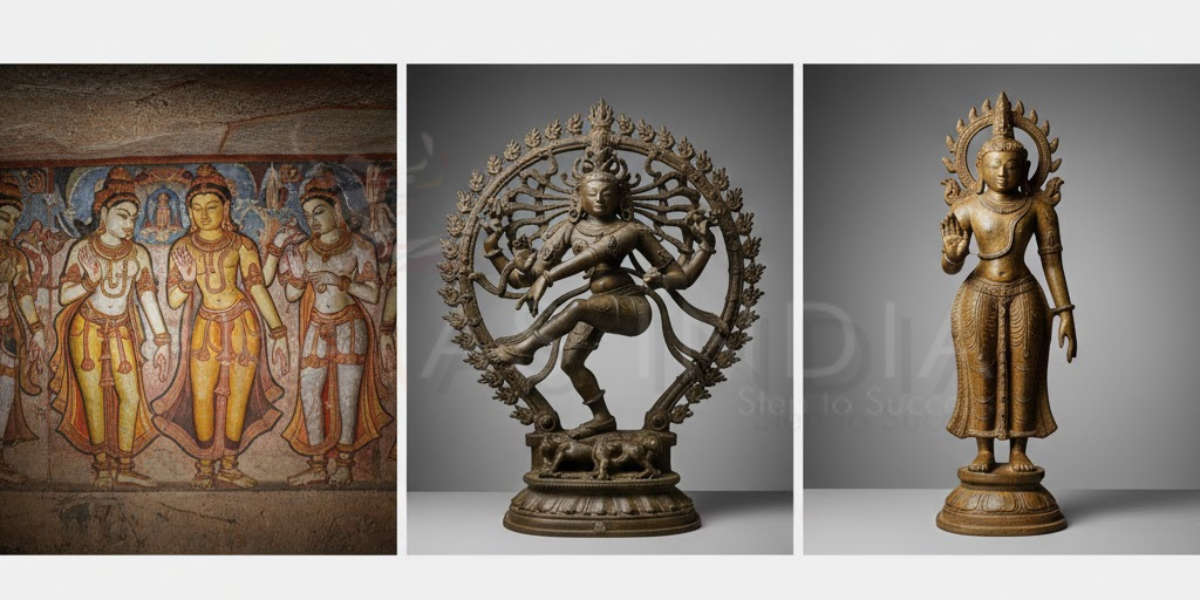
(b) South India
- Early Chola bronzes evolve later from ancient terracotta and metal traditions.
- Nataraja image demonstrates philosophical depth + metallurgical excellence.
(c) Eastern India
- Pala–Sena bronzes with refined metal-work.
- Esoteric Buddhist imagery (Vajrayana influence).
Themes, Iconography & Symbolism
Major Themes
- Religion: Buddhism, Jainism, Hinduism.
- Anthropomorphic and non-anthropomorphic forms.
- Nature motifs: lotus, naga, animals.
- Royal patronage symbolism.
Iconographic Elements
- Mudras – symbolic hand gestures.
- Asanas – body postures (padmasana, sukhasana).
- Tribhanga – triple-bend pose adding dynamism.
- Prabhamandala – halo representing divinity.
Symbolism
- Yaksha/Yakshi: fertility and prosperity.
- Bodhisattvas: compassion and cosmic ideals.
- Stupa gateways: narrative storytelling through reliefs.
Materials, Tools & Techniques
Materials
- Terracotta – inexpensive, mass-produced.
- Stone – sandstone, granite, schist, limestone.
- Metal – bronze via lost-wax casting.
Techniques
- Lost-wax method (cire perdue) for bronze masterpieces.
- Rock-cut methods (Ajanta, Ellora).
- Free-standing stone sculptures.
- Polishing methods (Mauryan polish).
Comparison Table (Instruction)
The writer should create a table comparing Gandhara, Mathura, Amaravati based on:
- Features
- Materials
- Themes
- Locations
Decline & Legacy
Post-Gupta:
- Decline in classical forms due to political fragmentation.
- Islamic influence leads to shift toward architecture over sculpture in many regions.
- Revival in medieval times, especially under Cholas.
- Many sites today are UNESCO World Heritage monuments.
FAQs about Sculptures in Ancient India
1. What are the major periods of ancient Indian sculpture?
The major phases include:
- Indus Valley Civilization (2500–1700 BCE)
- Mauryan Period (322–185 BCE)
- Shunga–Satavahana Period
- Kushan–Gandhara–Mathura Schools (1st–4th century CE)
- Gupta Period (4th–6th century CE)
Each period shows distinct stylistic and cultural evolution.
2. What materials were commonly used in ancient Indian sculptures?
Ancient Indian artists used stone (sandstone, granite, basalt), bronze, terracotta, ivory, and stucco. The material varied by region and purpose.
3. What are the most famous sculptures from the Indus Valley Civilization?
Two iconic examples are:
- The Dancing Girl (bronze)
- The Priest-King (steatite)
These represent early mastery in metalwork and symbolic representation.
4. What is special about the Mauryan sculptural style?
Mauryan sculptures are known for:
- High polish (Mauryan polish)
- Monolithic stone pillars
- Animal capitals like the Lion Capital of Sarnath
They reflect strong imperial patronage.
5. How do Gandhara and Mathura schools differ?
- Gandhara School: Greco-Roman influence, realistic anatomy, wavy hair, drapery.
- Mathura School: Indigenous style, red sandstone, spiritual expression, Indian facial features.
6. What defines Gupta period sculpture?
Gupta art is considered the ‘Classical Age’ of Indian sculpture, known for:
- Idealized beauty
- Elegant postures
- Smooth modelling
- Rise of iconic Hindu deities (Vishnu, Shiva, Durga)
7. Are terracotta sculptures significant in ancient India?
Yes. Terracotta was widely used for folk art, household rituals, toys, plaques, and decorative objects across regions like Bengal, Bihar, Uttar Pradesh, and the Deccan.
8. What themes were common in ancient Indian sculpture?
Themes included:
- Religion: Hindu, Buddhist, Jain icons
- Nature: Yaksha–Yakshi, animals, plants
- Royalty: Kings, officials
- Common life: Musicians, dancers, warriors
9. How did Buddhism influence sculpture in India?
Buddhism led to:
- Stupas and railings with reliefs
- Iconic Buddha statues
- Spread of art styles like Gandhara, Mathura, Amaravati
It promoted narrative art and symbolism.
10. What is the role of sculptures in Indian temples?
Temple sculptures served as:
- Religious symbolism
- Narrative panels
- Architectural decoration
They guided devotees and depicted mythological stories.
Conclusion
Ancient Indian sculpture signifies the continuity of aesthetic vision, spiritual depth, and cultural diversity. These artistic traditions are not merely relics but living embodiments of India’s civilizational ethos. From the bronze figurines of Harappa to the serenity of Gupta Buddhas, Indian sculpture documents the evolution of society, religion, technology, and creativity.
The legacy remains foundational to India’s artistic identity and global cultural heritage.