Types of Soil in India – Classification, Characteristics, Distribution, and Crop Suitability
- GS Paper 1: Physical Geography, Geomorphology, Indian Geography
- GS Paper 3: Environment, Soil Conservation, Agriculture, Climate Impact
- Prelims: Soil Types, Soil Features, Soil Distribution, Soil Conservation Schemes
- Geography Optional: Pedology, Soil Classification, Soil Erosion, Land Degradation, Agriculture Geography
Introduction
Soil is the fundamental natural resource that supports India’s agricultural economy. Nearly 55% of India’s workforce depends directly on agriculture, making soil health a critical component of food security, rural livelihood, and ecological stability. The diversity of soil in India reflects the combined influence of climate, geology, biota, relief, and time, which together determine its texture, structure, fertility, and productivity.
India displays one of the most diverse soil profiles globally, shaped by its varied climatic zones, river systems, ancient geological formations, and tropical weathering processes.
The Indian Council of Agricultural Research (ICAR) and the All India Soil & Land Use Survey (AIS&LUS) provide the most widely accepted modern classification, identifying eight major soil types found across the country. These soil categories help in assessing crop suitability, planning irrigation, and executing soil conservation measures.
Basis of Soil Classification in India
A. Genetic Classification (Old System)
Earlier, Indian soils were classified into broad genetic groups based on their origin and morphology (e.g., Alluvial, Black, Red, Laterite). This classification was descriptive but lacked scientific precision.
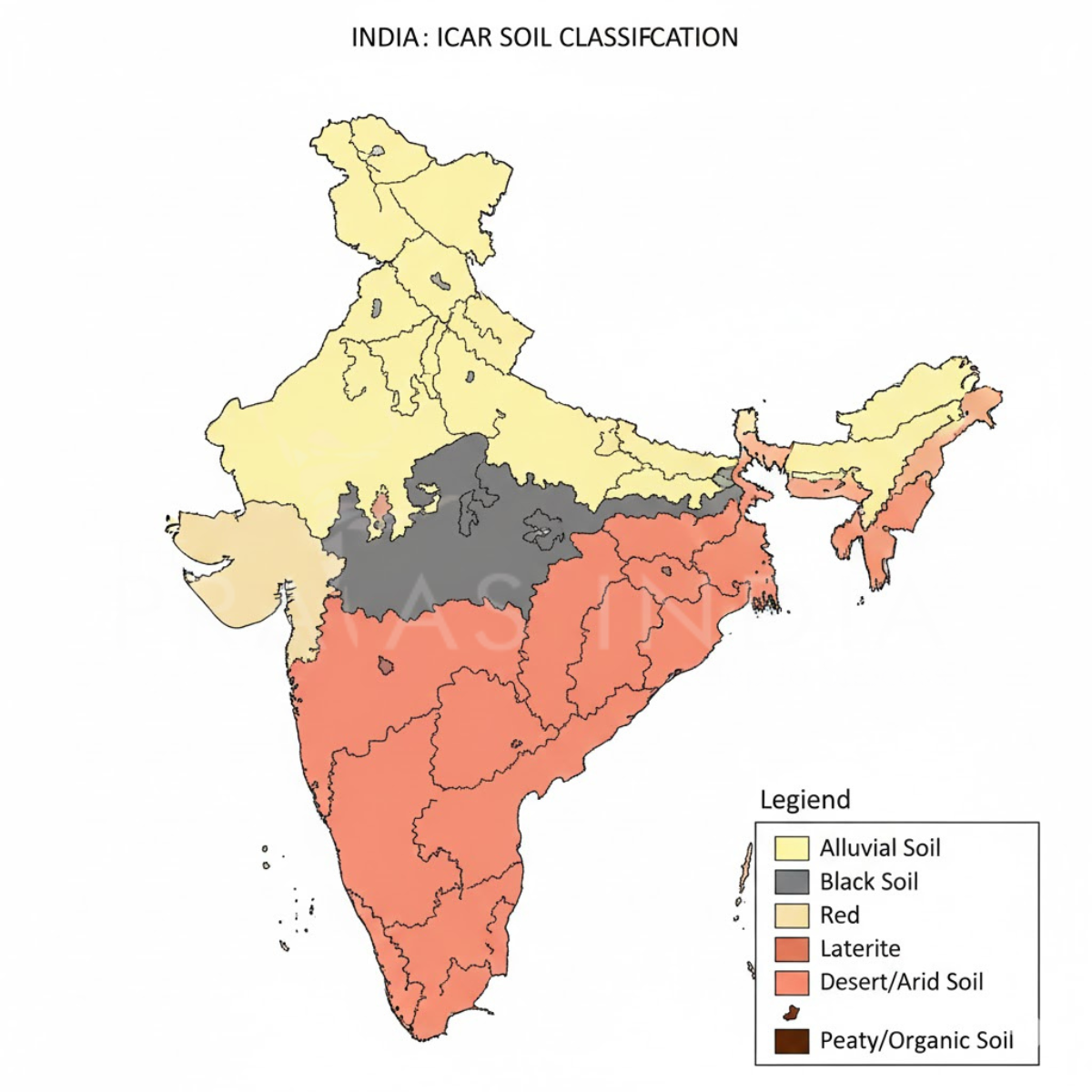
B. ICAR’s Modern Classification (8 Major Soil Types)
ICAR uses a pedogenic and scientific approach based on texture, chemical composition, and formation environment:
- Alluvial Soil
- Black Soil
- Red Soil
- Laterite Soil
- Arid/Desert Soil
- Mountain/Forest Soil
- Saline & Alkaline Soil
- Peaty & Marshy Soil
C. Climatic & Pedogenic Factors
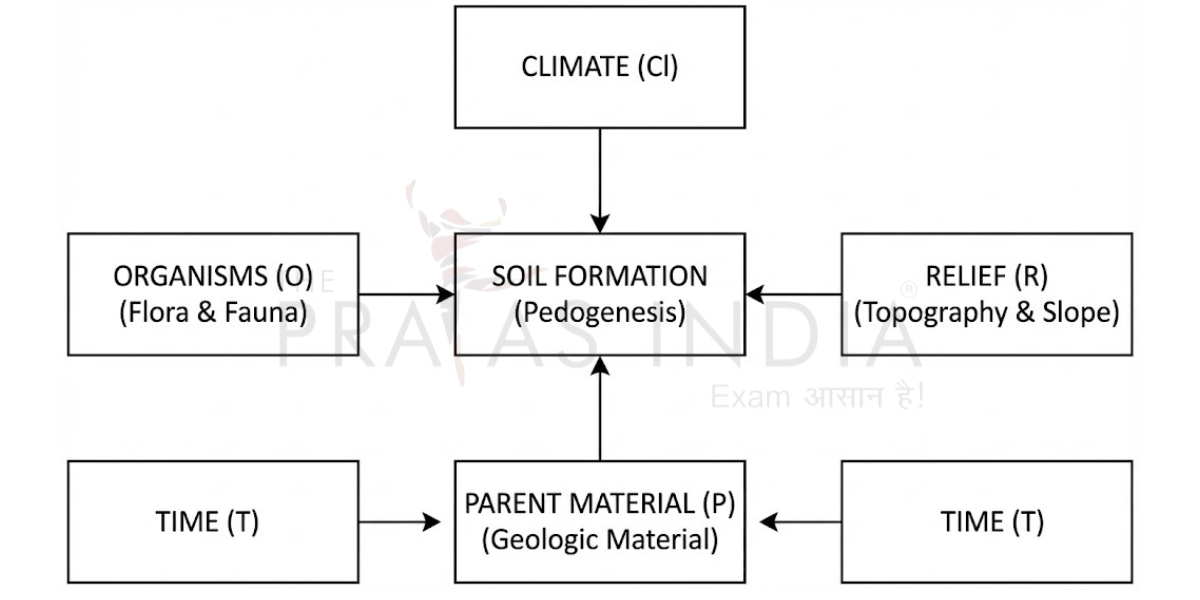
Soil formation in India depends on the ClORPT factors:
- Climate – rainfall, temperature
- Organisms – vegetation, microorganisms
- Relief – slope, drainage
- Parent Material – rock type
- Time – duration of weathering
Major Types of Soil in India – Detailed Explanation
Below is the detailed analysis of each soil type with formation, characteristics, distribution, crops, and challenges.
A. Alluvial Soil
1. Meaning & Formation
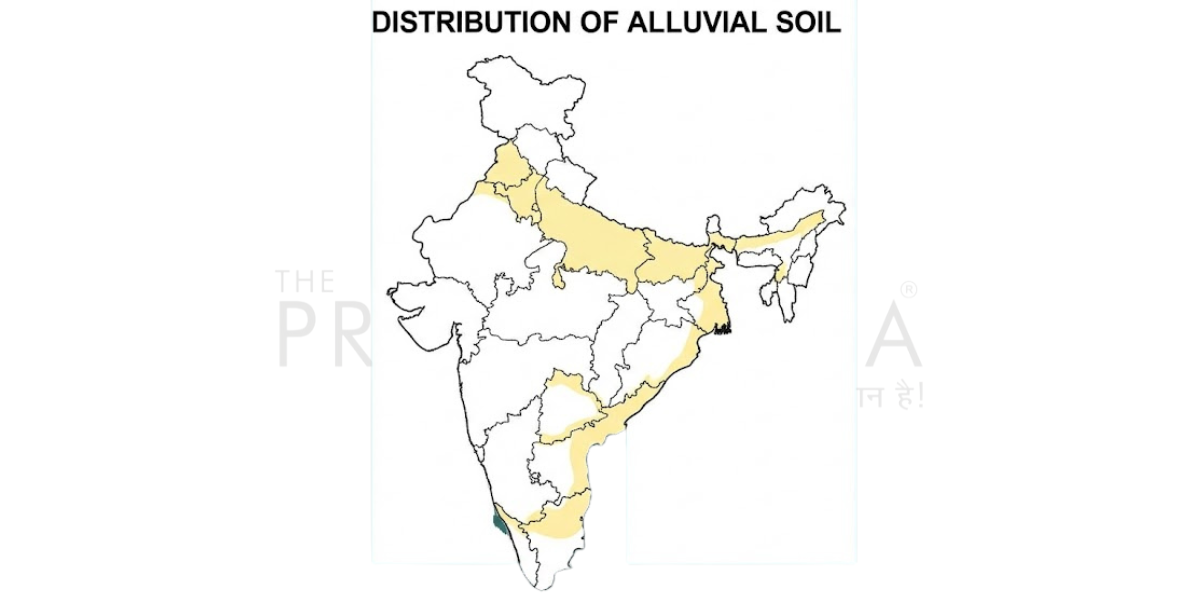
Formed by the deposition of sediments brought by the Indus, Ganga, and Brahmaputra river systems. It is the most extensive soil type in India.
2. Characteristics
- Light to medium texture
- Rich in potash, poor in phosphorus
- High fertility
- Two subtypes:
- Khadar (new alluvium): finer, more fertile
- Bhangar (old alluvium): coarse, contains kankar nodules
3. Distribution
- Punjab, Haryana, UP, Bihar, West Bengal, Assam
- Coastal alluvium in Odisha, Tamil Nadu, Andhra Pradesh
4. Suitable Crops
- Rice, Wheat, Sugarcane, Cotton, Jute, Oilseeds
5. Problems
- Flood-prone areas
- Nutrient depletion due to over-cultivation
B. Black Soil (Regur Soil)
1. Formation
Derived from basaltic rocks formed due to Deccan volcanic activity.
2. Characteristics
- High clay content
- Cracks during summer → self-ploughing nature
- High moisture retention
- Rich in lime, iron, magnesium
3. Distribution
- Maharashtra
- Gujarat
- Western Madhya Pradesh
- Telangana
- North Karnataka
4. Suitable Crops
- Cotton (most suitable)
- Soybean, Wheat, Sorghum, Groundnut
5. Problems
- Poor drainage
- Hard to work when wet

C. Red Soil
1. Formation
Formed due to weathering of ancient crystalline rocks such as granite and gneiss.
2. Characteristics
- High iron oxide → red colour
- Porous, friable
- Deficient in nitrogen, phosphorus
3. Distribution
- Tamil Nadu
- Karnataka
- Andhra Pradesh
- Odisha
- Jharkhand
- Kerala
4. Suitable Crops
- Millets
- Groundnut
- Pulses
- Cotton
- Castor
5. Challenges
-
Low fertility, needs fertilisers
D. Laterite Soil
1. Formation
Develops in high temperature and high rainfall regions due to intense leaching.
2. Characteristics
- Rich in iron and aluminium
- Low organic matter
- Porous and acidic
3. Distribution
- Karnataka (Western Ghats)
- Kerala
- Odisha highlands
- West Bengal plateau region
4. Suitable Crops
-
Tea, Coffee, Cashew, Rubber
5. Challenges
-
Nutrient-poor → needs fertilisers
E. Arid & Desert Soil
1. Characteristics
- Sandy texture
- Low organic matter
- High salt content
- Low moisture retention
2. Distribution
- Rajasthan (Thar Desert)
- Northern Gujarat
- Rann of Kutch
3. Crops
- Bajra
- Guar
- Fodder grasses
4. Problems
-
Salinity, wind erosion
F. Mountain/Forest Soil
1. Formation
Develops in Himalayan regions under forest cover.
2. Characteristics
- Rich in organic matter (humus)
- Shallow and immature
- Varies with altitude
3. Distribution
- Jammu & Kashmir
- Uttarakhand
- Himachal Pradesh
- Arunachal Pradesh, Nagaland
4. Crops
- Tea
- Apples
- Barley
- Spices
G. Saline & Alkaline Soil
1. Causes
- Poor drainage
- Over-irrigation
- High evaporation in arid regions
2. Characteristics
- High soluble salts
- Hard kankar layer
- Poor structure
3. Distribution
- Punjab, Haryana, UP (canal irrigation areas)
- Gujarat coast
4. Reclamation
- Gypsum
- Leaching
- Green manuring
Relevant Scheme:
Soil Health Card Scheme (2015–present) – monitors soil nutrients and crop recommendations.
H. Peaty & Marshy Soil
1. Characteristics
- Very high organic matter
- Dark colour
- High waterlogging
2. Distribution
- Kerala (Kuttanad)
- West Bengal (Sundarbans)
- Bihar Terai belts
3. Suitable Crops
- Rice
- Jute
India’s Soil Map – Visual Summary
Soil Erosion and Degradation in India
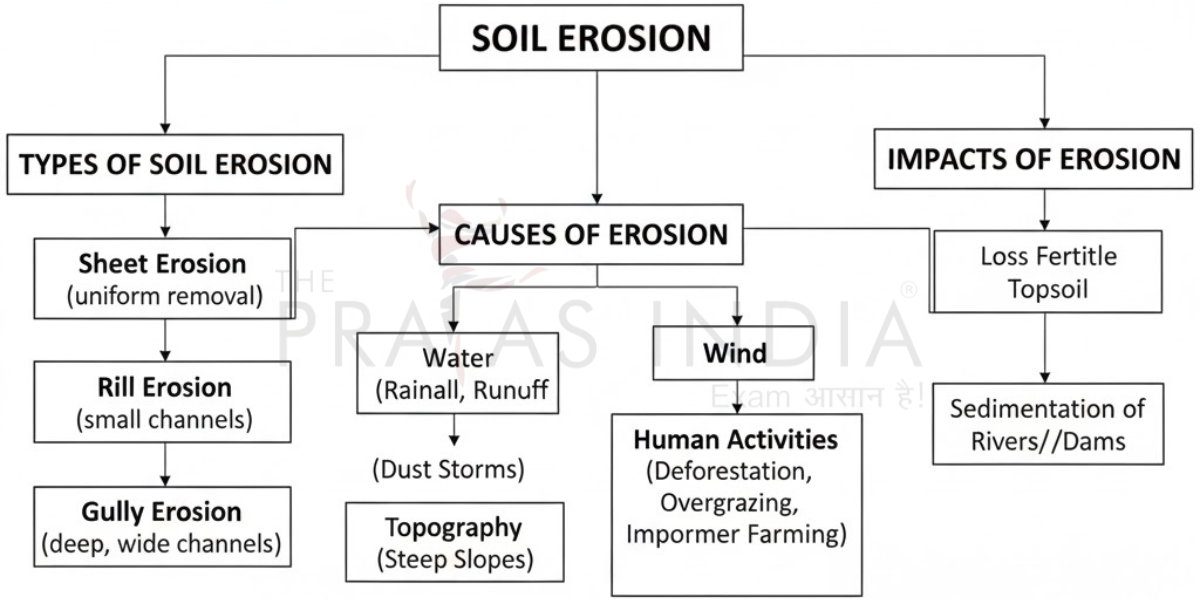
A. Types of Erosion
Water Erosion – sheet, rill, gully
Wind Erosion – common in arid western India
B. Causes
Over-cultivation
Overgrazing
Deforestation
Unscientific irrigation
C. Impacts
Loss of topsoil
Reduction in fertility
Desertification (Aravalli region expanding westwards)
D. National Concerns
NITI Aayog highlights that nearly 30% of India’s land is undergoing degradation, affecting productivity and rural livelihoods.
Soil Conservation Measures in India
Contour bunding
Terrace farming
Afforestation
Drip irrigation
Mulching
Cover crops
Check dams
Schemes
Pradhan Mantri Krishi Sinchai Yojana (PMKSY)
Rashtriya Krishi Vikas Yojana (RKVY)
Soil Health Card Scheme
Soil & Agriculture: Crop Suitability Table
| Soil Type | Major Crops |
|---|---|
| Alluvial | Rice, Wheat, Sugarcane, Cotton |
| Black | Cotton, Soybean, Wheat, Sorghum |
| Red | Millets, Groundnut, Pulses |
| Laterite | Tea, Coffee, Cashew |
| Desert Soil | Bajra, Guar, Fodder |
| Mountain Soil | Tea, Apple, Barley |
| Saline Soil | Cotton, Barley (after reclamation) |
| Peaty Soil | Rice, Jute |
Recent Updates (Important for Prelims)
A. FAO Global Soil Health Report (2023–24)
Highlights global decline in soil fertility.
India listed as having moderate to high soil stress due to intensive agriculture.
B. India’s Soil Organic Carbon (SOC) Status
Average SOC < 0.5% in many regions.
Mission LiFE encourages organic farming and residue management.
C. Desertification & Land Degradation Atlas (ISRO, 2021)
97.85 million hectares of India’s land is degraded.
Rajasthan, Maharashtra, Gujarat show highest desertification.
Frequently Asked Questions (FAQs) on Types of Soil in India
1. How many major soil types are recognized in India by ICAR?
ICAR identifies 8 major soil types: Alluvial, Black, Red, Laterite, Desert/Arid, Mountain/Forest, Saline/Alkaline, and Peaty/Marshy soils.
2. Which soil covers the largest area in India?
Alluvial soil covers the maximum area—mainly the Indo-Gangetic plains.
3. Which soil is also known as Regur or cotton soil?
Black soil, derived from Deccan basalt, is known as Regur and is ideal for cotton cultivation.
4. Why is red soil red in colour?
Red soil gets its colour due to high iron oxide content.
5. Which type of soil is suitable for tea and coffee?
Laterite soil in regions like Karnataka and Kerala supports tea, coffee, cashew, and rubber plantations.
6. How is saline/alkaline soil reclaimed?
Reclamation involves gypsum application, leaching, and improved drainage. Soil Health Card Scheme supports monitoring.
7. What is the main cause of laterite soil formation?
Intense leaching under high temperature and heavy rainfall in tropical climates leads to lateritisation.
8. What are the major causes of soil erosion in India?
Water erosion, wind erosion (arid regions), deforestation, overgrazing, and unsustainable farming practices.
9. What is the recent ISRO report related to soil?
ISRO’s Desertification & Land Degradation Atlas (2021) highlights that around 29% of India’s land is undergoing degradation.
10. Which soil has the highest humus content?
Peaty and marshy soils, found in Kerala and Sundarbans, are rich in organic matter and humus.
Conclusion
India’s diverse soils are a product of complex interactions of geology, climate, and biological activity. Sustainable soil management is essential to ensure agricultural productivity, water security, and climate resilience. With rising challenges like erosion, salinisation, and declining organic carbon, India must strengthen conservation efforts, promote scientific agriculture, and improve soil monitoring.
Healthy soils are the foundation of a stable ecosystem and a secure agricultural future.