How to Use Previous-Year Question Papers for Bank Exams | The Prayas India
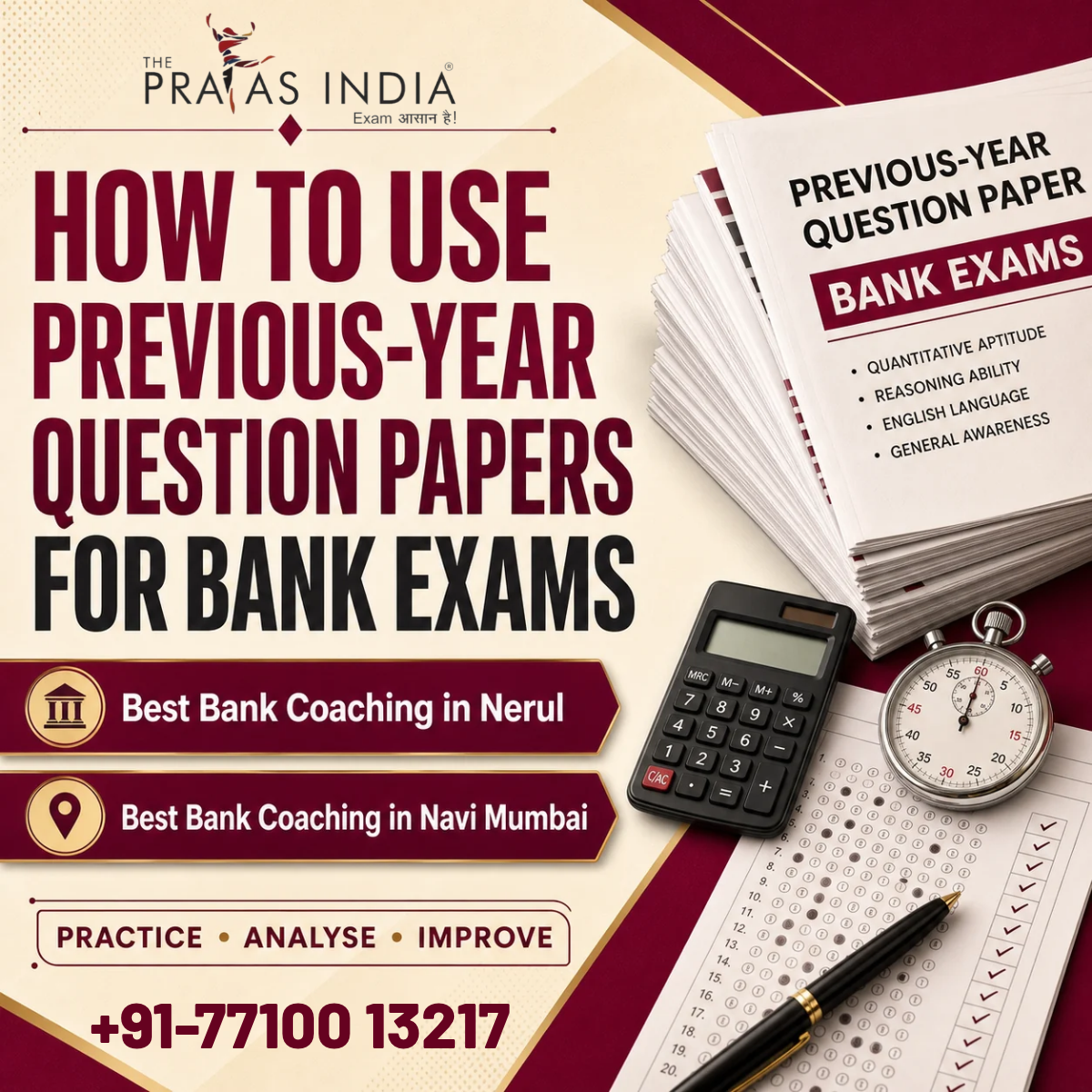
Preparing for bank exams requires more than reading textbooks and memorising formulas. Aspirants also need to understand the examination pattern, practise questions under time limits, and identify areas that require improvement. One of the most practical resources for achieving these goals is the previous-year question paper.
Whether you are preparing for SBI Clerk, SBI PO, IBPS Clerk, IBPS PO, or another banking examination, solving previous-year papers can help you develop a more structured preparation strategy.
However, simply downloading question papers and solving them randomly may not deliver the best results. You need to know how to use previous-year question papers for bank exams effectively, analyse your performance, and turn mistakes into learning opportunities.
Why Are Previous-Year Question Papers Important for Bank Exams?
Previous-year question papers help candidates become familiar with the style and structure of banking examinations. They provide a practical way to apply concepts learned during preparation.
Here are some important benefits.
1. Understand the Exam Pattern
Before starting intensive preparation, review the official notification and exam pattern for your target examination. Previous-year papers can help you understand the types of questions asked, the distribution of sections, and the level of difficulty encountered in earlier exams.
For example, bank examinations may include sections covering:
- Quantitative Aptitude or Numerical Ability
- Reasoning Ability
- English Language
- General or Banking Awareness, where applicable
- Computer Awareness, where applicable
The exact subjects, number of questions, duration, and selection process may differ between examinations and recruitment cycles. Always verify the latest official notification.
2. Identify Frequently Tested Concepts
Solving multiple papers can help you recognise concepts that appear repeatedly across different exam cycles. In Quantitative Aptitude, these might include percentages, ratios, averages, simplification, or data interpretation. Reasoning practice may include puzzles, seating arrangements, syllogisms, and inequality questions.
Treat these as areas to investigate rather than guaranteed predictions. Previous-year questions can guide your revision, but they cannot tell you exactly what will appear in the next examination.
3. Improve Speed and Accuracy
Bank exams often require candidates to solve questions within a limited time. Practising with a timer helps you understand how long you spend on different question types.
As you practise, work on three things:
- Solving familiar questions more efficiently.
- Avoiding careless calculation and reading errors.
- Recognising when a question is taking too long and moving on.
Speed should not come at the cost of accuracy. Your goal is to build a balanced approach that supports better performance under exam conditions.
4. Discover Your Weak Areas
A question paper is also a diagnostic tool. It can reveal whether you struggle with particular concepts, lengthy calculations, unfamiliar vocabulary, or time-consuming reasoning problems.
Instead of concluding that you are weak in an entire subject, identify the precise reason behind each incorrect or unanswered question. This makes your revision more focused.
How to Use Previous-Year Question Papers for Bank Exams Step by Step
Step 1: Collect Relevant and Reliable Papers
Start by selecting papers that match your target examination. If you are preparing for IBPS PO, prioritise relevant IBPS PO papers rather than relying entirely on papers from unrelated exams.
Look for question papers, memory-based papers, and practice resources from reliable educational sources. Whenever possible, cross-check information against official recruitment notifications and exam instructions.
Organise your resources by:
- Examination name
- Exam year or recruitment cycle
- Preliminary or main examination
- Subject or section
- Difficulty level, if known
Remember that some available papers are memory-based reconstructions rather than official released papers. Check their source and label them accordingly.
Step 2: Review the Paper Before Solving It
Before attempting a paper, spend a few minutes checking its structure. Note the sections, question types, instructions, and time limit applicable to the examination.
This preliminary review helps you avoid confusion during practice. It also allows you to prepare a realistic attempt strategy.
Do not spend too much time studying the answers before your first attempt. You need an honest assessment of what you can solve independently.
Step 3: Attempt the Paper Under Timed Conditions
Once you have covered the relevant basics, solve a previous-year paper under conditions similar to the actual examination.
Follow the applicable time limit and avoid checking solutions while attempting questions. Keep distractions away and record the questions you skip.
If you are still at the beginning of your preparation, you can first solve individual sections without a strict timer. Gradually move towards full-length, timed attempts as your concepts improve.
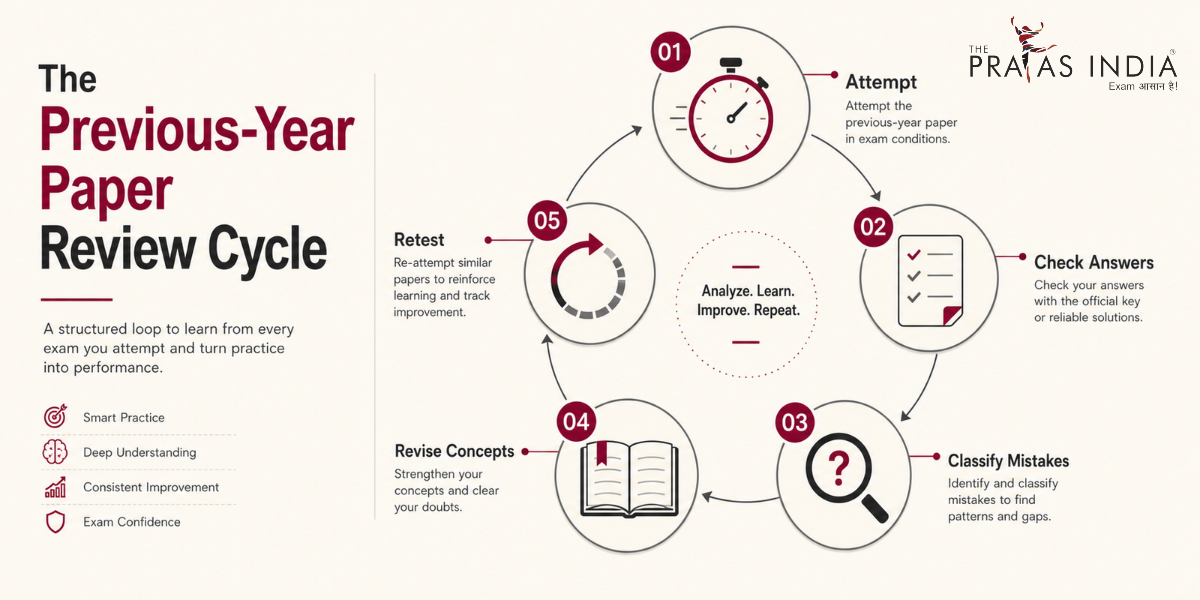
Step 4: Analyse Every Attempt
This is one of the most important stages of the process. Your learning does not end when the timer stops.
Review the result and classify questions into four categories:
- Correct and confident: You understood the concept and solved it accurately.
- Correct but slow: You reached the right answer but spent too much time.
- Incorrect: You made a conceptual, calculation, or interpretation error.
- Unattempted: You did not know the method, could not finish in time, or deliberately skipped the question.
Each category requires a different response. Revise concepts for knowledge gaps, practise faster methods for slow questions, and review your question-selection strategy for unattempted items.
Step 5: Maintain a Mistake Notebook
Create a dedicated notebook or digital document for mistakes. For each question, record the topic, the error you made, the correct method, and what you will do differently next time.
For example, if you repeatedly make errors in percentage calculations, revise the underlying concept and practise a small set of related questions. If you misunderstand reasoning conditions, focus on reading and representing the information accurately.
Review this notebook regularly. It can become one of your most useful revision resources before the examination.
Step 6: Practise Better Time Management
While reviewing your paper, pay attention to the time spent on each section and question type. Identify questions that consumed too much time compared with the marks or progress they offered.
Develop a flexible attempt strategy based on your strengths. You might start with questions you can solve confidently and leave lengthy or unfamiliar questions for later, depending on the exam interface and instructions.
Avoid copying another candidate’s strategy without testing it yourself. A method that works for someone else may not suit your strengths or accuracy level.
Step 7: Revisit Difficult Questions
Do not immediately discard a paper after checking your score. Reattempt selected questions after studying the relevant concepts.
A useful revision routine is:
- First, understand the correct solution.
- Next, solve the question again without looking at the answer.
- Then, practise a few similar questions.
- Finally, check whether you can solve them accurately within a reasonable time.
This process helps turn a mistake into a repeatable learning opportunity.
Step 8: Compare Your Performance Over Time
Maintain a simple performance tracker for each practice attempt. You can record your score, correct answers, incorrect answers, unattempted questions, time spent, and the topics that need revision.
Focus on trends rather than a single result. For instance, you may notice that your accuracy is improving but your speed remains low, or that you perform well in Quantitative Aptitude but need more practice in Reasoning Ability.
Use these observations to decide what to study next.
How Often Should You Solve Previous-Year Bank Exam Papers?
There is no single schedule that works for every aspirant. The right frequency depends on your preparation level and the time remaining before the examination.
If you are a beginner: Start with topic-wise questions and selected sections. Build conceptual understanding before attempting full papers regularly.
If you have completed the basics: Add timed sectional practice and schedule full papers at intervals that leave enough time for analysis and revision.
If the exam is approaching: Use full-length papers to practise time management and exam readiness. Do not attempt so many papers that you have no time left to review mistakes.
A practical rule is to spend meaningful time analysing each paper instead of treating the number of completed papers as your only measure of progress.
Common Mistakes to Avoid When Using Previous-Year Papers
Solving Papers Without Reviewing Answers
Attempting many papers without understanding your errors can lead to repeated mistakes. Review both incorrect answers and questions that you answered correctly by guessing.
Memorising Answers Instead of Understanding Concepts
Remembering a particular answer may help with that question, but understanding the method prepares you for variations of the same concept.
Ignoring the Latest Exam Pattern
Exam structures and recruitment rules can change. Check the latest official notification and use previous-year papers as a learning resource, not as a substitute for current exam information.
Focusing Only on Your Score
Your score is useful, but it does not explain everything. Accuracy, time management, question selection, and topic-wise improvement provide a clearer picture of your preparation.
Repeatedly Practising Only Easy Questions
It is important to build confidence, but avoiding difficult topics can leave gaps in your preparation. Gradually introduce questions that challenge you while continuing to revise your strengths.
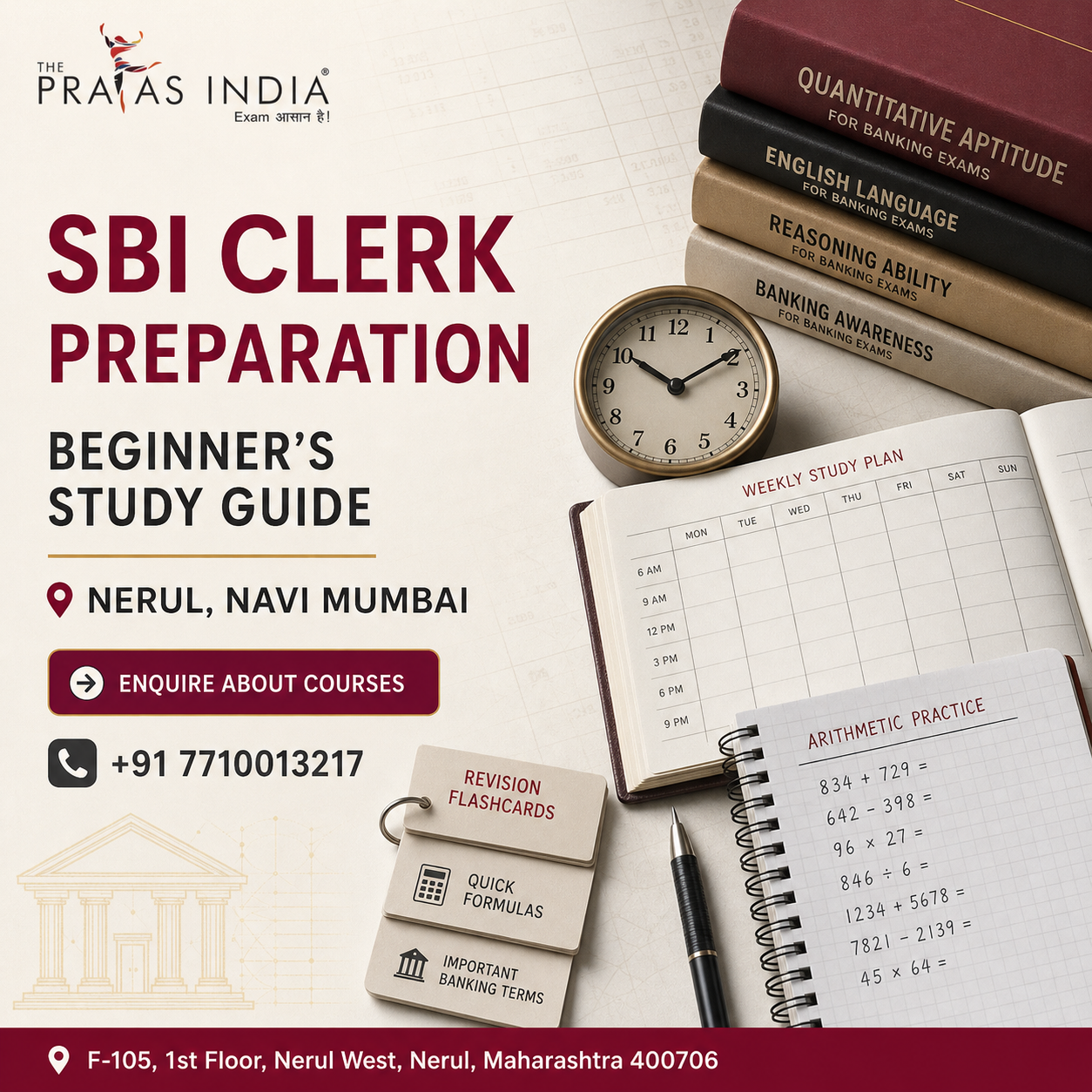
A Sample Weekly Practice Plan
You can adapt the following routine to your timetable and preparation level.
| Day | Practice activity |
|---|---|
| Monday | Revise a Quantitative Aptitude topic and solve related previous-year questions |
| Tuesday | Practise Reasoning questions and review mistakes |
| Wednesday | Work on English Language questions and reading accuracy |
| Thursday | Practise a timed sectional paper |
| Friday | Revisit mistakes and revise weak concepts |
| Saturday | Attempt a suitable previous-year paper under timed conditions |
| Sunday | Analyse the paper, update your tracker, and plan the next week’s revision |
If your target exam includes additional sections, allocate time to those subjects according to the latest exam pattern. Adjust the schedule to your available study hours rather than following it rigidly.
How Coaching and Guided Practice Can Help
Some aspirants find it difficult to interpret their practice results or decide which topics to revise first. Structured guidance can help them organise their preparation, understand question-solving methods, and follow a consistent practice routine.
When evaluating a coaching programme, consider the quality of explanations, availability of doubt support, practice resources, test analysis, timetable, and suitability for your target examination.
Bank exam aspirants in Nerul and Navi Mumbai can contact The Prayas India to enquire about currently available programmes and preparation support. Before enrolling, ask about the course structure, learning resources, and support available for your particular exam.
Conclusion
Previous-year question papers are most valuable when you use them as more than a collection of practice questions. They can help you understand exam formats, recognise recurring concepts, practise time management, identify weaknesses, and measure your progress.
The key is to follow a complete cycle: attempt, analyse, revise, and retest. Choose relevant papers, practise under suitable conditions, maintain a mistake notebook, and use your results to guide your next study session.
With regular practice and thoughtful analysis, you can make your bank exam preparation more focused, organised, and effective.
Frequently Asked Questions
Are previous-year question papers enough for bank exams?
Previous-year papers are useful practice resources, but combine them with concept learning, revision, sectional practice, and mock tests.
How often should I solve previous-year papers?
Choose a frequency that gives you enough time to attempt papers, analyse mistakes, and revise weak topics. Your schedule should match your preparation level.
Should I use a timer while practising?
Timed practice is useful for improving speed and time management after you have developed a basic understanding of the concepts.
What should I do after making mistakes?
Record each mistake, understand the correct method, revise the concept, and practise similar questions before retesting yourself.
Where can I enquire about bank exam coaching in Nerul?
Contact The Prayas India to enquire about currently available bank exam preparation programmes and learning support.
Prepare Smarter for Your Bank Exam
Looking for structured guidance for bank exam preparation? Contact The Prayas India to enquire about currently available programmes and preparation support.
The Prayas India – Nerul Branch
F-105, 1st Floor, Nerul West, Nerul, Maharashtra 400706
Phone: +91 7710013217