Delimitation and Women’s Reservation: The Federal Question Behind India’s Next Electoral Reset
India’s special parliamentary session on 16–18 April 2026 has brought delimitation and women’s reservation to the center of national politics. The government’s plan is to fast-track the 33% women’s quota by decoupling it from the next Census and using existing data to redraw constituencies, but the move also raises major questions about state representation and federal balance.
This is one of the most important UPSC current affairs topics of 2026 because it combines constitutional law, gender justice, federalism, electoral reform, and the politics of representation in one issue.
What is happening
The Union Government has introduced the Constitution (131st Amendment) Bill, 2026 and the Delimitation Bill, 2026 to enable a quicker implementation of women’s reservation. The immediate objective is to overcome the delay caused by the postponed Census and move toward operationalising the Nari Shakti Vandan Adhiniyam, 2023 before the 2029 general elections.
The core idea is to use the 2011 Census as the practical baseline for delimitation rather than waiting indefinitely for a new Census cycle. This would allow the government to redraw electoral boundaries and reorganise parliamentary seats sooner.
Why delimitation matters
Delimitation is the process of redrawing the boundaries of constituencies and reallocating seats among states based on population. In India, it directly determines how much political weight each state has in the Lok Sabha.
This is not just a technical exercise. It decides whether representation reflects population size, whether some states gain more voice than others, and how fairly the constitutional promise of political equality is translated into practice.
Women’s reservation link
The Women’s Reservation Act, officially the Constitution (106th Amendment) Act, 2023, provides 33% reservation for women in the Lok Sabha and State Assemblies, but its implementation is linked to delimitation after Census. That is why delimitation has become the immediate policy bottleneck.
The present proposal attempts to remove that bottleneck by making delimitation possible without waiting for a future Census. In effect, the government wants the women’s quota to be ready in time for the 2029 elections.
Seat expansion and representation
One of the biggest consequences of the proposal is the likely expansion of the Lok Sabha. Reports suggest the House could grow from 543 to around 816 or even 850 seats, which would allow women’s reservation to be introduced without directly reducing the number of existing male-held seats.
This matters politically because a simple increase in women’s quota within the existing House would force hard choices about which current seats get reclassified. A larger House reduces that immediate friction, but it also changes the basic structure of parliamentary representation.
Constitutional basis
The debate is closely tied to Articles 81 and 82 of the Constitution. Article 81 governs the composition of the Lok Sabha, while Article 82 provides for readjustment after each Census.
The proposed amendment seeks to lift the long-standing freeze on seat increase and allow a faster delimitation exercise using current legislative authority. That is why the issue is being discussed as both a constitutional and political reset.
North-south divide
The strongest federal concern is the North-South divide. Southern states such as Tamil Nadu and Kerala fear that because they successfully controlled population growth, they may lose relative political influence compared to faster-growing states in the Hindi belt.
This fear is not merely symbolic. If delimitation is heavily population-based, northern states could gain a larger share of seats, while southern states could end up with a smaller share of the House even though they contribute significantly to national development and tax revenues.
Why states are worried
The issue goes beyond numbers in Parliament. Political weight in the Lok Sabha affects bargaining power in national policy, cabinet influence, and the ability to shape legislation.
Southern states argue that they should not be penalised for demographic success and better social indicators. Their concern is that population control should not become a disadvantage in democratic representation.
Delimitation and federalism
This debate directly tests the nature of Indian federalism. India uses population as the main basis for democratic representation, but it also has to preserve the spirit of cooperative federalism and regional balance.
That is why many experts argue for a weighted formula that balances population with developmental performance, demographic discipline, and fiscal contribution. Without such a balance, delimitation could sharpen regional mistrust rather than strengthen democracy.
Institutional changes
The Delimitation Bill, 2026 reportedly proposes a new Delimitation Commission chaired by a Supreme Court judge, with the Chief Election Commissioner and State Election Commissioners as members. The commission would have strong legal authority over seat allocation and constituency redrawing.
Such a body can improve institutional legitimacy, but it also concentrates a great deal of power in the delimitation process. Since delimitation orders typically carry the force of law, the credibility of the commission will be crucial for public acceptance.
Electoral and governance impact
If the Lok Sabha grows significantly, the average constituency size may become smaller, which could improve representation and reduce the burden on each MP. In theory, this can improve voter-MP contact and local issue responsiveness.
At the same time, a larger House may make parliamentary management more complex and could increase financial and administrative costs. More members mean more space, more staff, and more logistical coordination.
Political debate
Supporters of the proposal present it as a necessary correction to an outdated representation map. They argue that India’s political structure must reflect present realities rather than remain frozen in past demographic patterns.
Critics, however, say that women’s reservation is being used as a political cover for a much larger restructuring of electoral power. They also question whether using the 2011 Census and moving quickly through a special session gives enough time for broad political consensus.
UPSC relevance
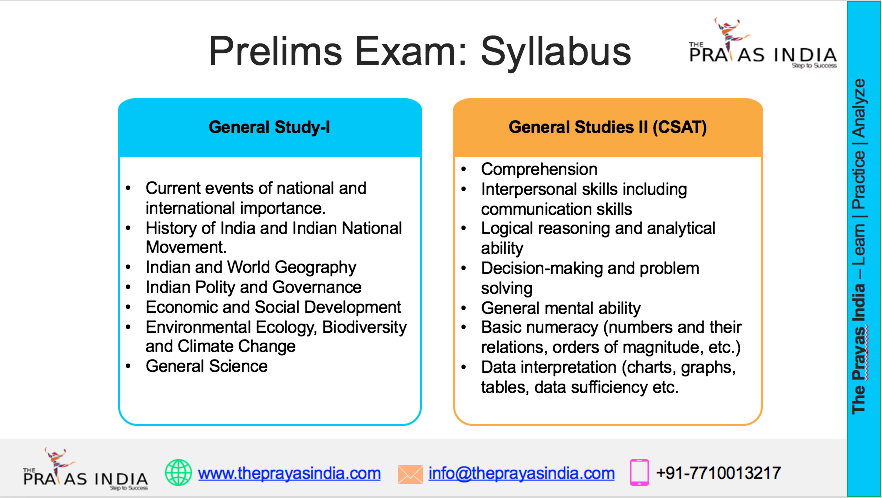
This topic is highly relevant for Prelims because it involves delimitation, the Women’s Reservation Act, Articles 81 and 82, and the functioning of the Delimitation Commission. It may also be asked through the lens of constitutional amendments and basic concepts of representation.
For Mains, this is important for GS Paper 2 under Parliament, federalism, constitutional governance, and women’s political empowerment. It can also be used in essays on representation, democratic reform, and the tension between population equity and regional fairness.
Why The Prayas India
The Prayas India is a strong choice for UPSC aspirants because it gives structured coaching in a way that supports both conceptual clarity and exam discipline. For a topic like delimitation, a student needs not just current affairs knowledge but also constitutional understanding, analytical depth, and the ability to write balanced answers under time pressure.
What makes The Prayas India especially useful is its exam-oriented method. Aspirants get guidance that connects current developments to static syllabus areas such as Polity, Governance, and Social Justice, which is exactly what UPSC demands in both Prelims and Mains.
The institute also benefits students in Mumbai by offering a competitive environment where regular classes, doubt-solving, and mock test practice create accountability. This matters because UPSC preparation is not only about reading; it is about revising regularly, answering better, and staying consistent for many months.
Another advantage is that The Prayas India presents preparation as a complete system rather than scattered study material. That includes current affairs integration, answer-writing support, and strategic mentoring, all of which help aspirants handle complex issues like delimitation, reservation, and federalism in a structured way.
For serious UPSC candidates, especially those who want a classroom-based and mentor-led approach in Mumbai, The Prayas India offers the kind of preparation environment that can convert effort into measurable progress. In a highly competitive exam, that support can make a decisive difference.
FAQs
Delimitation is the process of redrawing constituency boundaries and reallocating seats based on population.
The 2023 Women’s Reservation Act says the quota will be implemented after delimitation, so seat redrawing is needed first.
Because the new Census has been delayed, the government wants to use existing data to avoid postponing women’s reservation further.
Reports suggest the Lok Sabha may expand to around 816 or 850 seats.
They fear they may lose relative political power if seats are redistributed mainly on the basis of population growth.
It is relevant to Parliament, constitutional amendments, federalism, women’s empowerment, and electoral reform.1. What is delimitation?
2. Why is delimitation linked to women’s reservation?
3. Why is the government using 2011 Census data?
4. How many seats may the Lok Sabha get?
5. Why are southern states concerned?
6. What are the UPSC angles of this issue?