Everything You Should Know Before Preparing for SSC Exams | Best SSC Coaching in Mumbai | The Prayas India
A Strong Beginning Is Often the Biggest Advantage in Competitive Exam Preparation.
Every year, lakhs of graduates and students across India choose the Staff Selection Commission (SSC) examinations as their pathway to a stable and rewarding government career. The attraction is understandable. SSC recruitment offers opportunities across various government ministries, departments, and organisations, providing job security, career progression, financial stability, and the chance to contribute to public administration.
Despite this, many aspirants begin their preparation without fully understanding what the SSC examination actually demands. They purchase books recommended on social media, download random study schedules, subscribe to multiple YouTube channels, and immediately start solving questions. Although this approach may appear productive initially, it often leads to confusion after a few weeks. Different teachers recommend different methods, countless study resources become difficult to manage, and students gradually lose confidence because they lack a structured direction.
Successful SSC preparation does not begin with solving hundreds of practice questions. It begins with understanding the examination, identifying the right preparation strategy, and building a system that can be followed consistently over several months. Before deciding how many hours to study or which coaching institute to join, every aspirant should first understand the complete preparation journey.
This article serves as a comprehensive starting guide for beginners. Whether you are preparing for SSC CGL, SSC CHSL, SSC MTS, SSC CPO, or any other major SSC examination, the principles discussed here will help you avoid common beginner mistakes and build a preparation strategy that is practical, organised, and result-oriented.
Understanding the SSC Examination Landscape
Many newcomers believe that “SSC” refers to a single examination. In reality, the Staff Selection Commission conducts multiple recruitment examinations for different educational qualifications, job profiles, and government departments. While the examination pattern varies slightly across these recruitments, the fundamental preparation strategy remains remarkably similar.
Some of the most popular SSC examinations include:
- SSC CGL (Combined Graduate Level): One of the most sought-after examinations for graduates aspiring to secure prestigious Group B and Group C government posts.
- SSC CHSL (Combined Higher Secondary Level): Designed for candidates who have completed their higher secondary education and wish to begin their government career early.
- SSC CPO: Recruitment for Sub-Inspector positions in Delhi Police and Central Armed Police Forces.
- SSC MTS: Suitable for candidates looking for Multi-Tasking Staff positions in various central government offices.
- SSC Selection Posts and Stenographer Examinations: Conducted for multiple specialised vacancies across government departments.
Although these examinations differ in eligibility criteria and post profiles, they share a common objective: selecting candidates who possess strong aptitude, logical reasoning, language proficiency, numerical ability, and general awareness. This means that a solid preparation foundation often benefits aspirants across multiple SSC examinations rather than limiting them to just one.
Know Your Destination Before Planning the Journey
One of the biggest advantages an aspirant can have is clarity. Students who understand the structure of the examination, the skills being tested, and the expectations of the recruiting authority usually prepare more efficiently than those who simply follow random study plans.
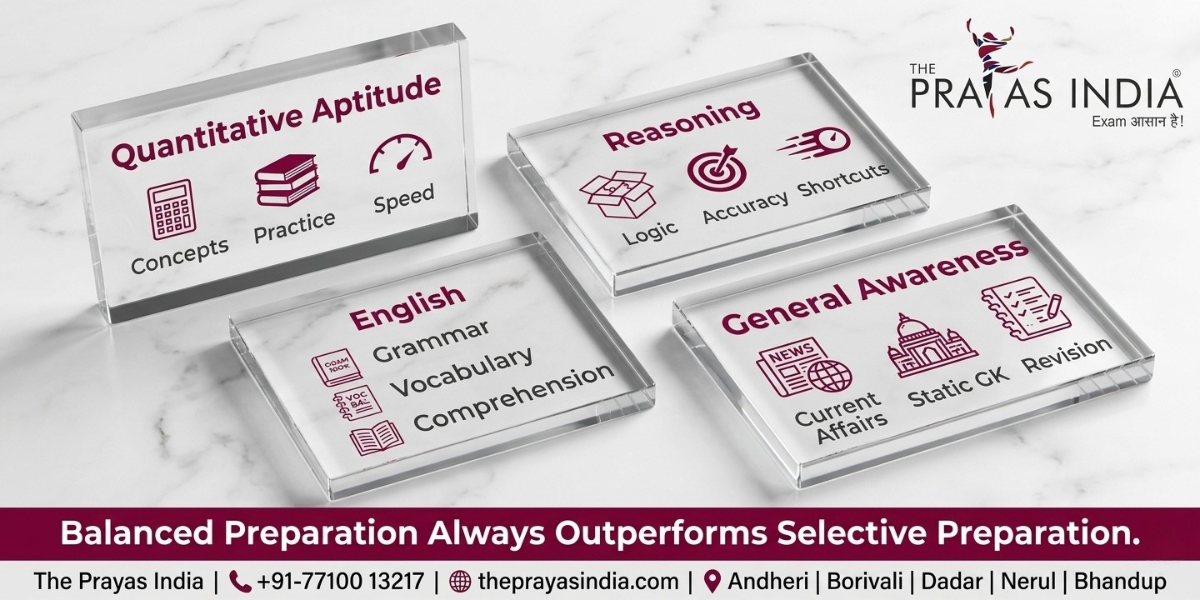
SSC examinations are designed to evaluate four broad competencies:
- Quantitative Aptitude
- General Intelligence & Reasoning
- English Language
- General Awareness
While the syllabus may appear manageable compared to some other competitive examinations, the real challenge lies in speed, accuracy, and consistency. Candidates are expected to solve a large number of questions within a limited time while maintaining high accuracy. This means preparation should focus not only on learning concepts but also on improving problem-solving efficiency through regular practice.
Understanding this objective changes the entire preparation strategy. Instead of memorising isolated facts or repeatedly solving familiar questions, aspirants begin developing conceptual clarity, time management, and analytical thinking—all of which play a crucial role in achieving a competitive score.
The Preparation Decisions That Matter Most
Before purchasing books or joining a coaching institute, every beginner should answer a few practical questions. These decisions influence the quality of preparation far more than most students realise.
Consider the following:
- Which SSC examination matches your educational qualification and career goals?
- How much time can you realistically dedicate to preparation each day?
- Are you preparing full-time, alongside college, or while working?
- Do you require classroom guidance, online coaching, or a hybrid learning approach?
- Which study resources will you use consistently instead of collecting unnecessary material?
Answering these questions early helps build a preparation plan that is realistic rather than overly ambitious. It also reduces the tendency to change strategies repeatedly after watching different videos or reading conflicting advice online.
Preparation becomes much easier when decisions are made thoughtfully instead of emotionally.
A Strong Foundation Is Better Than a Fast Start
Many beginners believe that success depends on finishing the syllabus as quickly as possible. As a result, they rush through chapters without fully understanding the underlying concepts. Initially, this creates the illusion of progress, but difficulties begin to appear during mock tests, where speed and application matter more than theoretical familiarity.
A better approach is to invest time in building a solid conceptual foundation. Strong basics make advanced practice easier, improve accuracy, and reduce revision time later in the preparation cycle. Whether it is arithmetic formulas, grammar rules, reasoning concepts, or current affairs, every topic should be understood before it is memorised.
This foundation also makes it easier to prepare for multiple SSC examinations because the core subjects remain largely similar across different recruitment processes.
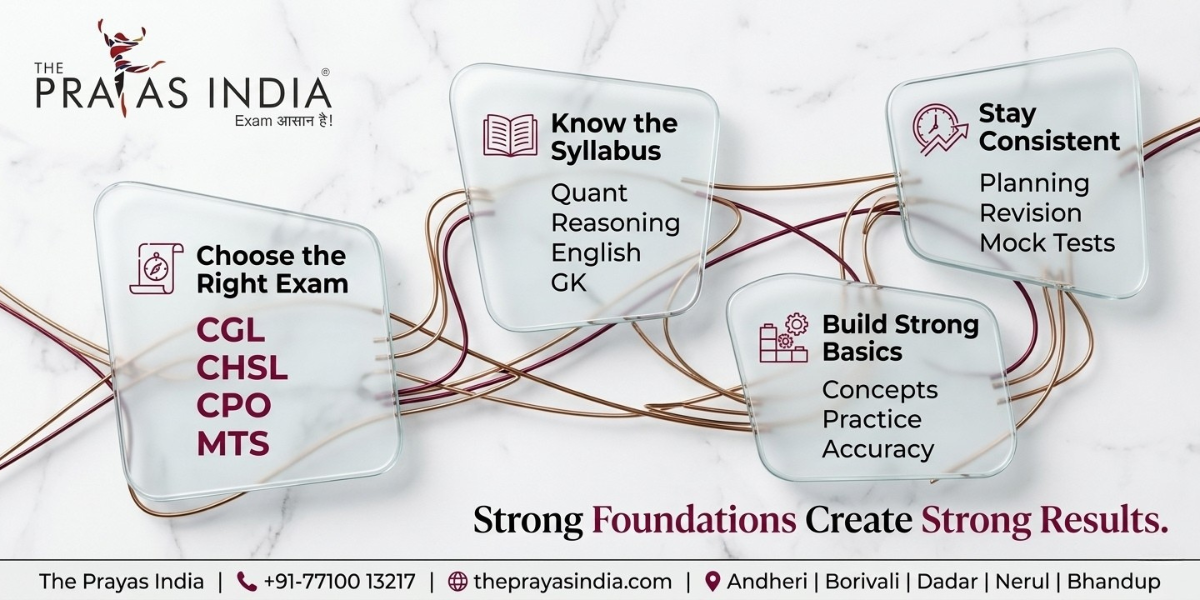
Preparing with the Right Guidance
Beginning your SSC preparation with the right strategy can save valuable time and prevent unnecessary confusion later. A structured learning environment, carefully designed study material, regular practice sessions, and continuous performance evaluation help aspirants stay focused throughout their preparation journey.
At The Prayas India, students preparing for SSC examinations receive academic guidance designed around conceptual learning, systematic practice, regular mock tests, doubt-solving support, and personalised mentorship. Instead of encouraging aspirants to simply complete the syllabus, the focus remains on building the skills and confidence required to perform consistently in the actual examination.
Building the Right Preparation System
The Quality of Your Preparation Depends More on Your System Than on the Number of Hours You Study.
Once you understand the SSC examination and decide which recruitment you want to target, the next step is building a preparation system that can be sustained over several months. This is where many aspirants unknowingly make mistakes. Instead of creating a structured approach, they focus on collecting more books, watching multiple online lectures, and switching strategies every few weeks.
A successful SSC preparation journey is rarely built on constant experimentation. It is built on consistency. Every study session should contribute towards strengthening concepts, improving speed, and increasing accuracy. When your preparation follows a well-defined system, you spend less time deciding what to study and more time actually learning.
Rather than trying to study everything simultaneously, focus on creating a balanced routine that allows every subject to receive regular attention. The objective is not to finish the syllabus as quickly as possible; it is to understand it thoroughly and retain it effectively.
Choose Resources That Build Confidence, Not Confusion
The internet offers unlimited study material for SSC aspirants. While this appears beneficial, it often creates the opposite effect. Students download dozens of PDFs, purchase multiple books for the same subject, subscribe to several YouTube channels, and follow different teachers who recommend different approaches.
Within a few weeks, preparation becomes scattered.
Instead of mastering one reliable source, aspirants keep moving from one resource to another in search of shortcuts. This habit creates information overload and leaves very little time for revision.
A smarter strategy is to keep your resources limited and dependable.
For most SSC examinations, a carefully selected combination of standard books, quality practice material, previous year question papers, and a reliable source for current affairs is sufficient. Once these resources are chosen, your priority should shift towards completing them multiple times instead of replacing them with newer alternatives.
Remember, confidence comes from repeated revision—not from owning more study material.
Balance All Subjects Instead of Focusing on Your Favourite One
Every aspirant has strengths and weaknesses. Some students are naturally comfortable with Quantitative Aptitude, while others perform well in English or Reasoning. The temptation is to spend more time on subjects that feel easier because they provide a sense of progress.
However, SSC examinations reward balanced performance.
Ignoring weaker subjects may not seem harmful during the initial months, but it becomes a major challenge during mock tests, where every section contributes to the final score. A candidate who scores exceptionally well in one subject but performs poorly in another often struggles to achieve the overall cut-off.
An effective study plan should therefore distribute attention across all major subjects.
A balanced weekly schedule might include:
- Concept building in Quantitative Aptitude.
- Daily practice for General Intelligence & Reasoning.
- Vocabulary, grammar, and comprehension exercises for English.
- Regular reading and revision for General Awareness.
- Previous year question practice across all subjects.
This balanced approach ensures that improvement takes place across the entire syllabus rather than remaining limited to one or two comfortable areas.
Time Management Begins Long Before the Examination
Many aspirants believe time management is only important during the actual examination. In reality, it begins on the very first day of preparation.
Students who organise their daily study routine efficiently often complete the syllabus earlier, revise more frequently, and approach mock tests with greater confidence.
Instead of studying randomly whenever time is available, assign clear objectives to every study session. For example, one session may focus entirely on learning a new concept, while another is dedicated to revision or practice questions.
Breaking preparation into focused sessions helps maintain concentration and reduces mental fatigue. Equally important is scheduling regular breaks, because sustained productivity depends on a refreshed mind rather than uninterrupted study hours.
The purpose of time management is not to make every minute busy; it is to ensure that every hour contributes meaningfully to your preparation.
Practice Is Where Real Learning Begins
Understanding concepts is only the first stage of SSC preparation. Competitive examinations reward candidates who can apply those concepts quickly and accurately under time pressure.
This is why regular practice should become an integral part of your study routine from the beginning.
Every topic you complete should be followed by:
- Topic-wise practice questions.
- Previous year examination questions.
- Timed sectional exercises.
- Short revision sessions.
- Error analysis after every practice set.
This process transforms theoretical understanding into practical examination skills.
Over time, repeated practice improves familiarity with question patterns, strengthens confidence, and gradually increases solving speed without compromising accuracy.
Coaching and Self-Study Should Complement Each Other
One of the most common questions beginners ask is whether coaching is necessary for SSC preparation.
There is no universal answer because every aspirant has different learning preferences and academic backgrounds. Self-study offers flexibility and independence, while coaching provides structure, expert guidance, regular assessment, and a disciplined learning environment.
The most successful aspirants often combine both approaches effectively. They use coaching to understand concepts, clarify doubts, receive mentorship, and follow a structured study plan. Self-study then becomes the time to revise, practise extensively, and strengthen weak areas.
The real advantage of coaching is not simply classroom teaching. It lies in reducing uncertainty. Instead of wondering which resource to study next or whether the preparation is moving in the right direction, students receive a clear roadmap supported by experienced faculty and continuous academic guidance.
Preparation Becomes Easier When Progress Is Measurable
Many aspirants judge their preparation based on how tired they feel at the end of the day. This can be misleading because long study hours do not always translate into meaningful learning.
A better approach is to measure progress through clear academic indicators.
Ask yourself at the end of every week:
- Which chapters have I completed?
- How many topics have I revised?
- Which concepts still require improvement?
- How many previous year questions have I solved?
- Is my speed improving?
- Am I making fewer mistakes than last week?
These questions provide a realistic picture of your preparation and help you identify areas that need immediate attention.
When progress becomes measurable, motivation is no longer dependent on emotions. It is supported by visible improvement.
Structured Learning Creates Long-Term Confidence
SSC preparation is not only about acquiring knowledge; it is about building confidence through systematic learning. Students who follow a structured plan usually feel more in control because they know exactly what they have completed and what still needs attention.
At The Prayas India, SSC aspirants are guided through a structured preparation process that combines experienced faculty, comprehensive study material, regular classroom practice, mock tests, personalised doubt-solving sessions, and continuous performance evaluation. Instead of relying on guesswork, students learn through an organised system designed to strengthen concepts, improve examination skills, and build confidence at every stage of preparation.
Developing Exam-Level Performance
Knowledge Helps You Attempt Questions. Practice Helps You Score Higher.
By the time most aspirants complete a significant portion of the SSC syllabus, they begin to realise an important truth. Understanding concepts alone is not enough to clear the examination. Many students can solve questions correctly while practising at home, yet struggle to complete the actual examination within the given time. Others know the answers but make avoidable mistakes under pressure. This difference highlights the gap between preparation and performance.
SSC examinations are designed to evaluate not only what you know but also how efficiently you can apply that knowledge within a limited timeframe. Speed, accuracy, decision-making, and consistency become equally important. The transition from learning concepts to performing confidently in the examination requires deliberate practice, regular evaluation, and continuous refinement of your approach.
Aspirants who recognise this stage early gradually transform their preparation into examination readiness instead of simply continuing to study new topics.
Practice Should Become More Challenging Every Week
Many beginners remain comfortable solving familiar questions repeatedly because they feel confident while doing so. Unfortunately, competitive examinations rarely reward comfort. They reward adaptability.
As your preparation progresses, the level of practice should also evolve. Instead of solving only topic-wise exercises, begin introducing mixed question sets that require frequent switching between Quantitative Aptitude, Reasoning, English, and General Awareness. This approach improves mental flexibility and closely resembles the experience of attempting the actual examination.
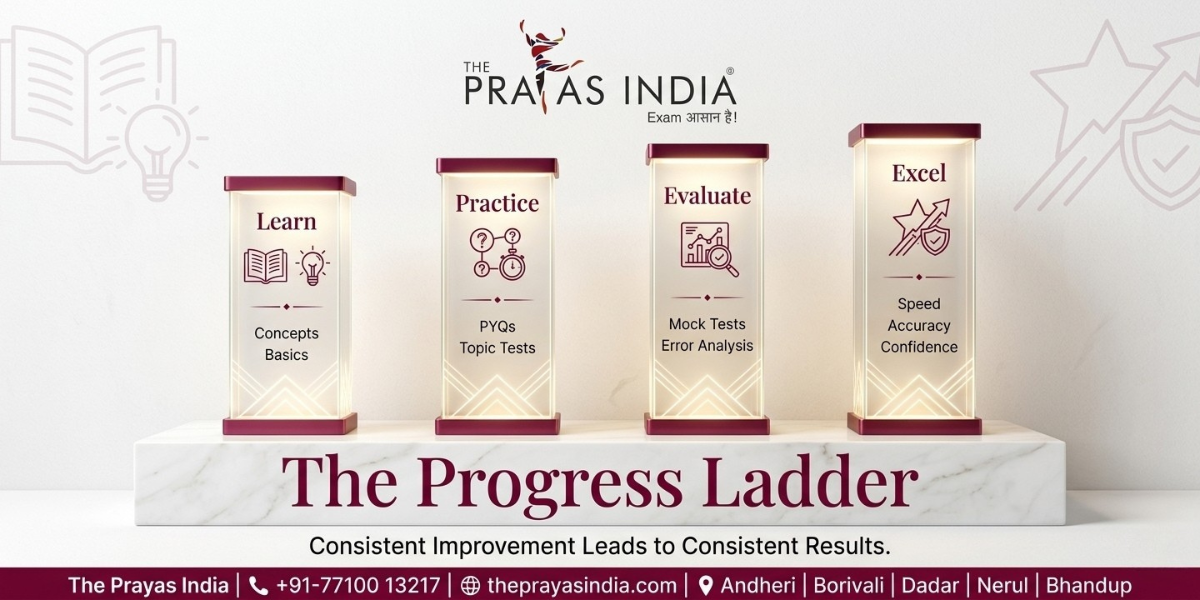
A progressive practice strategy may include:
- Topic-wise questions immediately after concept learning.
- Mixed subject practice sets every week.
- Previous year papers under timed conditions.
- Full-length mock tests after completing major syllabus portions.
- Detailed review sessions after every practice exercise.
Each stage serves a different purpose. Together, they prepare aspirants for the real examination environment.
Accuracy Creates More Marks Than Speed Alone
Many aspirants become obsessed with solving questions faster. Although speed is important, it loses its value if accuracy suffers.
Incorrect answers reduce confidence, waste valuable time, and often lower the overall score. Developing examination temperament therefore requires balancing speed with precision.
Improving accuracy begins with understanding why mistakes occur.
Some common reasons include:
- Misreading the question.
- Rushing calculations.
- Ignoring grammatical details in English.
- Making assumptions in reasoning questions.
- Guessing answers without proper elimination.
Identifying these patterns helps aspirants eliminate repeated errors over time.
Instead of celebrating the number of questions attempted, analyse how many were solved correctly and why the remaining mistakes occurred. This habit gradually improves both confidence and examination performance.
Previous Year Papers Reveal the Nature of the Examination
One of the most valuable resources available to SSC aspirants is the collection of previous year question papers.
These papers provide much more than additional practice.
They reveal:
- The overall difficulty level.
- Frequently repeated concepts.
- Distribution of questions across subjects.
- Expected level of reasoning.
- Time management requirements.
Aspirants who regularly solve previous year papers become familiar with the examination’s thinking pattern rather than relying solely on theoretical preparation.
Whenever possible, attempt these papers under actual examination conditions. Avoid checking answers immediately after every question. Completing the paper in one sitting provides a more realistic assessment of your preparation.
Mock Tests Are Learning Sessions, Not Judgement Days
Many students become emotionally attached to mock test scores.
A low score creates disappointment.
A high score creates overconfidence.
Neither reaction contributes meaningfully to improvement.
The true value of a mock test lies in the analysis that follows.
Every mock should answer important questions:
- Which section consumed excessive time?
- Which topics consistently produce incorrect answers?
- Were mistakes conceptual or careless?
- Which questions should have been skipped?
- How can the next attempt become better?
Maintaining a simple mistake journal often proves more valuable than maintaining a score sheet. Recording repeated errors helps aspirants recognise patterns and prevent similar mistakes during future tests.
Over several weeks, this process produces measurable improvement that raw practice alone cannot achieve.
Revision Is the Link Between Learning and Retention
Without revision, even well-understood concepts gradually become difficult to recall.
Many aspirants postpone revision because they believe completing the syllabus should take priority. Unfortunately, this approach often results in revisiting entire subjects from the beginning shortly before the examination.
A more effective strategy is continuous revision.
Some practical methods include:
- Weekly revision sessions for recently completed topics.
- Monthly revision of important formulas, grammar rules, and factual information.
- Short revision notes prepared during the first reading.
- Revision immediately after every mock test.
- Regular practice of weak topics until improvement becomes visible.
Revision should not be viewed as repeating the same material. It should strengthen memory while reducing the time required to recall important concepts during the examination.
Consistency Is Built Through Small Improvements
Many aspirants expect dramatic improvement after every week of preparation.
Competitive examinations rarely work that way.
Progress is usually gradual.
One week may improve calculation speed.
Another may strengthen vocabulary.
The following week may reduce reasoning mistakes.
These small improvements accumulate over time and eventually produce significant changes in examination performance.
Students who continue improving steadily often outperform those who rely on occasional bursts of motivation.
The objective should therefore be continuous progress rather than immediate perfection.
Performance Improves Faster with Structured Guidance
Preparing independently develops discipline, but many aspirants eventually reach a stage where external guidance accelerates their improvement. Experienced mentors help students recognise weaknesses that are often difficult to identify on their own. Timely feedback, structured mock analysis, personalised doubt-solving, and a disciplined preparation framework reduce unnecessary trial and error.
At The Prayas India, SSC preparation extends beyond classroom teaching. Students receive structured academic support through experienced faculty, concept-focused learning, comprehensive study material, regular mock tests, detailed performance analysis, and personalised mentorship. Every stage of preparation is designed to help aspirants improve accuracy, strengthen examination temperament, and convert consistent effort into measurable results.
Starting with Clarity, Finishing with Confidence
The Right Preparation Decisions Today Can Shape Your Government Career Tomorrow.
Every successful SSC candidate reaches the examination hall with a different story, but almost all of them have one thing in common—they prepared with consistency, remained committed to a structured strategy, and continuously improved their performance through practice and self-evaluation. Their success was not built overnight, nor was it based on extraordinary intelligence. It was the result of making the right decisions from the very beginning and following them with discipline.
As a beginner, it is easy to feel overwhelmed by the amount of information available online. Every platform offers a different timetable, every educator recommends a different resource, and every topper seems to have followed a unique strategy. While these experiences can certainly provide useful insights, blindly copying someone else’s preparation journey often creates unnecessary confusion.
The most effective preparation strategy is always the one that matches your own academic background, available study time, learning style, and career goals. Once these factors are understood, preparation becomes more organised, confidence gradually improves, and every study session contributes towards a larger objective.
Instead of searching for the perfect shortcut, focus on building a preparation system that you can trust for the next several months.
Questions Every Beginner Eventually Asks
Almost every SSC aspirant encounters similar doubts during the early stages of preparation. Understanding these questions before they become obstacles helps maintain clarity throughout the journey.
Is coaching compulsory for SSC preparation?
Coaching is not compulsory, but structured guidance often makes preparation more systematic. Experienced faculty, organised study material, regular mock tests, and performance analysis help many aspirants avoid common mistakes and remain consistent throughout the preparation cycle.
Can I prepare for multiple SSC examinations together?
Yes. Since examinations such as SSC CGL, SSC CHSL, SSC CPO, and several Selection Posts share similar subjects, a strong conceptual foundation allows candidates to prepare for multiple recruitments simultaneously. Preparation should focus on common fundamentals first and examination-specific requirements later.
How long does SSC preparation usually take?
The preparation period depends on your academic background, current skill level, and the amount of time you can study consistently every day. Instead of comparing yourself with others, focus on creating a realistic plan that you can follow without frequent interruptions.
Should I solve previous year papers before completing the syllabus?
Yes. Previous year papers should become a regular part of your preparation because they familiarise you with question patterns, difficulty levels, and examination expectations. Even during the early stages, solving selected questions helps strengthen conceptual understanding.
How important are mock tests?
Mock tests are one of the most valuable learning tools available to SSC aspirants. They not only measure preparation but also improve speed, accuracy, decision-making, and examination temperament. More importantly, analysing every mock test carefully often contributes more to improvement than simply attempting additional tests.
A Practical SSC Preparation Checklist
Before entering the intensive preparation phase, evaluate whether your strategy covers the essential elements required for long-term success.
Preparation Planning
✓ Have I selected the right SSC examination based on my eligibility and career goals?
✓ Have I limited my study resources to reliable and manageable material?
✓ Have I created a realistic weekly study plan?
Academic Preparation
✓ Am I giving balanced attention to Quant, Reasoning, English, and General Awareness?
✓ Am I strengthening concepts before attempting advanced practice?
✓ Am I solving previous year questions regularly?
Performance Development
✓ Am I practising under timed conditions?
✓ Am I attempting mock tests consistently?
✓ Am I analysing every mistake instead of only checking scores?
Revision
✓ Do I revise every week instead of waiting until syllabus completion?
✓ Have I prepared concise notes for quick revision?
✓ Am I revisiting weak topics regularly?
Consistency
✓ Can I realistically follow this preparation strategy for several months?
✓ Does my routine include sufficient breaks and recovery?
✓ Am I focusing on continuous improvement rather than comparing myself with others?
A preparation strategy that answers these questions positively is far more likely to remain effective throughout the examination cycle.
Building Success Through Structured Guidance
While independent preparation develops discipline, many aspirants achieve faster and more organised progress when supported by a structured academic environment. The right guidance reduces uncertainty, helps prioritise important topics, and provides continuous feedback that keeps preparation aligned with examination requirements.
At The Prayas India, SSC preparation is built around a comprehensive learning system rather than isolated classroom sessions. Students receive guidance from experienced faculty, access to carefully designed study material, regular classroom practice, detailed mock test analysis, personalised doubt-solving support, and continuous mentorship. Every stage of preparation is planned to help aspirants strengthen concepts, improve examination skills, and maintain consistency until the final selection process.
Whether you are beginning your preparation for the first time or attempting to improve your previous performance, learning within a structured academic framework enables you to focus on what truly matters—steady improvement and confident performance.
Conclusion
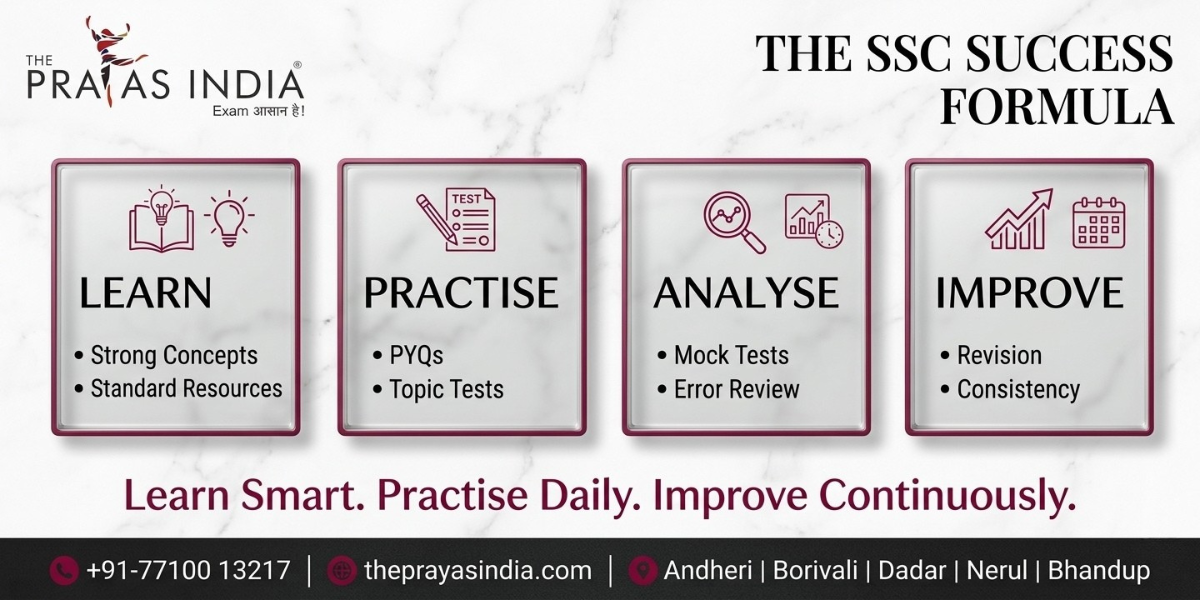
Preparing for SSC examinations is not about finding the quickest strategy or studying the maximum number of hours. It is about building a preparation process that remains organised, practical, and consistent over time. Aspirants who invest in understanding concepts, practising regularly, analysing their performance, and revising systematically are the ones who steadily move closer to selection.
Every successful journey begins with a well-informed first step. If you start with the right strategy, use reliable resources, evaluate your progress honestly, and remain committed to continuous improvement, your preparation becomes more focused and your confidence grows with every passing week.
The SSC examination rewards preparation that is disciplined rather than rushed. Begin with clarity, stay consistent, and let every study session take you one step closer to your goal of securing a government career.
Contact Us
📞 Call: +91-77100 13217
🌐 Website: https://theprayasindia.com