UPSC CSE 2026-27 Syllabus – Detailed Syllabus for Prelims & Mains Exam
The UPSC Civil Services Examination (CSE) is widely regarded as one of India’s most prestigious and challenging competitive exams. Conducted annually by the Union Public Service Commission (UPSC), this examination recruits candidates for high-profile government positions such as Indian Administrative Service (IAS), Indian Police Service (IPS), Indian Forest Service (IFS), Indian Revenue Service (IRS), and other Group A and B central services.
A clear understanding of the UPSC syllabus is essential for aspirants to develop an effective preparation strategy. This guide provides a comprehensive overview of the Prelims and Mains syllabus for UPSC CSE 2026-27, including subject-wise breakdowns, optional subjects, essay components, and interview/personality test details. Aspirants can also download the latest UPSC Syllabus PDF 2026-27 for structured and focused preparation.
UPSC CSE 2026-27 Exam Pattern Overview
Preliminary Examination (Prelims)
The UPSC Preliminary Examination acts as a screening test and consists of two objective papers, GS Paper I and CSAT (GS Paper II). Both papers carry 200 marks each, with negative marking for incorrect answers.
| Paper (Duration) | Total Marks | No. of Questions | Marks per Question | Negative Marking |
|---|---|---|---|---|
| Paper I – General Studies (2 hrs) | 200 | 100 | 2 | 1/3rd (0.66) |
| Paper II – CSAT (2 hrs) | 200 | 80 | 2.5 | 1/3rd (0.83) |
Note: Prelims Paper II (CSAT) is qualifying in nature. Candidates must score a minimum of 33% in Paper II to be eligible for the Mains examination.
Main Examination (Mains)
The UPSC Mains Examination is a descriptive exam comprising nine papers, including qualifying papers, General Studies papers, Essay, and Optional subjects. Each paper carries 3 hours duration.
| Paper | Subject | Marks |
|---|---|---|
| Indian Language (Qualifying Paper A) | The candidate may select one language from the Eighth Schedule of the Constitution | 300 |
| English (Qualifying Paper B) | English Language (Qualifying Paper) | 300 |
| Essay | Essay writing on multiple topics to assess understanding, articulation, and analytical ability | 250 |
| GS Paper I | Indian Heritage and Culture, Modern Indian History, Society, World and Indian Geography | 250 |
| GS Paper II | Polity and Constitution, Governance and Social Justice, International Relations | 250 |
| GS Paper III | Indian Economy, Science & Technology, Environment, Disaster Management, Internal Security | 250 |
| GS Paper IV | Ethics, Integrity, and Aptitude | 250 |
| Optional Subject Paper I & II | Candidate chooses one optional subject; both papers combined | 500 (250 each) |
Personality Test (Interview)
After the Mains, candidates who qualify are called for a Personality Test / Interview, which carries 275 marks. This stage assesses:
- Mental alertness and analytical abilities
- Decision-making and problem-solving skills
- Leadership and interpersonal skills
- Ethical integrity and suitability for public service
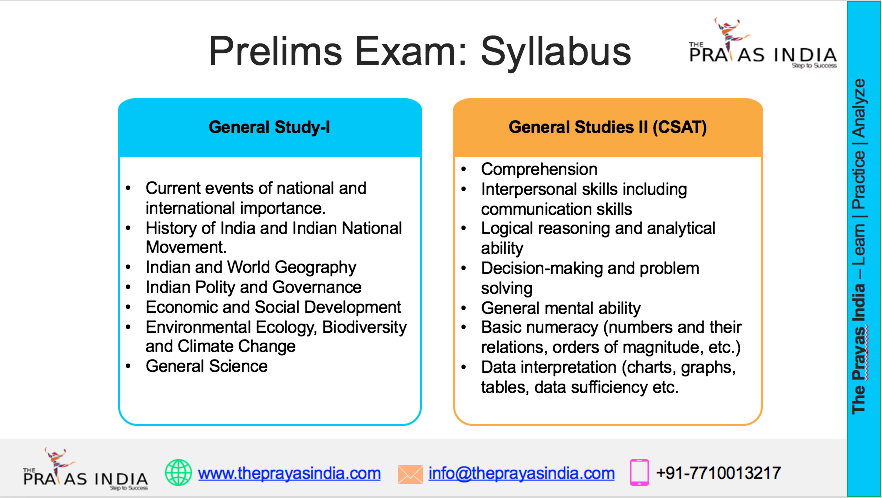
UPSC CSE 2026-27 Prelims Syllabus – Detailed Breakdown
The Preliminary Examination consists of GS Paper I (General Studies) and GS Paper II (CSAT). Both papers carry 200 marks each, but only Paper I counts for merit ranking; Paper II is qualifying.
GS Paper I Syllabus
- Current events of national and international importance
- History of India and the Indian National Movement
- Indian and World Geography: Physical, Social, and Economic Geography
- Indian Polity and Governance: Constitution, Political System, Panchayati Raj, Public Policy, Rights Issues
- Economic and Social Development: Sustainable Development, Poverty, Inclusion, Demographics, Social Sector Initiatives
- General issues on Environmental Ecology, Biodiversity, and Climate Change
- General Science
GS Paper II (CSAT) Syllabus
- Comprehension and communication skills
- Interpersonal skills including communication abilities
- Logical reasoning and analytical aptitude
- Decision making and problem solving
- General mental ability
- Basic numeracy (Class X level) and data interpretation (charts, graphs, tables, data sufficiency)
UPSC CSE 2026-27 Mains Syllabus – Detailed Breakdown
The UPSC Civil Services Main Examination includes a comprehensive written stage followed by an Interview/Personality Test. The written component features 9 conventional papers, with 2 papers designated as qualifying in nature.
UPSC Civil Services Main Exam GS Paper – I Syllabus
Indian Heritage, Culture, History, Society & Geography
General Studies Paper-I in the UPSC Civil Services Mains Examination evaluates a candidate’s understanding of India’s cultural roots, historical evolution, social dynamics, and geographical foundations. This paper requires both factual knowledge and analytical ability, as aspirants must connect past developments with present-day realities and global trends.
The syllabus broadly covers Art & Culture, Ancient to Modern History, Post-Independence India, World History, Indian Society, and Physical & Human Geography.
Indian Art & Culture – Heritage, Traditions & Cultural Continuity
This section focuses on India’s civilizational identity, creative expressions, and the evolution of cultural traditions across centuries.
Indian Culture – Core Themes
- Salient features of Indian art forms, literature, architecture, and traditions from ancient to modern times
- Cultural diversity and regional artistic expressions
- Continuity and transformation in Indian heritage
- Influence of religion, patronage, trade, and politics on cultural development
Indian Art Forms
Indian Paintings
- Mural Paintings – Ajanta, Ellora, Lepakshi; religious and court themes
- Miniature Paintings – Mughal, Rajput, Pahari schools; symbolism, storytelling, and royal patronage
- Evolution of painting styles across historical periods
Dance Forms in India
- Classical Dance Forms – Bharatanatyam, Kathak, Odissi, Kathakali, Kuchipudi, Manipuri
- Folk Dance Forms – Bhangra, Garba, Ghoomar, Chhau, Lavani, regional traditions
- Modern Dance – Contemporary Indian and fusion dance styles
- Role of dance in ritual, storytelling, and social expression
Music Traditions
- Classical Music – Hindustani and Carnatic traditions
- Gharana system, raga-tala structure, and musical evolution
- Folk Music – Regional oral traditions and cultural storytelling
Puppetry
- String Puppets, Shadow Puppets, Rod Puppets, Glove Puppets
- Tribal puppetry traditions
- Modern puppetry as a medium for social awareness and cultural preservation
Pottery & Material Culture
- Ochre Coloured Pottery (OCP)
- Black and Red Ware (BRW)
- Painted Grey Ware (PGW)
- Northern Black Polished Ware (NBPW)
- Archaeological significance in understanding early societies
Drama & Theatre
- Classical Sanskrit Theatre – Kalidasa, Bhasa traditions
- Regional Theatre – Folk drama and cultural narratives
- Modern Indian Theatre – Social reform, nationalism, and contemporary themes
Martial Arts in India
- Kalaripayattu, Gatka, Thang Ta, Silambam, Mallakhamb
- Cultural, physical, and historical significance
- Martial traditions as symbols of regional identity
Sculpture & Visual Arts
- Harappan sculptures
- Mauryan art (Pillars, Yaksha sculptures)
- Buddhist and Jain sculpture
- Gupta school of sculpture
- Medieval and modern Indian sculptural traditions
Bhakti & Sufi Movements
- Spread and evolution of Bhakti and Sufi traditions
- Role in promoting religious tolerance and social reform
- Contributions of women Bhakti saints
- Impact on literature, music, and society
Indian Literature
- Vedic Literature, Upanishads, Puranas
- Classical Sanskrit authors such as Kalidasa and Vishakhadatta
- Buddhist and Jain literary traditions
- Sangam (Early Dravidian) literature
- Medieval literary movements
- Modern Indian literary trends and nationalist writings
Indian Architecture
- Harappan urban architecture
- Mauryan and Gupta architecture
- Temple architecture – Nagara, Dravida, Vesara styles
- Cave architecture – Buddhist, Jain, Gupta caves
- Indo-Islamic architecture – Delhi Sultanate, Mughal, Provincial styles
- Rajput and Sikh architectural traditions
- Colonial and Post-Independence architecture
- Contributions of Buddhism and Jainism
- Rock-cut architecture – South, Western, and Eastern India
Ancient Indian History – Foundations of Civilization
This section examines the origins, political systems, socio-economic structures, religious movements, and cultural achievements of ancient India.
Prehistoric & Proto-Historic Period
- Paleolithic, Mesolithic, Neolithic cultures
- Chalcolithic settlements
- Iron Age technological developments
Indus Valley Civilization (IVC)
- Urban planning, drainage systems, and town layout
- Harappan society, economy, trade, and religion
- Major centers such as Harappa, Mohenjo-Daro, Dholavira
- Harappan art and architecture
- Theories regarding the decline of the civilization
Vedic Society
- Original home of the Aryans
- Early and Later Vedic socio-economic structures
- Varna system and social organization
- Vedic literature – Samhitas, Brahmanas, Upanishads
- Religious beliefs and philosophical thought
Pre-Mauryan Period
- Mahajanapadas and rise of territorial states
- Haryanka, Shishunaga, and Nanda dynasties
- Political, economic, and administrative developments
Jainism & Buddhism
- Life and teachings of Mahavira and Gautam Buddha
- Spread and patronage of religious movements
- Social and ethical impact on Indian society
Mauryan Empire
- Chandragupta Maurya and Bindusara
- Arthashastra by Kautilya
- Megasthenes’ accounts
- Emperor Ashoka – Dhamma policy and inscriptions
- Mauryan administration, economy, society, and art
- Decline of the Mauryan Empire
Post-Mauryan India
- Indo-Greeks, Shakas, Parthians, and Kushanas
- Satavahanas and other indigenous dynasties
- Schools of art – Gandhara, Mathura, Amravati
Gupta Empire
- Political history and administration
- Cultural achievements – “Golden Age of India”
- Economic and urban development
- Science, art, and literature
Harshavardhana
- Administration and governance
- Hiuen Tsang’s accounts
- Religious and social life during Harsha’s period
Southern Dynasties
- Satavahanas
- Pallavas
- Chalukyas
- Pandyas
- Cholas
- Rashtrakutas
- Contributions to administration, culture, trade, and architecture
Medieval Indian History – Political Power, Culture & Socio-Economic Transformation
Medieval Indian History focuses on political administration, socio-economic structures, cultural growth, religious movements, and regional powers from the 8th to the 18th century.
Delhi Sultanate
- Slave (Mamluk) Dynasty – Qutbuddin Aibak, Iltutmish, Razia Sultana
- Khalji Dynasty – Alauddin Khalji’s reforms, price control, military administration
- Tughluq Dynasty – Muhammad bin Tughlaq’s experiments, Firoz Shah Tughlaq’s policies
- Sayyid Dynasty
- Lodi Dynasty – Ibrahim Lodi and decline of Sultanate
- Administrative, economic, military, and cultural developments
Struggle for Power in North India
- Conflict among Rajputs, Afghans, and emerging Mughal power
- Transition from Sultanate to Mughal rule
Mughal Empire
- Babur – foundation of Mughal rule
- Humayun – exile and return
- Akbar – administration, Mansabdari system, religious policy
- Jahangir – governance and cultural patronage
- Shah Jahan – architecture and imperial expansion
- Aurangzeb – religious policies and empire extension
- Later Mughals – weakening of central authority
- Causes of the decline of the Mughal Empire
Sur Dynasty
- Sher Shah Suri – land revenue reforms, road networks, governance innovations
Maratha Empire
- Shivaji and the Maratha administration
- Expansion under Peshwas
- Anglo-Maratha conflicts
- Decline of Maratha power
Deccan Sultanates
- Ahmednagar, Bijapur, Golconda, Berar, Bidar Sultanates
- Political rivalries and cultural contributions
Modern Indian History – British Rule, Nationalism & Freedom Struggle
This section examines colonial expansion, economic exploitation, social reform, nationalist movements, and India’s struggle for independence.
Early Modern Developments (Before 1857)
- Later Mughals and regional powers
- Carnatic Wars
- Battles of Plassey and Buxar
- Anglo-Mysore Wars
- Anglo-Punjab Wars
- British expansion strategies
British Rule & Its Impact
- Economic exploitation
- Administrative restructuring
- Socio-cultural transformations
- Commercialization of agriculture
- Drain of wealth theory
Socio-Religious Reform Movements
- Raja Ram Mohan Roy
- Brahmo Samaj
- Arya Samaj
- Aligarh Movement
- Role in modern education and social awakening
Revolt of 1857
- Causes, leaders, spread, and nature
- Suppression and consequences
- Government of India Act, 1858
Rise of Nationalism (1858–1905)
- Role of Western education
- Press and political consciousness
- Formation of Indian National Congress
- Moderate phase
Extremism & Revolutionary Phase (1905–1918)
- Swadeshi Movement
- Surat Split
- Morley-Minto Reforms
- Rise of militant nationalism
- Growth of communal politics
Gandhian Era (1919–1947)
- Non-Cooperation Movement
- Civil Disobedience Movement
- Quit India Movement
- Round Table Conferences
- Government of India Act, 1935
- Role of Subhash Chandra Bose and INA
- Cabinet Mission
- Partition and Independence
Post-Independence India – Nation-Building & Political Evolution
Political Integration & Reorganization
- Integration of princely states
- Linguistic reorganization of states
- Regional aspirations
- Federal structure and center-state relations
Foreign Policy & Global Engagement
- Non-Aligned Movement
- Panchsheel
- Wars with Pakistan and China
- Nuclear policy
- Strategic autonomy
Economic Development
- Planned economy
- Green Revolution
- Industrial reforms
- LPG Reforms (1991)
- Cooperative movement
Political Developments
- One-party dominance
- Emergency (1975–77)
- Rise of coalition politics
- Regional political parties
Social Movements & Challenges
- Women’s movement
- Naxalism
- Tribal issues
- Communal tensions
- Popular protests
Science & Technology Policy
- India’s technological growth
- Space, nuclear, IT sectors
- Impact of economic reforms on innovation
World History – Revolutions, Wars & Global Political Transformations
Early Modern World
- Renaissance
- Reformation
- Discovery of sea routes
Major Revolutions
- American Revolution
- French Revolution
- Russian Revolution
- Impact on democracy and political thought
Industrial Revolution
- Economic transformation
- Rise of capitalism
- Social consequences
Imperialism & Colonialism
- Expansion of European empires
- Imperialism in Asia & Africa
- Resistance movements
World Wars
- World War I – causes, treaties, consequences
- World War II – global conflict, Holocaust, aftermath
Cold War Era
- US-USSR rivalry
- Korean War
- Vietnam War
- Cuban Missile Crisis
- Collapse of the Soviet Union
Political Ideologies
- Communism
- Capitalism
- Socialism
- Impact on global governance
Indian Society – Diversity, Inequality & Social Transformation
Salient Features of Indian Society
- Unity in diversity
- Pluralism
- Cultural heterogeneity
Women & Gender Issues
- Role of women’s organizations
- Women’s empowerment
- SHGs and microfinance
- Feminist movements
Population & Demographic Challenges
- Demographic dividend
- Aging population
- Population policies
Poverty & Development
- Causes of poverty
- Urban poverty
- Inclusive growth
- Welfare policies
Urbanization
- Migration
- Slum issues
- Urban governance
- Smart Cities Mission
Globalization & Its Impact
- Cultural influence
- Economic changes
- Social inequalities
Social Challenges
- Communalism
- Regionalism
- Secularism
- Social empowerment
World & Indian Geography – Physical, Human & Economic Dimensions
Physical Geography
- Earth’s structure
- Plate tectonics
- Volcanoes & earthquakes
- Climate systems
- Oceanography
Natural Resources
- Land, water, forests, minerals
- Energy resources
- Conservation strategies
Human Geography
- Population
- Urbanization
- Migration
- Economic activities
Indian Geography
- Physiography
- Drainage system
- Monsoon climate
- Soils
- Natural vegetation
- Agriculture
- Industry
- Transport networks
UPSC Civil Services Main Exam GS Paper – II Syllabus
POLITY
Indian Constitution
Historical Underpinnings & Evolution
- Regulating Act (1773) → Government of India Act (1935) → Independence Act (1947)
- Constituent Assembly formation & composition
- Objective Resolution (Jawaharlal Nehru)
- Drafting process & enforcement (1950)
Key Features of the Constitution
- Written Constitution
- Blend of rigidity and flexibility
- Federal system with unitary bias
- Parliamentary form of government
- Independent judiciary
- Fundamental Rights, DPSPs & Fundamental Duties
- Secularism, Universal Adult Franchise, Single Citizenship
- Emergency provisions
- Three-tier government
Amendments
- Amendment procedure (Article 368)
- Important Amendments:
- 42nd, 44th, 52nd, 61st, 73rd, 74th, 86th, 101st (GST), etc.
- Political & social impact of amendments
Basic Structure Doctrine
- Origin — Kesavananda Bharati Case
- Core elements: Rule of law, Judicial review, Secularism, Federalism
- Key Judgments:
- Golaknath Case
- Minerva Mills Case
- Indira Gandhi vs Raj Narain
Union–State Relations & Federalism
Functions of Union & States
- Legislative powers (7th Schedule)
- Financial & administrative relations
Centre–State Issues
- Legislative conflicts
- Fiscal federalism
- Role of Finance Commission
- GST Council
- Governor’s role & controversies
Inter-State Relations
- Water disputes tribunals
- Inter-State Council
- Zonal Councils
- Trade & commerce across states
Emergency Provisions
- National Emergency
- President’s Rule
- Financial Emergency
Local Governance & Decentralization
Panchayati Raj & Urban Local Bodies
- 73rd & 74th Amendments
- 11th & 12th Schedule
- Role of State Finance Commission
Challenges
- Poor fund devolution
- Political interference
- Capacity constraints
Reforms
- Panchayat Devolution Index (NITI Aayog)
- Digital governance in local bodies
Separation of Powers & Checks and Balances
Doctrine
- Separation between Legislature, Executive & Judiciary
Checks & Balances
- Judicial Review
- Impeachment
- Parliamentary accountability
Key Cases
- Ram Jawaya Case
- Kesavananda Bharati Case
- Golaknath Case
Parliament & State Legislatures
Structure
- Lok Sabha & Rajya Sabha
- Legislative councils (Vidhan Parishad)
Functions
- Law-making
- Budget approval
- Executive oversight
Issues
- Disruptions in Parliament
- Anti-defection law concerns
- Decline in parliamentary debates
Executive & Judiciary
Executive
- President, Prime Minister, Council of Ministers
- Governor, Chief Minister
Judiciary
- Supreme Court, High Courts, Subordinate Courts
- Judicial independence
- Judicial activism vs overreach
Constitutional & Statutory Bodies
Constitutional Bodies
-
Election Commission
- UPSC & State PSCs
- Finance Commission
- CAG
- NHRC, NCW, NCSC, NCST
Regulatory & Quasi-Judicial Bodies
- RBI, SEBI, IRDAI, TRAI
- Lokpal & Lokayuktas
- NITI Aayog
- National Green Tribunal
- CBI, CIC, CVC
GOVERNANCE
Government Policies & Development Interventions
Major Schemes
- Digital India
- Make in India
- Smart Cities Mission
- MGNREGA
- PMJDY
- Skill India
- Swachh Bharat Mission
Issues
- Poor implementation
- Leakages & corruption
- Monitoring challenges
Reforms Needed
- Outcome-based evaluation
- Transparency & citizen participation
NGOs, SHGs & Development Sector
Role of NGOs
- Education, health, environment, empowerment
- Accountability & funding issues
Self-Help Groups (SHGs)
- Financial inclusion
- Women empowerment
- Challenges: Credit access, sustainability
Governance, Transparency & Accountability
Good Governance Principles
- Accountability
- Participation
- Rule of law
- Transparency
RTI & Social Audit
-
Impact & misuse concerns
Citizen Charter & Sevottam Model
- Service delivery improvement
E-Governance
- Digital public services
- Challenges: Digital divide, cybersecurity risks
Role of Civil Services
Functions
- Policy formulation
- Service delivery
- Crisis management
- Institutional stability
Challenges
- Political interference
- Corruption
- Lack of professionalism
Reforms
- Lateral entry
- Performance-based promotion
- Ethical training
SOCIAL JUSTICE
Welfare Schemes for Vulnerable Sections
SC/ST
- SC/ST Prevention of Atrocities Act
- Forest Rights Act
- Tribal Sub Plan
Women & Children
- POCSO Act
- Domestic Violence Act
- Beti Bachao Beti Padhao
- Maternity Benefit Act
Elderly & Disabled
- Rights of Persons with Disabilities Act
- Senior Citizen Welfare Act
Health Sector Issues
Challenges
- Low public spending
- Infrastructure gaps
- Urban-rural disparity
Key Programs
- Ayushman Bharat
- National Health Mission
- National Health Policy
Education Sector Issues
Problems
- Dropouts
- Learning outcomes (ASER Report)
- Digital divide
Reforms
- NEP 2020
- Skill-based education
- Teacher training
Poverty, Hunger & Nutrition
Causes
- Unemployment
- Inequality
- Food insecurity
Programs
- NFSA
- Mid-Day Meal
- POSHAN Abhiyaan
INTERNATIONAL RELATIONS
India & Neighbourhood Relations
- China — Border & trade issues
- Pakistan — Terrorism & diplomacy
- Nepal, Sri Lanka, Bangladesh — strategic relations
- Maldives, Myanmar, Bhutan — regional security
Bilateral Relations
- USA — Defense & technology
- Russia — Energy & defense
- Japan — Infrastructure & trade
- EU, Africa, ASEAN — strategic partnerships
Global & Regional Groupings
- BRICS, SCO, BIMSTEC, ASEAN
- QUAD, G-20, NAM
- IBSA, SAARC, IORA
Foreign Policy Doctrines
- NAM
- Act East Policy
- Gujral Doctrine
- Nuclear Doctrine
Indian Diaspora
- OCI, Pravasi Bharatiya Divas
- Role in diplomacy & economy
- Challenges: Dual citizenship, migration policies
International Institutions
- United Nations
- IMF & World Bank
- WTO
- WHO
- UNESCO
UPSC CSE 2026-27 Mains Syllabus – General Studies Paper III
Technology, Economic Development, Agriculture, Environment, Security & Disaster Management
Marks: 250
Duration: 3 Hours
General Studies Paper III evaluates a candidate’s understanding of India’s economic structure, development challenges, technological advancement, environmental sustainability, agricultural reforms, disaster preparedness, and internal security framework. This paper focuses on policy analysis, problem-solving, data interpretation, and real-world governance challenges.
ECONOMIC DEVELOPMENT
Indian Economy & Issues Relating to Planning, Resources, Growth, Development & Employment
1. Planning in Indian Economic Development
Planning refers to the systematic allocation of resources and long-term economic strategy to achieve national development goals.
Meaning & Need for Planning
Planning ensures:
- Balanced regional development
- Poverty reduction
- Infrastructure expansion
- Industrial and agricultural modernization
- Employment generation
Types of Planning
- Imperative Planning – State-controlled planning
- Indicative Planning – Market-guided planning
- Structural Planning – Focus on sectoral transformation
Objectives of Indian Planning
- Economic self-reliance
- Inclusive growth
- Reduction of income inequality
- Industrial diversification
- Human capital development
Indian Planning History
- Five-Year Plans (1951–2017)
- Transition from Planning Commission to NITI Aayog
- Shift from centralized planning to cooperative federalism
Achievements & Failures of Planning
Achievements
- Industrial base creation
- Agricultural self-sufficiency
- Poverty reduction
Failures
- Regional imbalance
- Bureaucratic inefficiency
- Slow employment growth
NITI Aayog vs Planning Commission
- NITI Aayog emphasizes policy think-tank role, federal cooperation, real-time governance, and decentralized planning
2. Mobilisation of Resources for Development
Mobilization of resources refers to raising financial, human, and natural capital for national development.
Types of Resources
- Financial
- Human
- Natural
- Institutional
Government Resource Generation
- Tax revenue
- Non-tax revenue
- Fiscal & Monetary policy instruments
Role of Financial Institutions
- Banking Sector
- NBFCs
- Capital Markets
- Public Borrowing
External Resources
- Foreign Direct Investment (FDI)
- Official Development Assistance (ODA)
- Multilateral loans
Challenges in Resource Mobilization
- Tax evasion
- Low savings rate
- Rising public debt
- Global financial volatility
3. Growth & Development
Meaning of Growth vs Development
- Growth = Increase in GDP
- Development = Improvement in quality of life, income equality, and social welfare
Key Concepts
- Jobless growth
- Pro-poor growth
- Balanced vs unbalanced growth
- Human Development Index (HDI)
Measurement Indicators
- Per capita income
- Poverty index
- Multidimensional poverty index
- Gender Development Index
Challenges to Sustainable Growth
- Income inequality
- Unemployment
- Resource depletion
- Climate risks
4. Employment & Labour Market Challenges
Employment Structure in India
- Rural vs Urban employment
- Formal vs Informal employment
- Gig economy
Employment Issues
- Youth unemployment
- Underemployment
- Skill mismatch
- Workforce restructuring
Government Initiatives
- Skill India
- Startup India
- Make in India
- MGNREGA
- Production Linked Incentive (PLI) Scheme
5. Inclusive Growth
Inclusive growth ensures economic benefits reach marginalized and disadvantaged communities.
Core Elements
- Financial inclusion
- Education & healthcare access
- Gender equality
- Regional balance
Challenges
- Poverty
- Digital divide
- Urban-rural gap
- Social exclusion
Role of Government
- Direct Benefit Transfer (DBT)
- Jan Dhan Yojana
- Social security schemes
6. Government Budgeting & Fiscal Policy
Purpose of the Government Budget
- Resource allocation
- Economic stabilization
- Poverty reduction
Budget Components
- Revenue receipts & expenditure
- Capital receipts & expenditure
Measures of Deficit
- Fiscal Deficit
- Revenue Deficit
- Primary Deficit
Fiscal Responsibility
- FRBM Act
- Deficit reduction strategies
- Outcome-based budgeting
- Zero-based budgeting
7. Land Reforms in India
Objectives
- Equity in land ownership
- Agricultural productivity
- Social justice
Components
- Abolition of intermediaries
- Ceiling on land holdings
- Tenancy reforms
Challenges
- Political resistance
- Poor implementation
- Land record inefficiencies
Recent Reforms
- Land leasing policy
- Digital land records
- Rehabilitation laws
8. Liberalization & Industrial Policy
Impact of Liberalization (Post-1991)
- Increased FDI
- Industrial modernization
- Global trade integration
Industrial Policy Evolution
- Pre-1991 licensing system
- Post-1991 deregulation
Manufacturing Initiatives
- Make in India
- National Manufacturing Policy
- Special Economic Zones (SEZs)
9. Infrastructure & Investment Models
Key Infrastructure Sectors
- Energy
- Roads
- Railways
- Airports
- Ports
Investment Models
- Public Investment
- Private Investment
- PPP Model
- Foreign Investment
Sector-Specific & Cluster Models
- MSME clusters
- Startup ecosystems
- Smart Cities investments
AGRICULTURE
10. Cropping Patterns & Major Crops
Importance of Cropping Patterns
- Soil fertility
- Water efficiency
- Food security
Types
- Mixed cropping
- Crop rotation
- Multiple cropping
Emerging Trends
- Shift to cash crops
- Organic farming
- Climate-resilient crops
11. Irrigation Systems & Water Management
Irrigation Types
- Canal irrigation
- Drip irrigation
- Sprinkler irrigation
Challenges
- Water wastage
- Groundwater depletion
- Salinity
Need for National Water Policy & reforms
12. Agricultural Marketing & Storage
Institutions
- FCI
- APMCs
- Warehousing Corporations
Reforms
- e-NAM
- Farmer-Producer Organizations (FPOs)
- Contract farming
Challenges
- Price volatility
- Market inefficiencies
13. MSP, Subsidies & Food Security
Agricultural Pricing Policy
- MSP mechanism
- Input subsidies
PDS & Buffer Stock
- Food Corporation procurement
- NFSA implementation
Issues
- Fiscal burden
- WTO compliance
- Leakages in PDS
14. Food Processing Industry
Importance
- Value addition
- Employment
- Export potential
Government Initiatives
- SAMPADA
- Cold chain development
- Supply chain modernization
15. Animal Husbandry Economics
- Dairy & livestock economy
- Fisheries
- Rural livelihood impact
SCIENCE & TECHNOLOGY
16. Everyday Applications of Science
- Artificial sweeteners
- Food preservatives
- Antibiotics
- Water purification
- Household chemical applications
17. Achievements of Indian Scientists
Includes contributions by:
- C.V. Raman
- Jagadish Chandra Bose
- S.N. Bose
- Homi Bhabha
- Vikram Sarabhai
- A.P.J. Abdul Kalam
- Tessy Thomas
- C.N.R. Rao
18. Emerging Technologies
- IT & Artificial Intelligence
- Space technology
- Biotechnology
- Robotics
- Nanotechnology
- Defence & Nuclear technology
19. Intellectual Property Rights (IPR)
Types
- Patents
- Trademarks
- Copyright
- GI Tags
Indian IPR Framework
- International agreements
- Compulsory licensing
- Innovation protection
BIODIVERSITY & ENVIRONMENT
20. Biodiversity Conservation
Types
- Genetic
- Species
- Ecosystem
Conservation Methods
- In-situ
- Ex-situ
International Agreements
- CBD
- Ramsar Convention
- CITES
21. Environmental Pollution & Climate Change
Pollution Types
- Air
- Water
- Soil
- Noise
Environmental Threats
- Global warming
- Ozone depletion
- Desertification
- Acid rain
Environmental Laws & Institutions
22. Environmental Impact Assessment (EIA)
Purpose
- Sustainable development
- Risk mitigation
Challenges
- Implementation gaps
- Policy reforms needed
DISASTER MANAGEMENT
23. Types of Disasters
- Natural
- Man-made
- Biological
- Technological
Disaster Risk Reduction
- Preparedness
- Mitigation
- Response
- Rehabilitation
Government Framework
- NDMA
- SDMA
- Community-based disaster management
INTERNAL SECURITY
24. Extremism & Development Link
- Poverty
- Inequality
- Underdevelopment
Left Wing Extremism
Naxalism
25. Role of External & Non-State Actors
- Terrorist organizations
- Insurgency
- Cross-border terrorism
26. Cyber Security & Communication Threats
- Cyber warfare
- Data theft
- Social media misinformation
- Digital espionage
27. Money Laundering & Organized Crime
- Financial crimes
- Terror funding
- Prevention laws
28. Border Security Challenges
- Coastal security
- Land border disputes
- Organized crime linkages
29. Security Forces & Intelligence Agencies
- CAPF
- Intelligence Bureau
- RAW
- NIA
- NATGRID
UPSC Civil Services Main Exam GS Paper – II Syllabus
(For Mains + Case Studies + Real-Life Application)
1. Ethics & Human Interface
What is Ethics?
Ethics refers to moral principles that guide human conduct, helping distinguish right vs wrong, fair vs unfair, just vs unjust.
Essence of Ethics in Human Actions
- Guides moral decision-making
- Ensures social harmony
- Builds trust in personal & public life
- Prevents misuse of power
- Encourages accountability
Determinants of Ethical Behavior
- Family upbringing
- Education & institutions
- Culture & traditions
- Religion & philosophy
- Law & social norms
- Role models & leadership
- Personal conscience
Consequences of Ethics
Positive Outcomes
- Social stability
- Trust in governance
- Sustainable development
- Strong institutions
Negative Outcomes of Ethical Failure
- Corruption
- Crime
- Social injustice
- Loss of credibility
- Institutional breakdown
Dimensions of Ethics
- Personal Ethics — honesty, discipline
- Professional Ethics — duty, responsibility
- Public Ethics — integrity, impartiality
- Social Ethics — equality, compassion
- Environmental Ethics — sustainability
- Digital Ethics — data privacy, misinformation
Ethics in Private vs Public Relationships
| Private Life | Public Life |
|---|---|
| Loyalty | Impartiality |
| Personal emotions | Objectivity |
| Family obligations | Public accountability |
| Privacy | Transparency |
Human Values & Role of Institutions
Key Human Values
- Truth
- Compassion
- Respect
- Responsibility
- Courage
- Justice
Institutions in Value Formation
- Family — moral foundation
- School — discipline & civic values
- Society — social responsibility
- Media — value influence
- State — constitutional values
Lessons from Great Leaders
| Leader | Ethical Value |
|---|---|
| Mahatma Gandhi | Truth, Non-violence |
| Buddha | Compassion |
| Ambedkar | Justice, Equality |
| Abraham Lincoln | Moral courage |
| Nelson Mandela | Reconciliation |
| Swami Vivekananda | Character building |
2. Attitude
Meaning of Attitude
A psychological tendency to respond positively or negatively toward people, ideas, or situations.
Structure of Attitude (ABC Model)
- Affective — Feelings
- Behavioral — Actions
- Cognitive — Beliefs
Functions of Attitude
- Identity formation
- Social adjustment
- Value expression
- Decision guidance
Influence on Thought & Behavior
- Shapes perception
- Drives moral judgment
- Impacts leadership decisions
- Influences public interaction
Moral & Political Attitudes
- Attitude toward corruption
- Attitude toward equality
- Democratic values
- Respect for diversity
Social Influence & Persuasion
- Peer pressure
- Authority influence
- Media & propaganda
- Social norms
- Ethical resistance strategies
3. Aptitude & Foundational Values for Civil Services
Meaning of Aptitude
Innate or developed ability to respond effectively to real-life challenges.
Core Civil Service Values
- Integrity — honesty & moral courage
- Impartiality — fairness without bias
- Non-partisanship — political neutrality
- Objectivity — evidence-based decisions
- Dedication to Public Service — citizen-centric governance
- Empathy — understanding others’ emotions
- Tolerance — respect for diversity
- Compassion — concern for vulnerable groups
Ethical Traits of an Ideal Civil Servant
- Moral courage
- Accountability
- Emotional intelligence
- Transparency
- Humility
- Leadership
- Commitment to Constitution
4. Emotional Intelligence (EI)
Concept
Ability to recognize, understand, manage one’s own emotions and others’ emotions.
Components of EI
- Self-awareness
- Self-regulation
- Motivation
- Empathy
- Social skills
Applications in Governance
- Conflict resolution
- Public grievance handling
- Crisis leadership
- Team management
- Ethical decision-making
EI vs IQ in Administration
EI improves:
- Decision quality
- Public trust
- Leadership effectiveness
- Institutional harmony
5. Moral Thinkers & Philosophers
Indian Thinkers
- Gandhi — Moral politics
- Buddha — Middle Path
- Vivekananda — Character ethics
- Kautilya — Statecraft ethics
- Ambedkar — Social justice
Western Thinkers
- Aristotle — Virtue ethics
- Kant — Duty ethics
- Bentham — Utilitarianism
- John Rawls — Justice theory
- Plato — Moral idealism
Key Ethical Theories
| Theory | Focus |
|---|---|
| Virtue Ethics | Character |
| Deontology | Duty |
| Utilitarianism | Consequences |
| Justice Theory | Fairness |
| Care Ethics | Empathy |
6. Public Service Ethics & Governance
Ethics in Public Administration
- Moral responsibility
- Fair decision-making
- Citizen trust
- Efficient resource use
Ethical Dilemmas in Governance
- Law vs Compassion
- Transparency vs Confidentiality
- Loyalty vs Public interest
- Political pressure vs Integrity
Sources of Ethical Guidance
- Constitution
- Laws & Rules
- Conscience
- Codes of Conduct
- Institutional norms
Accountability & Ethical Governance
- Social audits
- CAG oversight
- RTI
- Parliamentary control
- Vigilance mechanisms
Corporate Governance Ethics
- CSR
- Transparency
- Stakeholder responsibility
- Prevention of fraud
- Ethical leadership
7. Probity in Governance
Meaning of Probity
Probity = highest standards of integrity, honesty & transparency in public life
Core Elements
- Ethical leadership
- Financial accountability
- Transparency
- Anti-corruption mechanisms
- Conflict-of-interest prevention
Tools to Ensure Probity
- RTI Act
- Citizen Charter
- Lokpal
- Vigilance institutions
- Codes of Ethics
- Whistleblower protection
Corruption Challenges
- Political corruption
- Bureaucratic corruption
- Corporate lobbying
- Nepotism
- Rent-seeking
8. Ethical Issues in International Relations
Key Ethical Concerns
- Human rights violations
- Arms trade
- Refugee crisis
- Climate justice
- Global inequality
- Debt diplomacy
Ethics in Foreign Aid & Funding
- Sovereignty concerns
- Conditionalities
- Transparency
- Fair global cooperation
9. Case Studies — Ethics in Action
Types of Ethical Conflicts
- Personal vs Professional values
- Law vs Humanity
- Political pressure vs Integrity
- Efficiency vs Fairness
Case Study Answer Framework (UPSC Style)
Step-1: Identify Stakeholders
Step-2: Define Ethical Issues
Step-3: List Values in Conflict
Step-4: Explore Options
Step-5: Evaluate Consequences
Step-6: Choose Best Ethical Action
Step-7: Justify with Ethical Principles
10. Scoring Strategy for GS-4 (UPSC Toppers’ Method)
What UPSC Wants:
- Ethical reasoning
- Real-life practicality
- Balanced moral judgment
- Administrative realism
- Human sensitivity
How to Write High-Scoring Ethics Answers:
- Define the concept clearly
- Use real examples
- Link values to Constitution
- Avoid philosophical over-theory
- Be practical, not idealistic
Conclusion
The UPSC journey is not about studying more — it is about studying smart, relevant, and syllabus-focused. With the right mentorship, structured guidance, and exam-oriented strategy, cracking UPSC becomes a realistic and achievable goal.
Join The Prayas India to get syllabus-mapped study plans, GS-focused preparation, answer writing mentorship, daily current affairs integration, and expert-led guidance designed specifically for serious UPSC aspirants.
Start your UPSC 2026-27 preparation with clarity, confidence, and a winning strategy — because your dream deserves disciplined execution.



![Prayas-तेजस [UPSC CSE Sociology Optional] – Online & Offline](https://theprayasindia.com/wp-content/uploads/2025/09/Prayas-तेजस-UPSC-CSE-Optional-Subject-The-Prayas-India-300x300.png)
![Prayas-सूत्र [UPSC CSE Materials (Hardcopy)]](https://theprayasindia.com/wp-content/uploads/2025/09/Prayas-सूत्र-UPSC-CSE-Study-Materials-Hardcopy-The-Prayas-India-300x300.png)
![Prayas-मंत्रा [UPSC CSE CSAT]](https://theprayasindia.com/wp-content/uploads/2025/09/Prayas-मंत्रा-UPSC-CSE-CSAT-The-Prayas-India-300x300.png)
![Prayas सारथी [UPSC CSE One on One Mentorship]](https://theprayasindia.com/wp-content/uploads/2025/09/Prayas-सारथी-UPSC-CSE-One-on-One-Mentorship-The-Prayas-India-300x300.png)