What to Look for Before Joining a CAT Coaching Institute | Best CAT Coaching in Mumbai | The Prayas India
A Smart Admission Decision Begins Long Before Your First Classroom Session.
Every CAT aspirant dreams of receiving an admission offer from a top management institute. Whether it is an IIM or another reputed B-school, the journey usually begins with the same question—where should I prepare? While students spend months planning their study schedules and collecting preparation resources, the decision of choosing a coaching institute is often made surprisingly quickly. A few online searches, a counselling session, some recommendations from friends, and the admission is confirmed. Unfortunately, this approach can create problems much later, when preparation is already underway and changing direction becomes difficult.
Choosing a CAT coaching institute is not simply about enrolling in a classroom programme. It is about selecting the learning environment that will influence your preparation over the next several months. The institute you choose affects how concepts are taught, how consistently you practise, how your progress is monitored, and how confidently you approach the examination. A coaching institute cannot replace your hard work, but it can certainly determine whether that hard work is organised, focused, and productive.
This is why selecting a coaching institute deserves careful thought. Just as companies evaluate multiple candidates before hiring the right employee, students should evaluate multiple institutes before making an admission decision. A well-informed choice often saves months of confusion, while a rushed decision can leave students struggling with an unsuitable learning environment.
The Difference Between Marketing and Meaningful Learning
The competitive education industry has become extremely sophisticated in the way it presents itself. Attractive advertisements, impressive success percentages, scholarship announcements, modern classrooms, and promises of guaranteed success have become common across coaching institutes. While these elements certainly help create a positive first impression, they rarely tell the complete story.
An attractive brochure cannot explain how doubts are handled after class. A polished website cannot reveal whether students receive regular academic guidance when their mock scores begin to fluctuate. Similarly, a long list of claimed results does not necessarily tell you how consistently average students are supported throughout their preparation journey.
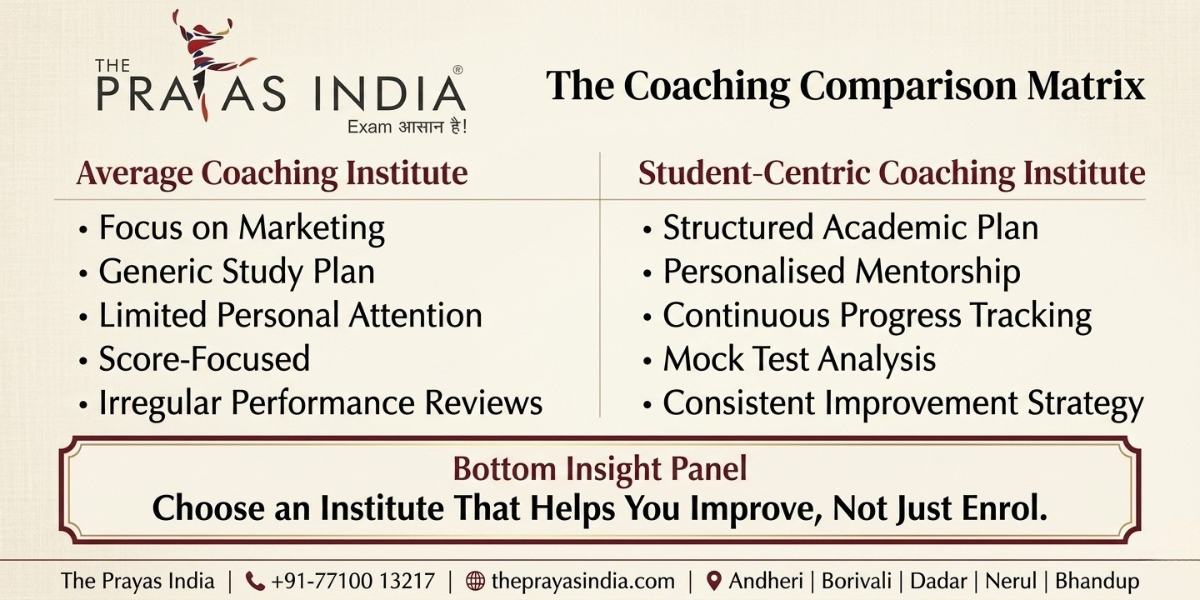
The most successful aspirants eventually realise that a coaching institute should not be evaluated by its marketing material alone. Instead, it should be judged by the quality of its academic process, its teaching philosophy, and the support system available long after the admission formalities are complete.
A good coaching institute quietly focuses on improving students. A great marketing campaign simply focuses on attracting them. Understanding the difference between the two is one of the most valuable lessons any CAT aspirant can learn before taking admission.
A Coaching Institute Should Fit Your Learning Style
Every student prepares differently. Some learn best through classroom discussions, while others prefer practising independently after understanding the basics. Some require regular academic guidance to stay disciplined, whereas others need only occasional mentoring to remain on track. Because learning styles differ, there is no single coaching institute that is universally perfect for every aspirant.
Before comparing fee structures or admission offers, it is worth asking a more meaningful question: Will this institute help me learn in the way I naturally learn best? A coaching programme should complement your strengths while helping you overcome your weaknesses. If the teaching methodology feels rushed, overly theoretical, or disconnected from your preparation needs, even the best faculty may not deliver the expected results.
This is why attending a counselling session should never be treated as the final step. Instead, students should observe how the institute approaches learning, whether academic planning appears structured, and whether the focus remains on long-term development rather than only admissions.
Looking Beyond the First Impression
Many students decide within a single visit because the infrastructure looks impressive or because someone they know recommended the institute. While recommendations and facilities certainly matter, they should only form a part of the overall evaluation process.
A better approach is to observe how the institute communicates with prospective students. Are counsellors interested only in explaining course fees, or do they also discuss your academic background, strengths, career goals, and preparation challenges? Institutions that invest time in understanding students before suggesting a course often demonstrate a more student-centric approach.
Similarly, it is useful to ask practical questions. How is classroom learning connected with self-study? How frequently is student performance reviewed? What kind of academic support is available if someone falls behind? The answers to these questions reveal much more about an institute than any advertisement ever can.
Building Confidence Before Preparation Begins
One of the biggest advantages of choosing the right coaching institute is not merely better teaching—it is clarity. Students who begin their preparation with a clear study plan and a structured academic system usually spend less time wondering what to study next and more time actually improving their performance. Consistency becomes easier because the preparation follows a defined direction instead of changing every few weeks.
At The Prayas India, this philosophy is reflected in every stage of the preparation journey. Students are guided through a structured learning framework supported by experienced faculty, comprehensive study material, regular mock tests, personalised doubt-solving sessions, and continuous mentorship. Rather than overwhelming aspirants with endless resources, the focus remains on helping them prepare systematically and improve steadily throughout the CAT journey.
Ultimately, choosing the right coaching institute is not about finding the biggest name. It is about finding an environment where disciplined effort receives the right guidance, honest feedback, and consistent academic support.
Key Takeaways
- Choosing a CAT coaching institute should be a carefully evaluated decision, not an impulsive one.
- Marketing claims should never replace academic evaluation.
- A good coaching institute aligns with your learning style and preparation needs.
- Long-term academic support matters more than impressive first impressions.
- The right learning environment builds confidence before preparation truly begins.
Beyond the Brochure
The Qualities That Actually Shape Your CAT Preparation
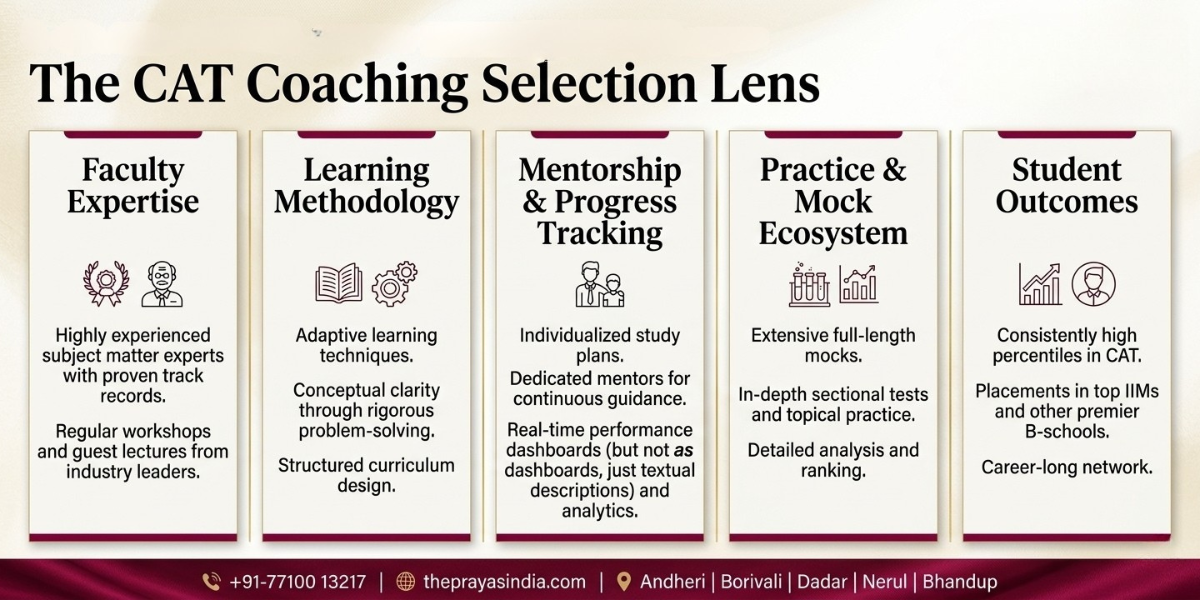
Once you have shortlisted a few coaching institutes, the next challenge is knowing how to compare them fairly. This is where many students make an avoidable mistake. Instead of evaluating the academic experience, they begin comparing surface-level factors such as fees, classroom interiors, discounts, or promotional offers. While these aspects may influence the admission decision, they rarely determine how successful your preparation will be.
A coaching institute should be viewed as a long-term academic partner rather than a short-term service provider. Over the next several months, it will influence the way you understand concepts, approach mock tests, manage setbacks, and build confidence. Therefore, the evaluation process should go much deeper than what appears in advertisements or brochures.
The best coaching institutes are not necessarily those with the loudest marketing campaigns. They are the ones that consistently create an environment where students can improve, ask questions without hesitation, analyse their mistakes, and develop the confidence required for one of India’s most competitive management entrance examinations.
A Good Faculty Does More Than Teach Concepts
Most students ask a simple question before taking admission:
“How experienced are the faculty members?”
While experience is certainly important, it is only one part of the equation.
A teacher may possess years of subject knowledge but still struggle to explain complex concepts in a way that students can easily understand. Similarly, another faculty member with comparatively fewer years of teaching may have an exceptional ability to simplify difficult topics and make learning engaging.
The real question should therefore be:
Can the faculty help students develop the thinking process required for CAT?
The CAT examination is not based on memorisation. Whether it is Quantitative Aptitude, Logical Reasoning, Data Interpretation, or Verbal Ability, success depends on understanding patterns, analysing information, and making logical decisions under time pressure.
Good faculty members focus on developing these abilities instead of merely completing the syllabus.
Learning Should Continue Outside the Classroom
A classroom session introduces concepts, but genuine preparation happens when students begin solving questions independently. This is why the overall learning ecosystem of a coaching institute matters just as much as classroom teaching.
A structured preparation environment encourages students to revise regularly, practise consistently, and analyse their mistakes. Instead of leaving learners to figure everything out on their own, it provides a clear academic direction throughout the preparation journey.
Before taking admission, try to understand how the institute supports students after classes. Does the learning process end when the lecture finishes, or does it continue through structured assignments, revision plans, and performance reviews?
An institute that supports continuous learning usually creates more confident and consistent aspirants.
Batch Size Influences the Learning Experience
Students often ignore batch size because it appears to be an administrative detail. In reality, it directly affects the quality of classroom interaction.
In extremely large batches, individual participation naturally becomes limited. Students may hesitate to ask questions, faculty members have less opportunity to observe individual progress, and classroom discussions often become one-sided.
Smaller or well-managed batches generally encourage better interaction between students and teachers. Aspirants feel more comfortable discussing doubts, participating in problem-solving sessions, and receiving personalised academic attention whenever required.
This does not mean that a large batch automatically provides poor learning. However, students should understand how the institute maintains interaction regardless of class strength.
The Right Peer Group Is an Invisible Advantage
One aspect of coaching is rarely discussed during admissions, yet it has a powerful influence on preparation—the peer group.
Preparing alongside motivated aspirants naturally improves discipline. Healthy academic discussions expose students to different problem-solving approaches, while regular interaction creates a sense of accountability that is difficult to maintain during self-study alone.
A positive learning environment is not built only by faculty members. It is equally shaped by the students who study together every day.
When evaluating an institute, observe the classroom culture. Are students engaged in discussions? Do they actively participate during lectures? Does the environment encourage curiosity and collaborative learning?
Often, the quality of your peer group quietly influences your preparation more than you realise.
Mock Tests Should Be Treated as Learning Sessions
Every coaching institute offers mock tests, but not every institute uses them effectively.
Many aspirants become obsessed with mock scores. They attempt one test after another, hoping that higher scores will automatically appear with time. Unfortunately, improvement rarely works that way.
A mock test is valuable only when it is followed by careful analysis.
Students should review questions they answered incorrectly, identify concepts that need revision, and understand why certain mistakes occurred repeatedly. Without analysis, mock tests become little more than scorecards.
An effective coaching ecosystem teaches students how to learn from every test rather than simply celebrating good scores or worrying about poor ones.
Mentorship Matters When Motivation Declines
Most students begin their CAT preparation with tremendous enthusiasm. The challenge is maintaining that enthusiasm for several months.
There will be weeks when mock scores refuse to improve. Certain topics will appear more difficult than expected. Some students may even begin questioning whether they are capable of achieving their target percentile.
This is where mentorship becomes valuable.
Mentorship is not about providing daily motivation. It is about offering practical academic guidance when students lose direction. Good mentors help aspirants identify weak areas, adjust preparation strategies, and remain focused on long-term progress instead of temporary setbacks.
The right guidance at the right time often prevents students from making unnecessary changes to their preparation plan.
Looking Beyond the Course Fee
One of the most common admission mistakes is selecting an institute based solely on its fee structure.
A lower fee may appear attractive initially, but it should never become the only deciding factor.
Instead, ask yourself a different question:
“What value will I receive throughout my preparation journey?”
Consider factors such as academic support, quality of teaching, structured learning, mentorship, and performance evaluation. These elements influence your preparation every week, while the admission fee is paid only once.
The cheapest option is not always the most economical if it fails to provide the academic support required to achieve your goal.
The Importance of Consistency
The CAT examination rewards consistency far more than occasional brilliance.
A coaching institute should therefore encourage disciplined preparation rather than short bursts of intensive study. Regular classroom learning, structured practice, revision schedules, and continuous performance tracking help students build sustainable study habits that continue until the examination.
At The Prayas India, this philosophy forms the foundation of CAT preparation. Students benefit from experienced faculty, a structured academic framework, comprehensive study material, regular mock tests, personalised doubt-solving sessions, and continuous mentorship designed to support steady improvement. Rather than overwhelming aspirants with unnecessary resources, the emphasis remains on helping every student prepare with clarity, consistency, and confidence.
Questions to Ask Before Taking Admission
Before finalising your decision, make sure you ask these important questions:
- How is the academic schedule planned?
- How frequently are mock tests conducted and reviewed?
- How are students guided after poor mock performances?
- Is there a structured revision plan?
- How is individual progress monitored?
- What kind of mentorship is available throughout the preparation period?
- Does the institute encourage conceptual understanding or only shortcut techniques?
The answers to these questions often reveal much more than brochures or advertisements ever can.
Inside the Classroom
The Questions That Separate a Good Choice from an Expensive Mistake
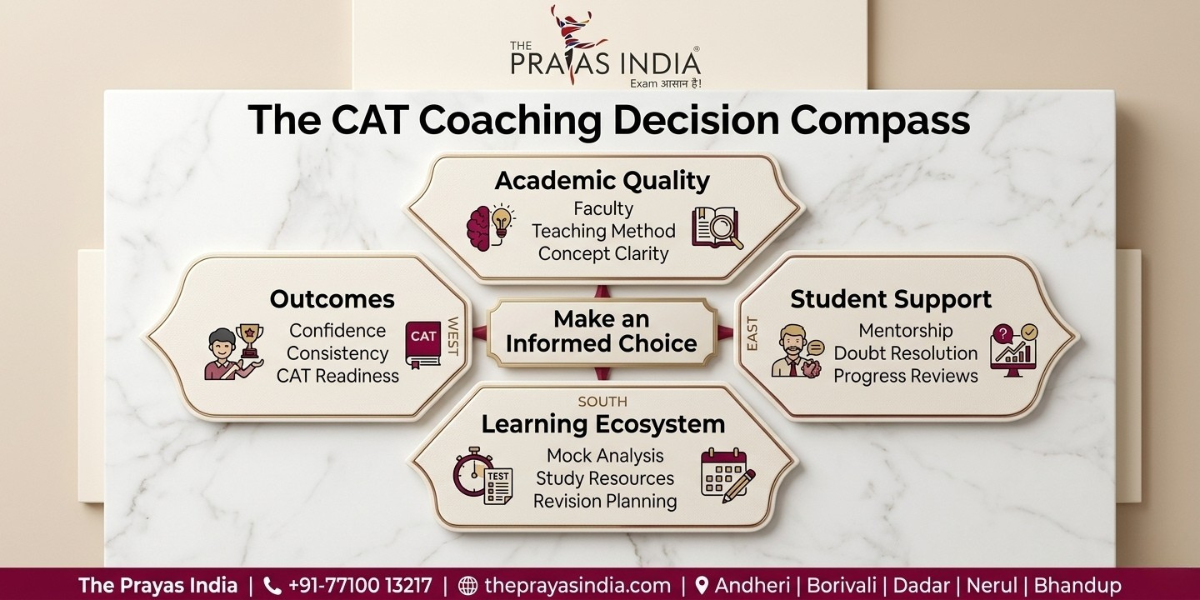
By the time students shortlist two or three coaching institutes, the decision often feels more difficult than it did at the beginning. Every institute promises quality teaching, structured preparation, experienced faculty, and excellent results. On paper, they all appear remarkably similar. Yet once classes begin, students quickly discover that the actual learning experience can be very different from what they expected.
This is why the final stage of your evaluation should not be based on brochures or websites. It should be based on observation. Before paying the admission fee, spend time understanding how the institute functions on an ordinary teaching day. Marketing material shows what an institute wants you to see. The classroom shows what students experience every day.
A thoughtful visit can answer questions that no advertisement ever will.
A Demo Class Is About More Than Teaching
Many students attend a demo lecture with only one objective—to judge whether the faculty explains concepts well. While teaching quality is undoubtedly important, a demo class can reveal much more if you know what to observe.
Pay attention to the way the session is conducted. Does the faculty encourage students to think independently, or are they simply solving questions one after another? Are multiple approaches discussed where applicable? Do students actively participate, or does the lecture remain a one-way conversation throughout?
The overall classroom atmosphere often reflects the institute’s teaching philosophy. A classroom where students feel comfortable asking questions usually creates stronger conceptual understanding than one where interaction is limited.
Instead of leaving the demo class with the thought, “The faculty explained well,” try leaving with a more meaningful conclusion:
“I can imagine learning consistently in this environment for the next several months.”
That is a much better indicator of compatibility.
Observe the Learning Culture, Not Just the Infrastructure
Modern classrooms, digital boards, comfortable seating, and attractive interiors certainly improve the learning experience. However, infrastructure should support education—not become its biggest selling point.
A beautifully designed classroom cannot compensate for an unstructured academic process.
As you walk through the institute, observe how students interact with faculty members. Notice whether discussions continue even after lectures end. See whether notice boards display academic schedules, mock test calendars, or student achievements instead of only promotional posters.
These small observations reveal whether the institute genuinely prioritises learning or primarily focuses on marketing.
A strong academic culture is usually visible in everyday activities rather than special presentations prepared for prospective students.
Ask Questions That Matter
During counselling sessions, students often ask predictable questions.
“What are the fees?”
“When does the batch start?”
“How long is the course?”
While these questions are necessary, they should not be the only ones.
A better admission decision comes from asking questions that help you understand the academic process.
For example:
- How is the yearly study plan structured?
- What happens if a student struggles with a particular topic?
- How are mock tests analysed?
- How frequently is individual progress reviewed?
- How does the institute help students remain consistent during long preparation cycles?
- Is there guidance for balancing college or work alongside CAT preparation?
The quality of the answers often tells you more than the answers themselves. Institutes that confidently explain their academic process usually have a well-defined system in place.
Don’t Ignore the Learning Journey After Admission
Many students evaluate coaching only from the perspective of admission day.
A more useful approach is to imagine your experience six months later.
Ask yourself:
Will I still receive academic support when the syllabus becomes difficult?
Will someone help me identify weak areas if my percentile stops improving?
Will there be a structured revision plan before the examination?
Preparation is not a single event.
It is a long journey consisting of classroom learning, self-study, mock tests, revision, performance reviews, and continuous improvement.
The institute should support students at every stage—not only during the admission process.
Technology Should Support Learning, Not Replace It
Most coaching institutes today offer recorded lectures, online portals, mobile applications, digital assignments, and online test platforms. These resources are valuable because they provide flexibility and allow students to revise concepts whenever required.
However, technology should never become a substitute for academic guidance.
A portal filled with hundreds of recorded lectures may appear impressive, but without a structured learning plan, students often struggle to decide what to study and when.
The real value of technology lies in making preparation more organised.
Students should look for an ecosystem where classroom teaching, online resources, assignments, and revision plans work together instead of functioning as separate components.
Success Depends on the System, Not Individual Classes
Some students judge an institute based on one excellent lecture.
Others become disappointed after one average session.
Neither approach provides a complete picture.
CAT preparation extends over several months. What matters is not whether every class feels extraordinary but whether the overall academic system consistently moves students forward.
A well-designed programme ensures that concepts are introduced logically, practice gradually increases in difficulty, mock tests become more frequent at the right time, and revision is integrated throughout the preparation cycle.
Consistency always produces better results than occasional brilliance.
Looking at the Return on Your Investment
Joining a coaching institute should be viewed as an investment in your future rather than simply an educational expense.
When evaluating the return on that investment, don’t limit yourself to comparing course fees.
Instead, consider questions such as:
- Will this institute help me improve my problem-solving ability?
- Will I become more disciplined during preparation?
- Will I develop better examination strategies?
- Will I receive continuous academic guidance?
- Will this learning environment increase my chances of reaching my target percentile?
The value of coaching is measured not by how much you pay, but by how much it improves your preparation.
The Difference Structured Guidance Makes
Self-study has helped many aspirants succeed, but even disciplined students occasionally require an external perspective. During a long preparation journey, it becomes difficult to identify recurring mistakes or recognise when a particular strategy is no longer effective.
This is where structured academic guidance becomes valuable.
At The Prayas India, CAT preparation is designed around continuous improvement rather than isolated classroom sessions. Students learn through experienced faculty, a carefully planned curriculum, comprehensive study material, regular mock tests, personalised doubt-solving support, and ongoing mentorship that helps them monitor progress throughout the preparation cycle. The emphasis is on building analytical thinking, consistency, and confidence so that every stage of preparation contributes towards the final goal of securing admission into a top management institute.
Making the Final Choice
A Coaching Institute Should Prepare You for More Than Just the CAT Examination.
After spending weeks researching coaching institutes, attending counselling sessions, comparing course structures, and speaking to current students, there comes a point where every aspirant has to make a decision. While it is natural to look for certainty, the reality is that no institute can guarantee a particular percentile or an admission into a top B-school. CAT is ultimately an aptitude-based examination, and success depends on consistent effort over several months.
What a good coaching institute can do, however, is create the right environment for that effort. It can help you follow a structured learning path, reduce unnecessary confusion, provide timely academic guidance, and ensure that your preparation remains consistent even when motivation fluctuates. The final decision should therefore be based on one simple question:
“Will this institute help me become a better learner over the next year?”
If the answer is yes, you are already moving in the right direction.
Red Flags You Should Never Ignore
During the admission process, students often focus on the positives and overlook warning signs that become obvious only after classes begin. Identifying these issues beforehand can save valuable preparation time and prevent unnecessary frustration later.
Be cautious if an institute:
- Focuses more on discounts than academics.
- Makes unrealistic promises such as guaranteed 99+ percentiles.
- Avoids explaining its teaching methodology.
- Cannot clearly describe its mock test or revision process.
- Rushes students into taking admission without understanding their preparation level.
- Provides vague answers when asked about mentorship or performance tracking.
A coaching institute should welcome informed questions. If genuine queries are avoided during counselling, students should think carefully before making a commitment.
The Value of Visiting Before Enrolling
Online research is helpful, but it should never replace a personal visit. Spending an hour at the institute often provides insights that websites and advertisements cannot.
Observe the classroom environment. Notice how students interact with faculty members. Look at academic schedules displayed on notice boards. Pay attention to whether the atmosphere feels focused and professional or whether the visit revolves only around admission discussions.
If possible, interact with current students. Ask them about their daily learning experience, mock test reviews, faculty accessibility, and overall academic support. Their answers often provide the most realistic picture of what you can expect after joining.
A personal visit transforms assumptions into observations, making the admission decision far more informed.
Think Beyond the CAT Examination
Many aspirants choose coaching with a single objective—to score well in CAT. While that goal is important, the preparation journey also develops skills that remain valuable long after the examination.
Critical thinking, logical reasoning, quantitative problem-solving, communication, time management, and decision-making are abilities that continue to help students during group discussions, personal interviews, MBA programmes, and corporate careers.
A good coaching institute recognises this broader objective. It doesn’t simply prepare students to answer questions. It helps them develop the analytical mindset expected in management education and professional life.
That is why choosing an institute should never be viewed as purchasing a course. It should be viewed as investing in long-term personal and professional development.
Frequently Asked Questions
Self-study works well for many students, especially those who can maintain discipline and evaluate their own performance. However, coaching becomes valuable when aspirants require structured planning, expert guidance, performance analysis, and a competitive learning environment that keeps preparation organised over several months.
Not necessarily. Course fees alone do not indicate academic quality. Students should evaluate the learning process, mentorship, teaching methodology, mock analysis, and long-term academic support before comparing prices.
The earlier students begin structured preparation, the more time they have to strengthen concepts, practise consistently, and improve through repeated mock analysis. However, even later starters can perform well if they follow a disciplined and well-planned strategy.
There is no fixed number that guarantees success. Quality matters more than quantity. Every mock test should be followed by detailed analysis so that mistakes become opportunities for improvement rather than repeated errors.
No institute can honestly guarantee admission because CAT performance depends on multiple factors, including preparation, examination temperament, and individual effort. A good coaching institute provides guidance and structure, but the final outcome always depends on how effectively the student uses those resources.Should I join coaching if I am already preparing through self-study?
Is an expensive coaching institute always better?
When is the best time to join CAT coaching?
How many mock tests should I attempt?
Can coaching guarantee admission into an IIM?
Your Final Admission Checklist
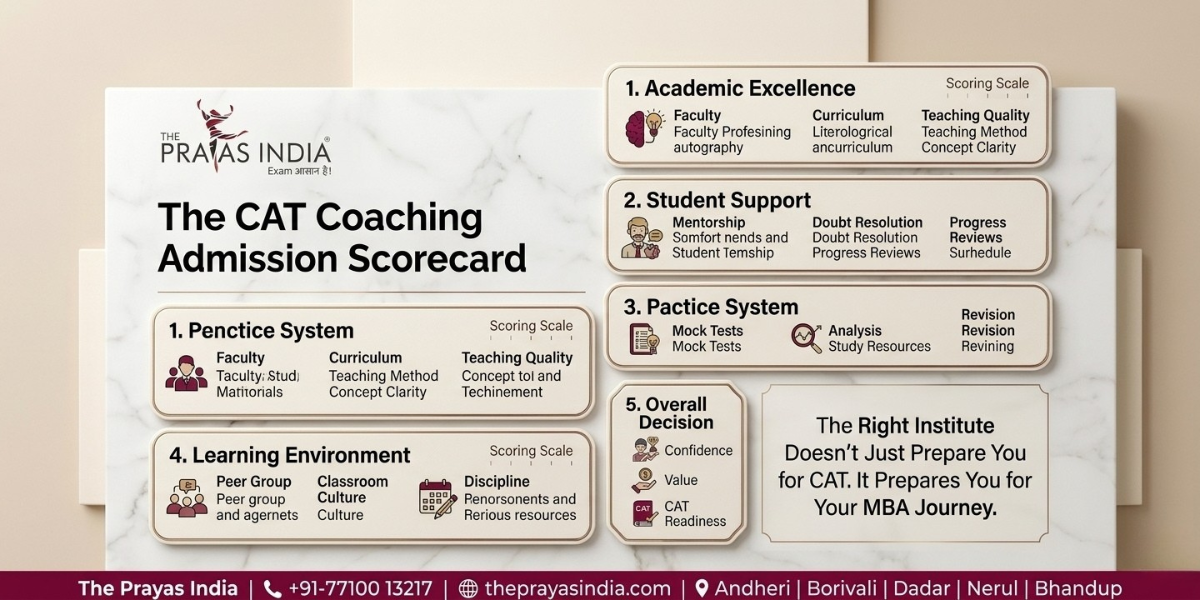
Before completing your admission, ensure that you can confidently answer “Yes” to most of these questions.
Academic Quality
✓ Does the institute follow a structured study plan?
✓ Are faculty members able to explain concepts clearly?
✓ Is conceptual understanding given priority over shortcuts?
Student Support
✓ Is mentorship available throughout the preparation journey?
✓ Are doubts addressed regularly?
✓ Is individual performance reviewed periodically?
Practice Framework
✓ Are mock tests conducted consistently?
✓ Is detailed mock analysis part of the programme?
✓ Is there a planned revision strategy?
Learning Environment
✓ Does the classroom encourage interaction?
✓ Is the peer group academically motivated?
✓ Does the institute maintain a professional learning culture?
Long-Term Value
✓ Will this institute help me become a stronger learner?
✓ Does the preparation extend beyond syllabus completion?
✓ Can I confidently imagine studying here for the next several months?
If your answers are mostly positive, you are likely making an informed decision rather than an emotional one.
Why Many CAT Aspirants Choose The Prayas India
Every student’s preparation journey is different, but the need for a structured academic process remains the same.
At The Prayas India, CAT preparation is built around helping students learn systematically instead of preparing randomly. The programme combines experienced faculty, comprehensive study material, regular mock tests, personalised doubt-solving support, and continuous mentorship within a structured learning framework. Rather than overwhelming students with excessive resources, the focus remains on improving conceptual understanding, analytical thinking, consistency, and examination readiness throughout the preparation cycle.
The objective is simple: create an environment where disciplined effort receives the right guidance at every stage of preparation.
Final Thoughts
Choosing a CAT coaching institute is not a decision that should be rushed. The institute you select will influence your daily routine, your confidence, your study habits, and the way you approach one of the most competitive management entrance examinations in the country.
Instead of being influenced only by advertisements or fee structures, evaluate the academic process, mentorship, learning culture, and long-term support that each institute offers. The right coaching institute will not promise shortcuts. It will help you build the knowledge, discipline, and confidence required to perform at your best.
Your CAT journey begins much earlier than the examination day. It begins with the decision you make today.
Choose carefully. Learn consistently. Prepare with confidence.