Civil Services Coaching in Andheri for Beginners: A Complete Guide to Starting UPSC Preparation
Preparing for the Civil Services Examination is a significant goal for many students who wish to build a career in public administration and contribute to the country. However, if you are new to UPSC preparation, knowing where to begin can feel confusing. The vast syllabus, multiple examination stages, current affairs and long preparation cycle require a clear and organised approach.
For students and working professionals in Mumbai, finding suitable guidance close to home can make it easier to maintain a consistent study routine. If you are exploring Civil Services Coaching in Andheri, this beginner-friendly guide will help you understand the UPSC examination, its syllabus, preparation strategy and important factors to consider before choosing a coaching institute.
Whether you are a college student, a recent graduate or a working professional, the first step is to understand the examination and create a realistic preparation plan.
What Is the Civil Services Examination?
The Civil Services Examination (CSE) is conducted by the Union Public Service Commission (UPSC) to recruit candidates for various services under the Government of India.
Some of the services associated with the examination include:
- Indian Administrative Service (IAS)
- Indian Foreign Service (IFS)
- Indian Police Service (IPS)
- Indian Revenue Service (IRS)
- Other central services notified through the examination
The examination assesses a candidate’s knowledge, analytical ability, decision-making skills, awareness of national and international developments, and suitability for public service.
UPSC preparation is not limited to memorising facts. It requires understanding concepts, connecting information, developing a balanced perspective and expressing ideas clearly.
Understand the Three Stages of the UPSC Civil Services Examination
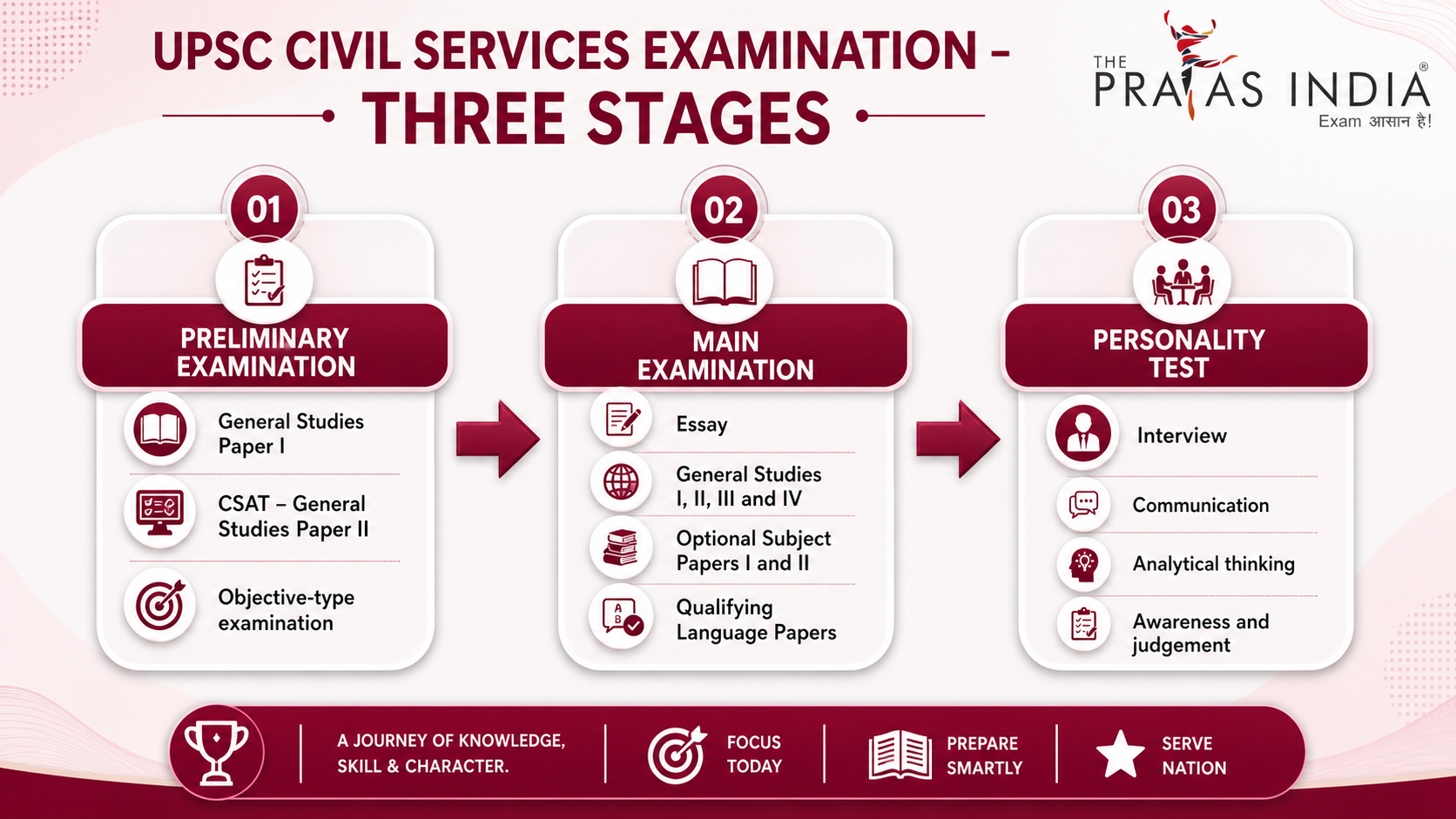
Before starting preparation, beginners should understand the overall examination structure. The Civil Services Examination is conducted in three stages.
A. Preliminary Examination
The Preliminary Examination is the first stage and consists of two objective-type papers:
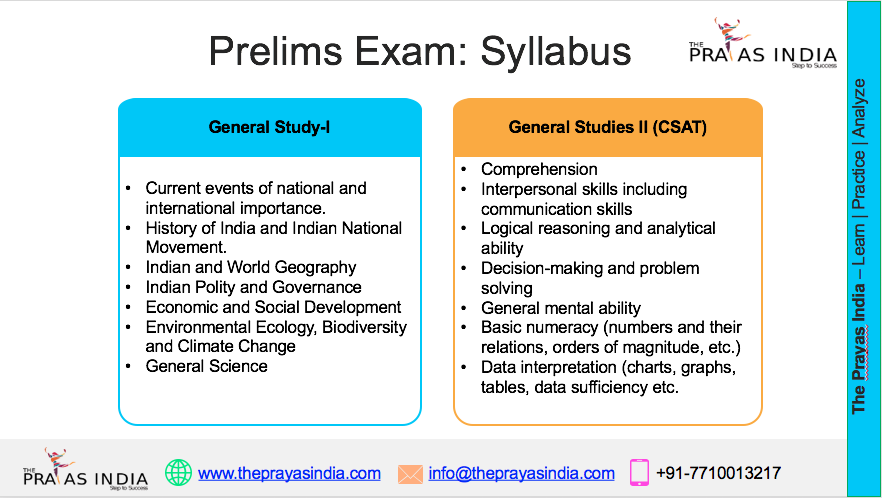
- General Studies Paper I: Covers subjects such as history, geography, polity, economy, environment, science and technology, and current events.
- General Studies Paper II (CSAT): Tests comprehension, logical reasoning, analytical ability, decision-making and basic numeracy.
CSAT is qualifying in nature. Candidates must meet the minimum qualifying requirement specified by UPSC. General Studies Paper I is used for determining qualification for the Mains stage.
B. Main Examination
Candidates who qualify for the Preliminary Examination become eligible to appear for the Main Examination.
The written Mains examination includes nine descriptive papers:
- Essay
- Four General Studies papers
- Two Optional Subject papers
- One Indian Language paper
- One English paper
The Indian Language and English papers are qualifying in nature. The other papers are considered for the written merit total, subject to the applicable examination rules.
The Mains examination tests conceptual understanding, analytical thinking, structured writing and the ability to present balanced answers.
C. Personality Test or Interview
Candidates who qualify in the written Main Examination are called for the Personality Test.
The interview assesses qualities such as clarity of thought, awareness, communication, judgement, intellectual curiosity and suitability for a career in public service.
It is not simply a test of factual knowledge. Candidates are expected to express their views thoughtfully and respond to questions with maturity.
Understand the UPSC Syllabus Before You Start
The UPSC syllabus is broad, so studying without a clear understanding of its scope can lead to wasted effort. Beginners should first read the official syllabus and become familiar with the major subjects.
Important areas for General Studies
- History and Culture: Ancient, medieval and modern Indian history, the freedom struggle, and Indian art and culture.
- Geography: Physical geography, Indian geography, world geography, resources, climate and geographical phenomena.
- Indian Polity and Governance: Constitution, political system, Parliament, judiciary, governance, public policy and constitutional bodies.
- Economy: Basic economic concepts, growth and development, inflation, budgeting, banking, employment and government economic initiatives.
- Environment and Ecology: Biodiversity, ecosystems, conservation, climate change and environmental issues.
- Science and Technology: Developments in science, technology, space, biotechnology, information technology and their applications.
- Current Affairs: Important national and international events, government policies, reports, developments and issues relevant to the syllabus.
What about the Optional Subject?
The Optional Subject is an important part of the Mains examination. Candidates choose one optional subject from the list notified by UPSC.
Your choice should be based on genuine interest, familiarity with the subject, availability of reliable study material and your ability to understand and write about it.
Do not select an optional subject only because someone else has recommended it. Review the syllabus and previous-year questions before making a decision.
How Should Beginners Start UPSC Preparation?
Starting UPSC preparation can seem difficult because there are many subjects and resources. A step-by-step approach makes the process more manageable.
Step 1: Read the Official Syllabus
Download and read the latest UPSC Civil Services Examination notification and syllabus. Keep a copy accessible while studying.
Use the syllabus as a checklist to understand which topics are relevant to the examination.
Step 2: Understand the Previous-Year Question Papers
Previous-year question papers help you understand the nature of the examination and the way questions are framed.
Begin by reviewing a few papers from different subjects. Notice recurring themes, the depth of questions and the connection between static subjects and current affairs.
Step 3: Build Your Foundation
Start with basic textbooks and reliable learning resources. Focus on understanding concepts rather than collecting too many books.
For example, build a foundation in Indian polity, history, geography and economics before moving to more advanced sources.
Step 4: Develop a Newspaper Reading Habit
Current affairs are an important part of UPSC preparation. Read a reliable newspaper regularly and connect important developments with the syllabus.
Avoid trying to memorise every news item. Focus on issues related to governance, the economy, international relations, environment, science and social development.
Step 5: Make Short and Useful Notes
Prepare notes that help you revise. Organise them subject-wise and topic-wise.
Include important facts, concepts, examples, government initiatives and relevant current developments. Keep your notes concise and update them when necessary.
Step 6: Begin Answer Writing Gradually
Answer writing is essential for the Mains examination. Once you have developed a basic understanding of a topic, start practising short descriptive answers.
Work on presenting an introduction, structured body and conclusion. Use relevant examples and maintain clarity.
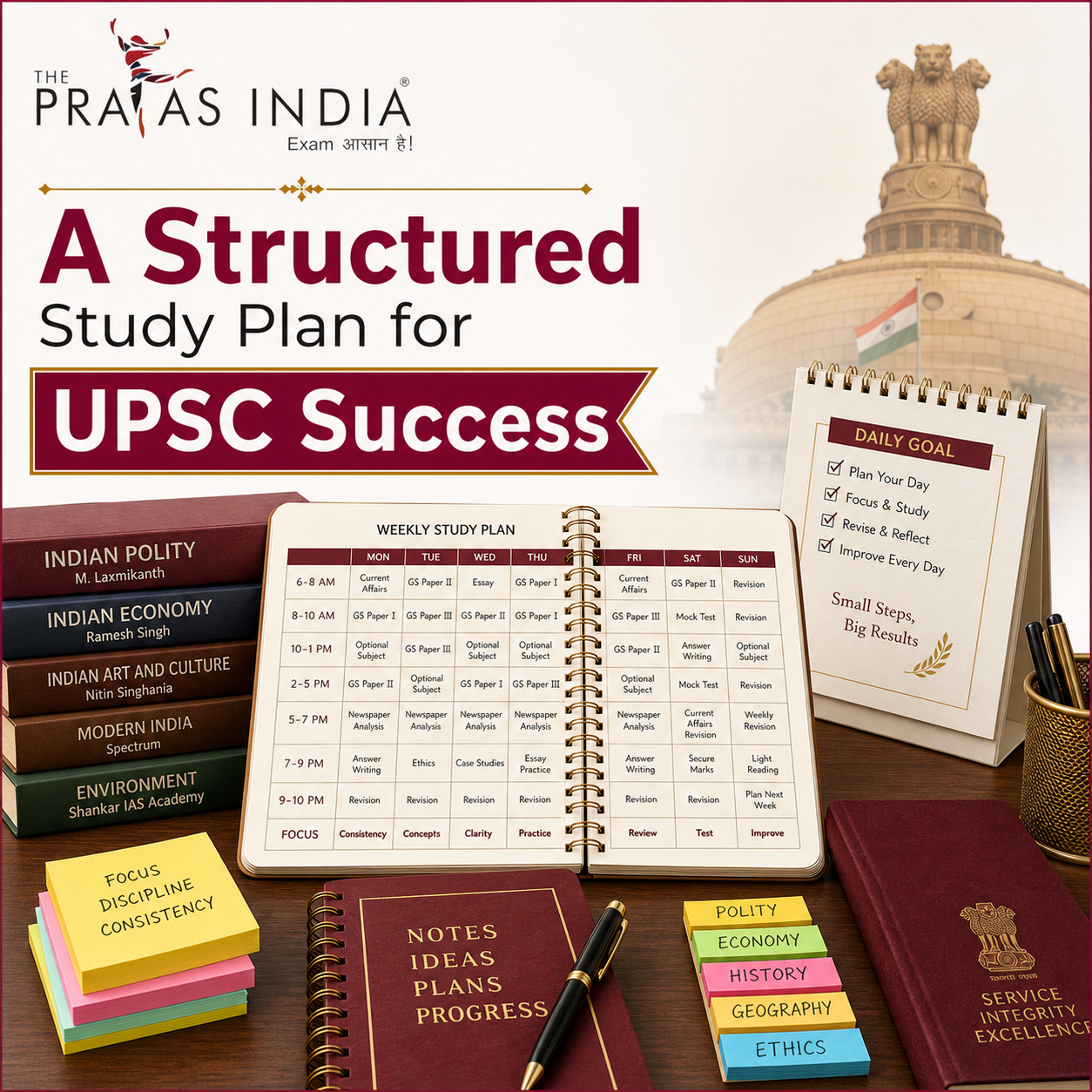
A Practical Daily Study Timetable for UPSC Beginners
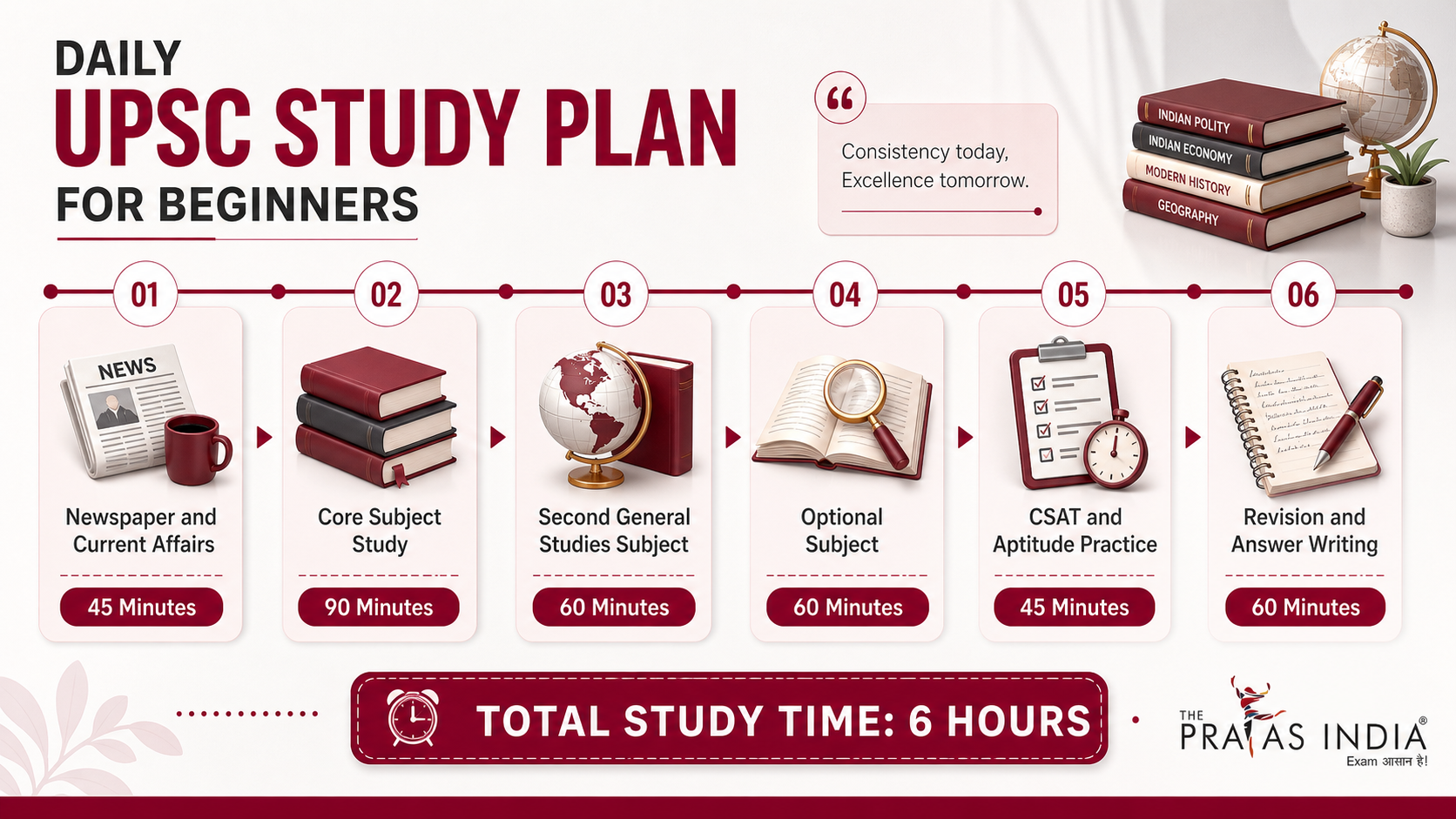
A realistic timetable helps beginners distribute their preparation across different subjects. The schedule below is an example for someone who can devote approximately six hours daily.
| Study Activity | Suggested Time |
|---|---|
| Newspaper and current affairs | 45 minutes |
| Core subject – History/Polity/Geography | 90 minutes |
| Second GS subject | 60 minutes |
| Optional Subject | 60 minutes |
| CSAT or aptitude practice | 45 minutes |
| Revision and answer writing | 60 minutes |
| Total | 6 hours |
You can modify the schedule according to your current level, daily responsibilities and time available before the examination.
Beginners should avoid making an overly ambitious timetable. A consistent six-hour routine that you can follow is generally more useful than a ten-hour schedule that becomes difficult to maintain.
How to Prepare for UPSC Prelims and Mains Together
One common mistake beginners make is treating Prelims and Mains as completely separate examinations.
Although the question formats are different, many subjects overlap. A balanced preparation approach can help you build knowledge for both stages.
For Prelims
- Focus on factual clarity and conceptual understanding.
- Practise objective-type questions regularly.
- Revise important facts, concepts and current affairs.
- Work on elimination techniques.
- Take mock tests and analyse incorrect answers.
For Mains
- Develop a deeper understanding of topics.
- Practise writing structured answers.
- Use relevant examples and current developments.
- Work on analytical thinking and balanced arguments.
- Review previous-year descriptive questions.
Why revision matters
UPSC preparation involves a large amount of information. Revising topics repeatedly helps improve retention and makes it easier to recall concepts during the examination.
Create weekly and monthly revision targets. Keep a record of topics that need additional attention.
Importance of Current Affairs in Civil Services Preparation
Current affairs connect static subjects with real-world developments. They help candidates understand how policies, institutions and social issues affect the country.
For example:
- A major Supreme Court judgement can be connected with constitutional principles and the judiciary.
- A new government scheme can be studied through governance and social justice.
- An environmental development can be linked with ecology and climate change.
- An international agreement can be connected with India’s foreign policy.
Instead of preparing current affairs as isolated facts, try to understand the background, significance, challenges and possible implications of each important issue.
Maintain concise notes and revise them regularly.
Common Mistakes UPSC Beginners Should Avoid
A good preparation strategy also involves knowing what not to do. Beginners should be careful about the following mistakes.
1. Collecting too many books: Multiple resources for the same topic can create confusion. Start with a limited set of reliable sources.
2. Ignoring the syllabus: Every study activity should be connected with the official syllabus.
3. Avoiding revision: Reading a topic once is not enough. Plan regular revision sessions.
4. Delaying answer writing: Start practising descriptive answers after developing a basic understanding of the subject.
5. Ignoring CSAT: CSAT is qualifying, but candidates must still meet the prescribed qualifying marks. Practise it regularly.
6. Studying current affairs without context: Understand why an issue matters and how it connects with the syllabus.
7. Comparing your progress with others: Every candidate has a different academic background and learning speed. Focus on your own preparation plan.
How to Choose the Right Civil Services Coaching in Andheri
Choosing a coaching institute is an important decision for many UPSC aspirants. The right learning environment can provide structure, guidance and a planned approach to preparation.
If you are searching for Civil Services Coaching in Andheri, consider these factors before enrolling.
Experienced Faculty and Conceptual Teaching
Look for faculty who can explain subjects clearly and help beginners develop a strong foundation. Teaching should focus on conceptual understanding rather than only memorising information.
Structured Syllabus Coverage
A planned course structure can help students understand how subjects and topics will be covered. Ask about the teaching schedule and how the institute approaches syllabus completion and revision.
Current Affairs Guidance
Current affairs should be connected with the relevant GS subjects. Find out how the institute helps students understand and organise important national and international developments.
Prelims and Mains Preparation
UPSC preparation involves both objective and descriptive examinations. Check whether the learning approach addresses Prelims, CSAT, Mains preparation and answer-writing practice.
Doubt-Solving and Academic Support
Beginners may need additional explanation while studying unfamiliar subjects. Consider whether there are opportunities to clarify doubts and receive academic guidance.
Location and Study Routine
If you live in Andheri West, Andheri East, Lokhandwala, Oshiwara, Jogeshwari or nearby areas, a conveniently located coaching centre may help you maintain a regular routine.
Learning Environment
Understand the teaching format, batch arrangements, available study support and overall academic environment before making your decision.
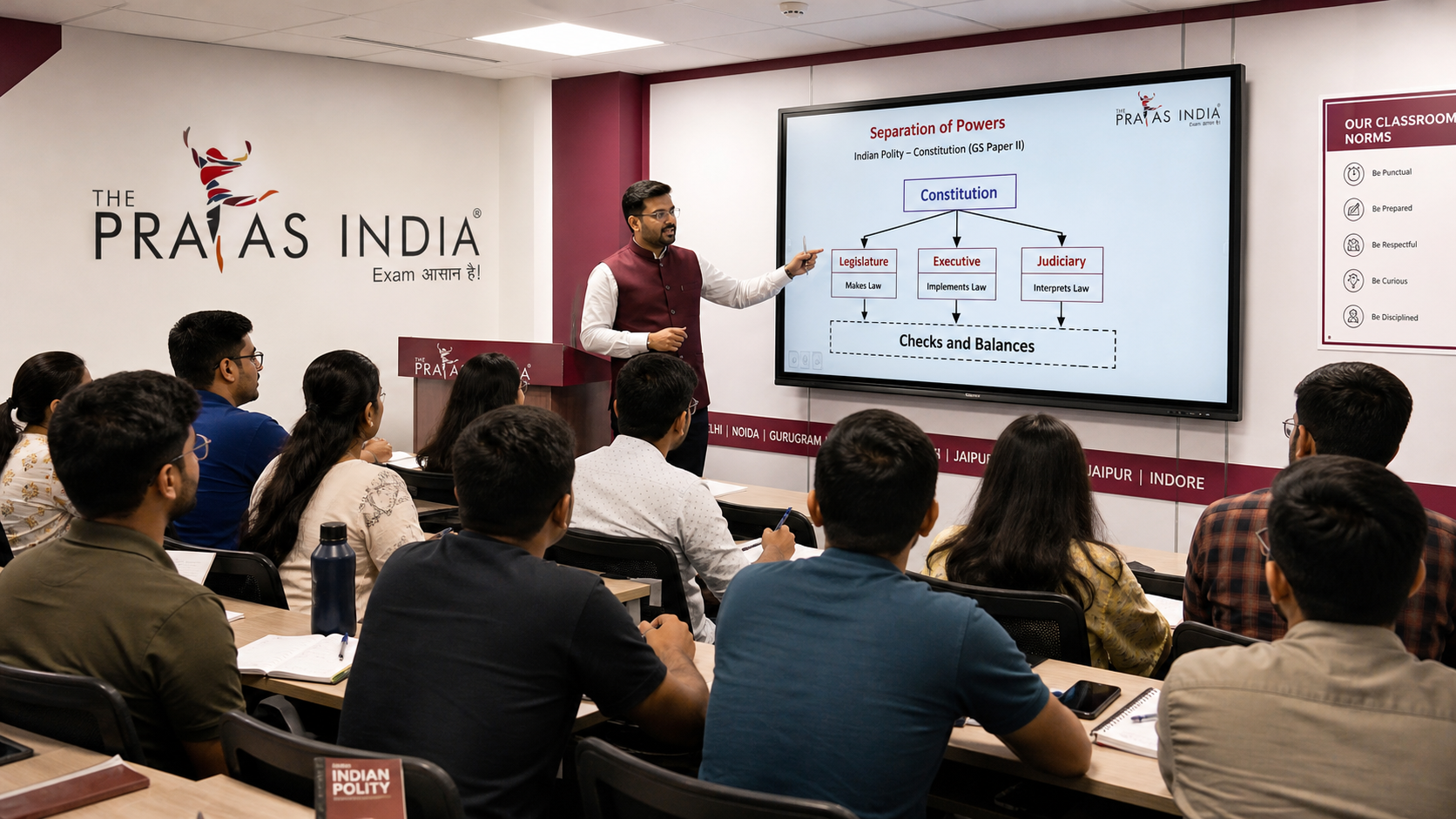
Why Consider Civil Services Coaching in Andheri?
Andheri is a well-connected part of Mumbai and is accessible to students from several nearby residential and commercial areas. For aspirants living in Andheri West, Andheri East, Lokhandwala, Oshiwara and surrounding neighbourhoods, exploring local coaching options can make it easier to plan regular classes alongside self-study.
When comparing UPSC Coaching in Andheri or IAS Coaching in Andheri, focus on the quality of teaching, course structure, subject coverage, doubt-solving support and preparation guidance.
The Prayas India has a branch in Andheri West for students who want to explore coaching and guidance for competitive examinations.
Visit The Prayas India – Andheri
- Address: Office 803, Time Chambers, Swami Vivekanand Road, near Paneri, Andheri West, Mumbai, Maharashtra 400058.
- Contact: 08355951603
You can contact the branch to enquire about Civil Services preparation guidance, available courses and admission-related details.
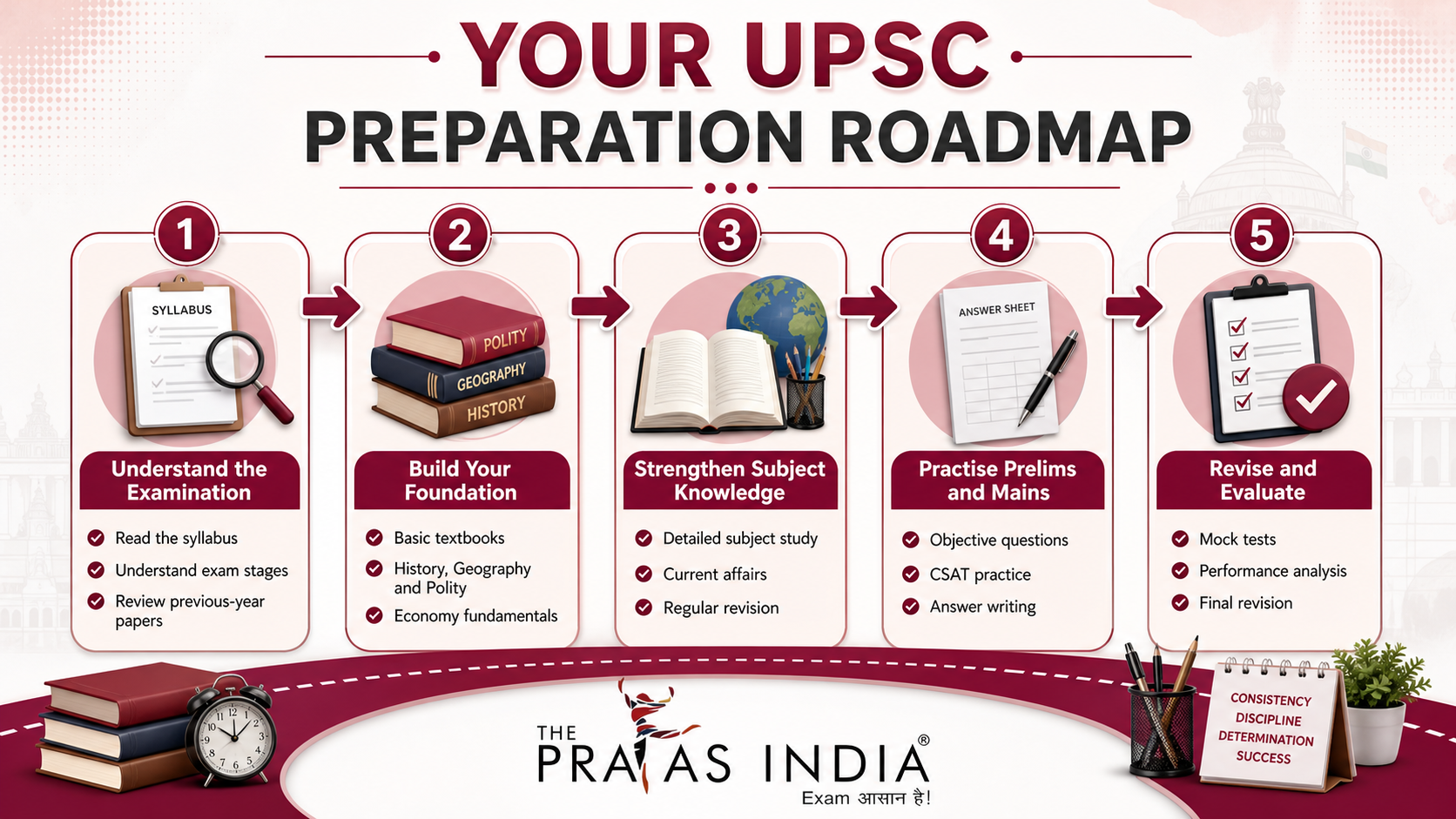
A Beginner’s UPSC Preparation Roadmap
If you are starting from zero, dividing your preparation into stages can make your goals easier to manage.
Stage 1: Understand the Examination
Read the official syllabus, examination notification and previous-year question papers. Become familiar with the Prelims, Mains and Personality Test.
Stage 2: Build Your Foundation
Study basic textbooks and develop an understanding of subjects such as History, Geography, Polity and Economy.
Stage 3: Strengthen Subject Knowledge
Move towards more detailed sources, connect current affairs with static subjects and begin regular revision.
Stage 4: Practise Prelims and Mains
Solve objective questions, practise CSAT and begin writing descriptive answers. Review your performance and work on weaker areas.
Stage 5: Revise and Evaluate
Take practice tests, revise notes and analyse your progress. Use your test performance to adjust your preparation plan.
How The Prayas India Andheri Can Be Your Local Coaching Enquiry Point
For students exploring civil services preparation in Mumbai, knowing where to enquire locally can be a useful first step.
The Prayas India Andheri branch is located in Andheri West. Aspirants can contact the branch to ask about available coaching programmes, batch details and admission-related information.
Before joining any programme, discuss your preparation level, target examination, learning requirements and available study time. This will help you understand whether the course structure is suitable for your goals.
Conclusion
Starting UPSC preparation as a beginner requires patience, consistency and a well-planned approach. Understanding the examination stages, reading the syllabus, building subject fundamentals, following current affairs and practising regularly can help you create a strong preparation foundation.
If you are looking for Civil Services Coaching in Andheri, compare available options carefully and choose a learning environment that supports your preparation needs.
Students from Andheri West and nearby areas can contact The Prayas India Andheri branch to enquire about civil services preparation guidance and admission details.
The Prayas India – Andheri
Office 803, Time Chambers, Swami Vivekanand Road, near Paneri, Andheri West, Mumbai, Maharashtra 400058.
Contact: 08355951603
Begin with the basics, stay consistent with your study plan and keep improving your understanding of the subjects. A disciplined approach can help you move forward in your Civil Services preparation journey.</WritingBlock}
Frequently Asked Questions – Civil Services Coaching in Andheri
1. Can beginners start UPSC preparation without prior experience?
Yes. Beginners can start by understanding the UPSC syllabus and exam pattern, studying basic textbooks, following current affairs and gradually practising Prelims and Mains questions.
2. What are the three stages of the UPSC Civil Services Examination?
The UPSC Civil Services Examination consists of the Preliminary Examination, Main Examination and Personality Test (Interview).
3. How many hours should beginners study for UPSC?
Study hours depend on your preparation level, daily responsibilities and target examination. Beginners should create a realistic timetable that includes concept learning, current affairs, revision and question practice.
4. Is coaching necessary for the Civil Services Examination?
Coaching is not compulsory. However, structured guidance, subject explanations, doubt-solving support and a planned study routine may help some aspirants organise their preparation.
5. Where can I enquire about Civil Services Coaching in Andheri?
You can contact The Prayas India Andheri branch at 08355951603. The branch is located at Office 803, Time Chambers, Swami Vivekanand Road, near Paneri, Andheri West, Mumbai.
6. Can working professionals prepare for UPSC?
Yes. Working professionals can prepare by following a realistic timetable, setting daily study targets, using weekends for longer study sessions and maintaining regular revision.
7. What should beginners study first for UPSC?
Beginners should start with the official syllabus, previous-year question papers and foundational subjects such as History, Geography, Indian Polity and Economy. They should also develop a regular newspaper-reading habit.
Start Your Civil Services Preparation in Andheri!
Planning to begin your UPSC journey? Connect with The Prayas India Andheri to enquire about Civil Services preparation guidance, available courses and admission details. Take your first step towards a structured preparation journey.
Visit The Prayas India – Andheri:
Office 803, Time Chambers, Swami Vivekanand Road, near Paneri, Andheri West, Mumbai, Maharashtra 400058.
Contact: 08355951603