How Many Hours Should a UPSC Aspirant Study Daily? A Practical Guide for Andheri Students
Preparing for the UPSC Civil Services Examination is a long-term commitment. One of the most common questions among beginners is: How many hours should I study every day to clear UPSC?
Some aspirants believe that studying for 12–14 hours daily is necessary, while others struggle to maintain even 5–6 focused hours alongside college, work, or other responsibilities. The truth is that there is no fixed number of study hours that guarantees success. What matters more is the quality of your preparation, consistency, revision, and regular practice.
For students exploring IAS coaching in Andheri, understanding how to plan daily study hours can make UPSC preparation more structured and manageable. Whether you are starting from zero or preparing alongside your graduation, a realistic timetable can help you make steady progress without unnecessary pressure.
How Many Hours Should You Study for UPSC Daily?
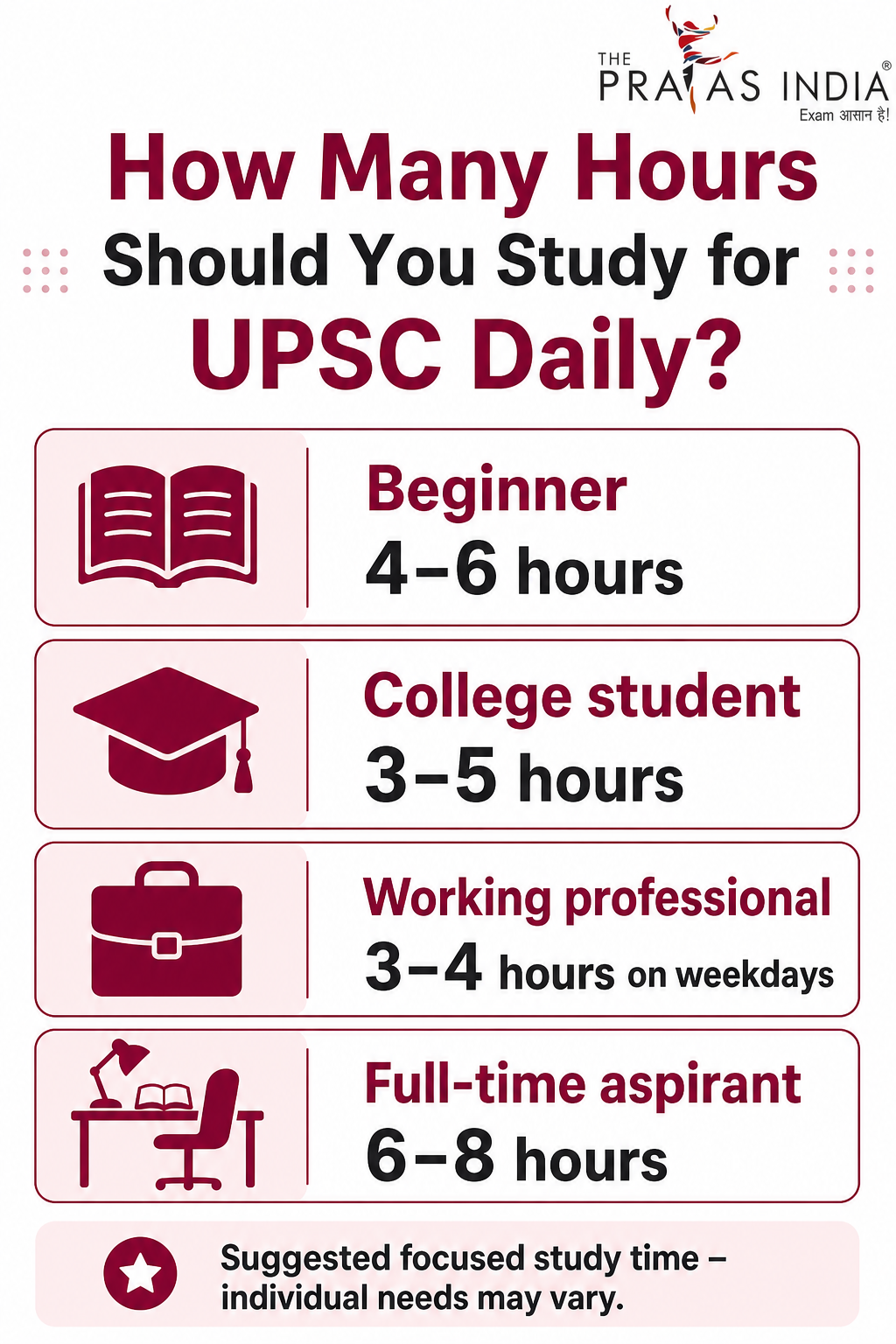
The ideal study duration depends on your preparation stage, available time, and familiarity with the UPSC syllabus.
Here is a practical starting point:
| Type of Aspirant | Suggested Focused Study Time |
|---|---|
| Beginner | 4–6 hours daily |
| College student | 3–5 hours daily, adjusted around classes |
| Working professional | 3–4 hours on weekdays; longer sessions on weekends |
| Full-time aspirant | 6–8 hours daily |
| Prelims or Mains-focused aspirant | 7–9 hours, depending on revision and practice needs |
These are broad guidelines, not compulsory targets. A student who studies for six focused hours with proper revision may make better progress than someone who sits with books for twelve hours but frequently loses concentration.
The goal should be productive study, not simply completing a high number of hours.
Why Studying for More Hours Does Not Always Mean Better Preparation
UPSC preparation involves understanding concepts, remembering information, developing analytical skills, and applying knowledge in examinations. Simply increasing study time does not automatically improve these abilities.
Consider these common problems:
- Passive reading: Reading the same chapter repeatedly without testing your understanding.
- No revision schedule: Moving to new topics without revisiting previously studied material.
- Too many resources: Collecting multiple books and notes for the same subject.
- Ignoring answer writing: Studying theory without practising how to structure answers.
- Burnout: Following an unrealistic timetable that becomes difficult to maintain.
Instead of measuring preparation only in hours, track what you complete. For example, finishing a Polity topic, revising it, solving relevant MCQs, and reviewing mistakes is a more meaningful daily target.
A Realistic Daily UPSC Study Timetable
A timetable should cover the major parts of preparation without making every hour feel rushed. Beginners can start with a manageable schedule and gradually increase their study time.
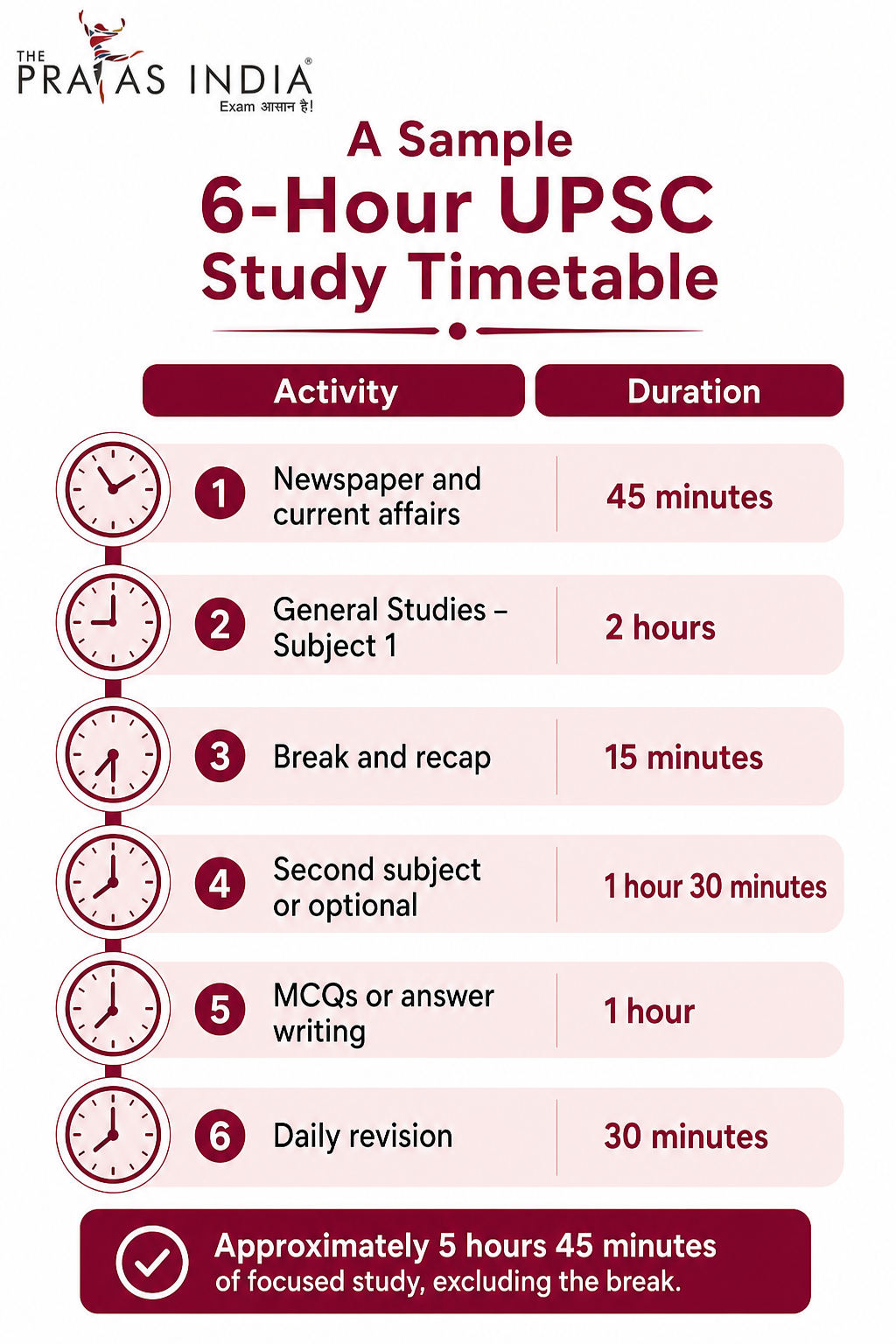
Here is an example of a six-hour focused study day:
| Study Session | Activity | Time |
|---|---|---|
| Session 1 | Newspaper reading and current affairs | 45 minutes |
| Session 2 | General Studies subject – concept learning | 2 hours |
| Session 3 | Short break and recap | 15 minutes |
| Session 4 | Second subject or optional subject | 1 hour 30 minutes |
| Session 5 | MCQs or answer-writing practice | 1 hour |
| Session 6 | Revision of the day’s topics | 30 minutes |
| Total | Structured Daily Routine | 6 hours |
Total focused study time: approximately 5 hours 45 minutes, excluding the short break.
You can adjust the timings based on your college, job, commute, or personal routine. The important thing is to give every major activity a place in your schedule.
How Should Beginners Divide Their Study Hours?
If you are new to UPSC preparation, avoid trying to study every subject in a single day. Start with a few clear priorities.
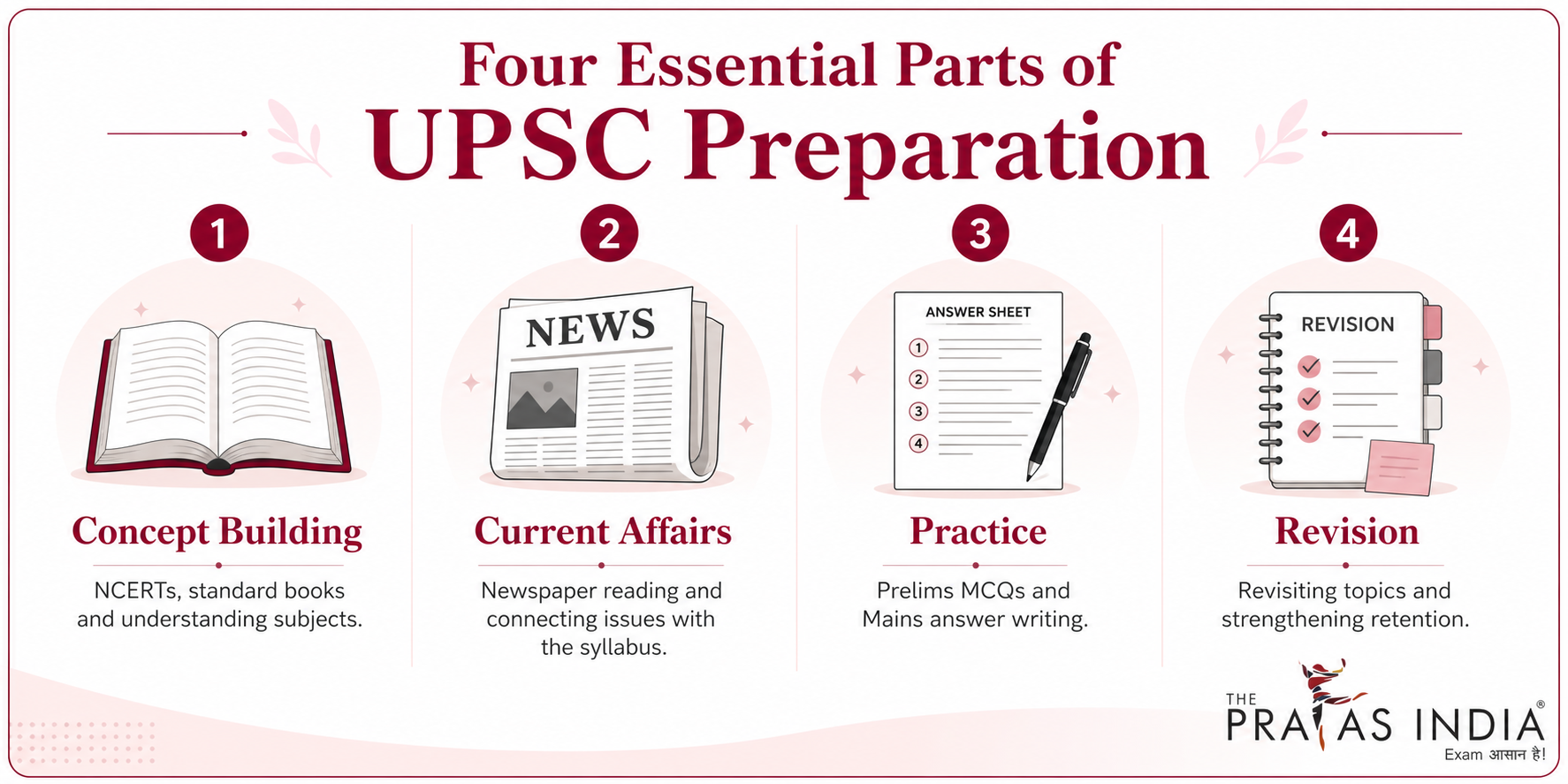
A. Concept building
Spend a substantial part of your study time understanding NCERTs and standard reference books. Focus on the basics of History, Geography, Polity, Economy, and Environment before moving to advanced material.
B. Current affairs
Read a reliable newspaper and connect important developments with the UPSC syllabus. Avoid collecting every news item. Focus on issues that have relevance to governance, the economy, society, international relations, and the environment.
C. Practice
Include MCQs for Prelims and answer writing for Mains as your preparation progresses. Practice helps you identify gaps in understanding and improve how you apply what you have studied.
D. Revision
Keep some time aside every day to revisit earlier topics. Weekly revision is also useful because it helps prevent older subjects from being forgotten while you move ahead with the syllabus.
Students comparing the Best UPSC Coaching in Andheri should also consider whether the learning approach helps them balance classroom learning, self-study, practice, and revision.
How Many Hours Should You Study at Different Stages of UPSC Preparation?
Your study schedule can change as you move closer to the examination.
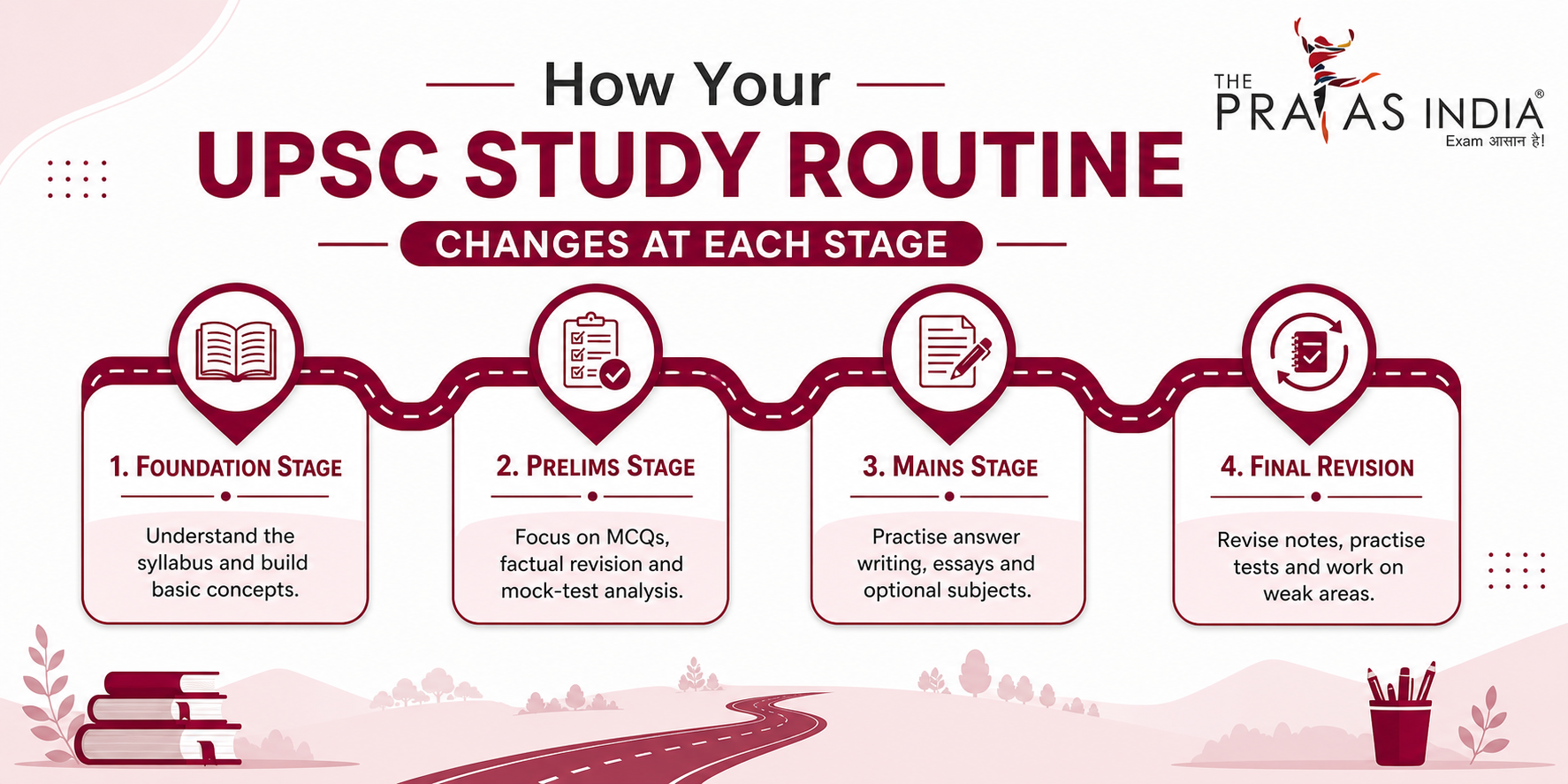
During the foundation stage
If you are a beginner, focus on understanding the syllabus and building basic subject knowledge. Around 4–6 focused hours can be a reasonable starting point, depending on your other commitments.
During the Prelims preparation stage
Give more attention to factual revision, conceptual clarity, current affairs, and mock tests. You may need longer study sessions as the examination approaches, but make sure you review your mistakes instead of only attempting more questions.
During the Mains preparation stage
Your schedule should include answer writing, essay practice, optional subject preparation, and revision. The quality of your answers matters more than the number of hours spent sitting at your desk.
During the final revision period
Avoid starting too many new resources. Prioritise revision, mock-test analysis, important notes, and areas where you regularly make mistakes.
Can You Prepare for UPSC While Studying in College or Working?
Yes. Many aspirants begin their preparation while completing graduation or managing a job. However, they need a timetable that fits their actual responsibilities.
For college students:
- Study for 2–3 focused hours on busy academic days.
- Use weekends for longer study sessions and weekly revision.
- Connect graduation subjects with relevant UPSC topics where possible.
- Avoid sacrificing sleep to follow an unrealistic timetable.
For working professionals:
- Use a consistent morning or evening study slot.
- Keep newspaper reading and short revision sessions manageable.
- Use weekends for subject coverage, practice, and test analysis.
- Plan weekly targets instead of expecting every weekday to look the same.
If you are looking for the Top IAS Coaching in Andheri, consider how a coaching schedule can fit around your existing commitments. Ask about batch timings, course structure, subject coverage, and the balance between classes and independent study before making a decision.
How to Make Every Study Hour More Productive
A few practical habits can improve the quality of your preparation.
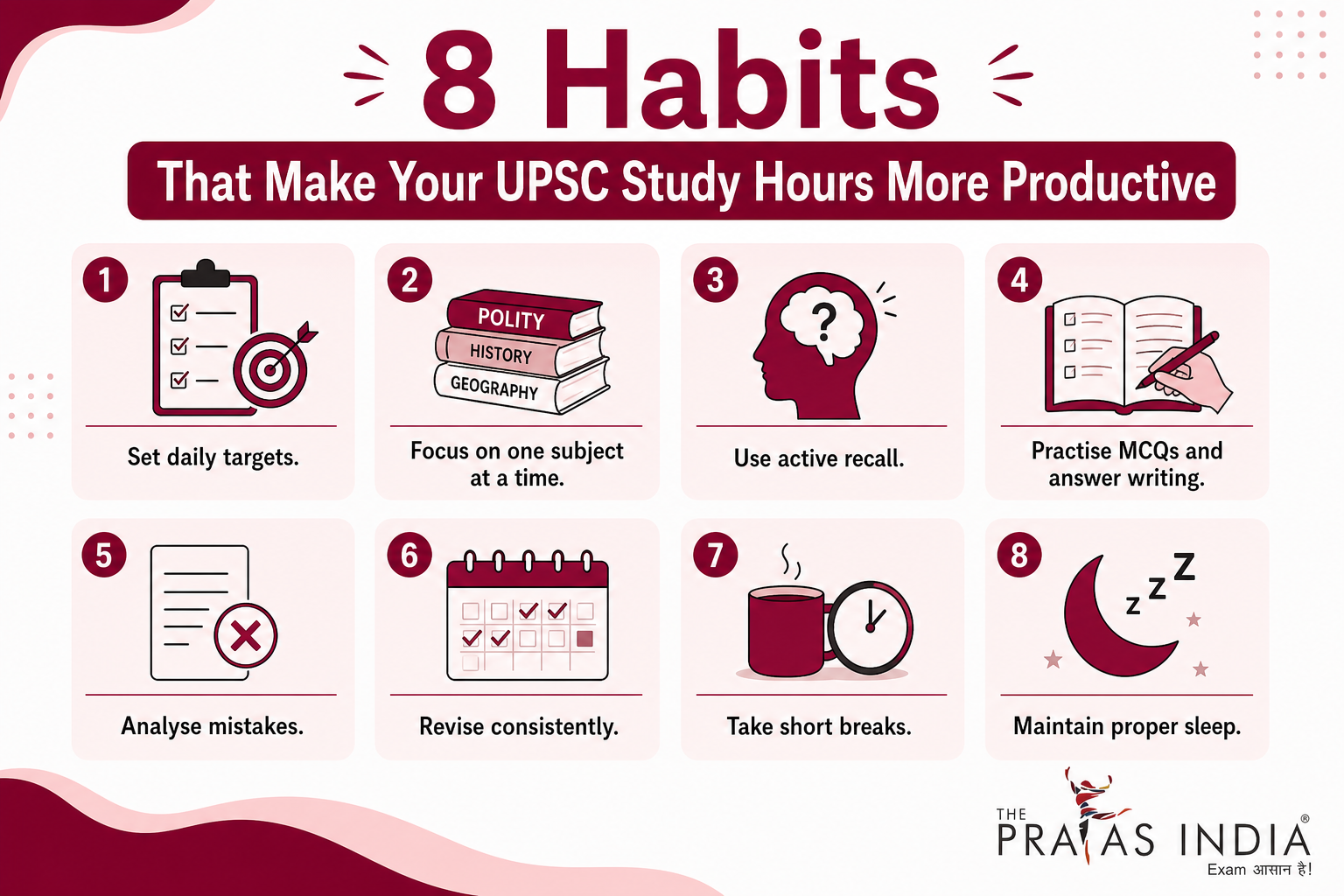
- Set daily targets: Write down the topics you intend to complete rather than setting only an hourly target.
- Study one subject at a time: Avoid switching between multiple subjects every few minutes.
- Use active recall: Close your book and try to explain what you have learned in your own words.
- Practise regularly: Solve MCQs and write answers according to your preparation stage.
- Analyse mistakes: Understand why an answer was incorrect instead of simply checking the correct option.
- Revise consistently: Revisit important topics at planned intervals.
- Take proper breaks: Short breaks can help you maintain concentration during longer study sessions.
- Protect your sleep: A sustainable routine needs adequate rest and recovery.
Choosing UPSC Guidance in Andheri
Aspirants in Andheri West and nearby areas such as Andheri East, Lokhandwala, Oshiwara, Jogeshwari, and Versova may explore local coaching options while planning their preparation.
When comparing the Top UPSC Coaching in Andheri, do not decide only by advertisements or claims about study hours. Look at practical factors such as:
- Whether the course covers the UPSC syllabus systematically.
- Whether the teaching approach is suitable for beginners.
- Whether the schedule allows time for self-study.
- Whether doubt-solving and revision are part of the learning process.
- Whether the institute explains its course structure and expectations clearly.
The Prayas India has its Andheri branch at Office 803, Time Chambers, Swami Vivekanand Road, near Paneri, Andheri West, Mumbai. Aspirants can contact the centre to enquire about available UPSC and Civil Services preparation guidance, course details, and batch information.
If you are comparing options for the Best IAS Coaching in Andheri, take time to understand the course and see whether its approach matches your preparation needs.
Common Study-Hour Mistakes UPSC Aspirants Should Avoid
Even motivated students can lose time by following habits that do not support effective learning.
- Copying someone else’s timetable: A schedule that works for a full-time aspirant may not suit a working professional.
- Counting every minute as study: Keep breaks and personal time separate from focused study hours.
- Ignoring revision: Completing a topic once does not mean you have mastered it.
- Avoiding mock tests: Practice is necessary to understand your level of preparation.
- Changing resources frequently: Too many books and online sources can create confusion.
- Studying late every night: Consistency and adequate sleep are more useful than repeatedly exhausting yourself.
Final Advice: Consistency Matters More Than the Number of Hours
There is no universal daily study-hour target for every UPSC aspirant. Beginners can start with 4–6 focused hours, while full-time aspirants may gradually build towards 6–8 hours or more, depending on their needs and preparation stage.
Instead of comparing your timetable with other candidates, measure your progress through syllabus coverage, revision, practice, and improvement in mock tests and answer writing.
For students exploring UPSC preparation options in Andheri, the most useful approach is to choose a learning plan that supports disciplined self-study and remains realistic over the long term.
Remember: UPSC preparation is a marathon, not a competition to see who can sit at a desk for the longest time. Build a routine you can follow consistently.
Frequently Asked Questions – Daily Study Hours for UPSC
1. How many hours should a beginner study for UPSC daily?
A beginner can start with around 4–6 focused hours daily. The schedule should include concept learning, current affairs, practice, and revision. Study time can be increased gradually as the routine becomes manageable.
2. Is studying for 6 hours a day enough for UPSC?
Six focused hours can be a useful daily target, particularly for beginners and students with other commitments. Whether it is sufficient depends on your syllabus coverage, preparation stage, revision, and practice.
3. Can I prepare for UPSC while attending college?
Yes. College students can begin with a manageable daily schedule and use weekends for longer study sessions, revision, and practice. Planning around college hours is important.
4. Should UPSC aspirants study for 12 hours every day?
Not necessarily. A 12-hour schedule is not compulsory for UPSC preparation. Focused study, regular revision, practice, and a sustainable routine are more useful than following an arbitrary hourly target.
5. How much time should I give to newspaper reading?
Many aspirants can begin with around 30–45 minutes of focused newspaper reading. Prioritise relevant issues and connect them with the UPSC syllabus rather than trying to memorise every news item.
6. How can I find suitable UPSC coaching in Andheri?
Compare course structure, faculty and teaching approach, batch timings, syllabus coverage, revision support, and doubt-solving arrangements. Contact the institute directly to understand its current courses and batch details before enrolling.
7. Is revision more important than studying new topics?
Both are important. Learning new topics helps complete the syllabus, while revision strengthens retention and understanding. A balanced timetable should make room for both.
Planning Your UPSC Preparation in Andheri?
If you are beginning your Civil Services preparation, connect with The Prayas India – Andheri to enquire about available courses, batch timings, and preparation guidance. Understand the course structure and choose a study plan that fits your goals.
Visit The Prayas India – Andheri:
Office 803, Time Chambers, Swami Vivekanand Road, near Paneri, Andheri West, Mumbai, Maharashtra 400058.
Contact: 08355951603