How to Prepare Economy for UPSC Prelims and Mains: A Complete Guide for Beginners
Economy is one of the most important subjects in the UPSC Civil Services Examination. It plays a significant role in both Prelims and Mains, covering topics such as inflation, banking, monetary policy, fiscal policy, budgeting, taxation, unemployment, economic growth and government schemes.
For many beginners, Economics can initially seem difficult because it involves concepts, technical terms, government policies and current affairs. However, with the right approach, aspirants can understand the subject systematically and connect theoretical concepts with real-world developments.
If you are preparing for the Civil Services Examination and exploring UPSC coaching in Andheri, understanding how to prepare Economy for both Prelims and Mains can help you plan your studies more effectively.
This guide explains the important topics, recommended study approach, current affairs strategy, revision methods and answer-writing techniques for UPSC Economy.
Understand the UPSC Economy Syllabus First
Before opening textbooks or collecting study material, understand what UPSC expects you to study.
Economy preparation should not be limited to memorising definitions. You need to understand how the Indian economy functions, how government decisions affect economic activities and how national and international developments influence India.
For Prelims, the focus is generally on conceptual clarity, factual understanding and the application of economic concepts.
For Mains, especially General Studies Paper III, you need to develop analytical understanding and explain economic issues, their causes, effects and possible solutions.
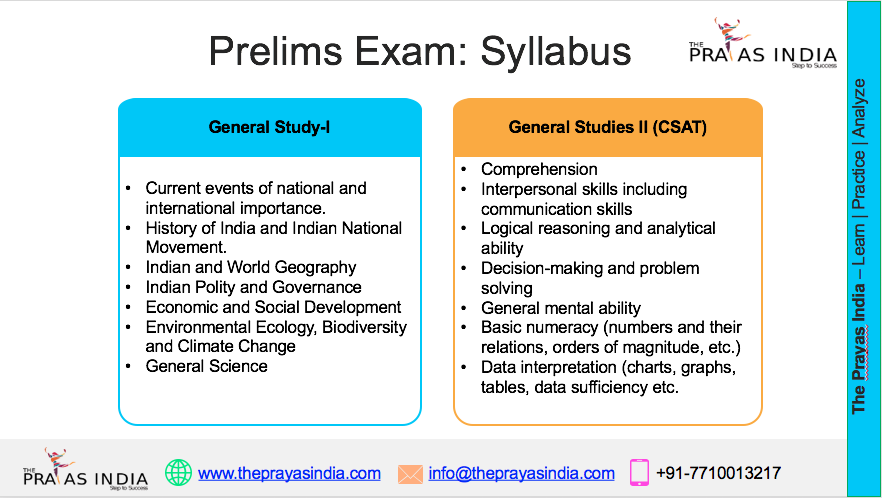
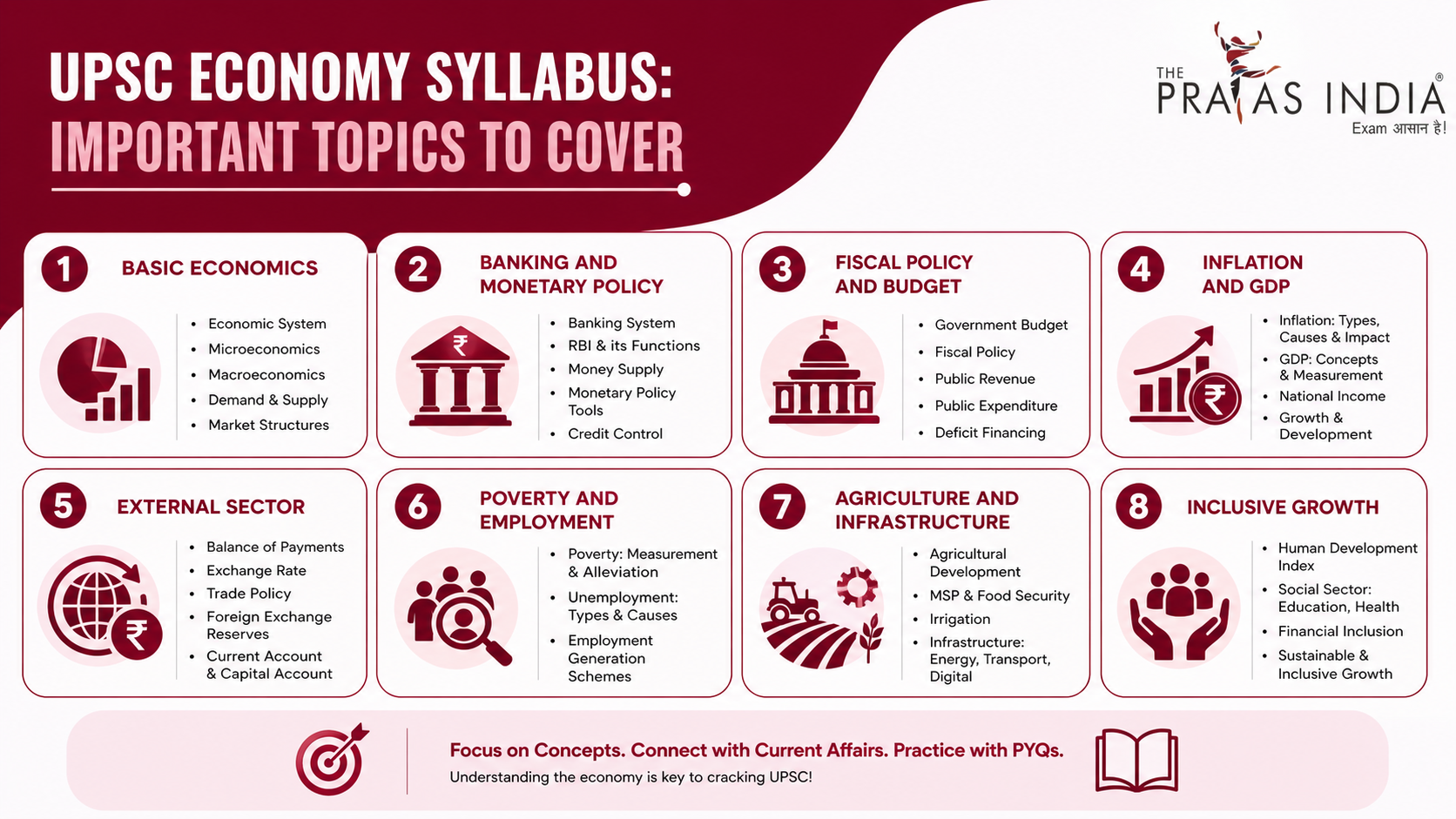
Important Economy topics for UPSC include:
- Basic concepts of the Indian economy
- Economic growth and development
- National income and GDP
- Inflation and deflation
- Banking and financial institutions
- Monetary policy and RBI
- Fiscal policy and government budgeting
- Taxation and GST
- Balance of Payments
- Foreign trade and exchange rates
- Poverty and unemployment
- Inclusive growth
- Infrastructure and investment
- Agriculture and the Indian economy
- Government economic policies and schemes
Build Your Basic Understanding Before Studying Advanced Topics
One common mistake beginners make is starting with complex economic reports and newspaper analysis without understanding basic concepts.
Start with foundational topics such as:
- What is GDP?
- What is national income?
- What is inflation?
- What is the difference between fiscal policy and monetary policy?
- What are direct and indirect taxes?
- How does the banking system work?
- What is the role of the Reserve Bank of India?
- What are imports, exports and foreign exchange reserves?
Try to understand every concept through simple examples.
For instance, when studying inflation, understand how rising prices affect household budgets, savings, purchasing power and the cost of living. Similarly, while studying interest rates, understand how changes in RBI policy rates can influence borrowing and investment.
A useful beginner strategy:
- Read the basic definition.
- Understand how the concept works.
- Study its impact on the Indian economy.
- Connect it with a current economic development.
- Practise related Prelims questions or Mains answers.
This approach helps you develop conceptual clarity instead of depending entirely on memorisation.
How to Prepare Economy for UPSC Prelims
UPSC Prelims requires a clear understanding of economic concepts and the ability to apply them to different situations.
Your preparation should focus on the following areas.
A. Understand important economic concepts
Study concepts such as GDP, GNP, inflation, deflation, repo rate, reverse repo rate, CRR, SLR, fiscal deficit, revenue deficit and Balance of Payments.
Do not simply memorise definitions. Understand their differences, functions and economic implications.
B. Focus on Banking and RBI
Banking is an important area of Economy preparation.
Pay attention to:
- Functions of the Reserve Bank of India
- Monetary Policy Committee
- Repo rate and other policy rates
- Cash Reserve Ratio
- Statutory Liquidity Ratio
- Non-Performing Assets
- Commercial banks
- Financial inclusion
- Digital banking and payment systems
C. Practise Previous Year Questions
Previous Year Questions (PYQs) help you understand the nature and difficulty of UPSC questions.
While solving them:
- Identify the concept behind each question.
- Understand why the correct option is right.
- Analyse why the other options are incorrect.
- Note recurring themes.
- Revise concepts where you make mistakes.
D. Solve Economy MCQs regularly
Practise topic-wise MCQs after completing individual chapters. Later, include Economy questions in full-length mock tests.
Avoid solving questions without reviewing them. The analysis of incorrect answers is an important part of learning.
How to Prepare Economy for UPSC Mains
Mains preparation requires more than conceptual knowledge. You need to explain economic issues in a structured and analytical manner.
Economy is particularly relevant to General Studies Paper III.
Focus on these preparation areas:
A. Understand economic issues in depth
For every important topic, study:
- Meaning and background
- Present situation
- Causes and contributing factors
- Impact on different sections of society
- Government initiatives
- Challenges and limitations
- Possible solutions
For example, while studying unemployment, understand its different types, reasons behind it, effects on economic development and measures that can improve employment opportunities.
B. Connect static concepts with current affairs
Mains questions often require you to apply basic economic concepts to contemporary developments.
For example:
- Inflation can be connected with food prices and monetary policy.
- Fiscal deficit can be linked with government expenditure and borrowing.
- Inclusive growth can be connected with financial inclusion and social welfare.
- Infrastructure can be linked with investment, employment and economic productivity.
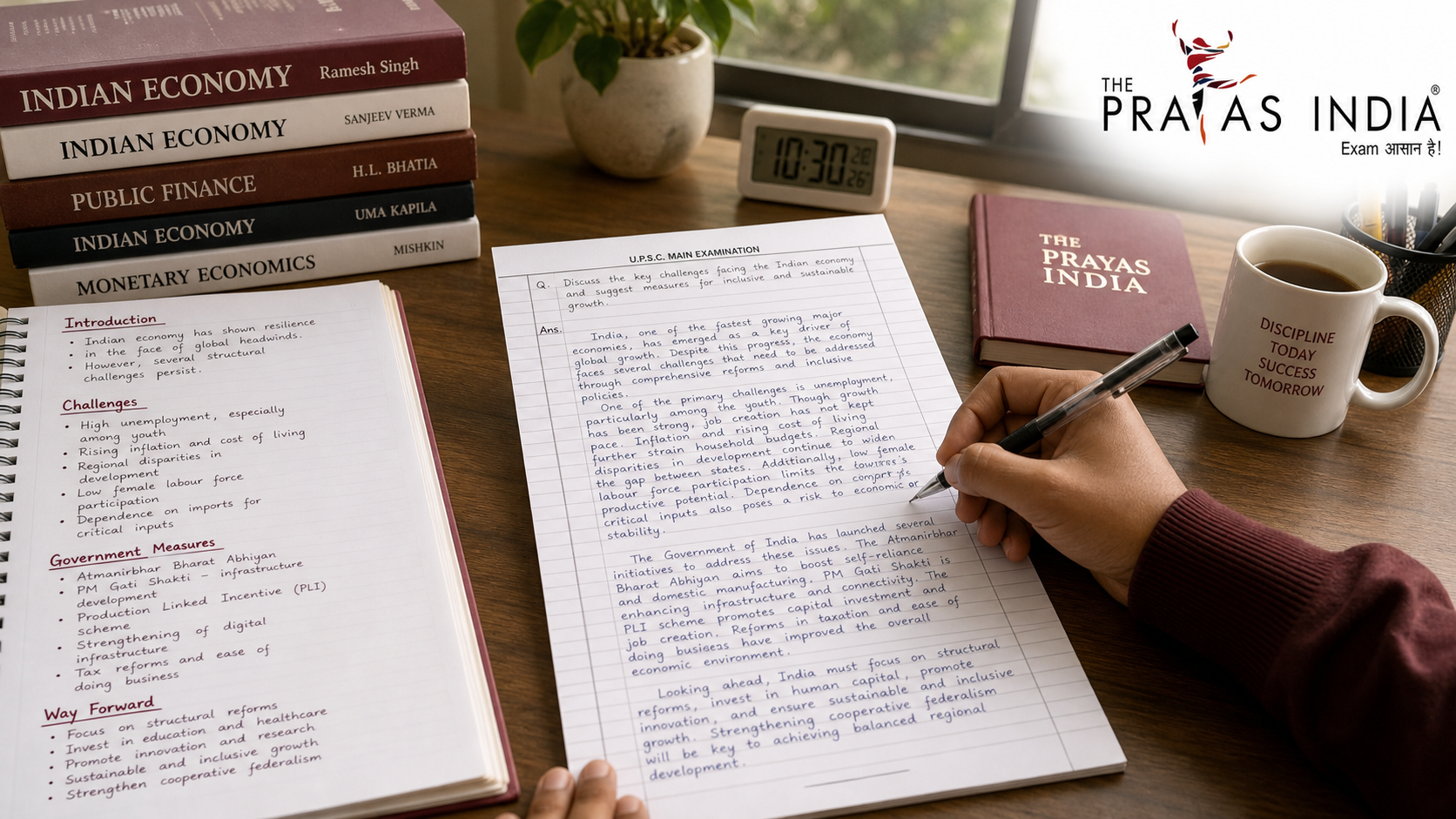
C. Practise answer writing
Answer writing helps you organise your knowledge and present arguments clearly.
A useful structure for Economy answers is:
- Introduction: Define the topic or explain its context.
- Main body: Discuss causes, effects, challenges and relevant examples.
- Government initiatives: Mention relevant policies or programmes where appropriate.
- Way forward: Suggest practical and balanced solutions.
- Conclusion: End with a concise, constructive observation.
Use relevant data only when you can verify its source and year. Avoid adding statistics simply to make an answer look impressive.
Make the Union Budget and Economic Survey Part of Your Preparation
The Union Budget and Economic Survey are useful sources for understanding India’s economic priorities, challenges and policy direction.
However, beginners should not try to memorise every announcement or figure. Focus on understanding the broader economic issues.
While studying the Union Budget, pay attention to:
- Government revenue and expenditure
- Fiscal deficit and borrowing
- Capital expenditure
- Taxation and GST-related developments
- Infrastructure spending
- Agriculture and rural development
- Employment and social-sector allocations
While studying the Economic Survey, focus on:
- India’s economic performance
- Sector-wise developments
- Employment and productivity
- Investment and infrastructure
- Agriculture and manufacturing
- Emerging economic challenges
- Policy recommendations
Connect these developments with the static syllabus. For example, while studying capital expenditure in the Budget, revise investment, infrastructure and fiscal policy concepts.
How to Read Newspapers for Economy
Newspaper reading is an important part of Economy preparation, but reading every business article is neither necessary nor practical.
Focus on news related to:
- RBI announcements and monetary policy
- Inflation and changes in prices
- Government economic policies
- Union Budget and taxation
- Banking and financial reforms
- International trade and global economic developments
- Employment, poverty and inclusive growth
- Agriculture, infrastructure and investment
For every important news item, ask yourself:
- Which part of the UPSC syllabus does it relate to?
- What is the economic concept behind it?
- Why is this development important?
- What could be its impact on the Indian economy?
Maintain short notes under topic-wise headings instead of making lengthy newspaper summaries. This makes revision easier before Prelims and Mains.
Recommended Study Resources for UPSC Economy
Beginners often get confused because they collect too many books, websites and notes. It is better to use a limited number of reliable resources and revise them properly.
| Resource | How to use it |
|---|---|
| NCERT Economics | Build foundational understanding |
| Standard Indian Economy textbook | Study important concepts systematically |
| RBI website and publications | Understand banking and monetary policy developments |
| Union Budget | Study government revenue, expenditure and priorities |
| Economic Survey | Understand economic trends and challenges |
| Newspaper | Follow relevant economic developments |
| UPSC Previous Year Questions | Understand question patterns and test preparation |
You do not need to read every publication cover to cover. Select relevant chapters and topics according to the UPSC syllabus.
Remember: A limited set of resources, revised multiple times, is generally more manageable than constantly changing study material.
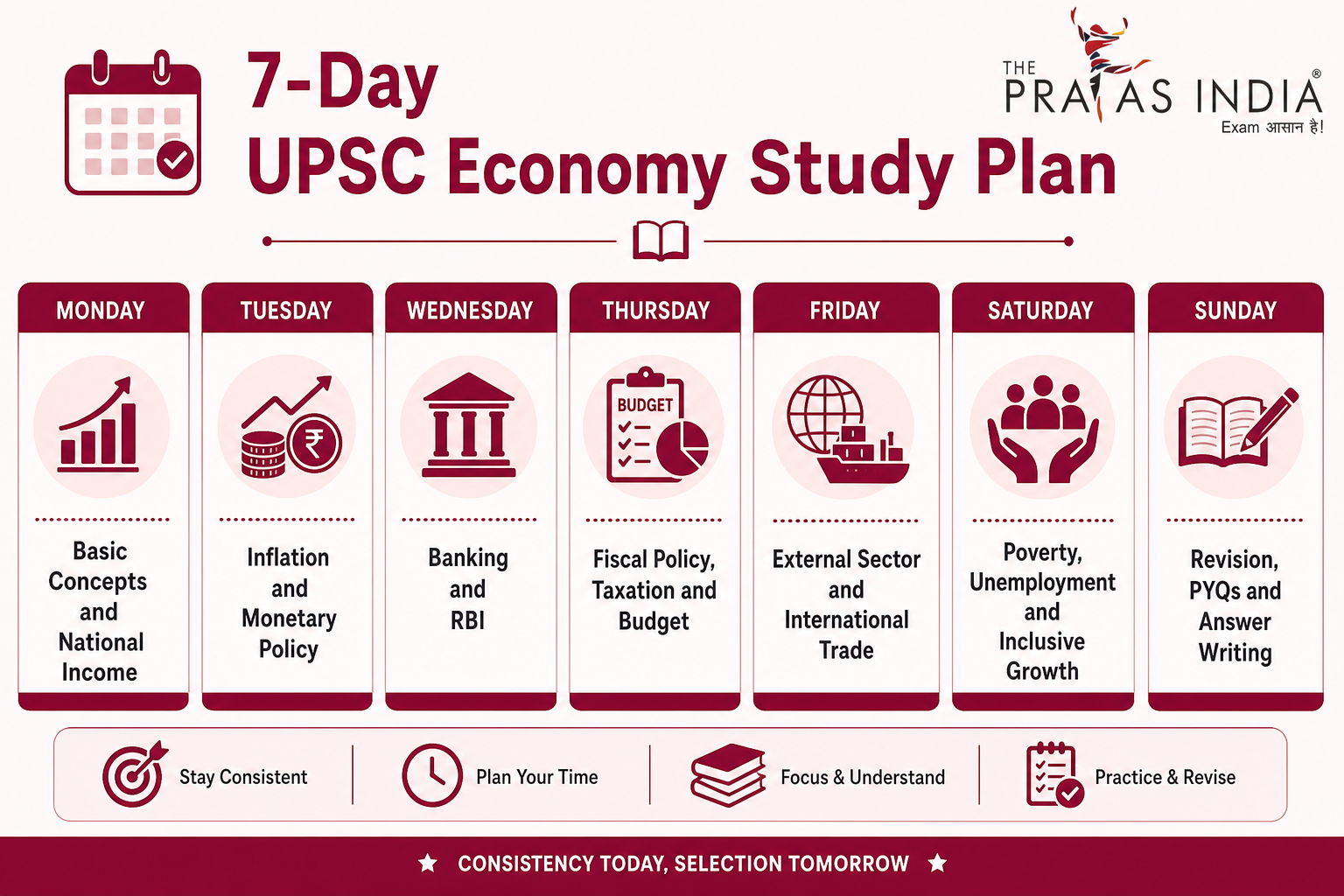
A Practical Weekly Economy Study Plan
A weekly plan can help you cover static Economy, current affairs, Prelims practice and Mains answer writing together.
Here is a sample schedule for beginners:
| Day | Study Focus |
|---|---|
| Monday | Basic economic concepts and national income |
| Tuesday | Inflation and monetary policy |
| Wednesday | Banking system and RBI |
| Thursday | Fiscal policy, taxation and Budget |
| Friday | External sector and international trade |
| Saturday | Poverty, unemployment and inclusive growth |
| Sunday | Weekly revision, PYQs and answer writing |
Adjust the schedule according to your preparation level and available study time. If you are studying other GS subjects simultaneously, divide your daily hours accordingly rather than trying to complete all Economy topics in one week.
Common Mistakes to Avoid While Preparing Economy
Even hardworking aspirants can lose time by following an unstructured preparation strategy. Avoid these common mistakes:
- Memorising without understanding: Learn why economic concepts work instead of remembering definitions alone.
- Ignoring basic concepts: Advanced topics become difficult when fundamentals such as GDP, inflation and fiscal deficit are unclear.
- Collecting too many resources: Repeatedly changing books and notes can interrupt preparation.
- Neglecting current affairs: Economy is connected with changing policies, institutions and national developments.
- Avoiding answer writing: Mains requires the ability to explain and analyse economic issues, not just remember facts.
- Skipping revision: Revisit important concepts and current-affairs notes regularly.
- Using outdated statistics: Check the year and source before quoting economic data in an answer.
Finding the Right UPSC Preparation Guidance in Andheri
For aspirants living in Andheri West and nearby areas such as Andheri East, Lokhandwala, Oshiwara, Jogeshwari and Versova, a structured learning environment can help bring consistency to Civil Services preparation.
When comparing the Best UPSC Coaching in Andheri, look beyond promotional claims. Understand the course structure, teaching approach, syllabus coverage, batch timings and opportunities for doubt-solving and practice.
Similarly, students searching for the Top IAS Coaching in Andheri should check whether the learning approach supports both classroom understanding and independent study.
The Prayas India has an Andheri branch at:
Office 803, Time Chambers, Swami Vivekanand Road, near Paneri, Andheri West, Mumbai, Maharashtra 400058.
Aspirants can contact the centre to enquire about available Civil Services preparation courses, batch schedules and course details. If you are considering the Best IAS Coaching in Andheri, take time to understand the available learning options and choose a programme that suits your preparation requirements.
Final Strategy: Prepare Economy for Both Prelims and Mains Together
Prelims and Mains Economy preparation should not be treated as two completely separate activities.
Build conceptual clarity first, practise objective questions to strengthen application, and develop analytical understanding for Mains. Connect important current affairs with static topics and revise them regularly.
A balanced preparation strategy should include:
- Understanding the syllabus and basic concepts.
- Studying important Economy topics systematically.
- Following relevant economic current affairs.
- Reading the Union Budget and Economic Survey selectively.
- Solving Prelims PYQs and MCQs.
- Practising Mains answer writing.
- Revising notes and correcting mistakes.
For beginners, consistency matters more than trying to finish the entire subject in a few days. Build your understanding step by step and keep connecting economic concepts with real developments in India.
With a clear study plan and regular practice, Economy can become a manageable and scoring part of your UPSC preparation.
Frequently Asked Questions – UPSC Economy Preparation
1. How should beginners start preparing Economy for UPSC?
Beginners should first understand basic concepts such as GDP, inflation, banking, monetary policy and fiscal policy. After building the foundation, move to standard study material, current affairs, Previous Year Questions and regular revision.
2. Is Economy important for both UPSC Prelims and Mains?
Yes. Economy is relevant to General Studies in both stages. Prelims tests conceptual understanding and application, while Mains requires analytical explanations of economic issues, policies, challenges and solutions.
3. Which topics are important in UPSC Economy?
Important areas include GDP, national income, inflation, banking, RBI, monetary policy, fiscal policy, taxation, Budget, external trade, poverty, unemployment, agriculture and inclusive growth. Study them according to the official syllabus and previous question trends.
4. Should I read the Economic Survey for UPSC?
The Economic Survey is a useful resource for understanding India’s economic performance, policy priorities and major challenges. Focus on relevant chapters, important findings and concepts connected with the UPSC syllabus rather than trying to memorise the entire document.
5. How can I improve my Economy answer writing for UPSC Mains?
Practise answers using a clear introduction, structured main body and balanced conclusion. Explain causes, effects, challenges and possible solutions. Include relevant examples and verified data wherever appropriate.
6. How much time should I dedicate to Economy preparation?
The time required depends on your preparation stage and familiarity with the subject. Beginners should allocate regular study sessions for concepts, current affairs, practice and revision while balancing Economy with other UPSC subjects.
7. Where can I enquire about UPSC preparation guidance in Andheri?
You can contact The Prayas India – Andheri at Office 803, Time Chambers, Swami Vivekanand Road, near Paneri, Andheri West, Mumbai, to enquire about available Civil Services preparation courses and batch details.
Planning Your UPSC Preparation in Andheri?
Looking for structured guidance for UPSC Civil Services preparation? Contact The Prayas India – Andheri to enquire about available courses, batch timings and programme details.
Visit The Prayas India – Andheri:
Office 803, Time Chambers, Swami Vivekanand Road, near Paneri, Andheri West, Mumbai, Maharashtra 400058.
Contact: 08355951603