Build a Strong Foundation for UPSC CSE with Expert Guidance | Best IAS Coaching in Mumbai | The Prayas India
The Union Public Service Commission (UPSC) Civil Services Examination (CSE) is one of India’s most prestigious and challenging competitive examinations. Every year, lakhs of aspirants dream of becoming IAS, IPS, IFS, and other esteemed civil servants, but only a small percentage successfully reach the final merit list.
The difference between aspirants who qualify and those who fall short is rarely intelligence alone. More often, success depends on starting with the right foundation, following a structured preparation strategy, and receiving guidance that keeps preparation focused throughout the journey.
Many candidates spend months collecting books, watching countless online videos, and preparing without a clear roadmap. While these resources are useful, they cannot replace a well-planned preparation strategy that builds concepts step by step.
If you’re searching for the Best UPSC coaching classes in Mumbai that emphasize conceptual learning and disciplined preparation, understanding how to build a strong foundation is the first step toward your goal.
Why Building a Strong Foundation Matters More Than Studying More
One of the biggest misconceptions about UPSC preparation is that success depends only on studying for long hours. In reality, the quality of preparation matters far more than the number of hours spent reading books.
Many aspirants begin their journey by purchasing multiple reference books and following different online sources simultaneously. Instead of gaining clarity, they often become confused because there is no structured sequence in their preparation.
A strong foundation ensures that every topic is learned in the correct order. Basic concepts become clear before advanced topics are introduced, making revision easier and improving answer-writing quality later in the preparation cycle.
When your fundamentals are strong, you spend less time memorizing information and more time understanding issues from multiple perspectives—an ability that is essential for both the Preliminary and Main examinations.
Understanding the UPSC Civil Services Examination
Before preparing for UPSC, it is important to understand what the examination actually demands.
Unlike many competitive exams that primarily evaluate factual knowledge, UPSC tests a candidate’s analytical ability, conceptual understanding, decision-making skills, writing ability, awareness of current affairs, and overall personality.
The examination is conducted in three stages, and each stage requires a different preparation approach.
Preliminary Examination
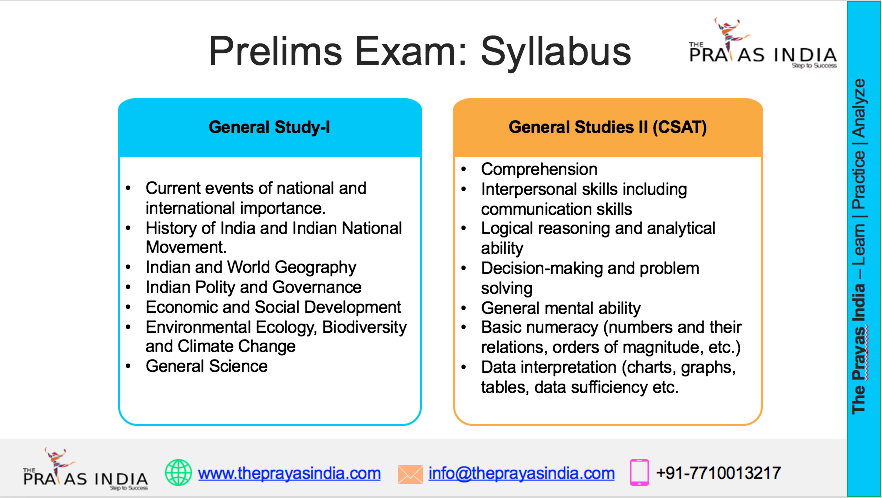
The Preliminary Examination acts as the first screening stage. It evaluates conceptual clarity, current affairs awareness, and the ability to solve objective questions accurately within a limited time.
Since there is negative marking, aspirants must develop both speed and accuracy while learning how to make informed decisions during the examination.
Main Examination
The Main Examination shifts the focus from objective questions to descriptive answer writing.
Candidates are expected to demonstrate analytical thinking, balanced opinions, structured presentation, and in-depth understanding of governance, economy, ethics, history, geography, polity, international relations, and other important subjects.
Success in Mains depends not only on knowledge but also on how effectively that knowledge is presented within the given word limit.
Personality Test (Interview)
The final stage assesses much more than factual knowledge.
The UPSC Interview evaluates communication skills, confidence, emotional maturity, ethical thinking, awareness of national and international issues, and the ability to make balanced decisions under pressure.
Preparing for this stage begins much earlier than most aspirants realize. Building confidence, improving communication, and staying updated with current affairs should become part of your preparation from the beginning.
Start with NCERTs Before Moving to Advanced Books
Many beginners immediately purchase multiple advanced reference books because they believe these resources alone will help them crack UPSC.
In reality, experienced mentors consistently recommend starting with NCERT textbooks because they build conceptual clarity across subjects like History, Geography, Economics, Political Science, Environment, and Science.
These books explain fundamental concepts in a simple manner, making advanced resources easier to understand later.
Once your basics become strong, standard reference books become far more meaningful, and revision also becomes quicker.
Build Concepts Instead of Memorizing Facts
UPSC is not an examination where rote learning guarantees success.
Questions increasingly require candidates to connect different subjects, analyze situations, and apply concepts to real-world issues.
For example, understanding climate change is not limited to Environmental Science. It also connects with Geography, Agriculture, Economy, International Relations, Disaster Management, and Government Policies.
Students who understand concepts can confidently handle such interdisciplinary questions, whereas those who rely only on memorization often struggle with changing question patterns.
Developing conceptual understanding from the beginning creates a strong academic foundation that supports every stage of the examination.
Develop the Habit of Reading Newspapers Every Day
Current affairs play a significant role throughout the UPSC examination process.
However, reading newspapers should not become an exercise in collecting facts. Instead, aspirants should focus on understanding why an event happened, its impact on governance, society, economy, environment, and international relations.
Reading quality newspapers regularly improves analytical thinking, comprehension skills, vocabulary, and answer-writing ability simultaneously.
Combining newspaper reading with monthly current affairs revision creates a balanced approach that remains useful throughout the preparation journey.
Make Revision a Part of Your Daily Routine
Many aspirants continuously study new topics while neglecting revision.
As a result, they forget concepts learned just a few weeks earlier. This creates unnecessary pressure as the examination approaches.
A smarter strategy is to dedicate time every week to revisiting previously completed topics.
Regular revision strengthens memory, improves confidence, and reduces the effort required before Prelims and Mains.
Instead of viewing revision as a separate task, treat it as an essential component of daily preparation.
Create a Study Plan That You Can Sustain
A common mistake among beginners is creating highly ambitious timetables that become impossible to follow after a few days.
Consistency is far more valuable than temporary bursts of motivation.
A realistic study plan should include time for learning new concepts, revising old topics, reading newspapers, practicing answer writing, solving MCQs, and taking short breaks.
The objective is not to complete the syllabus as quickly as possible but to understand it thoroughly.
Students who maintain a balanced study routine are generally able to continue preparing effectively for months without experiencing burnout.
Learn to Write Answers from the Beginning
One of the biggest differences between average and high-scoring UPSC aspirants is answer-writing ability.
Many students postpone answer writing until after completing the syllabus, but this often delays improvement.
Instead, begin with simple answers based on topics you have already studied.
Focus on presenting ideas in a logical structure using introductions, balanced arguments, examples, diagrams where appropriate, and concise conclusions.
Over time, this practice significantly improves writing speed, presentation quality, and confidence.
Consistency Is Your Greatest Competitive Advantage
UPSC preparation is rarely about dramatic improvements in a single month. It is about making small, meaningful progress every day.
Reading one chapter, revising one topic, practicing ten MCQs, or writing one answer may appear small individually, but these efforts compound over time into significant improvement.
Students who remain disciplined for an extended period often outperform those who rely solely on motivation or last-minute preparation.
As your preparation progresses, expert guidance, structured mentorship, and continuous evaluation become increasingly valuable. In the next section, we’ll explore how the right coaching environment can strengthen every stage of your UPSC journey and help you prepare with greater confidence.
The Role of Expert Guidance in UPSC Preparation
Preparing for UPSC is often described as a long and challenging journey. While determination and self-discipline are essential, having the right guidance can make the journey far more organized and productive.
Expert mentors help aspirants understand the exam’s evolving nature, prioritize important topics, avoid unnecessary study material, and prepare according to the latest UPSC trends. Instead of relying on trial and error, students receive a structured roadmap that keeps them moving in the right direction.
For aspirants searching for the Best UPSC Coaching in Mumbai, choosing an institute that emphasizes conceptual learning, mentorship, and continuous evaluation can significantly improve preparation quality.
How The Prayas India Helps You Build a Strong UPSC Foundation
Every UPSC aspirant begins with different strengths, learning styles, and academic backgrounds. Some students require additional support in Polity, while others may struggle with Economics, Geography, or answer writing.
At The Prayas India, the focus is on helping every aspirant develop a solid academic foundation before moving towards advanced preparation. The learning approach combines conceptual clarity, structured planning, regular practice, and continuous mentorship to ensure that students progress confidently throughout their UPSC journey.
Instead of simply completing the syllabus, students are guided to understand subjects deeply, develop analytical thinking, and build the consistency required for one of India’s toughest examinations.
Concept-Based Classroom Learning
UPSC preparation becomes more effective when students understand the “why” behind every topic instead of memorizing isolated facts.
Faculty members explain complex subjects in a simple and practical manner, connecting static concepts with current affairs whenever relevant. This approach helps students retain information longer and improves their ability to write analytical answers in the Mains examination.
Strong conceptual understanding also enables aspirants to solve unpredictable Prelims questions with greater confidence.
Structured Study Plan
A clear preparation roadmap removes uncertainty and keeps students focused on steady progress.
The Prayas India follows a well-planned academic schedule that covers the syllabus systematically while balancing classroom learning, revision, answer writing, current affairs, and mock tests.
This structured approach allows students to complete the syllabus without feeling overwhelmed while ensuring sufficient time for revision before the examination.
Regular Current Affairs Integration
Current affairs are an integral part of UPSC preparation and cannot be studied separately from static subjects.
Students receive guidance on linking important national and international developments with topics such as Polity, Economy, Environment, Science & Technology, International Relations, and Governance.
Learning to connect current events with the syllabus strengthens both Prelims preparation and Mains answer writing.
Answer Writing Practice
Knowing the correct answer and presenting it effectively are two different skills.
Regular answer-writing sessions help students organize their thoughts logically, improve writing speed, present balanced arguments, and conclude answers effectively.
With continuous practice and faculty feedback, aspirants gradually develop the confidence required to perform well in the descriptive examination.
Mock Tests with Detailed Performance Analysis
Mock tests play a vital role in measuring preparation progress.
Students regularly attempt topic-wise tests, sectional assessments, and full-length examinations designed according to the latest UPSC pattern.
Detailed performance analysis highlights conceptual gaps, recurring mistakes, weak subjects, and time management issues. These insights help students refine their preparation strategy well before the actual examination.
Personalized Mentorship
Every UPSC journey is unique.
Some aspirants require motivation to remain consistent, while others need guidance to overcome specific academic challenges.
Personalized mentorship ensures that students receive individual attention, realistic preparation advice, and continuous encouragement throughout their preparation.
Regular interactions with mentors also help students remain accountable to their study plans and preparation goals.
Classroom and Online Learning Options
Every aspirant’s schedule is different.
Some students prefer classroom interaction, while others require the flexibility of online learning because of college, work commitments, or travel.
The Prayas India offers both classroom and online learning options, enabling students to continue preparing without compromising the quality of education or mentorship.
Common Mistakes That Slow Down UPSC Preparation
Many hardworking aspirants unknowingly reduce their chances of success by repeating common preparation mistakes.
One of the biggest mistakes is trying to study from too many books at the same time. Instead of building clarity, excessive resources often create confusion and make revision difficult.
Another common issue is postponing answer writing until the syllabus is completed. Since answer-writing is a skill that develops gradually, delaying practice can affect Mains performance.
Ignoring revision is equally risky. Reading new topics every day without revisiting older subjects leads to poor retention and unnecessary stress closer to the examination.
Many students also become overly dependent on current affairs while neglecting static subjects. UPSC requires a balanced understanding of both.
Finally, comparing your preparation with others can reduce confidence and create unnecessary pressure. Every aspirant progresses at a different pace, and consistent improvement is far more valuable than unhealthy competition.
Practical Tips to Strengthen Your UPSC Preparation
Improving your preparation does not always require dramatic changes. Small habits followed consistently often produce the biggest results.
Begin every study session with a clear objective so that your learning remains focused.
Maintain concise notes that can be revised multiple times before the examination.
Practice previous years’ questions regularly to understand UPSC’s thinking pattern and identify important themes.
Dedicate time every week to answer writing, even if it is only one or two questions initially.
Stay updated with current affairs, but avoid collecting unnecessary information from multiple sources.
Finally, review your progress every month. Identify what is working, what needs improvement, and adjust your strategy accordingly.
Why Students Choose The Prayas India
Choosing the right coaching institute is an important decision because it shapes the way you prepare for one of the country’s most competitive examinations.
Students choose The Prayas India because the institute emphasizes quality learning over rushed syllabus completion. Every stage of preparation is planned to help aspirants understand concepts deeply, practice consistently, and improve steadily through regular evaluation.
For students looking for the Top IAS Coaching in Mumbai, Best IAS Coaching in Mumbai, Top UPSC Coaching in Mumbai, or UPSC Coaching Classes in Mumbai, The Prayas India provides a balanced learning environment that combines experienced faculty, structured academic planning, answer-writing practice, mock tests, personalized mentorship, and continuous academic support.
Rather than following a one-size-fits-all approach, the institute encourages every aspirant to prepare according to their individual strengths while building the discipline and confidence required to succeed in the UPSC Civil Services Examination.
Final Thoughts
Every successful civil servant begins with a strong foundation. The journey to becoming an IAS, IPS, IFS, or other civil servant is not defined by how many books you own or how many hours you study—it is defined by the quality of your preparation, your consistency, and your ability to learn from every stage of the process.
Building a solid foundation means understanding concepts instead of memorizing facts, following a structured study plan, practicing answer writing regularly, revising consistently, and staying updated with current affairs. These habits gradually develop the analytical thinking and confidence required to perform well in all three stages of the UPSC Civil Services Examination.
If you’re looking for the Best IAS Coaching in Mumbai, Top IAS Coaching in Mumbai, Best UPSC Coaching in Mumbai, or UPSC Coaching Classes in Mumbai, choosing the right guidance can make your preparation more focused and efficient. At The Prayas India, aspirants receive expert mentorship, structured learning, regular mock tests, answer-writing practice, and continuous academic support that help them prepare with confidence for one of India’s most prestigious examinations.
Admissions Open
Take the first step towards your UPSC dream with a preparation strategy designed for long-term success.
The Prayas India
📞 Call Now: +91-77100 13217
Andheri | Borivali | Dadar | Thane | Nerul | Bhandup
Website: https://theprayasindia.com
Frequently Asked Questions (FAQs)
Beginners should first understand the UPSC syllabus and exam pattern, complete NCERT books, develop a newspaper-reading habit, and gradually move to standard reference books. Following a structured study plan from the beginning makes preparation more effective.
Self-study plays an important role, but coaching can provide structured guidance, expert mentorship, answer-writing practice, mock tests, and performance analysis that help aspirants prepare more efficiently and avoid common mistakes.
There is no fixed number of hours. Most successful candidates focus on consistent, quality study rather than long study sessions. A disciplined routine with regular revision and practice is more beneficial than simply studying for extended hours.
Answer writing should begin once you have covered the basics of a subject. Starting early helps improve presentation skills, writing speed, analytical thinking, and confidence before the Mains examination.
Mock tests help students assess their preparation, improve time management, identify weak areas, and become familiar with the examination pattern. Detailed analysis after every mock test is equally important for continuous improvement.
Yes. The Prayas India offers both classroom and online learning options, allowing students and working professionals to prepare according to their schedules.
Most aspirants prepare for one to two years, depending on their academic background, consistency, and familiarity with the syllabus. A well-planned preparation strategy often produces better results than rushing through the syllabus.
The Prayas India emphasizes conceptual learning, structured study plans, expert faculty guidance, answer-writing practice, mock tests, personalized mentorship, and continuous performance evaluation. This comprehensive approach helps aspirants build a strong foundation for every stage of the UPSC Civil Services Examination.1. How should beginners start preparing for UPSC CSE?
2. Is coaching necessary for UPSC preparation?
3. How many hours should I study for UPSC every day?
4. When should I start answer writing for UPSC Mains?
5. How important are mock tests in UPSC preparation?
6. Does The Prayas India provide online UPSC coaching?
7. How long does UPSC preparation usually take?
8. Why choose The Prayas India for UPSC preparation?