How to Stay Consistent During UPSC Preparation | Best UPSC Coaching in Mumbai | The Prayas India
Success in UPSC Is Built Through Consistency, Not Occasional Motivation.
Every year, thousands of aspirants begin their UPSC preparation with tremendous enthusiasm. They purchase the recommended books, create detailed study timetables, subscribe to current affairs resources, and set ambitious daily targets. During the initial weeks, everything appears to be progressing well. Study hours are high, motivation is strong, and the goal of becoming a civil servant feels achievable.
However, as weeks turn into months, the reality of UPSC preparation begins to unfold.
The syllabus seems larger than expected, revision starts getting postponed, mock test scores fluctuate, and balancing current affairs with static subjects becomes increasingly challenging. Many aspirants who started with great determination gradually lose consistency—not because they lack intelligence or dedication, but because they rely too heavily on motivation instead of building sustainable study habits.
This is one of the biggest reasons why UPSC preparation becomes difficult for many candidates.
Motivation is temporary.
Consistency is a system.
The aspirants who eventually secure top ranks are rarely those who remain motivated every single day. Instead, they are the ones who continue studying even on days when motivation is absent. Their preparation is driven by discipline, realistic planning, and habits that can be sustained over several months rather than short bursts of intense effort.
This article explains how to develop that consistency, avoid common obstacles, and create a preparation routine that remains effective throughout your UPSC journey.
UPSC Preparation Is a Marathon, Not a Sprint
Unlike many competitive examinations that require preparation for a few months, UPSC demands sustained effort over a long period. The examination consists of multiple stages, a vast syllabus, regular current affairs preparation, answer writing practice, revision, and mock tests. Trying to complete everything quickly often leads to exhaustion instead of progress.
Many aspirants unknowingly create unrealistic schedules at the beginning of their preparation. They plan to study twelve or fourteen hours every day, complete several subjects within a month, and finish multiple books simultaneously. While such schedules may appear impressive on paper, they become extremely difficult to maintain consistently.
A better approach is to focus on routines that can realistically be followed for several months.
For example:
- Study for a fixed number of productive hours rather than chasing unrealistic targets.
- Divide large subjects into manageable daily goals.
- Reserve dedicated time for revision from the beginning.
- Include answer writing and current affairs as regular components instead of postponing them.
- Build flexibility into the schedule so that occasional interruptions do not disrupt the entire plan.
When preparation becomes sustainable, consistency naturally follows.
Consistency Begins with Realistic Expectations
One of the most common mistakes made by UPSC aspirants is expecting immediate progress. After studying for a few weeks, they anticipate noticeable improvements in mock test scores, faster syllabus completion, or complete confidence in every subject. When these expectations are not met, frustration begins to replace enthusiasm.
The truth is that UPSC preparation follows a gradual learning curve.
Some weeks will feel highly productive, while others may seem slower despite sincere effort. There will be subjects that require multiple revisions before they become comfortable, and there will be mock tests that expose weaknesses rather than celebrate strengths.
These experiences are not signs of failure.
They are a natural part of the preparation process.
Accepting this reality allows aspirants to remain consistent because they stop measuring success through daily outcomes and begin focusing on long-term progress instead.
Build Systems Instead of Depending on Motivation
Motivation is an excellent way to begin preparation, but it is an unreliable foundation for sustaining it.
Every aspirant experiences days when studying feels difficult. Personal responsibilities, academic pressure, disappointing mock scores, or simple mental fatigue can temporarily reduce enthusiasm. If your study routine depends entirely on feeling motivated, these days quickly become unproductive.
Instead, create systems that make studying automatic.
Examples include:
- Studying at the same time every day.
- Following a fixed morning or evening routine.
- Planning the next day’s schedule before ending the current one.
- Maintaining a daily checklist instead of relying on memory.
- Reviewing weekly goals every Sunday.
These habits reduce the number of decisions you need to make each day, making it easier to continue studying even when motivation is low.
Consistency is not about feeling inspired.
It is about reducing excuses.
Focus on Daily Wins Rather Than Distant Goals
Every UPSC aspirant dreams of clearing the examination, but thinking constantly about the final result can sometimes create unnecessary pressure. The examination is too large to conquer in a single week or even a single month.
The most successful aspirants break that enormous goal into smaller, measurable achievements.
Instead of concentrating only on the final selection, focus on completing today’s planned targets effectively.
Daily achievements may include:
- Completing one chapter thoroughly.
- Revising previously studied topics.
- Solving one answer writing practice set.
- Reading and analysing the newspaper.
- Reviewing notes prepared earlier.
These small victories create momentum, and momentum eventually develops into consistency.
Over time, months of disciplined daily progress produce results that occasional bursts of motivation never can.

Structured Guidance Helps You Stay Consistent
Maintaining consistency becomes much easier when your preparation follows a structured roadmap. Many aspirants lose momentum because they are uncertain about what to study next, how much time to allocate to each subject, or how to evaluate their progress. A well-organised learning environment removes this uncertainty and helps students remain disciplined throughout their preparation.
At The Prayas India, UPSC preparation is designed around consistency rather than short-term intensity. Through expert faculty guidance, structured classroom programmes, personalised mentoring, regular answer writing practice, mock tests, performance reviews, and continuous doubt-solving support, students receive a clear academic direction that helps them stay focused and productive throughout their UPSC journey.
Building a Study Routine You Can Follow for Months
Consistency Is Not About Studying More Every Day—It Is About Creating a Routine That Continues Even on Difficult Days.
Many UPSC aspirants believe that consistency is achieved by increasing study hours. They assume that if they can study for twelve or fourteen hours every day, success will naturally follow. While disciplined effort is certainly essential, consistency is rarely determined by the number of hours you study. Instead, it depends on whether your routine remains sustainable throughout the long preparation journey.
UPSC preparation is unique because it demands steady progress across multiple subjects, continuous current affairs preparation, regular answer writing practice, revision, and mock tests. If your schedule focuses too heavily on one component while neglecting others, maintaining consistency becomes increasingly difficult.
A balanced routine does not try to accomplish everything in a single day. Instead, it ensures that every important aspect of preparation receives regular attention over weeks and months.
Design Your Day Around Priorities, Not Just Time
Many aspirants begin each morning by deciding how many hours they will study. While this approach provides a rough target, it often creates unnecessary pressure because the emphasis shifts towards completing hours rather than completing meaningful work.
A more productive method is to organise your day around academic priorities.
For example, instead of writing:
“Study for ten hours today,”
your schedule could focus on completing specific tasks such as:
- Revising one previously completed subject.
- Learning one new topic from the syllabus.
- Reading and analysing current affairs.
- Practising answer writing or MCQs.
- Reviewing mistakes from previous mock tests.
This task-oriented approach keeps preparation focused and ensures that every study session contributes directly to examination readiness.
Follow a Weekly Planning System
Daily planning is important, but UPSC preparation becomes much more effective when viewed over an entire week rather than a single day.
There will inevitably be days when unexpected responsibilities, illness, or mental fatigue reduce your productivity. Aspirants who judge themselves based on one unproductive day often become discouraged and gradually lose momentum.
Instead, evaluate your preparation weekly.
A balanced weekly routine should include:
Concept Building
Allocate dedicated sessions for learning new portions of the syllabus.
Current Affairs
Maintain a regular newspaper reading and note-making schedule instead of accumulating several days of pending current affairs.
Revision
Reserve fixed time every week for revisiting previously studied topics so that learning remains fresh.
Practice
Include answer writing, previous year questions, and mock tests as recurring activities rather than occasional exercises.
Self-Evaluation
Spend time every week reviewing your progress, identifying weak areas, and planning improvements for the following week.
Weekly planning provides flexibility while maintaining accountability, making long-term consistency much easier.
Manage Energy Instead of Constantly Increasing Study Hours
One of the least discussed aspects of UPSC preparation is energy management.
Many aspirants continue extending their study hours even when concentration begins to decline. As fatigue increases, productivity decreases, resulting in longer study sessions with lower learning efficiency.
Instead of measuring success by the total number of hours studied, focus on maintaining high-quality concentration.
Some practical ways to manage energy include:
- Studying demanding subjects during your most productive hours.
- Taking short, planned breaks instead of waiting until exhaustion.
- Rotating subjects to avoid monotony.
- Including moderate physical activity in your daily routine.
- Maintaining adequate sleep to improve memory retention and concentration.
A fresh mind consistently outperforms an exhausted one.
Maintaining your physical and mental energy is therefore an important part of maintaining academic consistency.
Reduce Distractions Before They Interrupt Your Routine
Modern distractions rarely appear dramatic.
Preparation is more often disrupted by frequent notifications, unnecessary social media scrolling, endless strategy videos, or constantly comparing preparation methods with other aspirants.
Although each interruption may consume only a few minutes, repeated distractions gradually reduce study quality and make consistency difficult to maintain.
Develop simple habits that protect your study time.
For example:
- Keep your phone away during focused study sessions.
- Allocate specific time for checking messages.
- Limit unnecessary changes to study resources.
- Avoid comparing your progress with others on social media.
- Focus on completing your own schedule instead of following multiple preparation trends.
Protecting your attention is just as important as increasing your study hours.
Burnout Is Prevented Through Balance, Not Through Stopping Completely
Many aspirants believe that burnout occurs because they study too much.
In reality, burnout often develops because preparation lacks balance.
Studying continuously without revision, ignoring physical health, avoiding relaxation entirely, or expecting perfect productivity every day eventually creates mental exhaustion.
To remain consistent throughout your preparation:
- Schedule regular revision instead of constant new learning.
- Celebrate small milestones to maintain motivation.
- Take planned breaks without feeling guilty.
- Maintain healthy eating and sleeping habits.
- Accept that some days will naturally be less productive than others.
Consistency does not require perfection.
It requires the ability to return to your routine after temporary setbacks.
Expert Guidance Helps Maintain Long-Term Discipline
Many UPSC aspirants begin with a clear plan but gradually lose consistency because they struggle to prioritise subjects, measure progress, or identify the most effective preparation strategy. Regular academic guidance provides the structure and accountability needed to maintain disciplined preparation over several months.
At The Prayas India, students follow a carefully designed learning framework that combines classroom teaching, personalised mentorship, answer writing practice, current affairs discussions, regular mock tests, performance analysis, and continuous academic support. This structured approach helps aspirants remain focused, monitor their progress systematically, and sustain consistency throughout every stage of UPSC preparation.

Getting Back on Track When Consistency Breaks
Missing a Few Study Sessions Doesn’t End Your Preparation. Failing to Restart Does.
Every UPSC aspirant, regardless of experience or preparation level, faces periods where consistency weakens. There are days when personal responsibilities demand attention, unexpected events disrupt carefully planned schedules, or mental fatigue makes studying difficult. Some students become discouraged after a poor mock test, while others lose momentum after taking a short break that gradually turns into several unproductive days.
These situations are completely normal.
The difference between successful aspirants and those who struggle is not that one group never loses consistency. The real difference lies in how quickly they recover and return to their preparation.
Many students make the mistake of believing that missing a few study sessions means they have fallen too far behind. This unnecessary guilt often delays their return even further. Instead of restarting immediately, they wait for the “perfect Monday,” a new timetable, or renewed motivation.
Unfortunately, that perfect moment rarely arrives.
Consistency is not maintained by avoiding setbacks. It is maintained by learning how to recover from them without allowing temporary interruptions to become permanent habits.
Accept Setbacks Without Losing Direction
One of the biggest reasons aspirants struggle after a break is that they become overly critical of themselves. They compare their current progress with their original study plan and feel that recovering is impossible.
This mindset creates unnecessary pressure.
Rather than focusing on what was missed, shift your attention towards what can be accomplished today.
A practical recovery strategy includes:
- Reviewing the topics already completed before the break.
- Identifying the most important pending tasks.
- Restarting with manageable daily goals instead of unrealistic targets.
- Continuing from your existing plan rather than creating a completely new one.
Progress resumes much faster when energy is invested in moving forward instead of regretting lost time.
Recognise the Habits That Slowly Destroy Consistency
Most aspirants do not lose consistency overnight.
It usually disappears through a series of small habits that appear harmless individually but become significant over time.
Some of the most common consistency killers include:
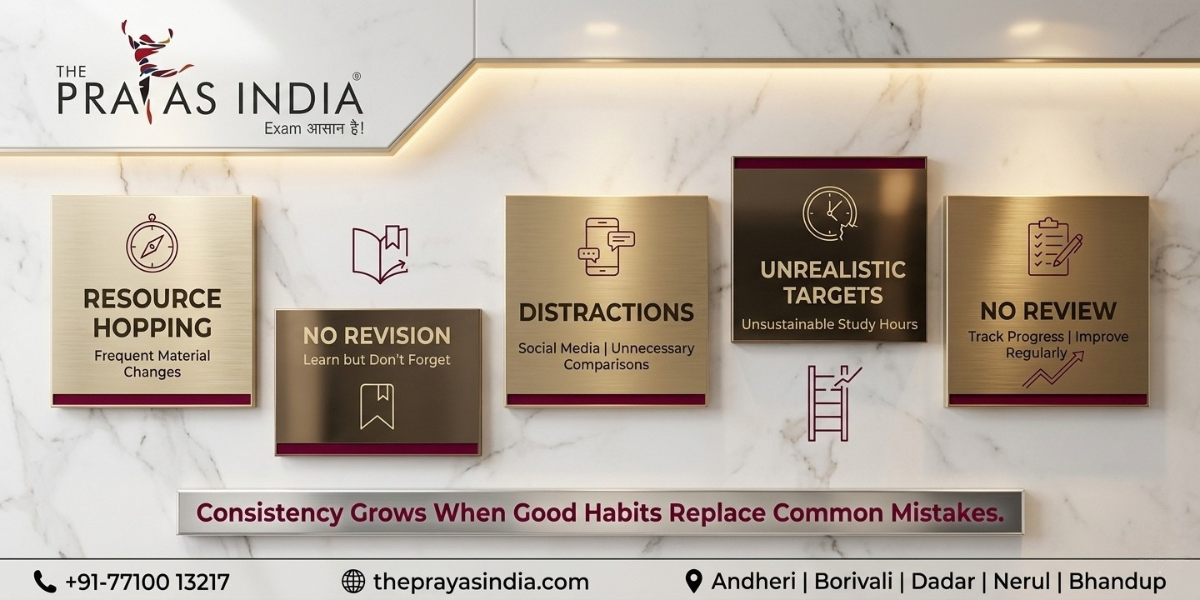
Constantly Changing Study Resources
Every few weeks, some aspirants switch books, online courses, coaching materials, or current affairs sources because they believe another resource will produce faster results.
Frequent changes prevent deep learning and create unnecessary confusion.
Comparing Preparation with Others
Watching topper interviews, social media updates, or preparation discussions can sometimes become more time-consuming than actual studying.
Every aspirant follows a different schedule, learning speed, and academic background.
Comparing your progress with someone else’s journey often reduces confidence instead of improving preparation.
Ignoring Revision
Many students continue learning new topics every day while postponing revision indefinitely.
Without regular revision, previously studied material gradually fades, making preparation feel increasingly overwhelming.
Trying to Study for Unrealistic Hours
Studying productively for eight focused hours every day is often far more beneficial than attempting fourteen hours that cannot be maintained consistently.
Quality always outweighs quantity.
Perfectionism
Some aspirants refuse to move ahead until every topic feels completely mastered.
UPSC preparation rarely allows complete perfection before progress.
Learning steadily while revising regularly is a far more practical approach.
Track Progress Instead of Relying on Memory
Maintaining consistency becomes much easier when progress is visible.
Many aspirants underestimate how much they have already completed because they rely entirely on memory. As a result, preparation begins to feel endless.
Keeping a structured progress tracker solves this problem.
Your tracker may include:
- Subjects completed.
- Current affairs coverage.
- Revision cycles finished.
- Answer writing practice completed.
- Mock tests attempted.
- Weekly learning goals achieved.
- Topics requiring additional revision.
Reviewing this tracker every week provides measurable evidence of improvement and helps maintain confidence during long preparation cycles.
Celebrate Progress, Not Just Major Milestones
UPSC preparation is often associated with one final objective—clearing the Civil Services Examination.
While this remains the ultimate goal, focusing exclusively on the final result can sometimes make the journey feel overwhelming.
Instead, recognise smaller achievements that indicate genuine progress.
Examples include:
- Completing a difficult subject.
- Finishing an entire revision cycle.
- Improving answer writing quality.
- Increasing mock test accuracy.
- Maintaining a productive study routine for several consecutive weeks.
- Successfully balancing current affairs with static subjects.
Acknowledging these achievements creates positive momentum and reinforces disciplined study habits.
Consistency grows when progress becomes visible.
Build Accountability into Your Preparation
Preparing alone provides flexibility, but it also increases the likelihood of losing consistency because there is no external system encouraging regular progress.
Accountability creates discipline.
This accountability may come from:
- Regular mock test schedules.
- Weekly performance reviews.
- Faculty feedback.
- Mentorship sessions.
- Study groups with serious aspirants.
- Clearly defined monthly goals.
When your preparation is reviewed regularly, it becomes easier to maintain focus and avoid unnecessary delays.
Expert Mentorship Helps You Stay Consistent Throughout the UPSC Journey
Long-term preparation becomes significantly easier when aspirants receive structured academic guidance and continuous performance monitoring. Many students know what needs to be studied but struggle to maintain consistency because they lack accountability, timely feedback, and a clear improvement strategy.
At The Prayas India, UPSC preparation is designed to keep students focused throughout every stage of the examination process. Through experienced faculty guidance, personalised mentorship, structured classroom programmes, regular answer writing practice, mock tests, performance reviews, and continuous academic support, students receive a disciplined preparation framework that helps them remain consistent even during challenging phases of their journey.
Consistency Is the Competitive Advantage Most Aspirants Ignore
UPSC Is Not Won by Studying the Hardest for a Few Weeks. It Is Won by Studying Consistently for Months.
As your UPSC preparation progresses, it becomes increasingly clear that success is not determined by occasional bursts of extraordinary effort. Instead, it depends on your ability to maintain a steady pace through every phase of the journey—learning new concepts, revising old topics, practising answer writing, solving mock tests, and staying updated with current affairs.
Many aspirants search for shortcuts that can accelerate their preparation. They frequently change study plans, switch resources, or look for motivational content hoping it will improve their performance overnight. However, UPSC preparation rarely rewards dramatic changes. It rewards disciplined routines followed consistently over a long period.
By this stage, your objective should no longer be to study more than everyone else. Your objective should be to ensure that every day contributes meaningfully to your preparation. Small, consistent improvements accumulate into significant progress, while irregular preparation often leads to repeated revision, forgotten concepts, and unnecessary stress.
The aspirants who eventually secure top ranks are usually not those who never faced setbacks. They are the ones who developed the discipline to recover quickly, continue learning, and remain focused despite challenges.
Frequently Asked Questions About Staying Consistent During UPSC Preparation
Is it normal to lose motivation during UPSC preparation?
Yes.
Since UPSC preparation extends over several months, every aspirant experiences periods where motivation naturally declines. This is why successful preparation should depend on well-established study habits rather than temporary enthusiasm. A structured routine ensures that preparation continues even on days when motivation is low.
How many hours should I study every day?
There is no universally ideal number of study hours.
Instead of comparing yourself with others, focus on maintaining productive study sessions that you can sustain over several months. Eight highly focused hours often produce better results than twelve inconsistent hours filled with distractions and fatigue.
What should I do if I miss my study schedule for a few days?
Do not attempt to compensate by creating an unrealistic timetable.
Begin by reviewing previously studied topics, identify the highest-priority pending work, and gradually return to your normal routine. Recovering steadily is far more effective than trying to complete several days’ work in one sitting.
How can I avoid feeling overwhelmed by the UPSC syllabus?
Break the syllabus into smaller academic goals instead of viewing it as one enormous task.
Divide preparation into manageable subjects, weekly targets, revision cycles, answer writing practice, and mock tests. Completing smaller milestones regularly creates steady progress and reduces unnecessary pressure.
Does consistency matter more than intelligence?
For a long-duration examination like UPSC, disciplined preparation often has a greater influence on success than natural ability alone.
Aspirants who consistently revise, practise answer writing, analyse mock tests, and improve gradually usually perform better than those who study intensely but irregularly.
Daily Consistency Checklist for UPSC Aspirants
Before ending each study day, review your preparation using this simple checklist.
Daily Learning
✓ Completed planned study targets.
✓ Studied one new topic with proper understanding.
✓ Read and analysed current affairs.
Revision
✓ Revised previously completed subjects.
✓ Updated notes wherever required.
✓ Strengthened weak concepts.
Practice
✓ Solved answer writing questions or MCQs.
✓ Reviewed mistakes from previous practice sessions.
✓ Analysed performance objectively.
Planning
✓ Prepared tomorrow’s study schedule.
✓ Identified priority tasks.
✓ Removed unnecessary distractions.
Following this checklist regularly helps transform consistency from an occasional achievement into a daily habit.
How Structured Mentorship Helps Aspirants Remain Consistent
Maintaining consistency becomes easier when your preparation follows a clear academic roadmap. Many aspirants lose momentum because they constantly wonder what to study next, whether they are following the right strategy, or if their preparation is progressing as expected. Expert guidance eliminates much of this uncertainty by providing direction, accountability, and timely feedback.
At The Prayas India, UPSC preparation is designed around long-term consistency rather than short-term intensity. Students receive structured classroom programmes, experienced faculty guidance, personalised mentorship, answer writing practice, regular mock tests, detailed performance reviews, and continuous academic support. This integrated learning environment helps aspirants stay focused, monitor their progress effectively, and maintain disciplined preparation from the first day until the final stage of the examination.

Conclusion
Consistency is the foundation of successful UPSC preparation. While strategy, study material, coaching, and guidance all play important roles, none of them can replace the value of disciplined daily effort. Every chapter you complete, every revision session you finish, every answer you write, and every mock test you analyse contributes to your overall progress.
Rather than waiting for the perfect study plan or the perfect moment to begin, focus on building habits that you can sustain throughout your preparation. Accept that some days will be more productive than others, but never allow temporary setbacks to become permanent interruptions. Long-term success belongs to aspirants who continue moving forward, even when progress feels slow.
Remember that UPSC is not a test of who can study the most in a single day. It is a test of who can remain committed, organised, and consistent over an extended period. When consistency becomes your greatest strength, improvement becomes inevitable, and success moves from being a distant ambition to an achievable reality.
Contact Us
📞 Call: +91-77100 13217
🌐 Website: https://theprayasindia.com